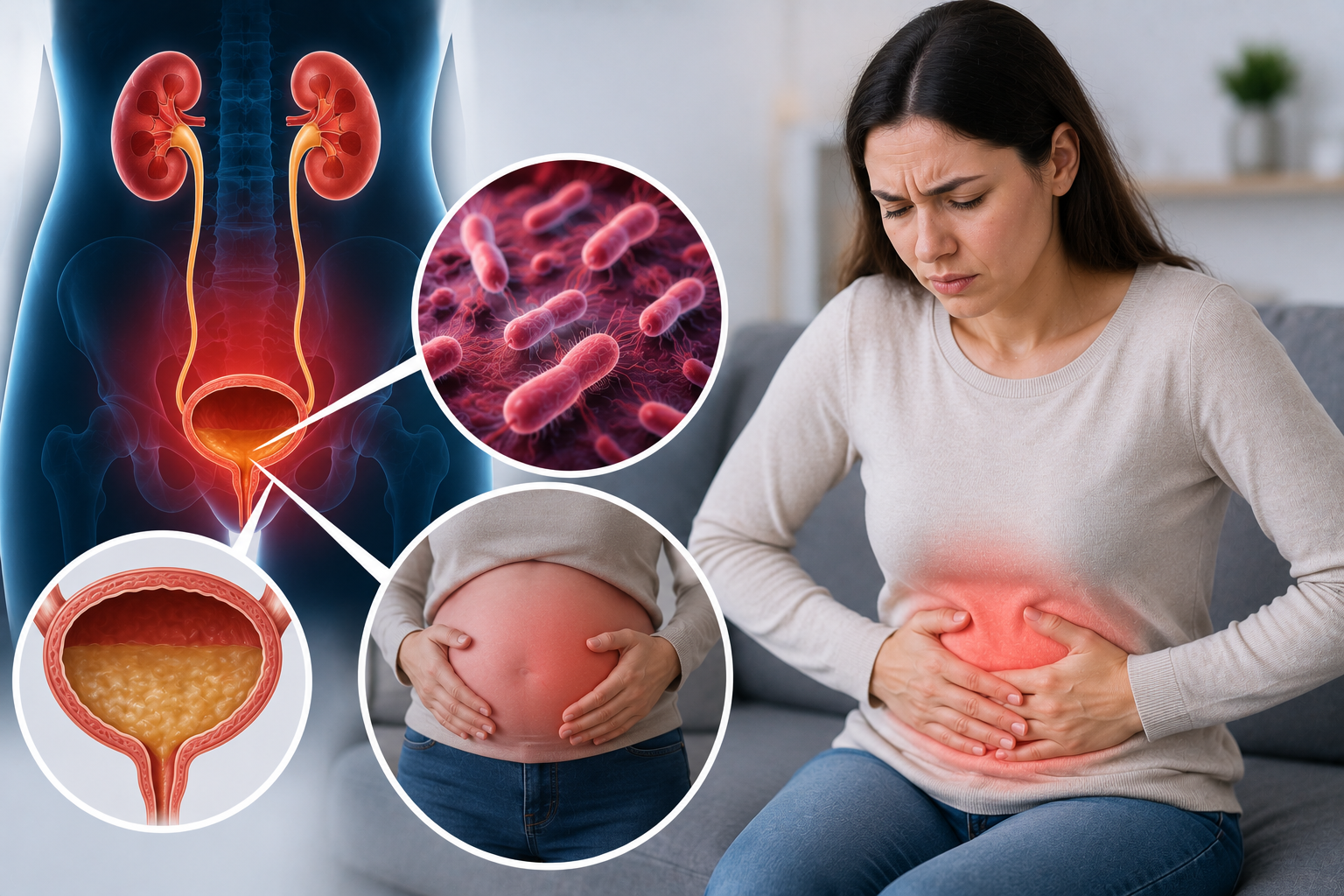
Urinary tract infections (UTIs) are among the most common bacterial infections, affecting millions of people every year. They can cause uncomfortable symptoms such as burning during urination, frequent urges to urinate, pelvic pain, and cloudy urine.
However, many people also notice digestive discomfort and wonder, does a urinary tract infection cause bloating? While bloating is not considered a classic symptom of a UTI, some individuals do experience a feeling of fullness, pressure, or swelling in the lower abdomen during an infection.
What Is a Urinary Tract Infection (UTI)?
Before understanding the link between UTIs and bloating, it helps to know what a urinary tract infection is and how it affects the body. A UTI develops when harmful bacteria enter the urinary system and begin multiplying, leading to irritation and inflammation.
Understanding the Urinary Tract
The urinary tract is responsible for removing waste and excess water from your body through urine. It includes four main parts:
| Part | Function |
| Kidneys | Filter waste and produce urine |
| Ureters | Carry urine from the kidneys to the bladder |
| Bladder | Stores urine until it leaves the body |
| Urethra | Allows urine to exit the body |
A urinary tract infection can affect any part of this system. However, most infections occur in the bladder or urethra, making them lower urinary tract infections. If bacteria travel to the kidneys, the infection becomes more serious and requires prompt medical treatment.
Does a Urinary Tract Infection Cause Bloating?
Many people are surprised to experience abdominal fullness during a urinary tract infection. Although bloating is not listed as one of the primary symptoms, it can occur in some cases due to the effects the infection has on the bladder and nearby organs.
Yes, does a urinary tract infection cause bloating is a reasonable question because the answer is yes, it can, although it is not one of the most common symptoms. Instead of gas-related bloating, many people describe feeling pressure, tightness, or swelling in the lower abdomen. This sensation often improves as the infection is treated and inflammation begins to decrease.
Why Can a UTI Make You Feel Bloated?
Although bloating is not considered a primary symptom of a urinary tract infection, many people notice a feeling of fullness or pressure in their lower abdomen. Understanding the reasons behind this sensation can help you manage your symptoms and know when to seek medical advice.
Inflammation Around the Bladder
When bacteria infect the bladder, the body’s immune system reacts by sending white blood cells to fight the infection. This response causes inflammation, which can make the bladder feel swollen and tender. Because the bladder sits in the lower abdomen, the inflammation may create the sensation of bloating even when there is little actual swelling.
Pelvic Pressure and Muscle Tightness
A UTI often causes the muscles around the bladder and pelvis to become tense. Frequent urges to urinate, discomfort, and irritation can make the lower abdomen feel tight or heavy. Many people describe this as bloating because the pressure is similar to the feeling of abdominal fullness.
Digestive Changes During an Infection
Any infection can affect the digestive system. Stress on the body may slow digestion, causing mild gas, constipation, or stomach discomfort. These digestive changes can contribute to bloating, especially if you are eating less, drinking less water, or spending more time resting because of the infection.
Antibiotic Side Effects
Antibiotics are the most common treatment for UTIs, but they may also disturb the balance of healthy bacteria in the intestines. This temporary imbalance can lead to gas, bloating, or loose stools. These side effects usually improve once the antibiotic course is finished and the gut bacteria begin to recover.
Common Symptoms of a UTI
A urinary tract infection usually produces noticeable urinary symptoms before digestive symptoms appear. Recognizing these signs early allows you to seek treatment before the infection becomes more serious.
Typical Symptoms
The most common symptoms of a UTI include:
- A burning sensation while urinating
- Frequent urge to urinate
- Passing only small amounts of urine
- Cloudy or strong-smelling urine
- Blood in the urine
- Pain or pressure in the lower abdomen
- Pelvic discomfort, especially in women
Some people may also experience mild bloating, fatigue, or a feeling of heaviness in the lower stomach. While these symptoms are less common, they can occur alongside the more typical urinary complaints.
Symptoms of a Kidney Infection
If the infection spreads to the kidneys, additional symptoms may develop, including:
- High fever
- Chills
- Pain in the back or side below the ribs
- Nausea and vomiting
- Severe fatigue
These symptoms require immediate medical attention because kidney infections can become serious if left untreated.
Other Conditions That Can Cause Bloating and Urinary Symptoms
Because bloating is not unique to UTIs, it is important to consider other conditions that may produce similar symptoms. A proper diagnosis helps ensure that you receive the correct treatment.
| Condition | Common Symptoms |
| Constipation | Bloating, abdominal pain, difficulty passing stool |
| Irritable Bowel Syndrome (IBS) | Gas, stomach cramps, changes in bowel habits |
| Kidney Stones | Severe pain, blood in urine, nausea |
| Interstitial Cystitis | Chronic bladder pain and frequent urination without infection |
| Ovarian Conditions | Pelvic pain, abdominal swelling, irregular periods |
| Pregnancy | Frequent urination, bloating, nausea |
If urinary symptoms continue despite antibiotic treatment or if bloating becomes severe, your healthcare provider may recommend additional testing to rule out these conditions.
How Is UTI Diagnosed?
Doctors can usually diagnose a urinary tract infection quickly using a combination of symptoms and laboratory tests. Early diagnosis allows treatment to begin before complications develop.
Medical History and Physical Examination
Your healthcare provider will ask about your symptoms, when they started, whether you have had previous UTIs, and if you have any underlying medical conditions. A physical examination may include checking for tenderness around the bladder or kidneys.
Urinalysis
A urine sample is tested for bacteria, white blood cells, red blood cells, and other signs of infection. This is often the first test performed and provides valuable information within a short time.
Urine Culture
If necessary, a urine culture identifies the exact bacteria causing the infection. It also helps determine which antibiotic is most effective, particularly in people with recurrent or complicated UTIs.
Imaging Tests
In cases of frequent infections, kidney stones, or suspected structural problems, your doctor may recommend imaging tests such as an ultrasound or CT scan to examine the urinary tract more closely.
Treatment for a UTI and Bloating
Treating the underlying infection is the most effective way to relieve bloating associated with a UTI. As the infection clears, inflammation decreases and abdominal discomfort usually improves.
Antibiotics are the primary treatment for bacterial UTIs and should always be taken exactly as prescribed, even if symptoms improve after a few days. Drinking plenty of water helps flush bacteria from the urinary tract and supports recovery. Resting and avoiding bladder irritants such as caffeine, alcohol, and spicy foods may also reduce discomfort.
If bloating is present, eating smaller meals, avoiding carbonated drinks, and including fiber-rich foods in your diet may help improve digestion. Some people also benefit from probiotics after completing antibiotics, as they may help restore healthy gut bacteria. Always speak with your healthcare provider before starting any new supplement.
Home Remedies to Relieve Bloating During a UTI
While home remedies cannot cure a bacterial infection, they can make you feel more comfortable during recovery.
Helpful self-care measures include drinking enough water throughout the day, applying a warm heating pad to the lower abdomen, eating light and balanced meals, avoiding foods that produce excessive gas, staying physically active with gentle walking, and getting enough sleep.
These simple habits support your body’s natural healing process and may reduce feelings of abdominal fullness.
Can Antibiotics for a UTI Cause Bloating?
Yes, antibiotics can sometimes cause bloating because they temporarily affect the natural bacteria living in the digestive system. As beneficial gut bacteria decrease, gas production may increase, leading to abdominal discomfort.
This side effect is usually temporary and improves after the treatment is completed. Eating yogurt with live cultures or taking probiotics, if recommended by your healthcare provider, may help restore a healthy balance of gut bacteria.
How Long Does UTI-Related Bloating Last?
In most cases, bloating improves within a few days after starting antibiotics as the infection begins to clear. For some people, digestive symptoms related to antibiotics may continue for a short time after treatment ends.
If bloating persists for more than a week after your urinary symptoms have resolved, or if it becomes severe, consult your healthcare provider to rule out another underlying condition.
Tips to Prevent UTIs and Reduce Bloating
Preventing UTIs can also lower the chance of experiencing bloating related to infection.
Some helpful habits include drinking plenty of water every day, avoiding holding urine for long periods, maintaining good personal hygiene, urinating after sexual activity, wearing breathable cotton underwear, eating a balanced diet rich in fiber, and limiting processed foods that contribute to digestive discomfort.
Frequently Asked Questions
Does every urinary tract infection cause bloating?
No. Most people experience burning during urination and frequent urination, while only some notice bloating or abdominal fullness.
Can a bladder infection make your stomach feel swollen?
Yes. Bladder inflammation and pelvic pressure can create the sensation of a swollen lower abdomen.
Is gas common with a UTI?
Gas is not a direct symptom of a UTI, but digestive changes or antibiotic treatment may increase gas and bloating.
Can antibiotics make bloating worse before it gets better?
Yes. Antibiotics can temporarily disrupt healthy gut bacteria, causing mild bloating that usually resolves after treatment.
When should I see a doctor for bloating with a UTI?
Seek medical attention if bloating is severe or accompanied by fever, vomiting, intense pain, or symptoms that do not improve after treatment.
Can drinking more water reduce bloating during a UTI?
Staying well hydrated helps flush bacteria from the urinary tract and supports recovery, which may gradually reduce abdominal discomfort.
Does a urinary tract infection cause bloating in everyone?
No. Every person experiences a UTI differently. Some people have only urinary symptoms, while others may also notice mild bloating or lower abdominal pressure.
Conclusion
So, does a urinary tract infection cause bloating? The answer is yes, but bloating is not one of the classic symptoms of a UTI. Instead, it usually results from bladder inflammation, pelvic pressure, digestive changes, or the temporary effects of antibiotics. In most cases, the feeling of fullness improves as the infection is treated and the body heals.
If you develop severe abdominal pain, persistent bloating, high fever, back pain, or symptoms that continue after completing your antibiotics, it is important to consult a healthcare provider. Prompt diagnosis and appropriate treatment not only relieve discomfort but also help prevent the infection from spreading to the kidneys.
Related Articles
Ibuprofen Not Working on Fillings Pain: Causes, Relief, and When to See a Dentist
Can an Ear Infection Cause Jaw Pain? Causes, Symptoms & Relief
Pain in Ear After Wisdom Tooth Removal: Causes, Relief & When to Worry
How to Get Rid of Numbness After Dentist: Causes, Remedies, and Recovery Tips
EZ Gel Under Eye: A Complete Guide to Natural Under-Eye Rejuvenation