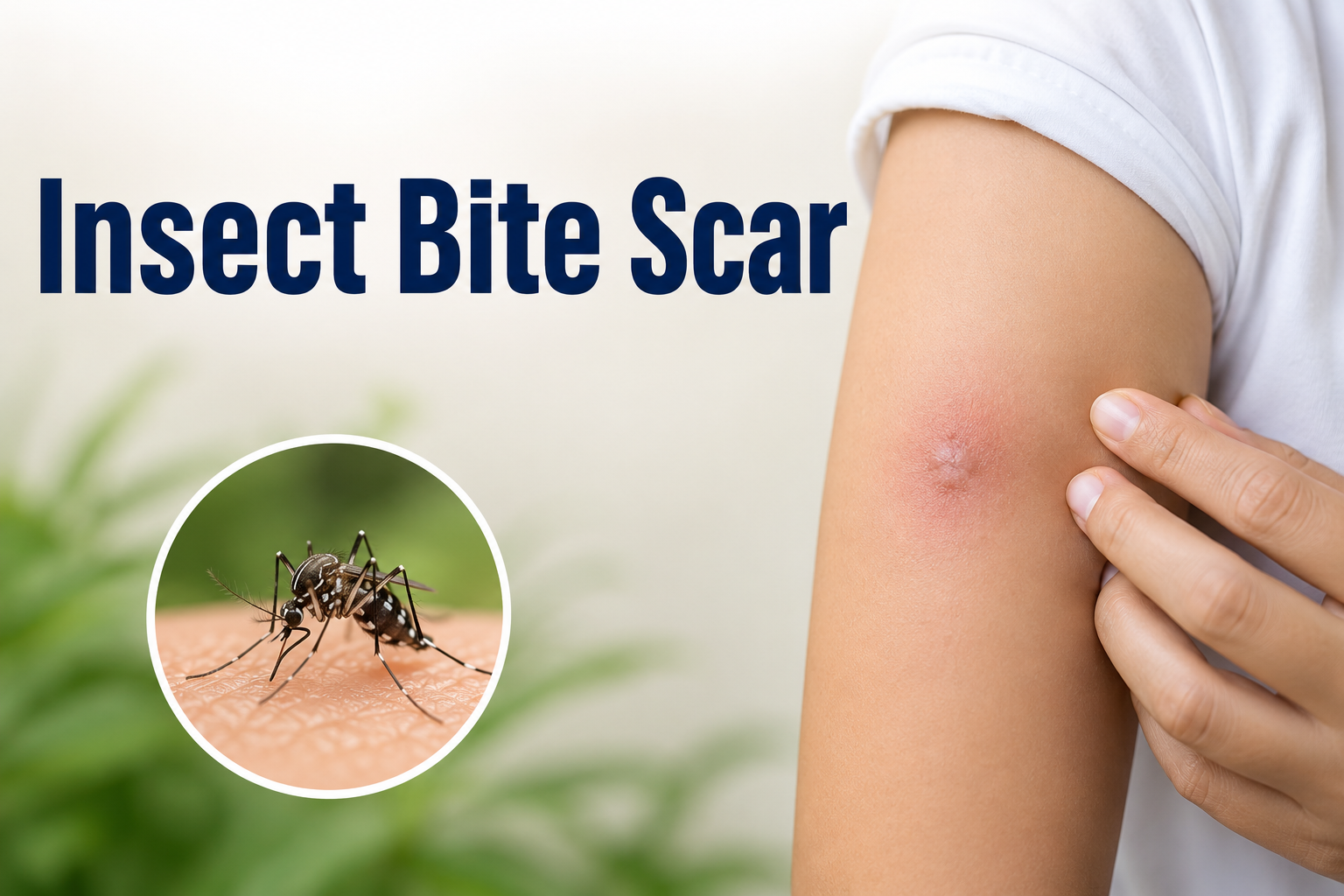
An insect bite scar forms when scratching or inflammation damages the skin’s deeper layers after a bite. Many people notice a dark or raised mark long after the itching stops, and wonder if it will ever fade. This guide explains why these scars form, which treatments actually work, and how to stop future bites from leaving marks.
You’ll find dermatologist-backed removal methods, honest pros and cons for each option, and simple prevention habits you can start today. Whether you’re dealing with a fresh mosquito bite mark or an old scar from months ago, this article covers every stage of treatment.
Key Takeaways
- An insect bite scar usually results from scratching, infection, or an allergic reaction — not the bite itself.
- Most bite-related dark spots are post-inflammatory hyperpigmentation, which fades within 6–12 months without treatment.
- True scars (raised, pitted, or textured) are less common and typically need clinical treatment.
- Sunscreen use significantly reduces the risk of a bite mark darkening permanently.
- Early, gentle care — not scratching — is the single biggest factor in preventing a lasting scar.
What Causes an Insect Bite Scar?
An insect bite itself rarely causes permanent scarring. The real damage usually comes from what happens afterward — scratching, infection, or an intense immune response to the bite’s saliva or venom.
According to the Mayo Clinic, insect bites trigger a histamine reaction that causes itching, swelling, and redness, and repeated scratching can break the skin and lead to infection or scarring.
Common causes of scarring include:
- Scratching or picking, which damages deeper skin layers and delays healing
- Secondary bacterial infection from broken, unclean skin
- Allergic reactions, which cause more intense swelling and tissue irritation
- Larger bites from insects like fire ants or bed bugs, which penetrate deeper
Pro Tip: Keeping nails trimmed short reduces the depth of scratches if you do scratch a bite in your sleep.
Insect Bite Scar vs. Normal Bite Mark: What’s the Difference?
Not every mark left behind is a true scar. Most bites leave temporary discoloration, while true scarring is far less common and looks different on the skin.
| Feature | Bite Mark (Hyperpigmentation) | True Scar |
| Texture | Flat, smooth | Raised, pitted, or thickened |
| Color | Brown, dark pink, or purple | Often lighter or darker than skin tone |
| Fading time | 6–12 months | May be permanent without treatment |
| Cause | Inflammation/melanin response | Damage to collagen and deeper skin layers |
The Cleveland Clinic notes that post-inflammatory hyperpigmentation is a temporary discoloration caused by excess melanin production after skin injury, and it typically resolves on its own over time.
How to Get Rid of Insect Bite Scars: Treatment Options
Treatment depends on whether you’re dealing with lingering discoloration or a true textured scar. Below is an honest comparison of the most common approaches, from at-home care to clinical procedures.
Silicone gel or sheets — A topical treatment applied directly to healed skin. Best for: Raised or thickened scars Pros: Non-invasive, backed by dermatology research, easy to use daily Cons: Requires weeks of consistent use; less effective on flat discoloration
Vitamin C or niacinamide serums — Brightening ingredients that target dark spots. Best for: Flat, dark hyperpigmentation Pros: Affordable, widely available, gentle for daily use Cons: Slow results; needs 8–12 weeks of consistent application
Chemical peels (in-office) — A dermatologist-applied acid solution that removes damaged surface layers. Best for: Stubborn dark spots that haven’t faded with creams Pros: Faster visible results than at-home products Cons: Requires downtime; can cause temporary redness or peeling
Laser therapy — Targeted light treatment for pigmentation or textured scars. Best for: Older or more resistant scars Pros: Often the most effective option for stubborn scarring Cons: Higher cost; may require multiple sessions
Sunscreen (daily use) — Broad-spectrum SPF applied over the healing area. Best for: Preventing a bite mark from darkening further Pros: Cheap, simple, prevents new discoloration Cons: Doesn’t treat scars that already exist
Warning: Avoid picking at scabs or using harsh exfoliants on fresh bites — this is one of the most common causes of permanent scarring.
How Long Does an Insect Bite Scar Take to Fade?
Most bite-related dark spots fade gradually rather than disappearing overnight, and timelines vary by skin tone and bite severity.
General fading timeline:
- Weeks 1–2: Redness and swelling subside; a flat dark mark may remain
- Months 1–3: Discoloration gradually lightens with consistent skin care
- Months 6–12: Most hyperpigmentation fully resolves without treatment
- Beyond 12 months: Marks that haven’t faded may be true scars requiring clinical treatment
Hypothetical Example (for illustration purposes): Imagine someone with a mosquito bite on their lower leg that they scratched repeatedly for a week. The area darkens and stays visible for several months. After switching to a daily vitamin C serum and consistent sunscreen, the mark noticeably fades within three to four months. Note: This scenario is illustrative. Actual results vary by skin type, bite severity, and treatment used.
Why Do Some People Scar More Than Others?
Scarring risk isn’t the same for everyone, and a few key factors explain why identical bites can heal so differently.
- Skin tone: Deeper skin tones are more prone to visible post-inflammatory hyperpigmentation.
- Scratching habits: Frequent or aggressive scratching is the single biggest scarring risk factor.
- Allergic sensitivity: People with stronger histamine reactions experience more swelling and tissue disruption.
- Sun exposure: UV light can darken a healing bite mark, making it more visible and slower to fade.
How to Prevent Insect Bite Scars Before They Form
Preventing a scar starts the moment you notice a bite, not after it’s already healed poorly.
Immediate Bite Care Steps
- Wash the area gently with soap and water to reduce infection risk.
- Apply a cold compress to reduce swelling and itch intensity.
- Use an anti-itch cream like hydrocortisone instead of scratching.
- Cover the bite with a light bandage if you tend to scratch while sleeping.
- Apply sunscreen daily once the skin has closed, even indoors near windows.
Pro Tip: Antihistamine tablets can reduce the itch response strongly enough to prevent the urge to scratch in the first place.
When to See a Dermatologist About an Insect Bite Scar
Most bite marks resolve without medical care, but certain signs mean it’s worth booking an appointment.
- The area shows signs of infection: increasing redness, warmth, pus, or fever
- The scar is raised, painful, or growing larger months after healing
- Discoloration hasn’t improved after 12 months of consistent skin care
- You have a history of keloid scarring, which needs specialized treatment
The American Academy of Dermatology recommends seeing a board-certified dermatologist for any scar that is painful, rapidly changing, or not responding to at-home treatment.
Frequently Asked Questions
Q: Do insect bite scars go away on their own?
Most fade on their own within 6–12 months, since they’re usually hyperpigmentation rather than true scars. Raised or textured scars are less likely to disappear without treatment.
Q: How long does it take for a bug bite scar to fade?
Typically 6 to 12 months for flat discoloration to resolve naturally. Consistent sun protection and brightening ingredients can speed up the process.
Q: What is the best cream for insect bite scars?
Vitamin C, niacinamide, and silicone-based products are commonly recommended by dermatologists. The right choice depends on whether the mark is flat discoloration or a raised scar.
Q: Why do some insect bites scar and others don’t?
Scarring risk depends on scratching habits, skin tone, allergic sensitivity, and bite severity. Bites that are left alone and kept clean rarely scar.
Q: Can you remove old insect bite scars?
Yes, older scars can be treated with chemical peels, laser therapy, or long-term use of brightening serums. Results vary depending on scar type and age.
Q: Does scratching a bug bite cause scarring?
Yes, scratching is one of the leading causes of insect bite scars. It breaks the skin, delays healing, and increases infection risk.
Q: Is it normal for mosquito bites to leave dark spots?
Yes, dark spots after mosquito bites are common and usually temporary. They result from the skin’s inflammatory response rather than permanent damage.
Conclusion
An insect bite scar is rarely permanent, and in most cases, it’s simply temporary discoloration rather than deep tissue damage. Understanding the difference between a fading bite mark and a true scar helps you choose the right treatment instead of wasting time on the wrong one. Consistent sun protection remains one of the easiest ways to stop a mark from darkening further while it heals.
For flat discoloration, ingredients like vitamin C and niacinamide offer a gentle, low-risk path to faster fading. For raised or textured scars, silicone gel, chemical peels, or laser therapy tend to deliver more noticeable results.