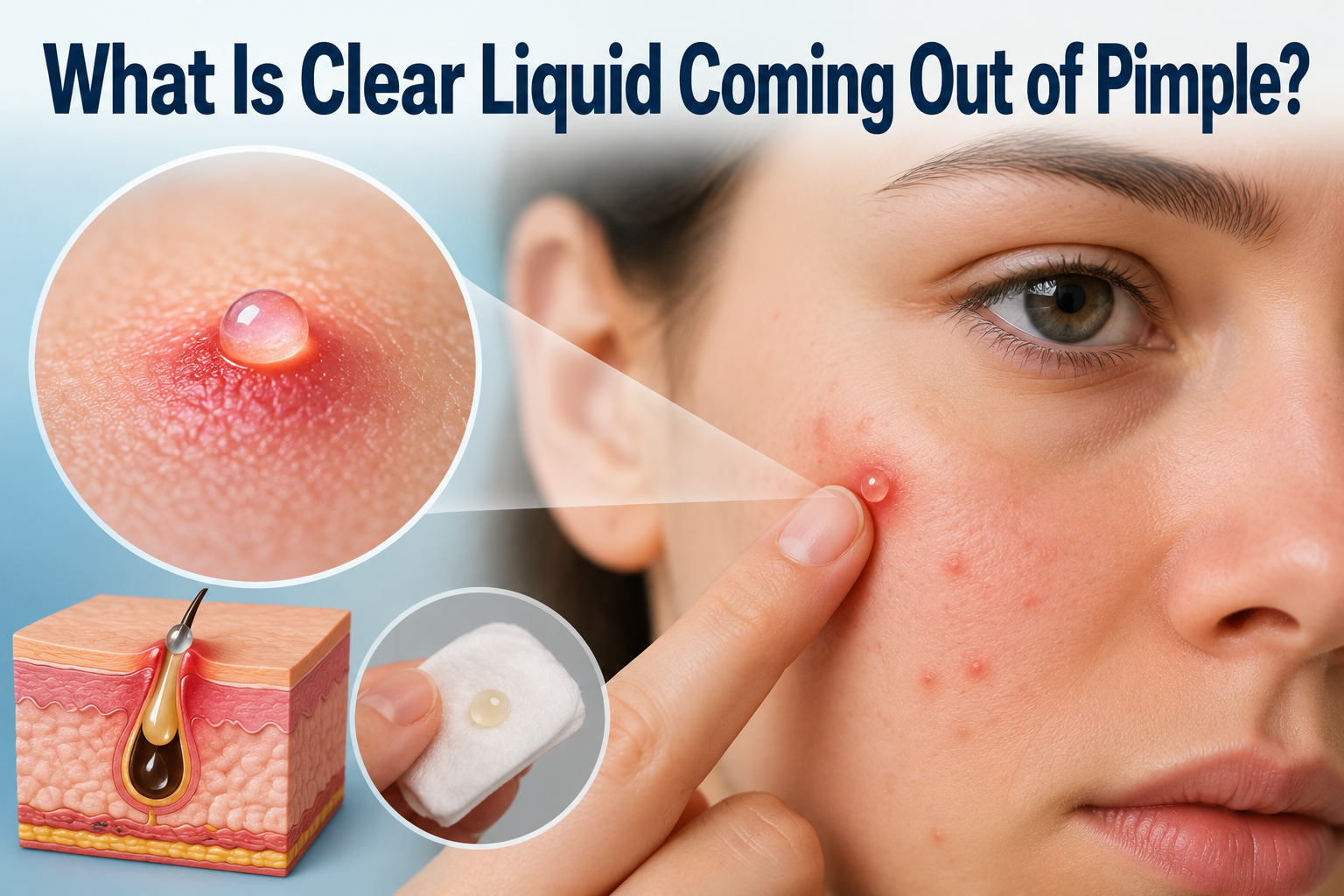
When a pimple releases clear liquid, it is usually serum, a watery fluid made up of blood plasma, lymphatic fluid, and dead white blood cells that seep out once the skin barrier around the pimple breaks.
This normally happens after a pimple has been popped, picked at, or has burst on its own during the healing process. Clear discharge is generally a sign that the body is flushing out inflammation and beginning to repair the skin.
It is different from thick yellow or green pus, which usually points to a bacterial infection needing more attention. In most cases, clear fluid drainage is temporary and stops within a day or two as the wound closes. However, if it continues for longer, worsens, or is joined by redness and swelling, it may need medical evaluation.
What Does Clear Liquid From a Pimple Mean?
Clear liquid from a pimple usually means the surrounding tissue is releasing serum as part of the natural healing response. This fluid is your body’s way of cleaning the wound and preparing the skin to repair itself.
Serum vs. Pus — What’s the Difference
Serum is a thin, watery, and often clear or slightly yellow-tinted fluid made of plasma without red or white blood cells mixed in heavily. Pus, on the other hand, is thicker, cloudier, and usually yellow, green, or white because it contains dead white blood cells fighting bacteria. If the discharge from your pimple is thin and clear, it is most likely serum rather than an active infection.
Is Clear Discharge Normal or a Warning Sign
In the majority of cases, clear discharge is a normal part of the skin healing after a pimple has ruptured or been drained. It becomes a warning sign only when it is accompanied by increasing pain, spreading redness, or a foul smell, which may indicate infection rather than normal healing.
Common Causes of Clear Fluid Discharge
Several everyday situations can lead to clear fluid draining from a blemish, ranging from accidental popping to underlying skin conditions. Knowing the exact cause helps you decide whether home care is enough or a dermatologist visit is needed.
Popped or Ruptured Pimple
When a pimple is squeezed, picked, or bursts naturally, the skin barrier is broken and the fluid inside is released. This fluid often starts as a mix of pus and serum, but as the area heals, it typically thins out into clear liquid before drying completely.
Cystic Acne Drainage
Cystic acne forms deep under the skin and can contain a mix of oil, bacteria, and inflammatory fluid. When a cyst finally drains, either on its own or after treatment, clear or slightly cloudy fluid is commonly released as pressure is relieved from the deeper layer of skin.
Sebaceous Cyst Leakage
A sebaceous cyst is a small sac filled with keratin and oily material that can sometimes be mistaken for a stubborn pimple. When irritated or squeezed, these cysts may leak a clear to yellowish, sometimes thick fluid that has a distinct texture compared to typical acne discharge.
Healing Process After Inflammation
As inflamed skin begins to calm down and repair itself, blood vessels in the area allow plasma to seep through, causing clear fluid to appear on the surface. This is a normal part of the body’s inflammatory response winding down and should decrease steadily each day.
Clear Fluid vs. Other Pimple Discharge Types
Not all pimple discharge looks or means the same thing, and comparing the different types side by side makes it easier to know what you are dealing with. The table below breaks down the most common types of fluid seen with pimples.
| Discharge Type | Appearance | Likely Cause | Concern Level | Recommended Action |
| Clear fluid (serum) | Thin, watery, clear | Normal healing after rupture | Low | Keep clean, monitor |
| Yellow/white pus | Thick, opaque | Bacterial infection | Moderate | Clean gently, watch for spread |
| Green-tinged pus | Thick, foul smell | Advanced infection | High | See a doctor promptly |
| Blood-tinged fluid | Pink or red tint | Broken capillary from picking | Low to moderate | Avoid further irritation |
| Thick white discharge | Creamy, cheese-like | Cystic or comedonal buildup | Moderate | Avoid squeezing, consider treatment |
When Clear Discharge Is Normal
Most cases of clear discharge fall well within the range of typical healing and do not require any special treatment beyond basic hygiene. Recognizing the normal signs can help ease unnecessary worry.
Signs of Healthy Healing
Healthy healing usually shows a gradual decrease in fluid, a flat or shrinking bump, and skin that looks pink rather than deep red or purple. There should be no increasing pain, and the area should feel less tender with each passing day.
Expected Timeline for Drainage to Stop
In most cases, clear fluid drainage slows down and stops within 24 to 48 hours as a scab or dry patch begins to form over the area. Larger cystic blemishes may take a few extra days to fully dry out and heal compared to smaller surface-level pimples.
Warning Signs You Shouldn’t Ignore
While clear fluid is often harmless, certain accompanying symptoms suggest the skin may be developing an infection that needs more than basic home care. Paying attention to these changes can prevent complications.
Redness, Swelling, and Warmth
If the skin around the pimple becomes increasingly red, puffy, or warm to the touch rather than settling down, this can indicate the body is fighting an infection. This is different from the mild, localized redness that is expected right after a pimple ruptures.
Fever or Spreading Infection
A fever, chills, or red streaks spreading away from the pimple are signs that an infection may be entering the bloodstream or deeper tissue layers. These symptoms should never be ignored and typically call for prompt medical care.
When Fluid Turns Yellow or Green
If clear fluid shifts to a yellow, green, or notably foul-smelling discharge, this usually signals that bacteria have taken over the healing process. At this stage, over-the-counter care may not be enough, and a professional opinion is recommended.
How to Properly Care for a Draining Pimple?
Caring for a draining pimple the right way can speed up healing and reduce the risk of scarring or further irritation. Simple, consistent care usually works better than aggressive treatment.
Cleaning the Area Safely
Gently wash the area twice a day with a mild, fragrance-free cleanser and lukewarm water, patting it dry with a clean towel afterward. Avoid scrubbing or using harsh exfoliants directly on the draining spot, as this can delay healing and increase irritation.
What Not to Do (Picking, Squeezing)
Picking, squeezing, or repeatedly touching the area introduces more bacteria and can push infection deeper into the skin rather than out. This habit also significantly raises the risk of long-term scarring and dark spots even after the pimple itself has healed.
Recommended Topical Care
A thin layer of an over-the-counter antibacterial ointment or a gentle spot treatment containing ingredients like benzoyl peroxide can help keep the area clean while it heals. Keeping the spot covered with a light bandage overnight can also prevent unconscious touching or picking while sleeping.
When to See a Dermatologist
Some situations call for professional care rather than continued home treatment, especially when a pimple keeps recurring or shows signs of a deeper skin issue. Knowing when to seek help protects your skin in the long run.
Signs That Need Professional Treatment
Persistent drainage lasting more than a week, worsening pain, or repeated cyst formation in the same spot are strong signs that a dermatologist visit is needed. These patterns often point to an underlying condition rather than a one-time blemish.
Treatment Options for Recurring Cysts
Dermatologists may recommend treatments such as corticosteroid injections, prescription topical retinoids, or in some cases minor in-office drainage procedures for stubborn cysts. For recurring cystic acne, oral medications or long-term skincare plans are often used to prevent future flare-ups.
Frequently Asked Questions
Is clear liquid from a pimple a good sign?
Yes, in most cases it shows the skin is healing and clearing out inflammation naturally.
Should I squeeze out clear fluid from a pimple?
No, it’s best to let it drain on its own rather than applying pressure, which can worsen irritation.
How long does clear discharge last?
It typically lasts one to two days before drying up and scabbing over.
Can clear fluid turn into an infection?
Yes, if the area isn’t kept clean, bacteria can enter and cause the fluid to become thicker and discolored.
Does clear fluid mean the pimple is gone?
Not immediately, but it does mean the healing process has started and the pimple is likely resolving.
Is it normal for a cyst to leak clear fluid?
Yes, especially after the pressure inside the cyst is relieved, though persistent leakage should be checked by a doctor.
Conclusion
Clear liquid coming out of a pimple is usually just part of the body’s natural healing process and is generally nothing to worry about on its own.
Paying attention to changes in color, smell, swelling, and pain will help you tell the difference between normal healing and a sign of infection.
With gentle care and patience, most draining pimples heal fully within a few days without any lasting issues.
Related Posts
Would Having a Hysterectomy Help PCOS? What You Need to Know
Estrella Women’s Health Center: Complete Care Approach, and Women’s Health Solutions
Can Braces Fix an Overbite? Causes, Treatment, and Recovery
How to Get Rid of Numbness After Dentist: Causes, Remedies, and Recovery Tips