A kidney stone can turn an ordinary day into a painful ordeal, and most people want one thing only: relief, and fast. The good news is that many small stones can pass on their own within a few days to a few weeks if you support your body the right way.
Understanding how to make a kidney stone pass faster means combining proper hydration, gentle movement, safe pain control, and, when needed, medication prescribed by a doctor. This guide walks through what actually helps, what to avoid, and when a stone needs professional treatment instead of home care.
Understanding Kidney Stones
Kidney stones are not all the same, and the type you have influences both your symptoms and your treatment options. Knowing the basics helps you make sense of what your doctor tells you and what habits might have contributed to the stone forming.
Types of Kidney Stones
Calcium oxalate stones are the most common type and usually form when the body absorbs too much oxalate from food or does not drink enough water. Uric acid stones tend to develop in people who eat a lot of animal protein or who are dehydrated frequently, and they often respond well to dietary changes. Struvite and cystine stones are less common; struvite stones are linked to urinary infections, while cystine stones are caused by a rare inherited condition that raises cystine levels in urine.
Common Causes and Risk Factors
Low fluid intake is the single biggest contributor to stone formation, since concentrated urine allows minerals to crystallize more easily. Diets heavy in salt, sugar, and animal protein raise the risk further, along with a family history of stones or certain long-term health conditions. Being overweight, living in a hot climate, and having a sedentary lifestyle also increase the chances of developing stones over time.
Typical Symptoms
The classic sign is a sharp, cramping pain that starts in the back or side and can move toward the lower abdomen or groin as the stone travels. Many people also notice blood in the urine, a frequent urge to urinate, nausea, or vomiting during an active episode. Pain that comes in waves, rather than staying constant, is a strong indicator that a stone is moving through the urinary tract.
How Long Does It Take to Pass a Kidney Stone?
Passage time depends heavily on stone size and location, and it can range from a few days to several weeks. Most people want a realistic timeline, so the table below gives a general idea based on stone size.
| Stone Size | Likelihood of Passing Naturally | Typical Time Frame |
| Less than 4mm | Very high (over 80%) | 1 to 2 weeks |
| 4mm to 6mm | Moderate (about 50-60%) | 2 to 4 weeks |
| Larger than 6mm | Low, often needs treatment | Rarely passes without procedure |
Factors Affecting Passage Time
Beyond size, the stone’s exact position in the ureter matters a great deal, since stones closer to the bladder tend to pass more easily than those higher up. Hydration levels, physical activity, and individual anatomy also play a role in how quickly a stone moves. Swelling in the ureter caused by the stone’s movement can slow things down even further.
When Passage Is Unlikely Without Treatment
Stones larger than 6mm rarely pass without intervention, and waiting too long in these cases can lead to kidney damage or infection. Persistent severe pain, fever, or an inability to urinate are signs that home methods will not be enough. In these situations, a doctor will usually recommend imaging tests followed by a procedure to remove or break up the stone.
Natural Ways to Help a Kidney Stone Pass Faster
Simple lifestyle adjustments can genuinely speed up how quickly a small stone travels through the urinary tract. These methods work best for stones under 5mm and should be paired with medical guidance rather than used as a replacement for it.
Hydration and Fluid Intake
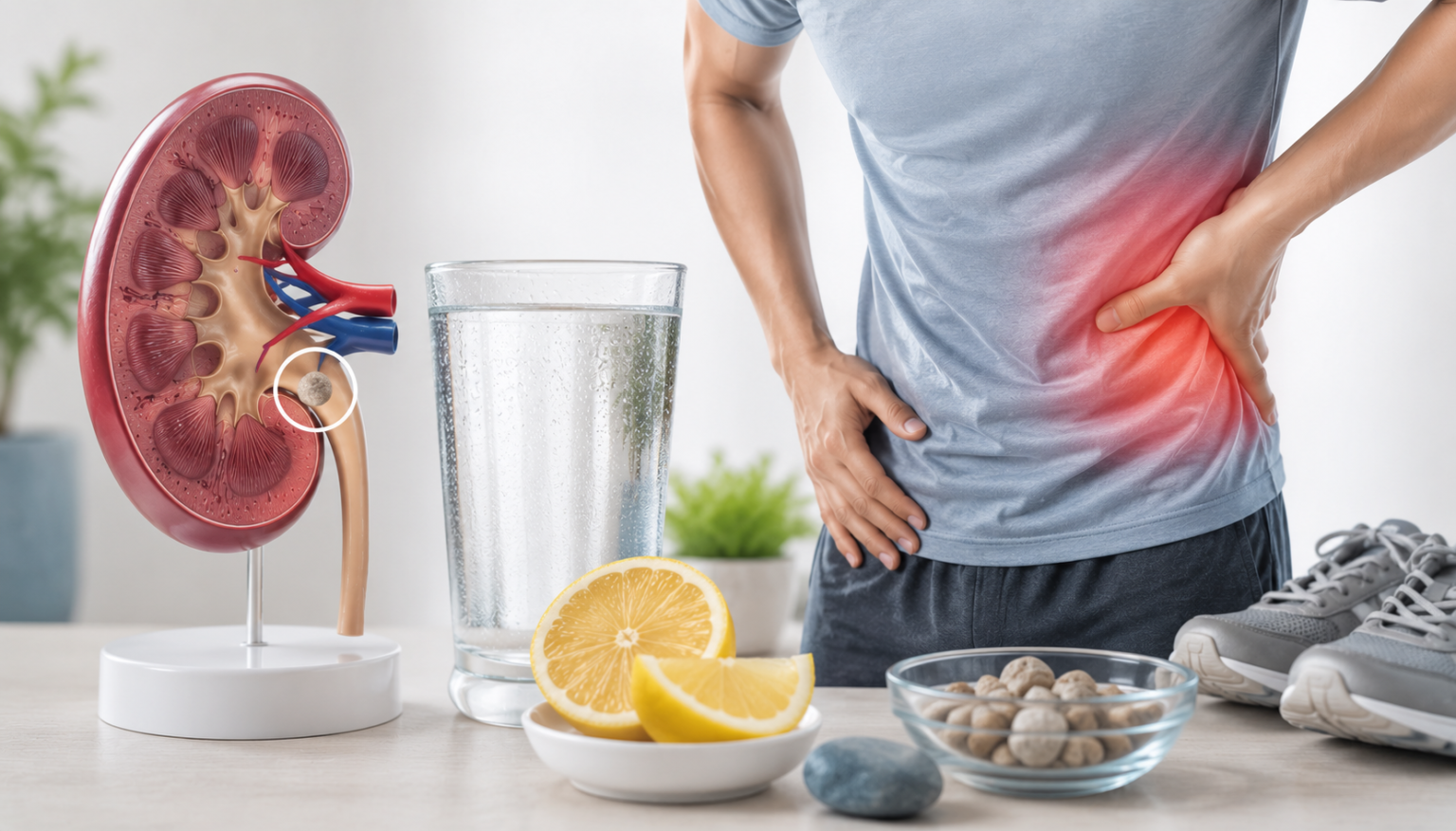
Drinking enough water is the most effective natural step, since it increases urine flow and helps flush the stone downward. Aim for pale yellow urine as a rough marker of good hydration, spreading fluid intake evenly across the day rather than drinking it all at once. Water remains the best choice, though some people also include unsweetened citrus drinks for added benefit.
Physical Movement
Light activities such as walking or gentle stretching can encourage a stone to move along the ureter using gravity and natural body motion. Staying completely still for long periods may slow the process down, so short walks throughout the day are generally encouraged unless pain makes movement difficult. Jumping or more vigorous movement is sometimes suggested anecdotally, though it should be done cautiously and only if comfortable.
Citrus Juices and Diet Adjustments
Lemon water and other citrus drinks contain citrate, which can help prevent certain stones from growing larger and may support smoother passage. Reducing salt, added sugar, and excessive animal protein in your diet during this period lowers strain on the kidneys and urinary tract. These dietary tweaks are most useful for people prone to calcium oxalate or uric acid stones specifically.
Medical Treatments That Speed Up Passage
When natural methods alone are not enough, doctors often prescribe medication that relaxes the urinary tract and reduces pain, making passage faster and more comfortable.
Alpha-Blockers
Medications such as tamsulosin relax the muscles in the ureter, widening the passage and allowing the stone to move through with less resistance. Studies have shown that alpha-blockers can shorten passage time and reduce the number of painful episodes for many patients. A doctor will typically prescribe these for stones between 4mm and 10mm after confirming size and location through imaging.
Pain Relief Medication
Nonsteroidal anti-inflammatory drugs like ibuprofen are commonly recommended to manage pain and reduce inflammation around the stone. In cases of severe pain, doctors may prescribe stronger medication for short-term use under supervision. Anti-nausea medication is sometimes added as well, since nausea and vomiting frequently accompany stone episodes.
When Doctors Recommend Medical Expulsive Therapy
This approach, combining alpha-blockers with pain control, is generally recommended for stones that are borderline in size or causing significant discomfort. It gives the stone a reasonable window to pass naturally while keeping the patient comfortable and monitored. If no progress is seen within the recommended time frame, doctors move on to more direct procedures.
Managing Pain While Waiting to Pass a Stone
Pain management is often the most immediate concern while a stone works its way through the urinary tract, and there are several safe ways to ease discomfort at home.
Heat Therapy and Positioning
Applying a heating pad to the back or side can relax muscles and reduce the intensity of cramping pain during an active episode. Finding a comfortable position, whether lying down or sitting slightly reclined, can also reduce pressure on the affected area. Many people find alternating between light movement and rest periods works better than staying in one position too long.
Over-the-Counter Pain Options
Standard doses of ibuprofen or similar over-the-counter pain relievers are usually the first line of defense for mild to moderate discomfort. These should be used according to package instructions, and anyone with kidney, stomach, or heart conditions should check with a doctor before use. Combining pain relief with hydration tends to give better overall comfort than either approach alone.
When a Stone Won’t Pass on Its Own
Some stones simply will not move without help, and recognizing this early prevents complications like infection or permanent kidney damage.
Signs a Procedure Is Needed
Pain that does not improve after several weeks, a stone larger than 6mm, or signs of infection such as fever all point toward needing a procedure. Repeated visits to the emergency room for pain control without progress is another clear signal. Your doctor will use imaging to confirm whether the stone has moved at all since the last check.
Common Procedures
Shock wave lithotripsy uses sound waves from outside the body to break the stone into smaller pieces that pass more easily. Ureteroscopy involves a thin scope passed through the urinary tract to remove or break up the stone directly, and it is often used for stones stuck in the lower ureter. Percutaneous nephrolithotomy, a more involved surgical option, is reserved for very large or complex stones that other methods cannot resolve.
Warning Signs That Need Emergency Care
Certain symptoms mean home care is no longer appropriate and immediate medical attention is required. Fever or chills alongside stone pain can indicate a serious infection that needs urgent treatment.
Vomiting that prevents you from keeping fluids down, an inability to urinate at all, or heavy blood in the urine are all reasons to seek emergency care right away rather than waiting to see if the stone passes on its own.
Preventing Future Kidney Stones
Once a stone has passed or been treated, prevention becomes the priority to avoid a repeat episode. Maintaining steady, generous water intake every day is the single most effective long-term habit, since it keeps urine diluted and less likely to form crystals.
Reducing sodium and limiting excessive animal protein, while keeping calcium intake at normal dietary levels rather than cutting it out, also lowers risk for most stone types.
People who have had more than one stone are often advised to have periodic urine and blood tests so a doctor can identify the specific mineral imbalance driving stone formation and recommend a tailored prevention plan.
Frequently Asked Questions
Can stress cause kidney stones? Stress itself does not directly cause stones, but it can lead to dehydration or poor eating habits that raise the risk indirectly.
Does drinking beer help pass stones? There is no reliable medical evidence supporting this, and alcohol can actually contribute to dehydration, which works against stone passage.
How painful is passing a stone? Pain varies widely depending on stone size and location, ranging from mild discomfort to intense cramping that requires medical pain relief.
Can you pass a stone without knowing it? Yes, very small stones sometimes pass unnoticed, especially if fluid intake is high and the stone is small enough to move without causing significant irritation.
Conclusion
Making a kidney stone pass faster comes down to a combination of steady hydration, light movement, sensible pain management, and, when needed, medication prescribed by a doctor.
Small stones often resolve within a couple of weeks with these steps, while larger stones may require a medical procedure to avoid complications. Paying attention to warning signs like fever, severe pain, or an inability to urinate ensures you seek help before a manageable situation becomes an emergency.
Related Posts
Can a Cavity Be Painful? Signs, Causes & Relief Explained
What Does a Cavity Look Like on a Molar? Signs & Stages Explained
Are Cavities Reversible? Early Signs, Remineralization