Watching a newborn struggle to breathe, even briefly, is one of the most frightening experiences a parent can face. Noisy breathing, whistling sounds, or a slight wheeze can instantly bring the word “asthma” to mind, especially if the condition already exists somewhere in the family. This concern is completely understandable, since asthma is such a common chronic illness worldwide and parents naturally want to catch any health issue early.
This article breaks down the topic in simple, easy-to-understand language. It explains why newborns are not typically diagnosed with asthma, what actually causes breathing noises in infants, which warning signs deserve immediate medical attention, and what parents can realistically do to support their baby’s breathing health. By the end, the confusion around whether newborns can have asthma should be completely cleared up.
What Is Asthma? (Quick Basics)
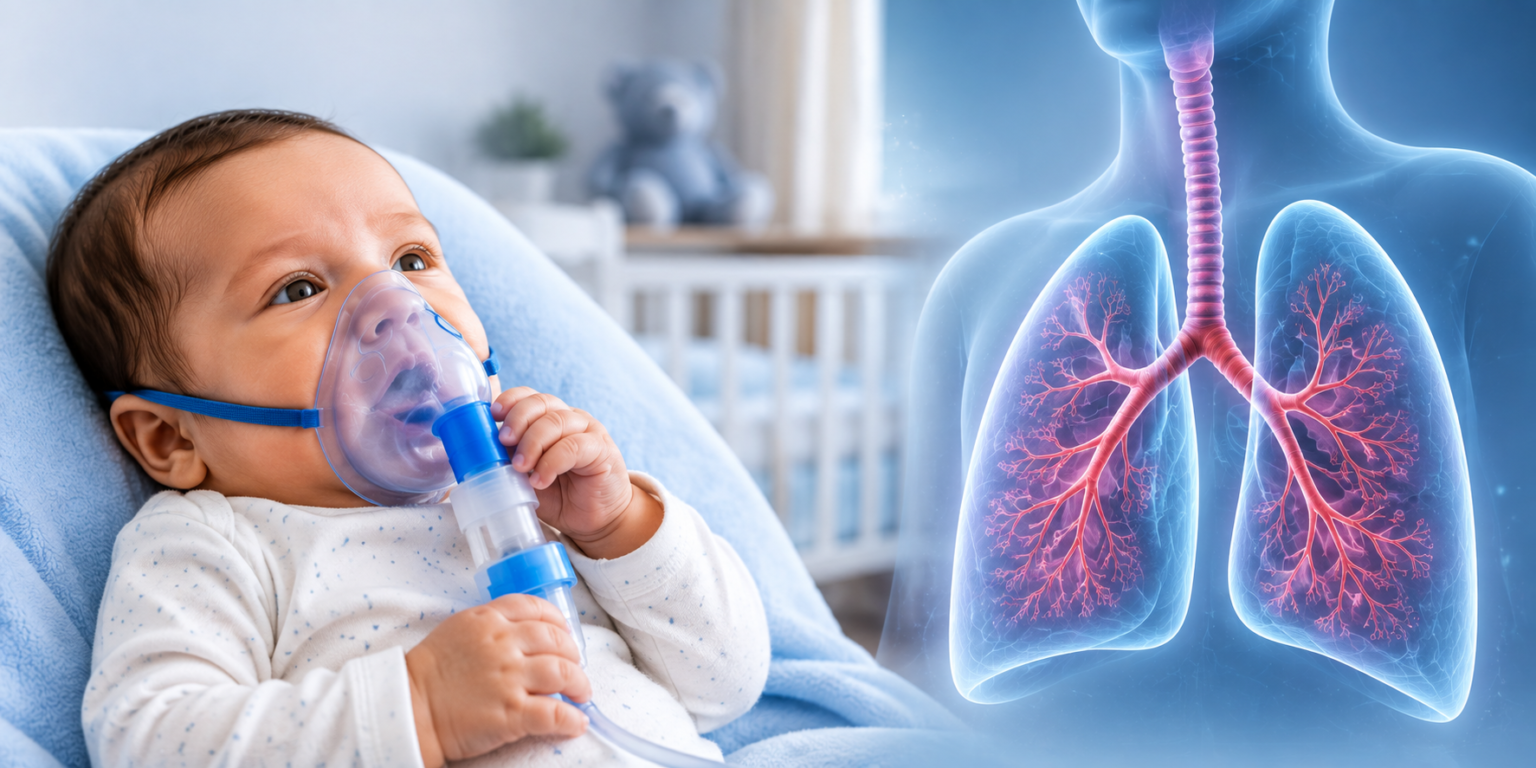
Asthma is a long-term condition that affects the airways carrying air in and out of the lungs, causing them to become inflamed and narrow at certain times. This inflammation makes breathing harder and often triggers wheezing, coughing, or a tight feeling in the chest.
How Asthma Affects the Airways?
During an asthma flare-up, the muscles around the airways tighten and the inner lining swells, which narrows the space air needs to pass through. This narrowing is what produces the classic wheezing or whistling sound many people associate with asthma attacks.
Why It Is a Chronic Condition
Asthma is not something that appears once and disappears forever; it tends to stick around for years and flares up in response to specific triggers such as allergens, cold air, or infections. Because of this ongoing nature, doctors need consistent, repeated observation before confirming a diagnosis, which is one major reason it is so hard to identify in infants.
Can Newborns Actually Have Asthma?
Doctors almost never diagnose asthma in a newborn because the tools used to confirm it, mainly lung function tests, require a level of cooperation and lung development that infants simply do not have. Instead, breathing issues in newborns are usually labeled and treated as something else until a clearer pattern emerges over the years.
Why Do Doctors Avoid Diagnosing Asthma in Newborns?
Lung function testing, known as spirometry, requires a person to breathe in specific controlled ways on command, something a newborn obviously cannot do. Without this test, doctors cannot reliably distinguish asthma from other common causes of infant breathing noise, so they generally hold off on labeling it as asthma.
The Role of Lung Function Tests
These tests measure how much air a person can inhale and exhale and how quickly, which helps doctors confirm airway narrowing typical of asthma. Since infants cannot follow breathing instructions, this diagnostic gold standard remains unusable until a child is old enough to participate properly.
Typical Age for Asthma Diagnosis
Most pediatricians wait until a child is around five years old before formally diagnosing asthma, since by that age breathing patterns, triggers, and test results become far more reliable. Before this age, terms like “wheezing” or “reactive airway disease” are used instead, describing symptoms without committing to a permanent asthma label.
Why Do Newborns Wheeze Then?
Newborns wheeze for several reasons that have nothing to do with true asthma, and most of these causes are temporary or manageable. The small size of a baby’s airways alone makes wheezing far more common in infancy than in older children or adults.
Naturally Narrow Airways in Infants
A newborn’s airways are extremely small, so even a tiny amount of mucus or swelling can cause a noticeable whistling sound when they breathe. As the child grows and the airways widen naturally, this type of wheezing frequently fades away on its own without any lasting issue.
Viral Infections Like RSV and Colds
Common viral infections such as respiratory syncytial virus (RSV) or an ordinary cold can inflame a baby’s airways and lead to noisy, labored breathing. These infections are extremely common in the first year of life and are usually the leading cause of wheezing episodes doctors see in infants.
Acid Reflux (GERD)
When stomach contents flow back up into the throat, it can irritate the airway and trigger coughing or wheezing sounds, especially after feeding. Reflux-related breathing noise typically improves as the baby’s digestive system matures over the following months.
Bronchiolitis
Bronchiolitis is a viral infection that inflames the tiny airways deep within the lungs, often producing a wheeze that sounds strikingly similar to asthma. It is one of the most frequent reasons infants are brought to a doctor or hospital for breathing concerns during their first winter season.
Structural Airway Issues (Rare)
In rare cases, a baby may be born with a structural abnormality in the airway itself, such as a floppy windpipe, that causes ongoing noisy breathing. These cases are uncommon but usually require specialist evaluation to rule out or properly manage.
Wheezing vs. Asthma – What’s the Difference?
Wheezing is simply a symptom, a sound produced when air moves through narrowed airways, while asthma is a specific long-term diagnosis explaining why that narrowing keeps happening. Not every wheezing baby has or will develop asthma, which is an important distinction for worried parents to understand.
Explaining Infant Wheezing as a Symptom
Because wheezing can stem from so many different causes in infancy, doctors treat it as a sign to investigate rather than an automatic asthma diagnosis. This cautious approach prevents babies from being mislabeled with a lifelong condition based on a single early symptom.
Transient Early Wheezing vs. Persistent Wheezing
Some babies experience “transient early wheezing,” which appears in the first few years and disappears completely as the airways grow larger. Others show “persistent wheezing” that continues into later childhood, which is more strongly associated with an eventual asthma diagnosis.
How Doctors Tell Them Apart Over Time
Pediatricians track how often wheezing occurs, what triggers it, and whether it responds to asthma-type treatments before drawing any conclusions. This pattern-based observation, often spanning several years, is the most reliable way to separate ordinary infant wheezing from developing asthma.
Risk Factors That May Lead to Childhood Asthma Later
While newborns are not diagnosed with asthma, certain factors can raise the likelihood that a wheezy baby will later be diagnosed with the condition as a toddler or young child.
| Risk Factor | Why It Matters |
| Family history of asthma or allergies | Genetics play a strong role in airway sensitivity |
| Maternal smoking during pregnancy | Can affect lung development before birth |
| Premature birth or low birth weight | Lungs may be underdeveloped at birth |
| Frequent early respiratory infections | Repeated inflammation can affect airway growth |
| Secondhand smoke or pollutant exposure | Irritates and weakens developing airways |
Family History and Genetics
If one or both parents have asthma or strong allergies, their child has a noticeably higher chance of developing asthma-like symptoms later on. This genetic link is considered one of the strongest predictors doctors use when assessing a wheezy infant’s future risk.
Maternal Smoking and Premature Birth
Smoking during pregnancy can interfere with how a baby’s lungs develop, while premature babies often have lungs that simply have not finished forming at birth. Both factors are linked to a higher chance of ongoing breathing issues and eventual asthma diagnosis.
Frequent Infections and Environmental Exposure
Babies who catch repeated respiratory infections early in life, or who are regularly exposed to smoke and pollution, tend to show higher rates of childhood asthma later. Reducing exposure to these irritants is one of the few preventive steps parents can actively control.
Signs and Symptoms Parents Should Watch For
Recognizing the everyday signs of breathing trouble helps parents know when a doctor’s visit is genuinely necessary rather than simply reacting out of fear.
| Symptom | What It Looks Like |
| Noisy or whistling breathing | Audible sound during inhale or exhale |
| Rapid breathing | Breaths noticeably faster than normal |
| Chest retractions | Skin pulling inward around ribs with each breath |
| Persistent coughing | Cough that lasts several days or worsens at night |
| Feeding difficulty | Baby struggles to breathe and feed simultaneously |
| Bluish lips or skin | An emergency sign requiring immediate care |
Everyday Warning Signs
Noisy breathing, rapid breaths, and a persistent cough are the most common signs parents notice first, and while they can be alarming, they are often manageable with proper medical guidance. Keeping a simple note of when these symptoms occur can help a pediatrician spot patterns faster.
Emergency Warning Signs
A bluish tint around the lips or skin, along with visible chest retractions or extreme difficulty feeding due to breathlessness, signals a medical emergency that needs urgent attention. These signs suggest the baby is not getting enough oxygen and should never be treated as a wait-and-see situation.
When to See a Doctor Immediately?
Any sign of bluish skin, severe chest retractions, or a baby who seems to be working unusually hard to breathe calls for emergency care without delay.
On the other hand, mild wheezing that comes and goes, especially alongside a cold, can usually be discussed at a regular pediatric appointment rather than an emergency visit.
Trusting parental instinct matters here, since caregivers often notice subtle changes in their baby’s breathing pattern before anyone else does.
How Doctors Evaluate Breathing Problems in Infants?
Pediatricians typically begin with a physical exam, listening closely to the baby’s lungs with a stethoscope to identify the type and location of any abnormal sounds. From there, they consider the baby’s history, feeding patterns, and recent illnesses to rule out infections, reflux, or structural issues before settling on a working diagnosis.
Because a single visit rarely tells the whole story, doctors often monitor symptoms over weeks or months, especially if wheezing keeps recurring. This ongoing observation, sometimes paired with allergy testing or a trial of asthma-type medication, helps build a clearer picture without rushing into a premature asthma label.
Can Anything Be Done to Reduce Future Asthma Risk?
While no method guarantees a baby will never develop asthma, several steps can meaningfully lower the risk or severity of future breathing problems. Keeping the home smoke-free is one of the most effective changes, since secondhand smoke is strongly linked to worsened airway health in children.
Breastfeeding, where possible, has also been associated with a lower likelihood of respiratory issues in infancy due to the immune protection it offers. Managing environmental allergens early, such as dust and pet dander, along with prompt treatment of respiratory infections, further supports healthy airway development during these crucial early years.
Living With a Wheezy Baby: Practical Tips for Parents
Simple home measures can make a noticeable difference in a baby’s comfort during episodes of noisy breathing. Using a cool-mist humidifier in the nursery can help loosen mucus, while keeping the home free of strong odors, smoke, and dust reduces unnecessary airway irritation.
Tracking symptoms in a small notebook, including when wheezing happens, how long it lasts, and what seemed to trigger it, gives pediatricians valuable information for spotting patterns. Over time, this record can reveal whether the wheezing is fading naturally or becoming more frequent, guiding the next steps in care.
Myths vs. Facts About Newborns and Asthma
A lot of misinformation circulates around this topic, often causing unnecessary panic among new parents.
| Myth | Fact |
| Every wheezing newborn has asthma | Most infant wheezing is caused by infections or narrow airways, not asthma |
| Asthma can be confirmed with a simple listen through a stethoscope | Confirming asthma requires lung function tests unavailable for infants |
| Wheezing always means a serious illness | Many cases resolve on their own as the baby grows |
| Family history guarantees asthma in the baby | It raises risk but does not guarantee the condition will develop |
Conclusion
True asthma is not something doctors diagnose in newborns, mainly because the necessary lung function tests cannot be performed on such young infants, and most early wheezing stems from narrow airways, infections, or reflux instead.
Still, family history and certain early-life factors can raise the chance of asthma appearing later in childhood, making it worth mentioning at pediatric visits. Parents should stay alert to warning signs like bluish skin or severe breathing effort while trusting that most infant wheezing resolves naturally with time and proper care.
FAQs
Can a 1-month-old have asthma? No, doctors do not diagnose asthma at one month old since lung function testing is not possible; any wheezing is usually treated as a separate, temporary issue.
Is wheezing in babies always serious? Not always, since mild wheezing tied to a cold or narrow airways often resolves on its own, though persistent or severe wheezing should still be checked by a doctor.
Does baby wheezing mean they’ll have asthma forever? No, many babies experience transient wheezing that disappears completely as their airways grow larger, without ever developing asthma later in life.
How is childhood asthma diagnosed? Childhood asthma is typically diagnosed around age five using lung function tests, symptom history, and how well the child responds to asthma treatment trials.
Can newborn wheezing go away on its own? Yes, in many cases wheezing caused by narrow airways or mild infections fades naturally within the first couple of years as the baby’s lungs mature.