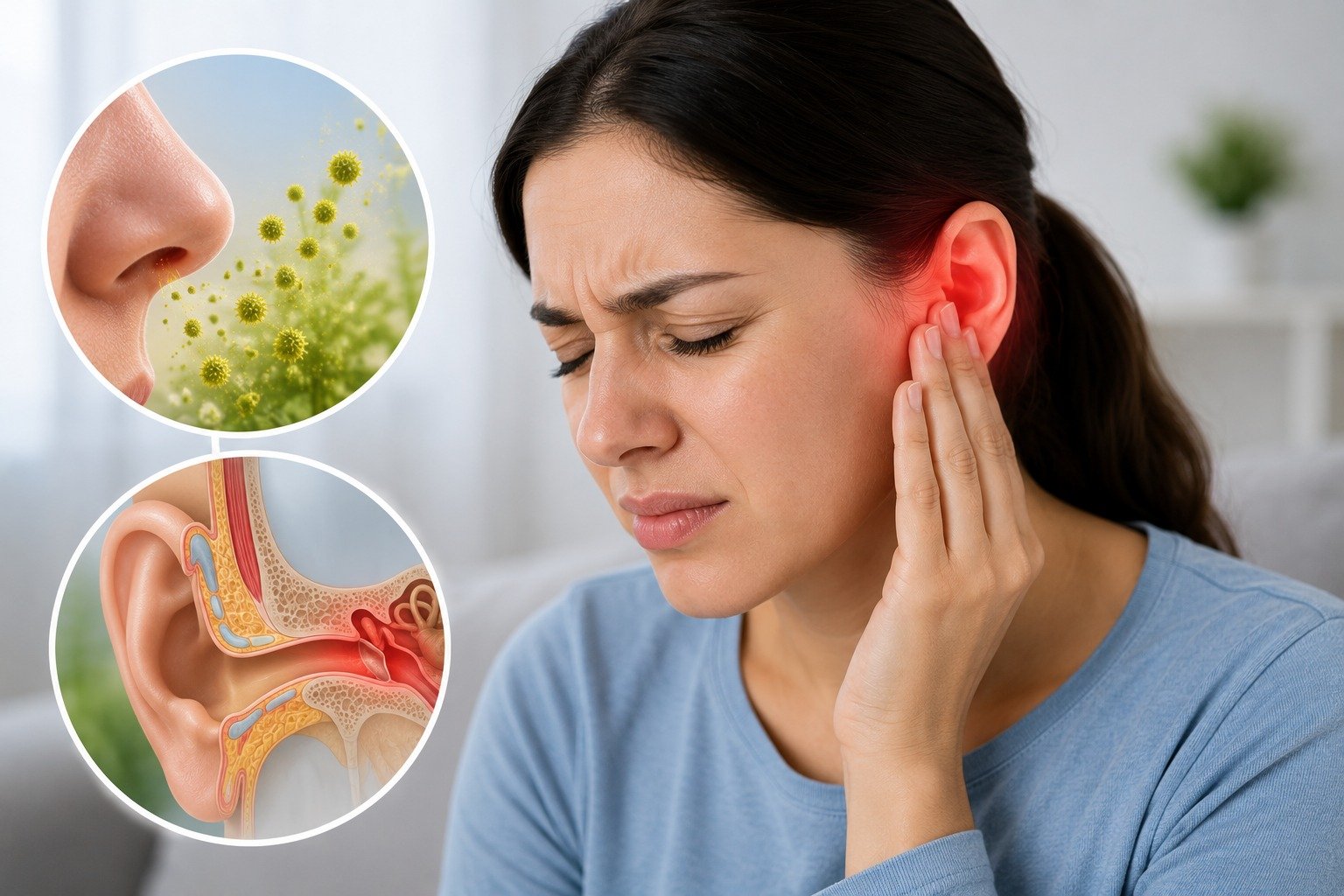
Can allergies cause ear pain? Yes, allergies can lead to ear pain by creating inflammation and congestion that block the Eustachian tubes, which are responsible for balancing pressure in the ears.
This blockage can cause discomfort, fullness, and even mild hearing changes. Many people experience these symptoms during seasonal allergies or exposure to dust, pollen, or pet dander.
In this article, we will discuss why allergies cause ear pain and pressure and also explore how to treat and manage allergy-related ear discomfort effectively.
What Are Allergies and How Do They Affect the Body?
Allergies occur when the immune system overreacts to harmless substances such as pollen, dust, mold, or pet dander. These substances trigger the release of chemicals like histamine, leading to inflammation and congestion throughout the body.
Because the nose, throat, sinuses, and ears are closely connected, allergic reactions can affect more than just breathing. Swelling and mucus production may extend to the passages linked to the ears, creating discomfort and pressure.
Can Allergies Cause Ear Pain?
Yes, allergies can cause ear pain. Although allergies do not directly infect the ear, they can block the Eustachian tubes, which help regulate pressure and drain fluid from the middle ear. When these tubes become swollen or clogged, pressure builds up and pain may develop.
People often notice ear discomfort during seasonal allergies or after exposure to common allergens. The pain may range from mild pressure to a dull ache and can affect one or both ears.
Why Allergies Lead to Ear Pressure and Discomfort?
When allergens trigger inflammation, the tissues inside the nose and throat become swollen. Since the Eustachian tubes connect the middle ears to the back of the throat, swelling can block these passages.
As a result, pressure changes cannot be balanced properly. Fluid may become trapped behind the eardrum, causing fullness, popping sensations, and pain. In some cases, hearing may become slightly muffled until the congestion improves.
The following table shows how allergies affect the ears:
| Allergy Response | Effect on the Ear |
| Inflammation | Swelling of Eustachian tubes |
| Increased mucus production | Blockage and fluid buildup |
| Sinus congestion | Pressure inside the ears |
| Persistent swelling | Ear pain and muffled hearing |
Common Symptoms of Allergy-Related Ear Problems
Ear pain caused by allergies is usually accompanied by other allergy symptoms. These signs may become worse during seasonal changes or after exposure to allergens.
Common symptoms include:
- Feeling of fullness inside the ear.
- Mild or moderate ear pain.
- Popping or clicking sounds.
- Temporary hearing changes.
- Dizziness or imbalance.
- Stuffy nose and sinus pressure.
- Sneezing and watery eyes.
Unlike ear infections, allergy-related symptoms often occur together with nasal congestion and improve when allergy symptoms are controlled.
The Link Between Allergies and Eustachian Tube Dysfunction
The Eustachian tubes are narrow channels that connect the middle ears to the throat. Their main job is to equalize air pressure and remove fluid from the ears.
How Allergies Affect the Eustachian Tubes
Inflammation caused by allergies can make these tubes swollen and narrow. As airflow becomes restricted, pressure builds up and fluid may collect behind the eardrum. This condition is known as Eustachian tube dysfunction.
Symptoms of Eustachian Tube Dysfunction
People with this condition often experience a sensation similar to being on an airplane. Symptoms may include ear pressure, muffled hearing, crackling sounds, and discomfort that worsens with swallowing or yawning.
Can Allergies Increase the Risk of Ear Infections?
Although allergies themselves do not cause infections, they can create conditions that make infections more likely. Fluid trapped behind the eardrum provides an environment where bacteria or viruses may grow.
Children are especially vulnerable because their Eustachian tubes are smaller and more easily blocked. If ear pain becomes severe or is accompanied by fever, an ear infection should be considered.
Allergies vs. Ear Infection: How to Tell the Difference
Ear pain caused by allergies and ear infections may feel similar, but some differences can help identify the cause.
| Symptom | Allergies | Ear Infection |
| Sneezing | Common | Rare |
| Itchy eyes | Common | Rare |
| Fever | Usually absent | Common |
| Severe pain | Less common | More common |
| Thick ear drainage | Rare | Possible |
| Nasal congestion | Common | Sometimes |
If symptoms continue for several days or worsen, medical evaluation is recommended.
Home Remedies for Ear Pain Caused by Allergies
Mild ear discomfort related to allergies often improves with simple home treatments. These methods focus on reducing congestion and improving drainage.
Helpful remedies include:
- Drinking plenty of water to thin mucus.
- Using saline nasal sprays to clear nasal passages.
- Applying a warm compress over the affected ear.
- Taking steam from a hot shower.
- Avoiding known allergens whenever possible.
- Sleeping with the head slightly elevated.
These measures may provide relief while helping pressure inside the ears return to normal.
Medical Treatments for Allergy-Related Ear Pain
Treatment focuses on controlling allergies and reducing inflammation around the Eustachian tubes. Different medications may be recommended depending on the severity of symptoms.
Antihistamines
Antihistamines help block the body’s allergic response. They reduce sneezing, itching, and mucus production, which can indirectly relieve ear pressure.
Nasal Corticosteroid Sprays
These sprays reduce inflammation inside the nasal passages. They are often recommended for people with chronic allergies because they help restore proper airflow and drainage.
Decongestants
Short-term use of decongestants may relieve nasal congestion and improve Eustachian tube function. However, they should be used carefully and according to medical advice.
Allergy Shots
People with severe or long-term allergies may benefit from immunotherapy. Allergy shots gradually reduce sensitivity to allergens and may decrease recurring ear problems over time.
When to See a Doctor for Persistent Ear Pain?
Most allergy-related ear discomfort improves when congestion clears, but persistent symptoms should not be ignored. A healthcare provider can determine whether another condition is causing the pain.
You should seek medical attention if:
- Ear pain becomes severe.
- Symptoms last longer than one week.
- Fever develops.
- Hearing loss worsens.
- Fluid or blood drains from the ear.
- Dizziness becomes severe.
- Over-the-counter medications do not help.
Prompt treatment can prevent complications and identify possible infections.
Tips to Prevent Ear Problems Caused by Allergies
Preventing allergy flare-ups is one of the best ways to avoid ear discomfort. Identifying triggers and reducing exposure can significantly improve symptoms.
Some practical prevention tips include:
- Keeping windows closed during high pollen seasons.
- Washing bedding regularly.
- Using air purifiers indoors.
- Avoiding cigarette smoke.
- Staying hydrated.
- Following prescribed allergy treatments consistently.
- Wearing masks when exposed to dust or pollen.
Managing allergies effectively can reduce congestion and help keep the ears functioning normally.
FAQs
Can allergies cause ringing or buzzing sounds in the ears?
Yes, allergies may contribute to tinnitus by causing congestion and pressure changes in the middle ear, which can lead to ringing or buzzing sensations.
Can allergy-related ear pain affect sleep quality?
Ear pressure and discomfort may make it difficult to fall asleep or stay comfortable, especially when lying down.
Do seasonal allergies make ear symptoms worse?
Yes, symptoms often become more noticeable during spring or fall when pollen levels are high and nasal congestion increases.
Can flying with allergies make ear pain worse?
Changes in air pressure during flights can worsen blocked Eustachian tubes and increase discomfort.
Are certain people more prone to allergy-related ear problems?
People with chronic allergies, sinus issues, or asthma may experience ear symptoms more frequently.
Can stress make allergy symptoms feel worse?
Stress does not cause allergies but may intensify symptoms and make ear discomfort more noticeable.
Can allergy-related ear pressure come and go?
Yes, symptoms may fluctuate depending on allergen exposure and the severity of nasal congestion.
Conclusion
So, can allergies cause ear pain? Yes, they can. Allergies often lead to inflammation and congestion that block the Eustachian tubes, creating pressure and discomfort inside the ears. While allergy-related ear pain is usually mild, it can affect daily life and sometimes increase the risk of ear infections.
Recognizing symptoms early and treating allergies properly can help relieve pressure and prevent complications. If ear pain becomes severe or persistent, consulting a healthcare professional is important to rule out infection or other underlying conditions.
Related Posts
Does Tennis Elbow Cause Shoulder Pain? Causes, Symptoms, Treatment & Prevention Guide
EZ Gel Under Eye: A Complete Guide to Natural Under-Eye Rejuvenation
Detego Health Provider Portal: Complete Guide for Healthcare Providers
Jason Health Labs: Complete Guide to Affordable Online Lab Testing Services