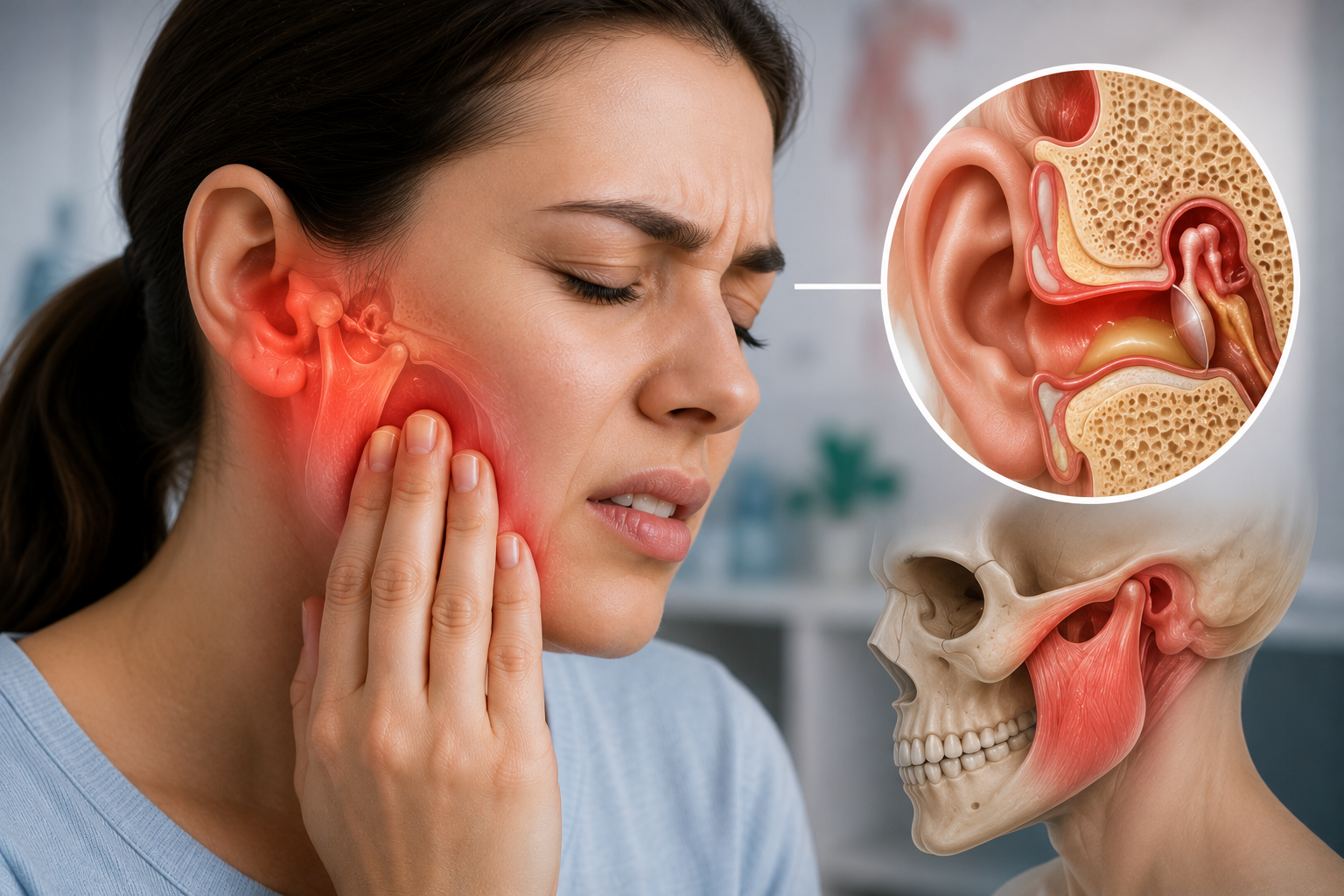
Yes, jaw pain can be caused by an ear infection, and this connection surprises a lot of people the first time they experience it. The ear and jaw sit very close to each other, and they also share several nerve pathways in the head and face.
Because of this shared wiring, pain that starts inside the ear does not always stay in the ear. It can travel outward and settle right into the jaw, making it feel like a dental problem or a jaw joint issue even when the real trouble is hidden inside the ear canal or middle ear.
Understanding the Anatomy: Why Jaw and Ear Pain Are Connected
The main reason jaw pain and ear infections are linked comes down to shared nerves and close physical placement. The trigeminal nerve, along with the tight positioning of the jaw joint right next to the ear canal, allows pain signals to spread easily between the two areas.
The Trigeminal Nerve and Its Role
The trigeminal nerve is one of the largest nerves in the face, and it sends sensory signals from the ear, jaw, teeth, and much of the face back to the brain. When inflammation from an ear infection irritates nearby nerve branches, the brain can misread where the pain is actually coming from, a process doctors call referred pain.
Proximity of the TMJ to the Ear Canal
The temporomandibular joint, or TMJ, sits directly in front of the ear canal, separated by only a thin layer of tissue and bone. Because of this closeness, swelling or fluid buildup from an ear infection can easily press against the joint area, creating jaw discomfort that mimics a joint disorder.
Shared Nerve Pathways Explained Simply
Think of the nerves around the ear and jaw as overlapping electrical wires bundled together in one small space. When one wire gets irritated, the signal can leak into the neighboring wire. This is exactly what happens with ear and jaw nerves, which is why one infection can produce pain in two different-feeling locations at once.
Types of Ear Infections That Can Cause Jaw Pain
Not every ear problem causes jaw pain in the same way, and the type of infection often decides how far the pain travels and how intense it feels.
Otitis Media (Middle Ear Infection)
Otitis media is an infection behind the eardrum, usually caused by fluid buildup after a cold or flu. Because this area sits deep and close to jaw-related nerves, pressure from this infection frequently radiates outward and is felt strongly along the jawline.
Otitis Externa (Swimmer’s Ear)
This infection affects the outer ear canal and is often caused by trapped moisture or minor skin injury inside the ear. Jaw pain from this type usually gets worse when chewing or opening the mouth wide, since the canal sits near jaw movement muscles.
Mastoiditis
Mastoiditis is a more serious infection affecting the bone behind the ear, usually developing when a middle ear infection is left untreated. Because this bone connects closely to jaw muscle attachments, the pain here tends to be deeper, more constant, and often paired with visible swelling.
Eustachian Tube Dysfunction
The eustachian tube helps balance ear pressure, and when it becomes blocked, pressure builds up inside the middle ear. This trapped pressure can push against surrounding jaw structures, causing a dull, aching jaw sensation that comes and goes with pressure changes.
How Ear Infections Trigger Jaw Pain
Ear infections do not directly attack the jaw, but the ripple effects of infection easily reach jaw tissue through pressure, inflammation, and nerve confusion.
Referred Pain Mechanism
Referred pain happens when the brain receives a pain signal but places it in the wrong location due to overlapping nerve pathways. This is the single biggest reason jaw pain caused by an ear infection can feel exactly like a toothache or joint problem.
Inflammation Spreading to Nearby Structures
Infections cause swelling, and swelling does not always stay contained in one exact spot. As tissue around the ear becomes inflamed, that swelling can gradually spread toward jaw muscles and ligaments, increasing discomfort in the surrounding region.
Pressure Buildup Effects on Jaw Muscles
Fluid trapped inside the middle ear increases internal pressure, and this pressure often pushes outward against nearby jaw muscles. Over time, this constant pressure can make jaw muscles feel tight, sore, or fatigued, especially during chewing or talking.
Symptoms That Indicate Ear-Related Jaw Pain
Recognizing the right pattern of symptoms is one of the most useful ways to figure out whether jaw pain is truly linked to an ear infection or coming from a completely different source.
Pain Pattern
Jaw pain caused by an ear infection often stays on one side of the face and tends to worsen with chewing, yawning, or lying down. Unlike typical muscle soreness, this pain often comes with a throbbing or pressure-like quality rather than a sharp, localized ache.
Accompanying Ear Symptoms
Along with jaw discomfort, most people also notice ear fullness, temporary hearing changes, or occasional fluid drainage from the ear. These extra symptoms are strong clues that the ear is the actual source of the problem rather than the jaw itself.
Fever, Dizziness, or Balance Issues
Since the inner ear also controls balance, infections here can bring along fever, mild dizziness, or a feeling of unsteadiness. When jaw pain shows up together with these symptoms, it strongly points toward an ear-related cause instead of a dental or joint issue.
Telling It Apart from TMJ or Dental Pain
TMJ disorder pain usually comes with jaw clicking, locking, or stiffness that has nothing to do with ear fullness or hearing changes. Dental pain, on the other hand, is generally sharp, localized to one tooth, and worsens with hot or cold foods, which is different from the dull, pressure-driven pain linked to ear infections.
Other Possible Causes of Jaw Pain
While ear infections are a real and common cause, jaw pain can also come from several other conditions that should not be ignored.
| Condition | Typical Pain Pattern | Key Extra Signs |
| TMJ Disorder | Clicking, stiffness, worsens on wide mouth opening | Jaw locking, joint popping sounds |
| Dental Abscess or Grinding | Sharp, localized to one tooth or side | Sensitivity to hot or cold food |
| Sinus Infection | Pressure across cheeks and upper jaw | Nasal congestion, facial heaviness |
| Trigeminal Neuralgia | Sudden, electric shock-like pain | Triggered by touch, talking, or chewing |
This table makes it easier to compare symptoms side by side and understand why proper diagnosis matters instead of guessing the cause on your own.
When to See a Doctor
Jaw pain linked to an ear infection is usually treatable, but certain warning signs mean it is time to stop waiting and book an appointment right away.
Red Flag Symptoms
High fever, severe swelling behind the ear, sudden hearing loss, or pain that keeps getting worse despite home care are signs that should never be ignored. These symptoms can indicate a more serious infection that needs prompt medical attention.
Which Specialist to Consult
An ENT specialist (ear, nose, and throat doctor) is usually the best first stop when ear infection symptoms are present alongside jaw pain. If ear symptoms are minimal and jaw clicking or locking is the main issue, a dentist or TMJ specialist may be the more appropriate choice instead.
What Diagnosis to Expect
Doctors typically start with a physical ear examination using an otoscope to check for redness, fluid, or swelling behind the eardrum. In some cases, hearing tests or imaging scans may also be used to confirm whether the jaw pain is truly connected to the ear infection.
Treatment Options
Treating the root ear infection is usually the fastest way to relieve the jaw pain that comes along with it, since the jaw discomfort is a side effect rather than the main disease.
Treating the Underlying Ear Infection
Bacterial ear infections are commonly treated with antibiotics, while viral infections may simply need time, fluids, and rest to clear up naturally. Once the infection and swelling reduce, jaw pain linked to it typically fades on its own within a few days.
Pain Relief Methods
Over-the-counter pain relievers such as ibuprofen or acetaminophen can help manage both ear and jaw discomfort during recovery. A warm compress placed gently near the jaw and ear area can also relax tight muscles and ease pressure-related aching.
Home Care Tips
Staying hydrated, avoiding hard or chewy foods, and getting enough rest all support faster healing during an active ear infection. Gently massaging the jaw muscles, without pressing directly on the infected ear, can also help reduce muscle tension caused by pain referral.
When Surgery or Specialist Intervention Is Needed
In rare, more serious cases like mastoiditis or repeated fluid buildup, a specialist may recommend procedures such as ear tube placement or drainage. These options are typically only considered when infections keep returning or standard treatment fails to bring relief.
Prevention Tips
Preventing ear infections in the first place is one of the most effective ways to avoid jaw pain triggered by this connection altogether.
Keeping ears dry after swimming or bathing, avoiding cotton swabs that push wax deeper into the canal, and treating colds or allergies early all reduce infection risk.
Managing sinus congestion quickly, since blocked sinuses often lead to blocked eustachian tubes, also helps prevent pressure buildup. Reducing excessive jaw clenching or grinding further lowers the chance of added strain during an ear infection flare-up.
FAQs
Can a sinus infection also cause jaw pain? Yes, sinus infections can cause jaw pain too, especially across the upper jaw and cheek area, due to pressure buildup in nearby sinus cavities.
How long does ear-related jaw pain last? It usually improves within a few days to a week once the underlying ear infection is properly treated with rest or medication.
Can children get this type of referred pain too? Yes, children are actually quite prone to this since their eustachian tubes are shorter and infections spread more easily to nearby areas including the jaw.
Is it an emergency if jaw pain comes with high fever? High fever combined with severe jaw or ear pain should be treated as urgent, and a doctor should be consulted the same day rather than waiting it out.
Conclusion
So, can jaw pain be caused by an ear infection? Based on shared nerves, close anatomy, and referred pain patterns, the answer is clearly yes in many real cases.
Most competitor articles on this topic only mention the connection briefly without explaining the deeper anatomy or comparing it properly against TMJ and dental pain, which often leaves readers confused about their own symptoms.
Understanding the difference between ear-related jaw pain and other causes helps you seek the right treatment faster instead of guessing. If jaw pain shows up alongside ear fullness, hearing changes, or fever, treating the ear infection is usually the real solution rather than focusing only on the jaw itself.
Related Articles
How Long Does a Lip Flip Last? Complete Timeline Guide
Middle Back Pain Around Rib Cage: Causes, Symptoms, and Relief
EZ Gel Under Eye: A Complete Guide to Natural Under-Eye Rejuvenation