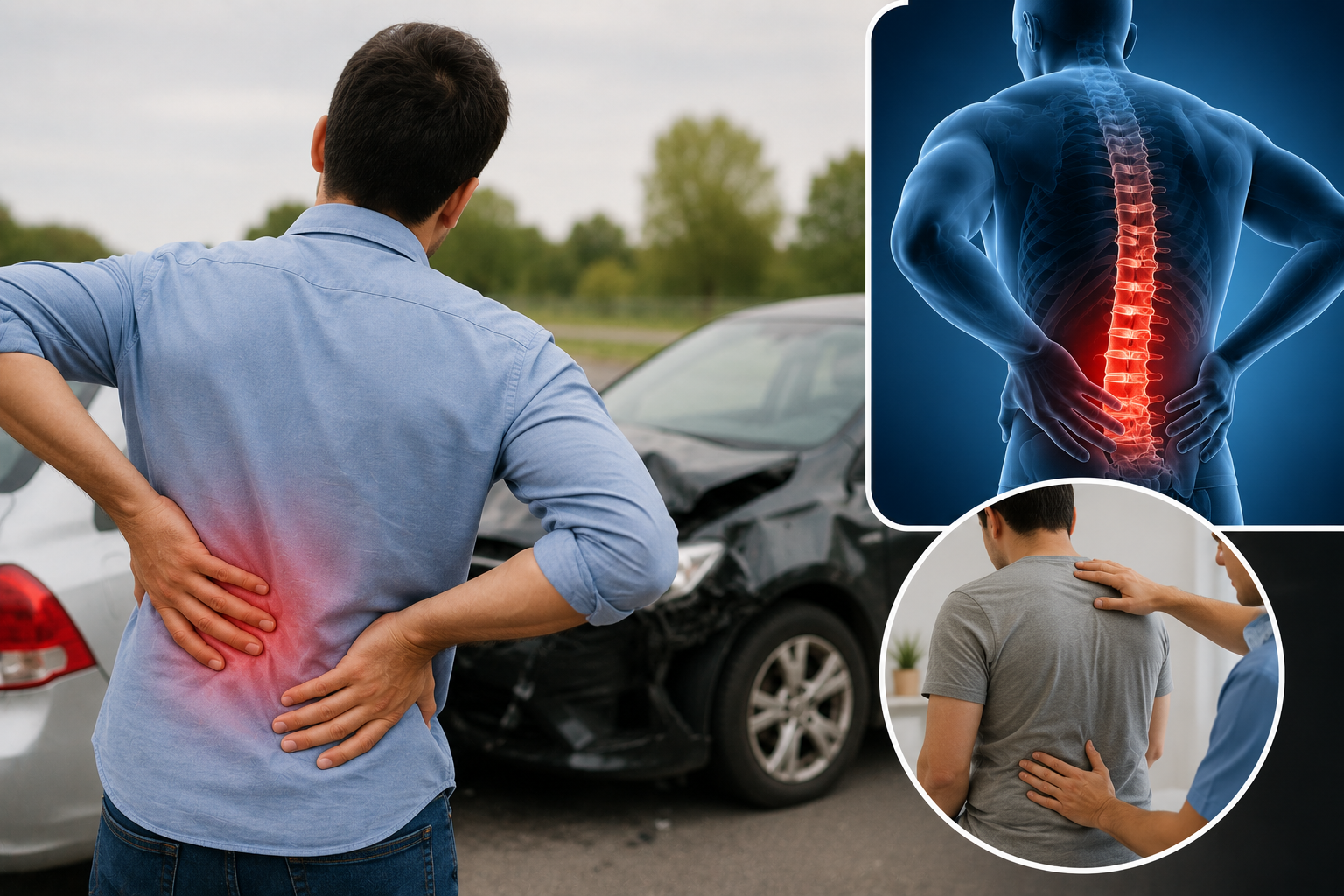
Car accident back pain affects a large share of collision survivors, even in crashes that look minor from the outside. You may feel fine at the scene, only to wake up the next day stiff, sore, or unable to bend without a jolt of pain in your lower back. This guide explains why that happens, which symptoms mean you should see a doctor right away, and what treatment paths actually help you recover.
By the end, you’ll know how to tell a normal ache from a warning sign, and how to choose the right type of care for your specific injury.
Key Takeaways
- Persistent low back pain is reported by at least 31% of people one year after a motor vehicle collision, according to a 2020 systematic review published on PubMed.
- The National Highway Traffic Safety Administration reports more than 2.3 million people are injured in U.S. motor vehicle crashes each year, with neck and back injuries among the most common.
- Back pain often appears hours to several days after a crash because adrenaline and inflammation delay the sensation of pain.
- Whiplash, herniated discs, muscle strains, and spinal misalignment are the most frequent causes of post-crash back pain.
- A same-week medical evaluation creates a documented link between the crash and your injury, which matters for both treatment and any insurance claim.
- Most uncomplicated soft-tissue back injuries improve within six weeks to three months with proper care.
What Causes Back Pain After a Car Accident?
A car crash forces your body through rapid, unnatural motion in a fraction of a second. Even at low speed, this can strain the muscles, ligaments, discs, and joints that support your spine.
The direction of impact changes the type of injury:
- Rear-end collisions snap the body forward and back, straining the lower back and neck (whiplash).
- T-bone (side-impact) crashes twist the spine laterally, which can cause sprains, strains, or disc injuries.
- Rollover or high-speed crashes carry enough force to fracture vertebrae or damage spinal discs directly.
Pro Tip: Low-speed fender benders can still cause real spinal injury. Vehicle damage does not reliably predict how much force your spine absorbed, so don’t judge your injury by how your car looks.
How Common Is Back Pain After a Car Accident?
Back pain after car accident cases are far more common than most people expect, and the data backs this up.
- A systematic review and meta-analysis found that persistent low back pain affects at least 31% of people one year after a motor vehicle collision.
- NHTSA data shows more than 2.3 million people are injured annually in U.S. motor vehicle crashes, with neck and back injuries among the most frequently reported.
- Clinical research from the University of North Carolina at Chapel Hill notes that 10% to 30% of adults develop chronic neck or back pain after a minor motor vehicle collision.
These figures explain why doctors and physical therapists treat car accident back pain as a distinct, well-studied category of injury rather than routine soreness.
Why Does Back Pain Sometimes Appear Days Later?
Delayed back pain after accident cases are common, and there’s a physiological reason for it.
During a crash, your body releases adrenaline and stress hormones that temporarily blunt pain signals. Once those hormones subside over the following hours and days, symptoms you didn’t notice at the scene start to surface.
Inflammation adds a second layer to the delay. When soft tissue is injured, swelling builds gradually, often peaking 24 to 72 hours after the crash. A disc that was jarred but not immediately painful can also start pressing on a nerve as inflammation increases, producing pain that seems to come out of nowhere a week or two later.
Warning: Don’t assume you’re unhurt just because you felt fine at the scene. Delayed pain is one of the most common reasons people miss the early treatment window that helps prevent chronic injury.
Types of Back Injuries From Car Accidents
Not all car accident back pain comes from the same source. Common diagnoses include:
- Whiplash-associated back strain — soft tissue injury from the same whip-like motion that injures the neck.
- Muscle and ligament strains — overstretched or torn tissue from sudden bracing.
- Herniated or bulging discs — spinal discs pushed out of place, sometimes compressing a nearby nerve.
- Facet joint injury — small joints between vertebrae become inflamed or misaligned.
- Vertebral fractures — less common, but possible in higher-speed or severe crashes.
Signs Your Injury May Involve a Disc or Nerve
- Pain that radiates down one leg (sciatica-type pain)
- Numbness or tingling in the legs or feet
- Weakness when standing, walking, or gripping with your foot
Warning Signs That Your Back Pain Is Serious
Most car accident back pain is treatable soft-tissue injury, but certain symptoms need same-day medical attention:
- Numbness, tingling, or weakness in your legs or feet
- Loss of bladder or bowel control
- Pain that worsens rapidly instead of gradually improving
- Fever combined with back pain (possible infection, rare but serious)
- Pain following a high-speed crash, rollover, or any loss of consciousness
If any of these apply to you, go to an emergency room or urgent care immediately rather than waiting for a scheduled appointment.
Treatment Options Compared
There is no single “best” treatment for car accident back pain — the right option depends on the type and severity of your injury. Here’s how the main care paths compare.
| Care Option | Best For | Typical Cost Range | Standout Feature | Consideration |
| Emergency Room | Severe pain, numbness, suspected fracture | Highest (varies by insurance) | Immediate imaging and diagnosis | Not designed for ongoing rehab |
| Primary Care Physician | Initial evaluation, referrals | Moderate | Coordinates your overall care | May require a wait for specialist referral |
| Physical Therapist | Muscle strain, mobility loss, post-injury rehab | Moderate, often covered by insurance | Builds strength and range of motion | Requires consistent multi-week attendance |
| Chiropractor | Joint misalignment, muscle tension | Moderate | Manual adjustment and mobility work | Not appropriate for confirmed fractures |
| Orthopedic Spine Specialist | Herniated discs, nerve involvement, no improvement after weeks | Higher | Advanced imaging and surgical evaluation if needed | Usually reached via referral |
Pro Tip: Many people start with a primary care physician or urgent care visit for diagnosis, then get referred to physical therapy, chiropractic care, or an orthopedic spine specialist based on what the imaging shows.
How to Choose the Right Type of Care?
Matching your symptoms to the right provider speeds up recovery and avoids wasted appointments.
Start With Diagnosis, Not Treatment
Before committing to chiropractic care, physical therapy, or any hands-on treatment, get a proper diagnosis. An X-ray or MRI can rule out fractures and identify disc involvement, which changes the safest treatment path.
Match the Provider to the Injury
- Muscle and ligament strain: physical therapy is usually the first-line treatment.
- Joint stiffness without nerve symptoms: chiropractic care can help restore mobility.
- Numbness, tingling, or radiating pain: an orthopedic spine specialist or neurologist should evaluate you before starting manual therapy.
- Pain that hasn’t improved in 4–6 weeks: ask your doctor about a referral to a pain management specialist.
Hypothetical Example (for illustration purposes)
A driver in a rear-end collision feels only mild neck stiffness at the scene. Four days later, she develops sharp lower back pain that worsens when sitting. Her primary care doctor orders an MRI, which reveals a mildly bulging disc. She begins physical therapy focused on core stability and reports significant improvement within six weeks. Note: This scenario is illustrative. Actual results vary by injury severity, treatment timing, and individual health factors.
What to Expect During Recovery
Recovery timelines vary, but most uncomplicated soft-tissue back injuries follow a general pattern:
- First 72 hours: Inflammation peaks; rest, ice, and gentle movement are typically recommended.
- 1–6 weeks: Active treatment phase — physical therapy, chiropractic care, or prescribed exercises begin restoring function.
- 6 weeks–3 months: Most uncomplicated injuries substantially improve, though some residual stiffness can remain.
Because roughly a third of people still report low back pain a full year after a collision, sticking with a full course of treatment — not stopping once acute pain fades — matters for long-term outcomes.
FAQ
Q: How long does back pain last after a car accident?
A: Mild strains often improve within a few weeks. More significant injuries, like herniated discs, can take three months or longer, and about 31% of people report pain persisting at one year.
Q: Is back pain two weeks after a car accident normal?
A: Yes, delayed onset is common because adrenaline and inflammation mask early symptoms. Two-week-old pain still warrants a medical evaluation to confirm the cause.
Q: What kind of back injury can a car accident cause?
A: Common injuries include muscle strains, whiplash-related back pain, herniated or bulging discs, facet joint injuries, and, in severe crashes, vertebral fractures.
Q: Should I see a doctor for mild back pain after a car accident?
A: Yes. Even mild pain can indicate a soft-tissue or disc injury, and early evaluation improves treatment outcomes and documents the injury’s cause.
Q: Can a car accident cause permanent back damage?
A: In some cases, yes — particularly with untreated herniated discs or nerve compression. Prompt diagnosis and consistent treatment reduce this risk.
Q: How do I know if my back pain after an accident is serious?
A: Seek immediate care if you have numbness, leg weakness, radiating pain, or loss of bladder or bowel control. These can signal nerve or spinal involvement.
Q: Does insurance cover back pain treatment after a car accident?
A: Coverage depends on your policy type and state, including whether you have personal injury protection (PIP) or med-pay coverage. Check with your insurer or a licensed professional for guidance specific to your situation.
Conclusion
Car accident back pain is common, often delayed, and treatable when addressed early. Understanding your symptoms, watching for warning signs, and matching your care to the type of injury gives you the best chance at a full recovery.
If your back pain hasn’t improved, or you’re noticing new symptoms, don’t wait — schedule an evaluation with a qualified provider this week.