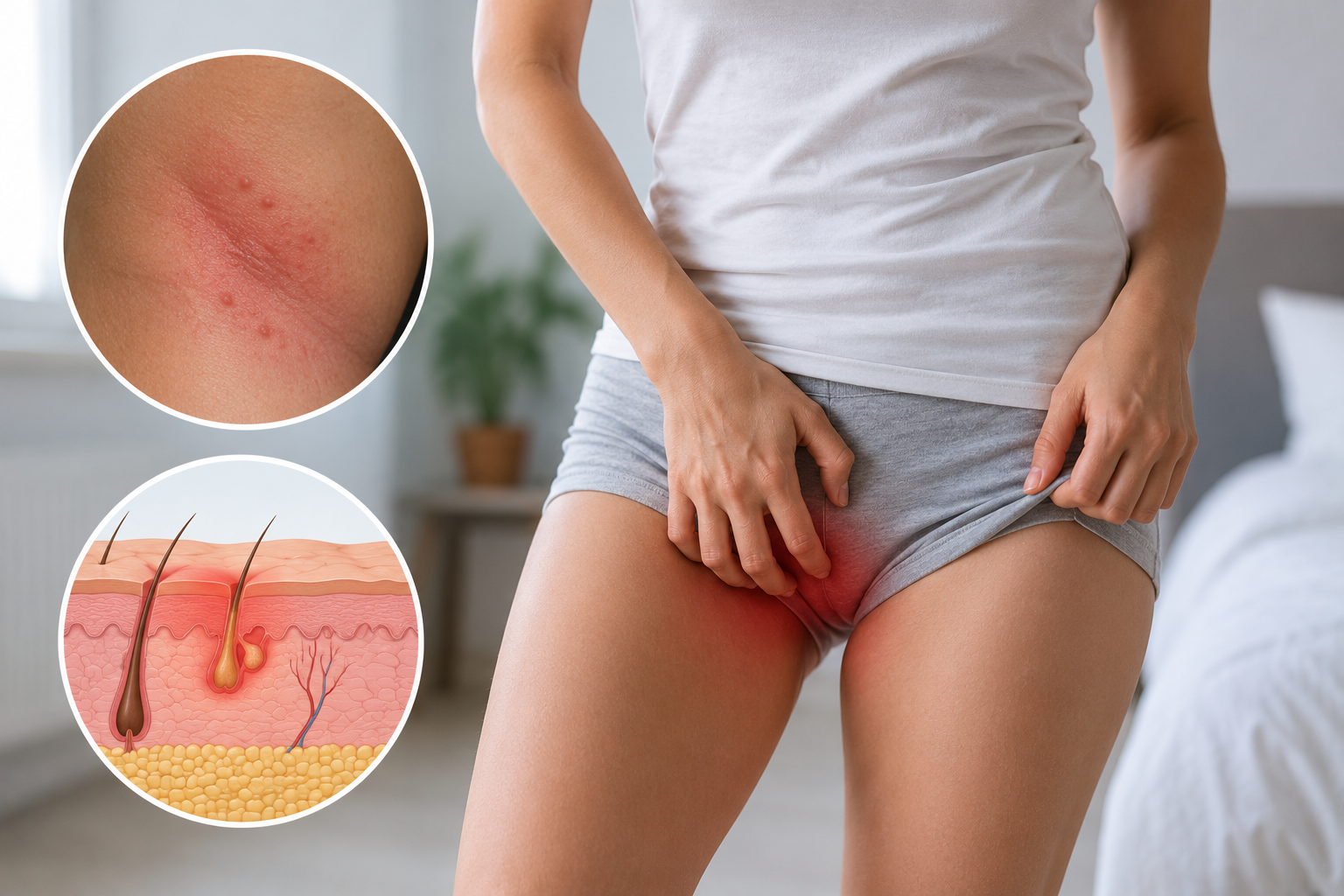
The skin on the itchy inner thighs is sensitive and often exposed to sweat, friction, and heat. These factors can make the area more likely to become irritated, especially during warm weather or physical activity.
Conditions such as chafing, fungal infections, eczema, allergies, and dry skin are among the most common reasons people develop itchy inner thighs.The good news is that most causes are treatable with proper skin care, home remedies, or medications when necessary.
In this article, you will learn about the symptoms, causes, risk factors, diagnosis, treatment options, home remedies, and prevention tips for itchy inner thighs in easy-to-understand language.
What Are Itchy Inner Thighs?
Itchy inner thighs refer to an uncomfortable sensation that creates the urge to scratch the skin on the inside of your upper legs. The itching may affect one thigh or both and can occur with or without a visible rash. Depending on the underlying cause, the discomfort may be mild and temporary or severe and long-lasting.
The inner thighs experience frequent contact with each other while walking or exercising. This repeated friction, combined with sweat and moisture, makes the skin more vulnerable to irritation. Although itchy inner thighs are often harmless, persistent itching should not be ignored because it may indicate a fungal infection, eczema, allergic reaction, or another medical condition.
Common Symptoms of Itchy Inner Thighs
The symptoms of itchy inner thighs vary depending on what is causing the irritation. Some people only notice mild itching, while others may develop painful rashes or inflamed skin.
Common symptoms include:
- Persistent itching or irritation
- Redness of the skin
- Burning or stinging sensation
- Dry, rough, or flaky patches
- Skin peeling
- Small bumps or blisters
- Swelling around the affected area
- Cracked skin due to excessive scratching
- Tenderness or soreness
- Rash that spreads gradually
What Causes Itchy Inner Thighs?
There are many possible causes of itchy inner thighs. Some are related to everyday habits, while others result from skin conditions or infections. Identifying the exact cause helps determine the most effective treatment.
Chafing
Chafing is one of the leading causes of itchy inner thighs. It occurs when the skin repeatedly rubs against itself or clothing, creating friction. This problem is especially common among athletes, people with larger thighs, and individuals who spend long periods walking or running.
The affected skin often becomes red, tender, and irritated. If friction continues, the skin may crack, making it more painful and increasing the risk of infection.
Jock Itch
Jock itch is a fungal infection that commonly affects the groin and inner thighs. It develops when fungi grow in warm, moist environments, making sweaty skin an ideal place for infection.
People with jock itch usually notice an itchy red rash with clearly defined borders. The itching may become worse after exercising or sweating. Without treatment, the infection can spread to nearby areas.
Heat Rash
Heat rash develops when sweat becomes trapped beneath the skin because sweat glands become blocked. This often occurs during hot and humid weather or after intense physical activity.
The rash typically consists of tiny red bumps accompanied by itching or a prickly sensation. Keeping the skin cool and dry usually helps the rash improve within a few days.
Dry Skin
Dry skin is another common reason for itchy inner thighs, especially during winter or in dry climates. When the skin loses moisture, it becomes rough, flaky, and irritated.
Frequent hot showers, harsh soaps, and low humidity can make dry skin worse. Applying moisturizer regularly often provides significant relief.
Eczema
Eczema is a chronic inflammatory skin condition that causes intense itching, dryness, and redness. Although it commonly affects the arms and legs, it can also appear on the inner thighs.
Flare-ups may occur due to stress, allergens, sweating, or irritating skincare products. Managing eczema usually requires regular moisturizing and avoiding known triggers.
Risk Factors That Increase Your Chances
Not everyone develops itchy inner thighs under the same circumstances. Certain factors make some individuals more likely to experience skin irritation, infections, or inflammation in this sensitive area.
Several lifestyle habits, environmental conditions, and medical issues can increase the likelihood of developing itchy inner thighs.
| Risk Factor | How It Increases the Risk |
| Hot and humid weather | Increases sweating and moisture buildup |
| Excess body weight | Causes more skin-to-skin friction |
| Regular exercise | Produces sweat that irritates the skin |
| Tight clothing | Traps heat and moisture |
| Poor hygiene | Encourages fungal and bacterial growth |
| Diabetes | Raises the risk of skin infections |
| Weak immune system | Makes infections more likely |
| Sensitive skin | Reacts more easily to irritants and allergens |
How Are Itchy Inner Thighs Diagnosed?
Identifying the exact cause of itchy inner thighs is important because the treatment depends on what is causing the itching. While mild cases caused by friction or dry skin can often be managed at home, persistent or severe symptoms may require a medical evaluation. A doctor will usually diagnose the condition through a physical examination and, if necessary, additional tests.
During the examination, the doctor checks the affected skin for redness, rashes, swelling, blisters, peeling, or signs of infection. They may also ask about your symptoms, daily activities, medical history, allergies, and any new soaps, detergents, or skincare products you have recently used. If a fungal infection is suspected, a small skin scraping may be taken and examined under a microscope. In rare cases where the diagnosis is unclear, allergy testing or a skin biopsy may be recommended to identify the underlying condition.
Treatment Options for Itchy Inner Thighs
The treatment for itchy inner thighs depends on the underlying cause. Mild irritation often improves with simple skincare, while infections or chronic skin conditions may require medication. Starting treatment early usually helps relieve discomfort more quickly and prevents complications.
Common treatment options include:
- Antifungal creams: Used to treat fungal infections such as jock itch. These medications eliminate the fungus and reduce redness and itching.
- Corticosteroid creams: Help reduce inflammation caused by eczema, allergic reactions, or contact dermatitis.
- Moisturizers: Fragrance-free creams and ointments restore the skin barrier and are especially helpful for dry skin.
- Antihistamines: These medications may reduce itching caused by allergic reactions and can also improve sleep if itching is worse at night.
- Antibiotics: If scratching has led to a bacterial infection, antibiotics may be needed to clear the infection.
Lifestyle changes are also an important part of treatment. Wearing loose cotton clothing, keeping the skin clean and dry, changing sweaty clothes after exercise, and avoiding harsh skincare products can speed up healing and reduce future flare-ups.
Home Remedies to Relieve Itchy Inner Thighs
Many people find relief from itchy inner thighs by following simple home care measures. These remedies are most effective when symptoms are mild and there are no signs of a serious infection.
Helpful home remedies include:
- Wash the affected area daily with mild soap and lukewarm water.
- Dry the skin thoroughly after bathing or sweating.
- Wear breathable cotton or moisture-wicking clothing.
- Apply fragrance-free moisturizer to prevent dryness.
- Use petroleum jelly or an anti-chafing balm before walking or exercising.
- Apply a cold compress for 10 to 15 minutes to reduce itching and inflammation.
- Avoid scratching because it can damage the skin and increase the risk of infection.
- Change out of damp clothing as soon as possible after exercise.
Following these simple habits consistently can reduce irritation and help the skin heal more quickly.
How to Prevent Itchy Inner Thighs
Preventing itchy inner thighs is often easier than treating them. Good hygiene, proper clothing, and healthy skincare habits help reduce friction, moisture, and irritation.
The table below summarizes effective prevention tips.
| Prevention Tip | Benefit |
| Keep the skin clean and dry | Prevents fungal and bacterial growth |
| Wear loose, breathable clothing | Reduces heat and friction |
| Use anti-chafing products | Protects the skin during exercise |
| Moisturize daily | Prevents dry and irritated skin |
| Change sweaty clothes promptly | Reduces moisture buildup |
| Avoid harsh soaps and fragrances | Lowers the risk of allergic reactions |
| Maintain a healthy weight | Decreases skin-to-skin rubbing |
Making these habits part of your daily routine can significantly lower the chances of developing itchy inner thighs.
When Should You See a Doctor?
Although many cases improve with home treatment, medical attention is necessary if the symptoms become severe or do not improve. Persistent itching may indicate an infection or another condition that requires professional treatment.
You should see a doctor if:
- The itching lasts longer than two weeks.
- The rash spreads or becomes more painful.
- Pus, swelling, or fever develops.
- The skin cracks or bleeds from scratching.
- Over-the-counter treatments do not provide relief.
- The itching repeatedly returns.
Early diagnosis can prevent complications and help you recover more quickly.
Possible Complications of Untreated Itchy Inner Thighs
Leaving itchy inner thighs untreated may lead to additional skin problems. Continuous scratching can break the skin and increase the risk of bacterial infections. Some people may also develop thickened skin, dark or light patches after healing, or permanent scars if the irritation is severe.
Recurring fungal infections are another possible complication, especially if the original infection is not completely treated or preventive measures are ignored. Seeking treatment early and following good skincare practices greatly reduces the risk of these complications.
Frequently Asked Questions (FAQs)
What causes itchy inner thighs without a rash?
Dry skin, sweating, friction, mild allergies, or irritation from clothing can cause itching even when no visible rash is present.
Is jock itching the only cause of itchy inner thighs?
No. Chafing, eczema, contact dermatitis, dry skin, psoriasis, heat rash, and bacterial infections can also cause itching.
Can sweating make inner thighs itch?
Yes. Sweat creates moisture that increases friction and encourages fungal growth, making itching more likely.
What cream is best for itchy inner thighs?
The best cream depends on the cause. Moisturizers help dry skin, antifungal creams treat fungal infections, and steroid creams reduce inflammation caused by eczema or allergies.
Are itchy inner thighs contagious?
The itching itself is not contagious, but fungal infections like jock itch can spread through direct contact or shared personal items.
How long does it take for itchy inner thighs to heal?
Mild irritation often improves within a few days, while fungal infections may require several weeks of treatment.
Can itchy inner thighs be prevented?
Yes. Keeping the area clean and dry, wearing breathable clothing, reducing friction, and maintaining good hygiene can help prevent most cases.
Conclusion
Itchy inner thighs are a common skin concern that can result from friction, sweating, dry skin, allergies, fungal infections, or other skin conditions. While many cases improve with proper home care, persistent or severe symptoms should be evaluated by a healthcare provider to identify the underlying cause.
Practicing good hygiene, wearing breathable clothing, moisturizing regularly, and avoiding prolonged moisture can help prevent irritation and keep the skin healthy.
Related Posts
Can a DEXA Scan Show Cancer? What It Can and Cannot Detect
Does a Urinary Tract Infection Cause Bloating? Causes, Symptoms, and When to See a Doctor
Can Heartburn Cause Back Pain? Causes, Symptoms, Treatment, and When to Worry
How to Relieve Neck Pain from Sleeping Wrong: Effective Treatments, Stretches, and Prevention Tips
Can Sleep Deprivation Cause Headaches? Causes, Symptoms, Treatment & Prevention