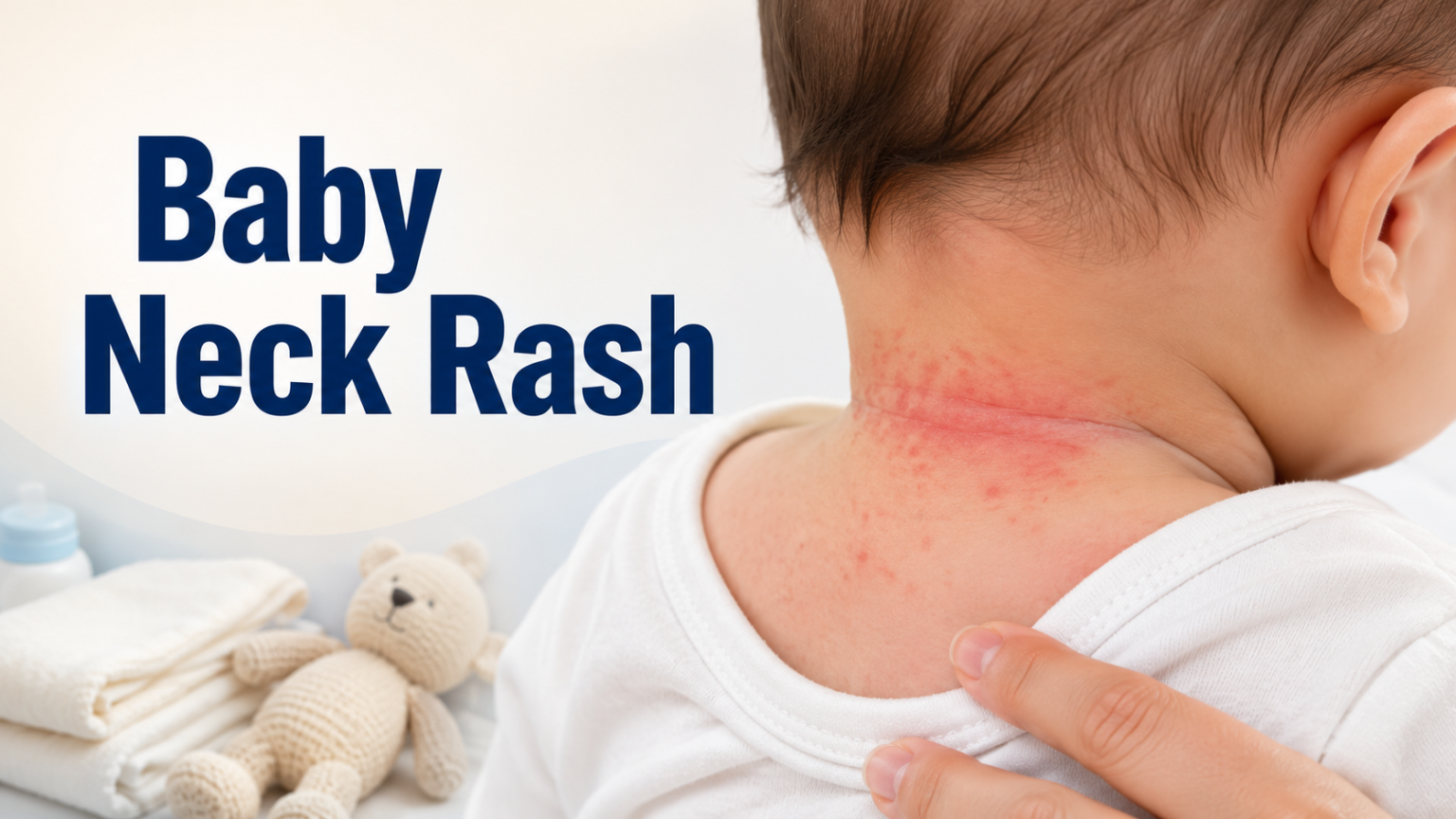
A baby neck rash is one of the most common skin concerns new parents notice during the first year of life. The soft folds around a baby’s neck trap moisture, milk, drool, and sweat, which makes this area especially sensitive to irritation.
In most cases, a baby neck rash looks worse than it actually is and clears up quickly with simple home care. However, understanding the different causes helps parents respond correctly and know when a rash needs medical attention rather than home remedies alone.
Key Takeaways
Baby neck rash is usually caused by trapped moisture, friction, or minor infections in the neck folds. Most cases improve within a few days using proper cleaning and drying techniques. Persistent, spreading, or painful rashes should always be checked by a pediatrician.
What Is Baby Neck Rash?
Baby neck rash refers to any redness, bumps, or irritated patches that develop in the folds of a baby’s neck. This area is naturally warm, moist, and covered by soft skin creases, making it an easy target for friction and bacterial or fungal growth.
Why the Neck Area Is Prone to Rashes
Babies, especially newborns, often have chubby necks with deep folds that stay hidden from air circulation. Milk, drool, sweat, and lint can collect in these creases throughout the day. Since the skin barrier in infants is thinner than in adults, it reacts faster to trapped moisture and friction, leading to visible irritation.
Common Causes of Baby Neck Rash
Several different skin issues can appear in the neck folds, and each one has a distinct trigger. Recognizing which type of rash your baby has makes it easier to choose the right care approach.
Drool Rash
Drool rash develops when saliva sits on the skin for long periods, breaking down its natural protective barrier. Babies who are teething or going through a drooling phase are especially prone to this. The rash typically looks like light redness or chapped skin concentrated where drool pools.
Heat Rash (Miliaria)
Heat rash occurs when sweat glands become blocked, trapping perspiration under the skin. It commonly appears as small, red, or clear bumps, especially during hot weather or when a baby is overdressed. Keeping the baby cool and dry usually resolves it within a day or two.
Intertrigo (Skin Fold Friction)
Intertrigo happens when two skin surfaces rub against each other in a warm, moist environment. The constant friction combined with trapped sweat leads to redness, soreness, and sometimes a raw appearance. It is one of the most frequent causes of neck fold irritation in infants.
Yeast or Fungal Infection (Candida)
When moisture stays trapped for too long, yeast such as Candida can overgrow in the folds. This type of rash tends to look bright red, slightly raised, and may have small satellite spots spreading outward. It often requires an antifungal cream rather than moisturizer alone.
Eczema or Seborrheic Dermatitis
Some babies have a genetic tendency toward eczema or seborrheic dermatitis, which can appear on the neck along with other areas like the scalp or cheeks. These rashes usually look scaly, dry, or slightly yellowish and may come and go over time.
Allergic Reactions
Certain fabrics, laundry detergents, or baby lotions can trigger contact allergies. An allergic rash usually appears suddenly after exposure to a new product and may be accompanied by mild itching or swelling.
Signs and Symptoms to Watch For
Most baby neck rashes are mild and limited to redness or slight dryness in the fold area. Parents should also learn to distinguish ordinary irritation from symptoms that suggest infection or a more serious skin condition.
Mild Irritation vs. Signs of Infection
Mild irritation typically involves light redness, dryness, or small bumps without pain. Signs of infection, on the other hand, include oozing, a foul odor, increasing swelling, or a baby who seems uncomfortable or feverish. If any of these infection signs appear, a pediatrician visit is recommended rather than continuing home treatment.
How Baby Neck Rash Is Diagnosed
In most cases, a pediatrician can identify the type of rash simply by examining the skin and asking about recent changes in products, weather, or feeding habits. If the rash does not respond to basic care or looks unusual, the doctor may take a skin swab to check for a fungal or bacterial infection before recommending targeted treatment.
Comparison Table: Types of Neck Rash at a Glance
| Rash Type | Typical Appearance | Common Duration | Recommended Care |
| Drool Rash | Mild redness, chapped skin | 2–4 days | Keep dry, use barrier cream |
| Heat Rash | Small red or clear bumps | 1–3 days | Cool environment, light clothing |
| Intertrigo | Red, raw, sore folds | 3–5 days | Dry thoroughly, reduce friction |
| Yeast Infection | Bright red with satellite spots | 1–2 weeks | Antifungal cream from doctor |
| Eczema/Seborrheic Dermatitis | Scaly, dry, yellowish patches | Weeks to months (recurring) | Moisturizer, doctor-guided treatment |
| Allergic Reaction | Sudden redness, mild swelling | Until trigger is removed | Identify and remove allergen |
Home Care and Treatment Options
Caring for a baby neck rash at home usually focuses on reducing moisture and friction while protecting the skin barrier. Simple daily habits often resolve mild rashes without any medication.
Keeping the Area Clean and Dry
Gently wipe the neck folds with a soft, damp cloth during baths or after feeding sessions, then pat the area completely dry rather than rubbing it. Moisture left behind is the main reason mild rashes turn into more stubborn irritation.
Safe Moisturizers and Barrier Creams
A thin layer of fragrance-free moisturizer or zinc oxide barrier cream can protect the skin from further friction and moisture exposure. These products should be applied sparingly so they do not add extra buildup inside the folds.
When to Use Antifungal or Medicated Creams
If the rash looks bright red with small surrounding spots or does not improve after a few days of basic care, an antifungal cream prescribed by a pediatrician may be necessary. Medicated creams should only be used under professional guidance, especially for infants under one year old.
Prevention Tips
Preventing baby neck rash mainly involves reducing the amount of moisture and friction that builds up in the neck folds throughout the day.
Clothing and Swaddling Adjustments
Loose, breathable cotton clothing allows air to reach the neck area and reduces trapped heat. Avoid tight collars or swaddles that press directly against the neck folds for long periods.
Managing Drool and Feeding Spills
Wiping drool and milk spills promptly after feeding sessions prevents saliva and formula from sitting on the skin. Using a soft bib can also help absorb excess moisture before it reaches the neck.
Temperature and Humidity Control
Keeping the room at a comfortable temperature and avoiding overdressing helps prevent sweat buildup. In warmer climates, lightweight fabrics and frequent fold checks can make a noticeable difference.
When to See a Pediatrician
While most baby neck rashes clear up with simple care, certain symptoms call for a professional evaluation instead of continued home treatment.
Red Flag Symptoms
Parents should schedule a pediatric visit if the rash oozes fluid, develops a foul smell, spreads rapidly, or is accompanied by fever or visible pain. These symptoms may indicate a bacterial or fungal infection that requires prescription treatment rather than over-the-counter care.
Hypothetical Case Study
The following is a hypothetical scenario for illustrative purposes only and does not represent an actual patient.
Consider a three-month-old whose parents noticed persistent redness in the neck folds despite regular cleaning. After a pediatrician examination, the rash was identified as a mild yeast infection due to trapped moisture from frequent spit-up. A short course of antifungal cream combined with more frequent drying resolved the irritation within ten days.
Frequently Asked Questions
Is baby neck rash contagious? No, most causes of baby neck rash, such as heat rash or drool rash, are not contagious and result from moisture or friction rather than an infectious source.
Can I use baby powder on neck rash? Baby powder is generally not recommended, since it can clump inside the folds and worsen irritation rather than absorb moisture effectively.
How long does baby neck rash usually last? Mild cases often improve within two to five days with proper drying and gentle care, while fungal or eczema-related rashes may take longer.
Should I stop bathing my baby if they have a neck rash? Regular gentle bathing followed by thorough drying is usually recommended, as it helps remove residue that contributes to the rash.
When should I worry about a neck rash? Seek medical attention if the rash oozes, smells unusual, spreads quickly, or is paired with fever or noticeable discomfort.
Conclusion
Baby neck rash is a common and usually manageable skin concern caused by trapped moisture, friction, or minor infections in the neck folds.
Identifying the specific type of rash allows parents to apply the right home care, from simple drying techniques to antifungal treatment when needed.
Most cases resolve quickly, but persistent or infected-looking rashes should always be evaluated by a pediatrician to ensure proper treatment.
Related Articles
Heart Attack Misdiagnosis Attorney: What to Know Before You Call One
5 Reasons to Stop CPR: When and Why It’s Necessary
Insect Bite Scar: Causes, Removal Options & Prevention Tips
Roof of the Mouth Swollen: Causes, Symptoms, Treatments, and Prevention Guide
EZ Gel Under Eye: A Complete Guide to Natural Under-Eye Rejuvenation