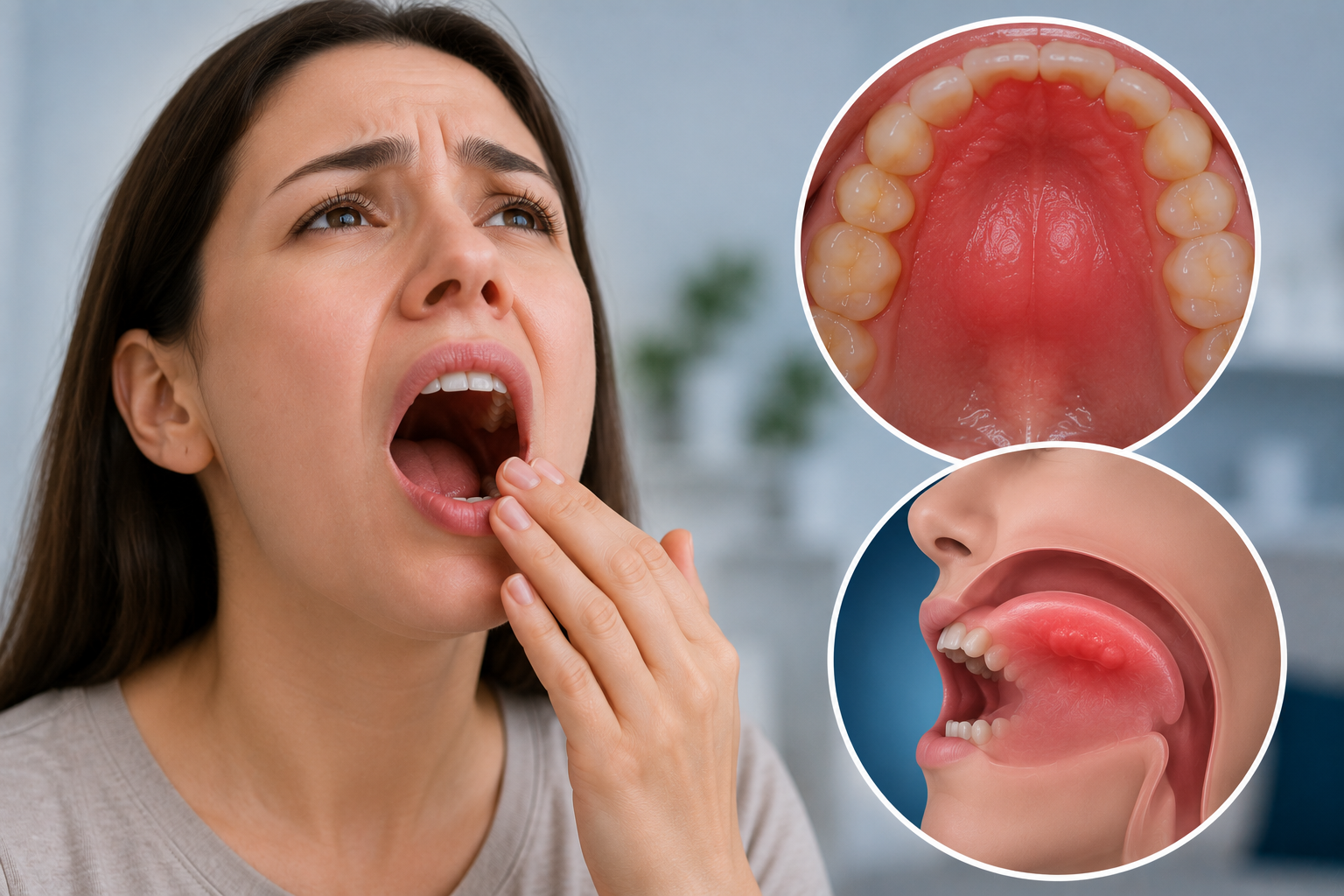
Having the roof of the mouth swollen can be uncomfortable and sometimes painful. You may notice tenderness while eating, drinking, or even speaking. In many cases, the swelling is caused by something simple, such as eating food that is too hot or accidentally injuring the inside of your mouth.
The roof of the mouth is made up of sensitive tissues that can easily become irritated. Even minor burns from hot pizza or coffee can cause swelling that lasts for several days. Other conditions, such as mouth ulcers, oral thrush, dehydration, or viral infections, may also lead to inflammation.
This guide explains the structure of the roof of the mouth, common causes of swelling, symptoms to watch for, treatment options, prevention tips, and when it is time to seek medical advice.
What Is a Swollen Roof of the Mouth?
A roof of mouth swollen means that the tissues on the upper part of the mouth have become enlarged, inflamed, or irritated. The swelling may affect the hard palate at the front, the soft palate toward the back, or sometimes both areas. Depending on the underlying cause, the swelling can appear suddenly or develop gradually over several days.
Some people experience only mild tenderness, while others notice redness, burning, soreness, or difficulty eating and swallowing. The swelling may occur by itself or alongside other symptoms such as mouth sores, white patches, fever, or swollen glands. In many situations, the condition is temporary and heals without complications. However, recurring or long-lasting swelling should always be evaluated by a healthcare professional to identify the exact cause and begin appropriate treatment.
Although the condition can affect people of all ages, maintaining good oral hygiene and avoiding common irritants can significantly reduce the risk of developing a roof of the mouth.
Anatomy and Function of the Roof of the Mouth
The roof of the mouth plays an important role in speaking, chewing, swallowing, and protecting the nasal cavity. It is divided into two different sections, each with its own structure and function. Understanding these parts can make it easier to recognize where the swelling is located and what might be causing it.
Hard Palate
The hard palate forms the front two-thirds of the roof of the mouth. It is made of bone and covered with a layer of soft tissue called mucosa. Because of its firm structure, it provides support while chewing and helps separate the mouth from the nasal cavity.
Even though it is relatively strong, the hard palate is still covered with delicate tissues that can be damaged by burns, injuries, or infections. Eating extremely hot foods, biting into sharp chips, or consuming acidic foods may irritate this area and result in a roof of mouth swollen.
Soft Palate
The soft palate is the flexible section located behind the hard palate. Unlike the front portion, it does not contain bone. Instead, it is made up of muscles and connective tissues that move during swallowing and speaking.
When you swallow food or liquids, the soft palate rises to close off the nasal passages. This action prevents food from entering the nose and helps direct it safely into the throat. The soft palate also contributes to speech by controlling airflow and producing certain sounds.
Functions of the Roof of the Mouth
The roof of the mouth performs several essential functions that people often take for granted. Without it, normal eating and speaking would become much more difficult.
Some of its primary functions include:
| Function | Why It Is Important |
| Separates the mouth and nasal cavity | Prevents food and liquids from entering the nose during eating and drinking. |
| Assists with chewing | Provides a firm surface that helps the tongue break down food efficiently. |
| Supports swallowing | Guides food from the mouth toward the throat safely. |
| Helps produce speech | Works with the tongue to create clear pronunciation and proper airflow. |
| Protects oral tissues | Acts as a barrier between the mouth and surrounding structures. |
Common Causes of a Swollen Roof of the Mouth
A swollen roof of the mouth can develop for many different reasons. Sometimes the cause is minor and disappears within a few days, while other cases may require medical treatment. Understanding the possible causes can help you identify what might be triggering the swelling and whether you should seek professional care.
Burns from Hot Food or Drinks
One of the most common reasons for a roof of mouth swollen is eating or drinking something that is too hot. Foods like pizza, soup, coffee, or tea can burn the delicate tissues on the roof of the mouth. The affected area may become red, painful, and swollen shortly after the burn occurs.
Most minor burns heal within a week if you avoid hot, spicy, or acidic foods and allow the tissue to recover naturally.
Injury or Trauma
Accidentally scratching the roof of the mouth with hard foods, sharp chips, crusty bread, or a toothbrush can damage the soft tissues. Braces, dentures, or other dental appliances may also cause repeated irritation.
These injuries are usually mild, but keeping the area clean helps prevent infection and speeds up healing.
Mouth Ulcers and Cold Sores
Canker sores are small painful ulcers that can develop anywhere inside the mouth, including the roof. Cold sores caused by the herpes simplex virus may also affect this area. Both conditions can make the roof of the mouth swollen and tender until the sores heal.
Allergic Reactions
Some people experience swelling after eating foods such as nuts, shellfish, certain fruits, or other allergens. Medicines and dental products may also trigger allergic reactions inside the mouth.
If swelling is accompanied by difficulty breathing, swelling of the lips or tongue, or dizziness, immediate emergency medical attention is necessary.
Dehydration, Smoking, and Vitamin Deficiencies
Dry mouth caused by dehydration reduces the protective effects of saliva, making oral tissues more likely to become irritated. Smoking and excessive alcohol use further damage the lining of the mouth, while deficiencies of vitamins such as B12, folate, or iron may increase the risk of mouth inflammation.
Signs and Symptoms to Watch For
The symptoms of a roof of mouth swelling vary depending on the underlying cause. Some people notice only mild discomfort, while others experience significant pain.
Common symptoms include:
- Swelling on the hard or soft palate
- Pain or tenderness
- Redness
- Burning sensation
- Mouth sores or blisters
- White patches
- Difficulty chewing or swallowing
- Increased sensitivity to hot or spicy foods
- Bad breath
- Fever if an infection is present
Symptom Severity Guide
| Symptom | Possible Cause |
| Burning after hot food | Minor burn |
| White patches | Oral thrush |
| Painful ulcer | Canker sore |
| Swelling with itching | Allergy |
| Fever and sore throat | Infection |
| Persistent lump | Requires medical evaluation |
How a Swollen Roof of the Mouth Is Diagnosed?
Finding the exact reason for a roof of mouth swollen is important because treatment depends on the underlying cause. Doctors or dentists usually begin by asking about your symptoms, recent injuries, eating habits, medications, allergies, and overall health.
Next, they carefully examine the mouth to look for burns, ulcers, infections, cysts, or unusual growths. If an infection is suspected, a swab or blood test may be recommended. In rare cases where a suspicious lump does not heal, a biopsy may be performed to rule out serious conditions.
Most cases can be diagnosed through a physical examination without the need for extensive testing.
Treatment Options for a Swollen Roof of the Mouth
Treatment depends on what caused the roof of mouth swollen. Mild irritation often improves with simple home care, while infections or other medical conditions may require prescription medication.
Home Care
If the swelling is caused by a minor burn or injury, several simple measures can help reduce discomfort.
These include:
- Rinsing with warm salt water
- Drinking plenty of water
- Eating soft foods
- Avoiding spicy, acidic, and crunchy foods
- Sucking on ice chips
- Maintaining good oral hygiene
Medical Treatment
When home care is not enough, healthcare providers may recommend medications based on the diagnosis.
| Cause | Possible Treatment |
| Bacterial infection | Antibiotics |
| Oral thrush | Antifungal medication |
| Viral infection | Antiviral medication if appropriate |
| Allergic reaction | Antihistamines or emergency treatment |
| Pain and inflammation | Pain relievers or medicated mouth rinses |
If swelling is caused by a cyst, persistent growth, or another serious condition, additional procedures or specialist treatment may be necessary.
Home Remedies to Reduce Discomfort
Although home remedies cannot treat every cause, they often provide relief while the mouth heals.
Helpful remedies include:
- Gargling with warm salt water two to three times daily.
- Drinking cool water to soothe irritated tissues.
- Applying ice chips briefly to reduce swelling.
- Choosing soft foods like yogurt, oatmeal, mashed potatoes, and bananas.
- Avoiding smoking and alcohol until the mouth has healed.
Foods to Eat and Foods to Avoid
| Foods to Eat | Foods to Avoid |
| Yogurt | Spicy foods |
| Mashed potatoes | Hot drinks |
| Oatmeal | Citrus fruits |
| Bananas | Crunchy chips |
| Smoothies | Alcohol |
| Scrambled eggs | Tobacco products |
Possible Complications if Left Untreated
Most cases of a roof of mouth swollen heal without problems. However, ignoring persistent swelling may lead to worsening infection, difficulty eating, dehydration, chronic pain, or delayed diagnosis of more serious conditions. If swelling continues for more than one week or repeatedly returns, it should be evaluated by a healthcare professional.
How to Prevent a Swollen Roof of the Mouth
You can lower your risk by following healthy oral care habits.
- Brush and floss every day.
- Drink enough water to prevent dry mouth.
- Let hot foods cool before eating.
- Eat a balanced diet rich in vitamins.
- Avoid smoking and excessive alcohol.
- Visit your dentist regularly for routine checkups.
When to See a Doctor
Medical attention is recommended if:
- Swelling lasts longer than one week.
- Pain becomes severe.
- You have fever or pus.
- Swallowing becomes difficult.
- Breathing becomes difficult.
- A lump continues to grow.
- Swelling keeps returning.
Prompt evaluation helps identify serious conditions early and ensures appropriate treatment.
Frequently Asked Questions
Why is the roof of my mouth swollen?
Common causes include burns from hot food, injuries, infections, allergies, dehydration, mouth ulcers, and oral thrush.
How long does a swollen roof of the mouth last?
Minor irritation usually heals within three to seven days, while infections or other conditions may take longer depending on the cause.
Can allergies cause the roof of the mouth to swell?
Yes. Food allergies, medications, and environmental allergens can trigger swelling inside the mouth.
Is a swollen roof of the mouth serious?
Most cases are mild, but persistent swelling, severe pain, or difficulty breathing requires immediate medical attention.
What foods should I eat while recovering?
Soft foods such as yogurt, oatmeal, mashed potatoes, bananas, smoothies, and scrambled eggs are easier on irritated tissues.
Can dehydration cause a swollen roof of the mouth?
Yes. Dry mouth caused by dehydration makes oral tissues more vulnerable to irritation and inflammation.
When should I see a doctor?
Consult a healthcare provider if the roof of the mouth swollen does not improve within a week, keeps returning, or is accompanied by fever, severe pain, trouble swallowing, or difficulty breathing.
Conclusion
A roof of the mouth swollen is usually caused by minor issues such as burns, injuries, or infections and often improves within a few days with proper care.
However, persistent swelling, severe pain, or symptoms like fever or difficulty swallowing may indicate a more serious condition that requires medical attention.
Practicing good oral hygiene, staying hydrated, and avoiding irritants can help prevent many cases. If the swelling does not heal or keeps returning, consult a healthcare professional for an accurate diagnosis and appropriate treatment.
Related Posts
ASAP Health Max Immune Support Silver Supplement: Benefits, Dosage & Safety Guide
Spider Veins on Stomach: Causes, Risk Factors, and Treatment Options
Tooth Lesion: Types, Causes, and Treatment Options Explained
Ibuprofen Not Working on Fillings Pain: Causes, Relief, and When to See a Dentist
How to Get Rid of Numbness After Dentist: Causes, Remedies, and Recovery Tips