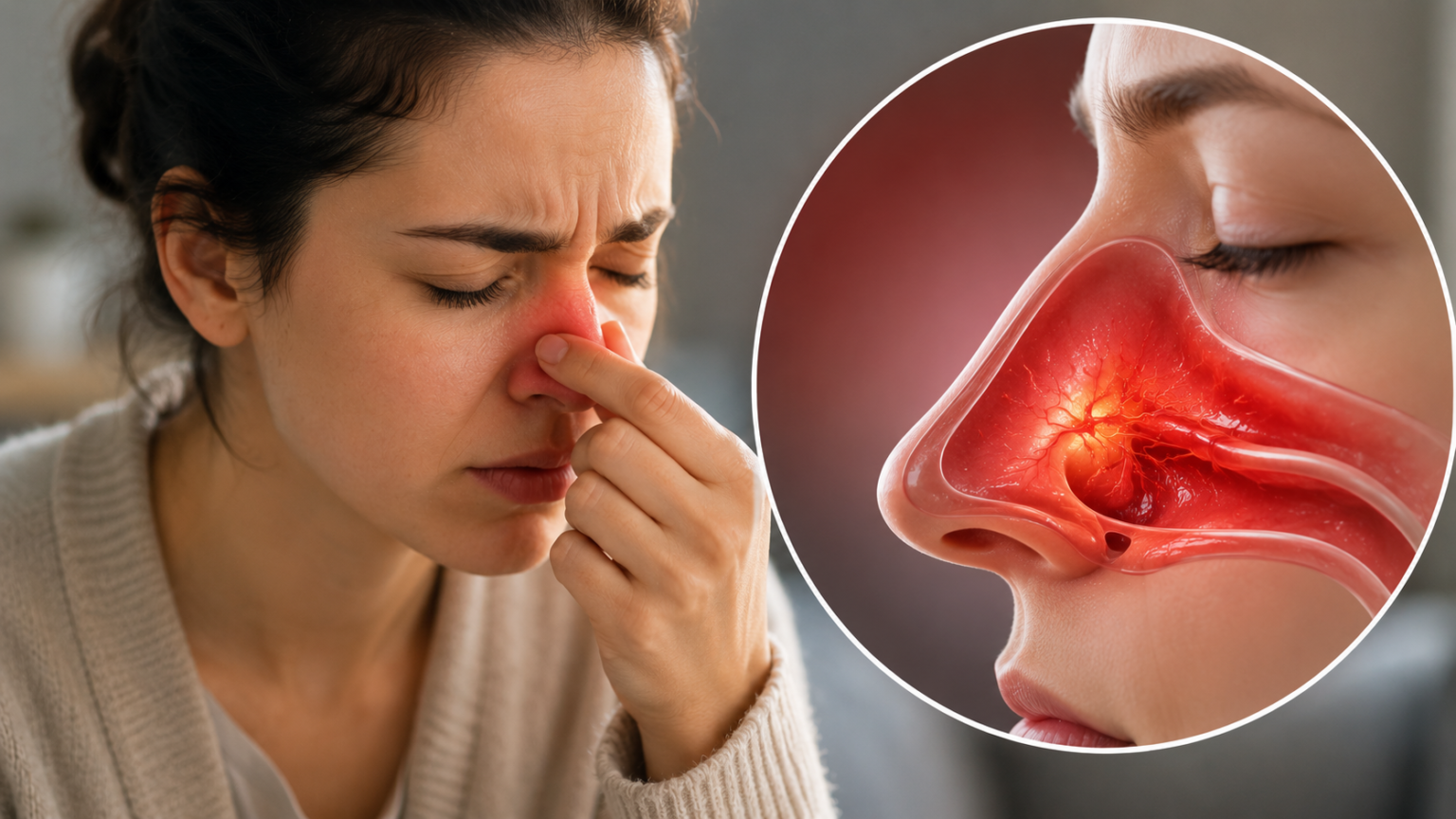
A burning feeling inside the nose can appear suddenly or build up slowly over a few days, leaving the nasal passages feeling raw and sore. Many people search for why is my nose burning because the sensation can range from a mild sting to an intense, fiery discomfort that makes breathing feel unpleasant.
This symptom is rarely dangerous on its own, but it often points to an underlying trigger such as allergies, dry air, infection, or irritation from an outside source.
Understanding what is happening inside your nasal lining is the first step toward finding real relief. In most cases, simple home care and a few lifestyle changes are enough to calm the burning and restore normal breathing. This guide walks through every common cause, the warning signs worth watching for, and the treatments that actually work.
What Does a Burning Sensation in the Nose Feel Like?
A burning nose usually feels like tingling, stinging, or a raw heat sitting deep inside the nostrils, and it often gets worse with every breath.
Along with the burning itself, people commonly notice watery eyes, sneezing, mild congestion, or a dry, itchy feeling that spreads toward the throat.
The intensity can shift throughout the day depending on the surrounding air, the season, or exposure to a trigger, which is why the feeling rarely stays constant.
Common Causes of a Burning Nose
There is no single reason behind why is my nose burning, since the sensation can come from allergies, infections, dry air, or irritation from everyday products. The sections below break down each cause so you can match your symptoms to the most likely trigger.
Allergic Rhinitis
Allergic rhinitis, also called hay fever, happens when the immune system overreacts to harmless substances like pollen, dust mites, pet dander, or mold spores. This overreaction inflames the nasal lining, and that inflammation often shows up as burning, itching, sneezing, and watery eyes. It tends to follow a seasonal pattern, though indoor allergens can trigger it all year round.
Non-Allergic Rhinitis
Non-allergic rhinitis produces the same burning and congestion as allergies, but no allergen is actually involved. Instead, it is set off by things like strong perfume, sudden temperature swings, spicy smells, or cigarette smoke. This type tends to linger longer and does not respond well to typical allergy medication.
Colds, Flu, and Respiratory Infections
Common viral infections such as colds, flu, and other respiratory illnesses inflame the delicate lining inside the nose. As the body fights off the virus, mucus production increases and the nasal tissue becomes swollen and raw. This combination is a frequent reason people notice burning early in an infection, sometimes before other symptoms even appear.
Sinusitis
Sinusitis occurs when the sinus cavities become inflamed, usually following a cold or lingering allergy flare. The swelling extends into the nasal passages themselves, creating pressure, thick discharge, and a burning sensation that can worsen when bending forward. Chronic cases may cause this discomfort for weeks at a time.
Dry Air and Seasonal Changes
Indoor heating in winter and air conditioning in summer both strip moisture from the air, and that dryness pulls water directly from the nasal lining. Without enough moisture, the delicate tissue cracks and becomes irritated, producing a burning feeling that is often worse first thing in the morning. This is one of the most common and easily fixed causes.
Environmental and Chemical Irritants
Smoke, cleaning sprays, strong perfumes, and other airborne chemicals can directly damage the sensitive nasal lining on contact. Even brief exposure, such as walking through a cleaning products aisle, can trigger an immediate burning reaction. Repeated exposure at home or work tends to make the irritation worse over time.
Spicy Foods
Capsaicin, the compound that makes chili peppers hot, activates nerve endings in the nose and mouth even when it has not been inhaled directly. This nerve response can cause a runny nose alongside a short burst of burning that usually fades within minutes. It is harmless and simply a natural reaction to the compound.
Structural Nasal Issues
Problems like a deviated septum, nasal polyps, or enlarged turbinates can change how air flows through the nose. Altered airflow dries out certain areas faster than others, leading to ongoing irritation and a burning feeling that home remedies alone rarely fix. These issues are usually confirmed through an in-person examination.
Underlying Health Conditions
Certain systemic conditions, including thyroid disorders and autoimmune diseases such as Sjögren’s syndrome, can disrupt the body’s moisture balance. When this balance is off, the nasal lining dries out more easily and becomes prone to burning and irritation. Hormonal shifts can produce a similar effect in some people.
When Nose Burning Signals Something More Serious?
Most cases of a burning nose clear up on their own with basic care, but certain signs deserve closer attention. A burning sensation paired with a high fever, facial swelling, severe headache, thick colored discharge, or symptoms lasting beyond two weeks should be checked by a doctor rather than managed at home.
Sudden burning after exposure to a chemical spill or fumes is also a reason to seek medical care right away, since this can indicate deeper tissue irritation. Recurring symptoms that keep coming back despite avoiding known triggers may point to a structural issue that only an ENT specialist can properly diagnose.
Comparison Table: Common Causes at a Glance
| Cause | Typical Trigger | Common Accompanying Symptoms | Usual Duration |
| Allergic Rhinitis | Pollen, dust, pet dander, mold | Sneezing, itchy eyes, congestion | Seasonal or ongoing |
| Non-Allergic Rhinitis | Perfume, smoke, weather shifts | Congestion, runny nose | Days to weeks |
| Cold or Flu | Viral infection | Sore throat, fatigue, fever | 7–10 days |
| Sinusitis | Post-cold or allergy flare | Facial pressure, thick discharge | 1–3 weeks or longer |
| Dry Air | Heating or air conditioning | Dryness, cracking, mild bleeding | Worsens seasonally |
| Chemical Irritants | Smoke, cleaning sprays | Immediate sting, watery eyes | Minutes to hours |
| Spicy Foods | Capsaicin exposure | Runny nose, brief burning | A few minutes |
| Structural Issues | Deviated septum, polyps | One-sided airflow problems | Persistent |
| Underlying Conditions | Thyroid or autoimmune disorders | General dryness, fatigue | Ongoing |
How to Relieve a Burning Nose at Home?
Most mild cases of nose burning respond well to simple, low-cost remedies that restore moisture and calm irritation. The methods below target the most common causes and can usually be combined for faster relief.
Humidifiers and Hydration
Running a humidifier keeps indoor air moisture above the recommended level, which prevents the nasal lining from drying out overnight. Drinking plenty of water throughout the day supports this from the inside as well. Together, these two habits address dry air, one of the most frequent triggers behind the sensation.
Saline Sprays and Rinses
Saline sprays and nasal rinses flush out irritants, allergens, and excess mucus while adding moisture back to the tissue. They are gentle enough for daily use and work well alongside other treatments. Many people notice relief within minutes of use.
Avoiding Known Irritants
Identifying and limiting exposure to personal triggers, such as certain cleaning products, perfumes, or pet dander, reduces how often symptoms flare up. Keeping windows closed on high-pollen days and using fragrance-free household items can make a noticeable difference. This step works best when paired with humidification.
Over-the-Counter Options
Antihistamines can calm an allergic reaction, while decongestants reduce swelling in the nasal passages during a cold or sinus flare. These should be used according to package directions and are best suited for short-term relief. A pharmacist can help match the right product to the specific symptoms.
Medical Treatments for Persistent Nasal Burning
When home remedies are not enough, a doctor may recommend stronger options tailored to the underlying cause. These treatments are typically reserved for cases that last longer than two weeks or repeatedly return.
Prescription Antihistamines and Steroids
For more severe allergic or non-allergic rhinitis, a doctor may prescribe stronger antihistamines or a nasal steroid spray to reduce inflammation. These options work gradually and are usually taken daily during flare-ups. They tend to be more effective than over-the-counter versions for chronic cases.
Treating an Underlying Sinus Infection
If sinusitis is the cause, treatment may involve prescription nasal sprays, and in bacterial cases, antibiotics. Addressing the infection directly usually resolves the burning sensation along with the other symptoms. Follow-up care helps confirm the infection has fully cleared.
When to See an ENT
An ear, nose, and throat specialist can identify structural problems like a deviated septum or nasal polyps through an in-person examination. This is the right next step when symptoms persist despite trying standard treatments. In some cases, a minor procedure may be recommended to correct the airflow issue permanently.
How to Prevent Recurring Nasal Burning
Preventing future flare-ups usually comes down to a few consistent habits rather than any single fix. Keeping indoor humidity balanced, using an air purifier in homes with pets or nearby traffic, and switching to fragrance-free cleaning products all reduce daily irritation.
Rinsing the nose with saline during high-pollen seasons and staying hydrated throughout the year also help maintain a healthy nasal lining. For people with recurring allergies, tracking symptom patterns can make it easier to spot and avoid specific triggers before they cause discomfort.
Frequently Asked Questions
Why is my nose burning when I have a cold?
The burning happens because the virus inflames the nasal lining, and increased mucus production adds further irritation to already swollen tissue.
Is nose burning a sign of COVID-19?
Some people with COVID-19 have reported nasal burning, though it is not one of the most common or defining symptoms of the illness.
Can dry air alone cause nasal burning?
Yes, dry indoor air is one of the most common causes on its own, since it pulls moisture directly from the sensitive nasal lining.
How long does nasal burning usually last?
Mild cases from dry air or spicy food often clear up within minutes to a few hours, while infections or allergies may take one to two weeks.
Conclusion
A burning nose is uncomfortable, but it is almost always tied to a clear and treatable cause, whether that is dry air, allergies, an infection, or an irritant in your surroundings. Matching your specific symptoms to the causes and remedies above should point you toward the right fix without guesswork.
Simple habits like using a humidifier, rinsing with saline, and avoiding known triggers resolve the majority of cases without medical treatment. If the burning persists beyond two weeks or comes with fever, swelling, or heavy discharge, it is worth having an ENT take a closer look.
Related Articles
Pain in Arms After Sneezing: Causes, Warning Signs, and How to Get Relief
How Much Is SRT Therapy for Skin Cancer? Prices, Insurance & What to Expect
How to Cure Burning Watery Eyes: Causes, Remedies & When to See a Doctor
How to Relieve Neck Pain from Sleeping Wrong: Effective Treatments, Stretches, and Prevention Tips
Does Impact Health Cover IVF? Complete Guide to Fertility Treatment Coverage