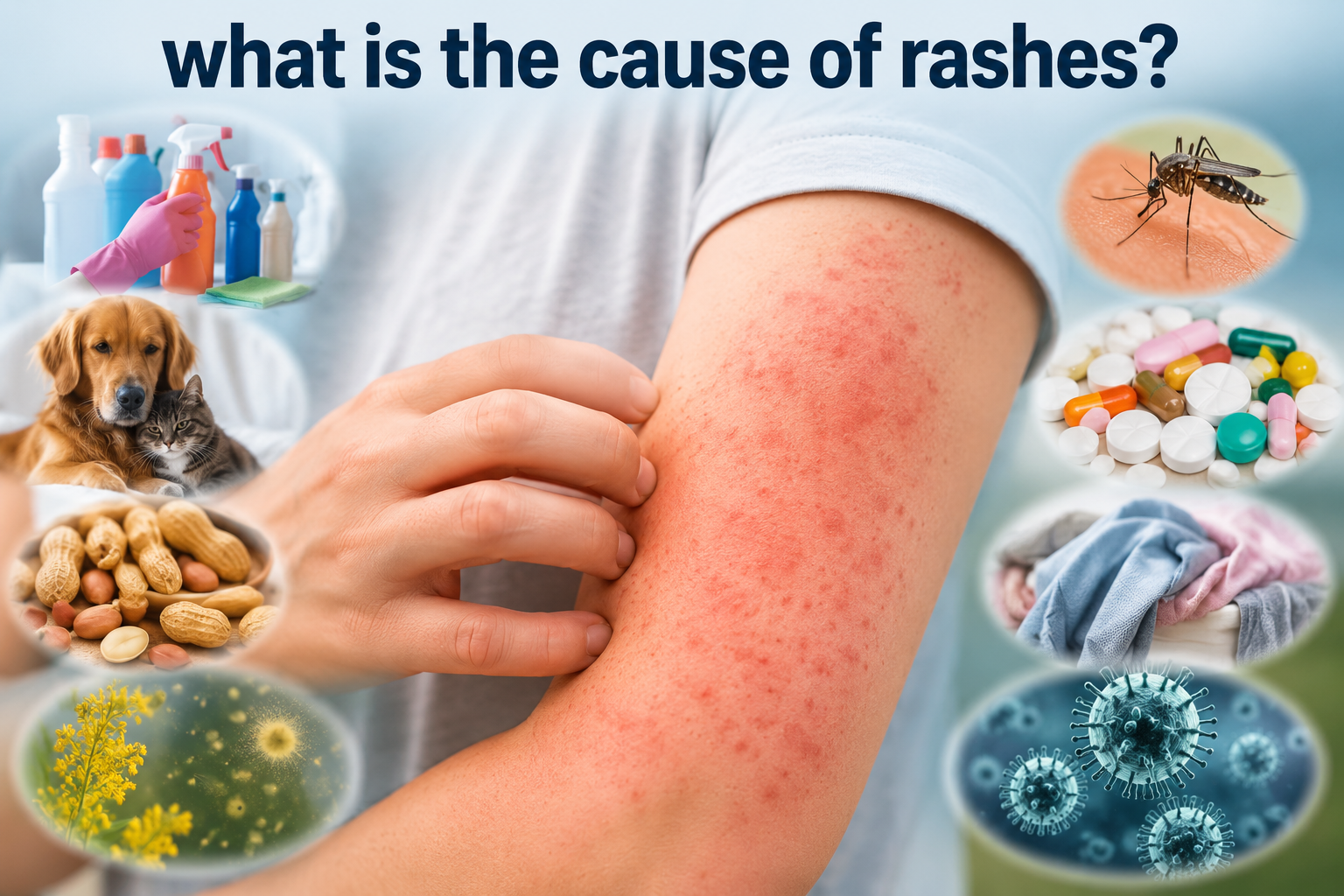
A rash is simply your skin’s way of reacting to something that has disturbed its normal balance. When people ask what is the cause of rashes, the honest answer is that there isn’t just one trigger — allergies, infections, irritants, chronic skin diseases, environmental factors and even stress can all bring one on.
Some rashes appear suddenly after touching a plant or eating a certain food, while others build up slowly due to an underlying health condition. The skin reacts through redness, itching, bumps or swelling because the immune system or irritated tissue is signaling that something is wrong.
Understanding what is the cause of rashes in your specific case helps you choose the right treatment instead of guessing. This guide breaks down every major category so you can identify patterns and know when professional care is necessary.
Allergic Causes of Rashes
Allergic reactions are one of the most frequent answers to what is the cause of rashes, since the immune system overreacts to a substance it wrongly identifies as harmful. These rashes often appear quickly and may be accompanied by itching, swelling or hives.
Food Allergies
Certain foods such as nuts, shellfish, eggs and dairy can trigger an immune response that shows up as redness or hives on the skin within minutes to hours. The severity can range from a mild patch to a body-wide reaction depending on individual sensitivity. In serious cases, food allergies can also cause swelling of the lips or throat, which needs urgent medical attention.
Drug or Medication Allergies
Antibiotics, painkillers and certain other medications are well known triggers of skin rashes in sensitive individuals. The reaction may appear as small red spots, hives or a widespread flat rash across the body. Stopping the medication and consulting a doctor is usually the first recommended step.
Insect Bites and Stings
Mosquitoes, bees, wasps and ants can cause localized swelling, redness and itching at the site of the bite. In some people, the reaction spreads beyond the bite area, indicating a stronger allergic response. Cold compresses and antihistamines are commonly used for relief.
Contact Dermatitis from Allergens
Everyday items like nickel jewelry, fragrances and certain cosmetics can trigger an itchy, red rash wherever they touch the skin. This type of reaction usually develops within a day or two of contact rather than immediately. Avoiding the specific allergen is the most effective long-term solution.
Irritant-Related Causes
Not every rash comes from an allergy — sometimes the skin simply gets irritated from direct contact with something harsh. These reactions are usually confined to the exact area that touched the irritant.
Soaps, Detergents and Chemicals
Strong cleaning products, perfumed soaps and certain fabric detergents can strip the skin’s natural protective layer, leading to dryness, redness and cracking. This is especially common on the hands due to frequent washing. Switching to fragrance-free, gentle products often resolves the issue.
Poison Ivy, Oak and Sumac
Contact with these plants releases an oily resin called urushiol, which causes an intensely itchy, blistering rash in most people who touch it. The rash can appear in streaks or patches matching where the plant brushed against the skin. Washing the area immediately after contact can reduce the severity of the reaction.
Friction and Diaper Rashes
Constant rubbing between skin folds, tight clothing or prolonged moisture can create irritation known as chafing or diaper rash. This is common in infants, athletes and people in humid climates. Keeping the area dry and using barrier creams helps prevent recurrence.
Infectious Causes of Rashes
Infections are another major part of the answer to what is the cause of rashes, since viruses, bacteria, fungi and parasites can all produce distinct skin reactions. Identifying the type of organism involved is important because treatment differs significantly between categories.
Viral Infections
Illnesses such as chickenpox, measles, shingles and hand-foot-and-mouth disease commonly present with rashes as a core symptom. These rashes are often accompanied by fever, fatigue or body aches. Most viral rashes resolve on their own, though some require antiviral treatment.
Bacterial Infections
Conditions like impetigo, cellulitis and scarlet fever cause redness, warmth and sometimes pus-filled sores on the skin. Bacterial rashes can spread quickly if left untreated and often require antibiotics. Warmth and tenderness around the affected area are key warning signs.
Fungal Infections
Ringworm, athlete’s foot and yeast infections thrive in warm, moist areas of the body and cause ring-shaped or scaly patches. These infections are contagious through direct contact or shared surfaces. Antifungal creams are typically effective for treatment.
Parasitic Infections
Scabies and lice are caused by tiny organisms that burrow into or live on the skin, resulting in intense itching, especially at night. These conditions spread easily in close-contact environments like households or schools. Specific medicated lotions are needed to eliminate the parasites completely.
Chronic Skin Conditions
Some rashes are not a one-time reaction but part of a long-term skin condition that flares up periodically. These require ongoing management rather than a single treatment.
Eczema (Atopic Dermatitis)
Eczema causes dry, itchy and inflamed patches of skin, often in the creases of elbows and knees. It tends to run in families and is linked to a sensitive skin barrier. Moisturizing regularly and avoiding known triggers helps control flare-ups.
Psoriasis
This autoimmune condition speeds up skin cell turnover, resulting in thick, scaly patches that can be itchy or sore. Psoriasis often appears on the scalp, elbows and knees and tends to cycle between flare-ups and remission. Treatment usually involves topical medications or light therapy.
Rosacea
Rosacea primarily affects the face, causing persistent redness, visible blood vessels and sometimes small bumps. Triggers include spicy food, alcohol, sun exposure and stress. While there is no permanent cure, symptoms can be managed with the right skincare routine.
Hives and Related Reactions
Hives are raised, itchy welts that can appear suddenly and move around the body within hours. They are closely related to allergic responses but can also occur without an obvious trigger.
Acute Urticaria (Hives)
Acute hives usually appear after exposure to an allergen, infection or even temperature change, disappearing within a few hours to days. The welts can vary in size and often shift location as the reaction progresses. Antihistamines are the standard first-line treatment.
Angioedema
Angioedema involves deeper swelling under the skin, often around the eyes, lips or throat, and can accompany hives. This condition can become dangerous if it affects breathing, making prompt medical evaluation necessary. It is often triggered by the same allergens responsible for hives.
Environmental Causes
Heat, sun and cold exposure can all irritate the skin enough to trigger a rash, even without any allergy or infection involved.
Heat Rash
Heat rash develops when sweat becomes trapped under the skin, usually during hot and humid weather. It appears as small red bumps, often in areas covered by clothing. Staying cool and wearing breathable fabrics helps prevent it.
Sun-Related Rashes
Excessive sun exposure can cause sunburn-related rashes or trigger photosensitivity reactions in people using certain medications. Symptoms include redness, tenderness and sometimes small blisters. Sunscreen and protective clothing are the best preventive measures.
Autoimmune and Systemic Causes
Certain rashes are a visible sign of a deeper issue happening inside the body rather than a surface-level reaction.
Lupus-Related Rashes
Lupus, an autoimmune disease, often produces a butterfly-shaped rash across the cheeks and nose. This rash can worsen with sun exposure and is usually accompanied by fatigue or joint pain. Diagnosis typically requires blood tests alongside a physical examination.
Rashes from Systemic Illness
Conditions such as thyroid disorders or certain viral fevers can cause rashes as a secondary symptom rather than the main illness. These rashes often appear alongside other systemic signs like weight change or persistent fever. Treating the underlying condition usually resolves the rash as well.
Stress and Hormonal Triggers
The skin is closely connected to the nervous and hormonal systems, which is why emotional and physical changes can also result in rashes.
Stress-Induced Flare-ups
High stress levels can worsen existing skin conditions like eczema or psoriasis, or even trigger hives in some individuals. This happens because stress hormones can increase inflammation throughout the body. Relaxation techniques and proper sleep often help reduce flare frequency.
Hormonal Changes
Pregnancy, menstrual cycles and hormonal disorders can lead to temporary skin sensitivity and rash-like reactions. These changes affect oil production and immune response in the skin. Most hormone-related rashes settle once hormone levels stabilize.
Warning Signs: When to See a Doctor
Some rashes are harmless and fade on their own, but others signal a medical emergency. The table below highlights key differences to watch for.
| Warning Sign | Possible Concern |
| Rapid spreading with warmth and pus | Bacterial infection |
| Swelling of face, lips or throat | Severe allergic reaction |
| High fever with rash | Viral or systemic infection |
| Rash lasting more than two weeks | Chronic skin condition |
| Difficulty breathing alongside rash | Anaphylaxis (emergency) |
Diagnosis and Treatment Overview
Doctors typically diagnose the cause of a rash through a physical examination, patient history and, when needed, allergy testing, blood work or a skin biopsy.
Treatment depends entirely on the root cause — antihistamines for allergies, antibiotics for bacterial infections, antifungal creams for fungal issues, and long-term management plans for chronic conditions like eczema or psoriasis.
Home care such as cool compresses, gentle moisturizers and avoiding known triggers supports recovery in most mild cases. Persistent or unexplained rashes should always be evaluated by a healthcare professional rather than self-diagnosed.
FAQs
What is the cause of rashes on the skin? Rashes can be caused by allergies, irritants, infections, chronic skin conditions, environmental factors or stress, each producing a different pattern and severity.
Can stress alone cause a rash? Yes, stress can trigger hives or worsen existing skin conditions due to increased inflammation in the body.
When should a rash be treated as an emergency? Seek immediate care if a rash is accompanied by facial swelling, difficulty breathing, high fever or rapid spreading with pus.
Are all rashes contagious? No, only certain infectious rashes like ringworm, scabies or chickenpox spread between people, while allergic or chronic rashes are not contagious.
Conclusion
Rashes can stem from a wide range of causes, from simple allergies and irritants to infections, chronic conditions and internal health issues.
Recognizing the pattern, triggers and accompanying symptoms makes it much easier to understand what is the cause of rashes in a particular case.
While many rashes clear up with basic home care, persistent, spreading or severe symptoms always call for professional medical evaluation.
Related Articles
Can You Have Laser Surgery Twice? Full Guide to Enhancement
Can Jaw Pain Be Caused by an Ear Infection? Full Guide & Relief Tips
How Long Does Tendonitis Take to Heal? Full Recovery Timeline
Can Allergies Cause Dizziness? Causes, Symptoms, and Relief
Careers in Dental Public Health: Education, Jobs, Salary, and Future Opportunities