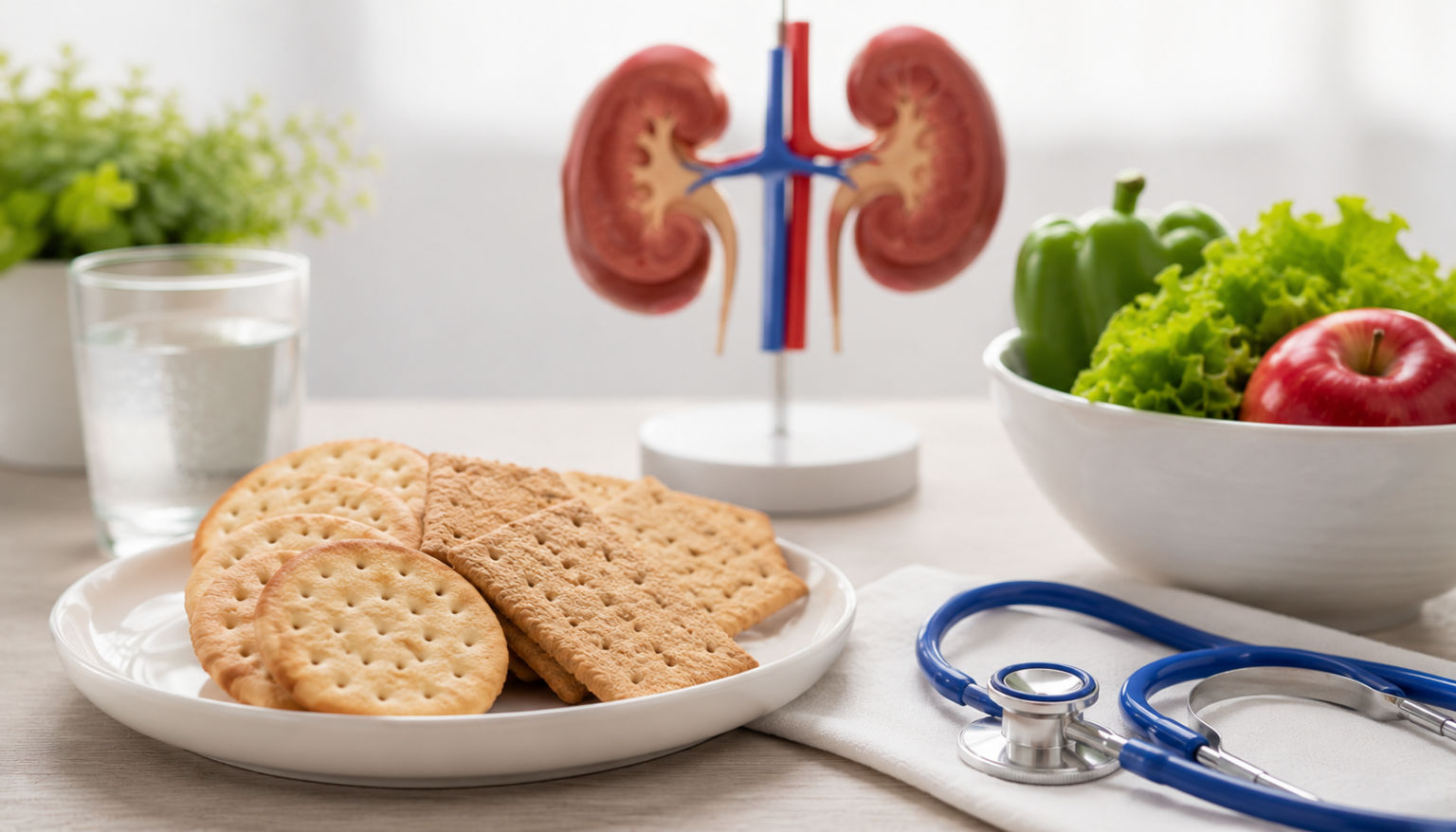
For anyone living with chronic kidney disease (CKD), even a small snack decision like picking a biscuit can matter a lot. Many packaged biscuits are loaded with sodium, phosphorus additives, and preservatives that put extra strain on already weakened kidneys.
The good news is that kidney patients don’t have to give up snacking altogether. Choosing the right biscuit, made from the right ingredients and eaten in the right portion, can fit safely into a renal-friendly diet. This guide breaks down exactly which biscuit is good for kidney patients, which ones to avoid, and how to make smarter snack choices every day.
Key Takeaways
- Plain, low-sodium biscuits such as Marie or arrowroot varieties are generally the safest choice for kidney patients.
- Whole grain, chocolate, cream-filled, and salted biscuits should be limited or avoided because of high sodium, potassium, or phosphorus content.
- Portion control is just as important as ingredient choice, since even a “safe” biscuit can cause problems if eaten in large amounts.
- Every kidney patient’s needs differ by CKD stage, so a renal dietitian should always be consulted before making permanent dietary changes.
Why Diet Matters for Kidney Patients?
Diet plays a direct role in how quickly kidney disease progresses and how well a patient feels day to day. Because the kidneys filter out excess minerals and waste products from the blood, any decline in kidney function means these substances can build up instead of being removed properly. This is why doctors so often focus on sodium, potassium, and phosphorus when guiding kidney patients toward safer food choices, including something as simple as a biscuit.
Role of Sodium in Kidney Health
Sodium causes the body to retain fluid, which raises blood pressure and forces the kidneys to work harder than they should. Over time, this added pressure can accelerate kidney damage and contribute to swelling in the legs, hands, or face. Most packaged biscuits contain baking soda, salt, or preservatives that quietly push sodium intake far higher than a kidney patient’s daily limit.
Role of Potassium and Phosphorus
Potassium and phosphorus are minerals the kidneys normally balance, but when kidney function drops, both can build up to dangerous levels in the blood. High potassium can affect heart rhythm, while excess phosphorus can weaken bones and harden blood vessels over time. Biscuits made with whole grains, chocolate, or dairy-based fillings tend to carry higher amounts of both minerals than plain, refined-flour options.
Why Portion Size Matters
Even a biscuit made with kidney-friendly ingredients can become a problem if too many are eaten at once. Portion size directly affects how much sodium, potassium, and phosphorus enter the bloodstream in a single sitting, so moderation remains essential regardless of the biscuit type. Most renal dietitians suggest limiting intake to two or three small biscuits per serving, paired with a food diary to track daily mineral totals.
Best Biscuit Options for Kidney Patients
When choosing a biscuit, the safest picks are almost always plain, simple, and low in added salt or dairy. The options below are commonly recommended by renal nutrition guidelines because they avoid the ingredients that tend to spike sodium, potassium, or phosphorus levels.
Plain or Marie Biscuits
Plain Marie biscuits are one of the most commonly recommended options because they are made mostly from refined flour, sugar, and a small amount of fat, without heavy salt or dairy additives.
Choosing an unsalted or low-sodium version further reduces the risk of fluid retention and blood pressure spikes. These biscuits are widely available and tend to be gentle on digestion as well, which makes them a practical everyday snack.
Arrowroot Biscuits
Arrowroot biscuits are another commonly suggested choice, since they are typically light, low in fat, and made without strong flavoring agents that usually carry extra sodium. Their simple ingredient list makes it easier for patients to estimate mineral content compared to heavily processed alternatives. Many patients also find arrowroot biscuits easier to digest, especially during periods of reduced appetite.
Homemade Low-Sodium Biscuits
Homemade biscuits give kidney patients full control over every ingredient that goes into the recipe. Using refined flour, a controlled small amount of salt, and skipping chocolate, nuts, or dairy-heavy fillings keeps the mineral content predictable and low. This option is often considered the safest overall, since store-bought biscuits can contain hidden additives that aren’t always obvious from the front label.
Biscuits to Avoid
Certain biscuit types are best limited or removed entirely from a kidney-friendly diet because of how concentrated their sodium, potassium, or phosphorus content tends to be.
Whole Wheat and Multigrain Biscuits
While whole grains are often praised for general health, they are actually higher in both potassium and phosphorus compared to refined flour biscuits. This makes whole wheat or multigrain varieties less suitable for kidney patients, even though they may appear to be the “healthier” option at first glance. Reduced kidney function struggles to clear these extra minerals efficiently.
Chocolate and Cream-Filled Biscuits
Chocolate contains notably high potassium and phosphorus levels, and cream fillings often add extra dairy-based phosphorus on top of that. Together, these ingredients can push mineral intake well beyond safe daily limits with just a few biscuits. Patients managing potassium or phosphorus restrictions are usually advised to avoid this category altogether.
Salted Crackers and Nut-Based Biscuits
Salted crackers are an obvious sodium risk, but nut-based biscuits carry a hidden danger too, since nuts are naturally high in both potassium and phosphorus. Dried fruit toppings common in these biscuits add even more potassium to the mix. Reading the ingredient list carefully helps identify and avoid these combinations before they become a problem.
Comparison Table: Biscuit Options by Mineral Content
The table below offers a general comparison of common biscuit types based on their typical sodium, potassium, and phosphorus levels, to help guide safer choices at a glance.
| Biscuit Type | Sodium Level | Potassium Level | Phosphorus Level | Kidney-Friendly? |
| Plain/Marie Biscuits | Low (unsalted variety) | Low | Low | Yes |
| Arrowroot Biscuits | Low | Low | Low | Yes |
| Homemade Low-Sodium Biscuits | Low (controlled) | Low | Low | Yes |
| Whole Wheat/Multigrain Biscuits | Moderate | High | High | Limit |
| Chocolate/Cream-Filled Biscuits | Moderate to High | High | High | Avoid |
| Salted Crackers | High | Moderate | Moderate | Avoid |
| Nut-Based Biscuits | Moderate | High | High | Avoid |
Tips for Choosing Kidney-Friendly Snacks
Making safer snack choices becomes easier once a patient knows exactly what to look for on packaging and how to adjust habits around portion size and preparation.
Reading Nutrition Labels
Checking the sodium content per serving is the first step, since many packaged biscuits list surprisingly high amounts even in a small portion. Ingredient lists should also be scanned for phosphorus additives, often listed under names containing “phos,” as these are absorbed by the body more easily than naturally occurring phosphorus. Comparing similar products side by side often reveals major differences between brands.
Making Biscuits at Home
Preparing biscuits at home allows full control over salt, dairy, and flavoring ingredients, removing the guesswork involved with packaged snacks. Simple recipes using refined flour, a small amount of oil or butter, and minimal salt can be adjusted to match a patient’s specific dietary limits. Batch preparation also makes it easier to portion biscuits ahead of time for consistent daily servings.
Portion Control Guidelines
Sticking to a pre-measured portion, rather than eating directly from a full packet, helps prevent accidental overconsumption of sodium or minerals. Pairing biscuits with a kidney-friendly beverage, rather than salty spreads or dips, also keeps the overall snack safer. Tracking portions in a food diary alongside other meals gives a clearer picture of total daily mineral intake.
When to Consult a Renal Dietitian
Every kidney patient’s dietary needs shift depending on their CKD stage, dialysis status, and any other existing health conditions, which is why general guidelines can only go so far. A renal dietitian can calculate exact sodium, potassium, and phosphorus limits based on lab results and recommend specific biscuit brands or homemade recipes suited to that patient’s situation. Regular check-ins also help adjust the diet as kidney function changes over time, keeping snack choices both safe and enjoyable.
FAQs
Can kidney patients eat digestive biscuits? Digestive biscuits are usually made with whole wheat flour, which raises their potassium and phosphorus content compared to plain biscuits. They should generally be limited, and a renal dietitian can advise on safe frequency based on individual lab values.
Are oats biscuits safe for CKD patients? Oats contain a moderate amount of potassium and phosphorus, so oats biscuits are not typically the top choice for kidney patients. Small portions may be acceptable for early-stage CKD, but this should be confirmed with a doctor or dietitian first.
How many biscuits can a dialysis patient eat per day? Most dialysis patients are advised to limit themselves to two or three small, low-sodium biscuits per serving, though exact limits depend on individual lab results and fluid restrictions. A renal dietitian can provide a precise daily allowance.
Are sugar-free biscuits better for kidney patients? Sugar-free biscuits mainly address blood sugar concerns rather than sodium, potassium, or phosphorus levels, so they aren’t automatically kidney-safe. The mineral content still needs to be checked separately on the nutrition label.
Conclusion
Choosing which biscuit is good for kidney patients comes down to picking plain, low-sodium options like Marie or arrowroot biscuits, or preparing homemade versions with full ingredient control.
Avoiding whole grain, chocolate, and salted varieties, while keeping portions in check, makes snacking far safer for anyone managing kidney disease. Since every patient’s mineral limits differ, working with a renal dietitian remains the best way to personalize these choices safely.
Related Articles
What Does a Cavity Look Like on a Molar? Signs & Stages Explained
Detego Health Provider Portal: Complete Guide for Healthcare Providers
How to Cure Burning Watery Eyes: Causes, Remedies & When to See a Doctor
Can Irritation Cause Acne? Skin Irritation and Breakouts
Can Sleep Deprivation Cause Headaches? Causes, Symptoms, Treatment & Prevention