


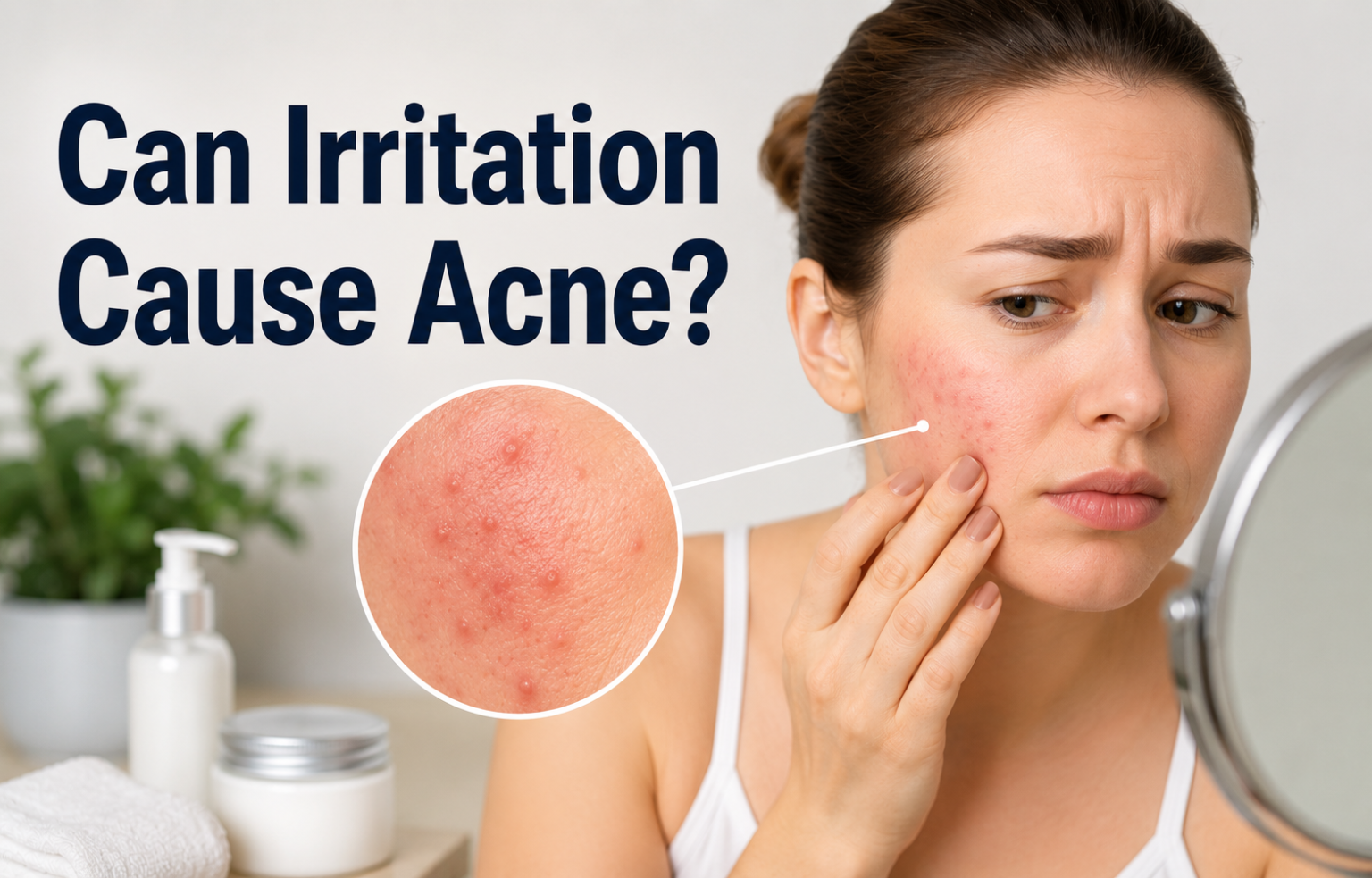
Yes, irritation can cause acne, and many people don’t realize this connection until their skin starts breaking out for no obvious reason. When skin gets rubbed, scrubbed, or exposed to harsh products, it responds with inflammation, and that inflammation often turns into clogged pores and pimples.
This is different from typical hormonal acne because it starts from outside stress on the skin rather than internal oil or hormone changes. Understanding this link helps you figure out why your skin is reacting and how to calm it down before it gets worse.
This article breaks down exactly how irritation leads to acne, what causes it, and how you can prevent and treat it with simple daily habits.
What Is Acne, Really?
Acne happens when hair follicles get blocked with oil, dead skin cells, and sometimes bacteria, leading to visible bumps on the skin. It is not just one type of breakout but a group of related skin issues that vary in size, depth, and cause.
Acne generally shows up in a few recognizable forms, and knowing them helps you understand what your skin is actually dealing with.
| Type of Acne | What It Looks Like | Common Cause |
| Whiteheads | Small closed bumps under the skin | Clogged pores with trapped oil |
| Blackheads | Open bumps with dark tips | Oxidized oil exposed to air |
| Papules | Small red, tender bumps | Inflammation without pus |
| Pustules | Red bumps with white centers | Bacterial buildup and inflammation |
| Cysts | Large, painful, deep bumps | Severe inflammation and infection |
Each of these forms can be worsened by irritation, since inflamed skin reacts more strongly to blocked pores than calm, healthy skin does.
What Is Skin Irritation?
Skin irritation is a reaction that happens when the skin’s outer layer gets disturbed by friction, chemicals, or environmental stress. It usually shows up as redness, a burning feeling, tightness, or dryness rather than actual pimples at first.
Unlike an allergic reaction, irritation does not involve the immune system reacting to a specific allergen. Instead, it is a direct physical response to something harsh touching the skin repeatedly, like scrubbing too hard or using a product that is too strong for your skin type. This distinction matters because irritation-based issues often calm down quickly once the irritant is removed, while allergies may need medical treatment.
How Irritation Leads to Acne — The Science Made Simple
Irritation does not cause acne in one single step. It sets off a chain reaction inside the skin that eventually leads to clogged pores and breakouts.
Damage to the Skin Barrier
The skin barrier is the outer protective layer that keeps moisture in and irritants out. When this barrier gets damaged from scrubbing or harsh products, the skin becomes weaker and more exposed. A damaged barrier allows bacteria and debris to settle into pores more easily, which raises the risk of breakouts.
Increased Oil Production as a Response
When skin senses damage or dryness from irritation, it often overcompensates by producing more oil. This is the skin’s way of trying to protect itself, but the extra oil can mix with dead skin cells and clog pores. Ironically, trying to “dry out” irritated skin can backfire and create more oil-related breakouts.
Inflammation as a Trigger for Breakouts
Inflammation is the body’s response to irritation, and it plays a direct role in acne formation. Swollen, inflamed skin traps bacteria and oil more easily inside the follicle. This is why irritated areas often turn into red, tender pimples rather than calm, clear skin.
Clogged Pores from Swelling and Dead Skin Buildup
Irritated skin often swells slightly, which narrows the opening of pores. At the same time, irritation can speed up dead skin shedding, and these skin cells can get trapped inside the narrowed pore opening. This combination creates the perfect setup for a new breakout to form.
Common Causes of Irritation That Trigger Acne
Irritation-based acne can come from many everyday habits and products, often without people realizing the connection.
Mechanical Irritation
Friction from helmets, tight collars, face masks, and even phone screens pressed against the cheek can rub the skin repeatedly. This constant rubbing traps oil and bacteria against the skin, which often leads to breakouts along the jawline, chin, or forehead.
Chemical Irritation
Harsh cleansers, alcohol-based toners, and strong exfoliating acids can strip the skin’s natural oils and damage its protective barrier. Once this barrier is compromised, the skin becomes more prone to inflammation and clogged pores, which shows up as new breakouts.
Over-Exfoliation and Skincare Overload
Using too many active ingredients at once, like retinoids, acids, and scrubs together, can overwhelm the skin. Instead of clearing acne faster, this often irritates the skin so much that it reacts with more redness and breakouts than before.
Touching, Picking, and Popping Pimples
Repeatedly touching or squeezing pimples spreads bacteria to nearby pores and irritates the surrounding skin. This is one of the most common reasons a single pimple turns into a small cluster of new breakouts within days.
Sweat and Unwashed Skin After Workouts
Sweat mixed with dirt and oil can irritate the skin, especially when it is left on the face for long periods after exercise. This buildup clogs pores and creates a friendly environment for acne-causing bacteria to grow.
New Skincare or Makeup Products
Introducing a new product too quickly, without testing it first, can shock the skin and cause irritation. This irritation can then trigger breakouts, especially if the product contains heavy oils or comedogenic ingredients.
Acne Mechanica: A Special Case
Acne mechanica is a specific type of breakout caused purely by friction, heat, and pressure on the skin rather than internal factors like hormones. It commonly affects athletes, students who wear tight headgear, and workers who use protective equipment for long hours.
This type of acne often appears in the exact areas where pressure or rubbing occurs, such as under a helmet strap or where a backpack strap sits against the shoulder or neck. Preventing it usually involves reducing friction, keeping the area clean and dry, and choosing breathable fabrics or looser-fitting gear whenever possible.
Is It Irritation, Allergy, or Actual Acne?
Telling these three apart matters because the treatment for each is different, and treating the wrong one can make skin worse instead of better.
Signs It’s Irritation
Irritated skin usually feels tight, dry, or slightly burning, and it often appears red without necessarily forming raised bumps. It tends to improve quickly once the irritating product or friction source is removed.
Signs It’s an Allergic Reaction
An allergic reaction often includes itching, swelling, or hives, and it can appear suddenly after using a new product. Unlike simple irritation, allergies may need antihistamines or a dermatologist’s input to fully calm down.
Signs It’s True Acne
True acne shows up as distinct bumps like whiteheads, blackheads, or pustules, and it tends to follow patterns related to oil production or hormonal cycles. It may take longer to resolve and often responds to acne-specific treatments rather than just removing an irritant.
How to Prevent Irritation-Related Acne?
Preventing this type of acne mostly comes down to protecting the skin barrier and reducing unnecessary stress on the skin.
- Cleanse gently using lukewarm water and a mild, fragrance-free cleanser instead of scrubbing hard
- Avoid combining too many active ingredients like acids and retinoids in the same routine
- Choose non-comedogenic products that are labeled as unlikely to clog pores
- Reduce friction by loosening tight clothing, cleaning phone screens, and adjusting helmet padding
- Keep hands off your face and avoid picking or squeezing existing pimples
- Introduce new skincare products slowly, giving your skin time to adjust before adding more
How to Treat Acne Caused by Irritation?
The first step in treating irritation-related acne is calming the skin barrier rather than attacking the breakout directly. This usually means switching to a simple routine with a gentle cleanser, a fragrance-free moisturizer, and skipping any strong actives for a short period.
Products with soothing ingredients like ceramides or panthenol can help repair the barrier faster. Once the redness and sensitivity settle down, active ingredients can be reintroduced slowly and one at a time. If breakouts persist or feel painful despite these changes, it is a sign the skin needs more targeted care rather than just calming products.
When to See a Dermatologist
Most irritation-related breakouts improve within a couple of weeks once the irritant is removed and the skin is treated gently.
However, if the acne keeps getting worse, spreads to new areas, or shows signs of infection like increasing pain, swelling, or pus, it is time to see a dermatologist.
Professional input is also useful when basic changes to your routine do not seem to be making any difference at all.
Common Myths About Irritation and Acne
There are a few misunderstandings that keep people repeating habits that make irritation-related acne worse instead of better. One common myth is that scrubbing harder will clear breakouts faster, when in reality it usually increases irritation and inflammation.
Another myth is that all breakouts are hormonal, ignoring the very real role that friction and harsh products play in triggering pimples. Many also believe sensitive skin cannot get acne, but sensitive skin is often more prone to irritation-triggered breakouts because its barrier is naturally weaker.
FAQs
Can stress-related irritation cause acne? Stress can increase oil production and inflammation in the body, which may worsen existing irritation and lead to more breakouts, especially in people already prone to acne.
Does sweating cause acne breakouts? Sweat itself does not directly cause acne, but leaving sweat on the skin for long periods can mix with oil and dirt, irritating pores and increasing the chance of breakouts.
Can wearing a mask cause acne? Yes, prolonged mask use creates friction and traps heat and moisture against the skin, which is a common cause of acne mechanica along the chin and cheeks.
How long does irritation-induced acne take to heal? Mild cases often improve within one to two weeks once the irritant is removed and a gentle skincare routine is followed consistently.
Should I stop skincare products if my skin is irritated? It is best to pause strong actives like acids and retinoids during irritation, sticking to a simple, gentle routine until the skin barrier recovers.
Conclusion
Irritation is a real and often overlooked reason behind unexpected breakouts, working through barrier damage, inflammation, and clogged pores.
Recognizing the signs of irritation versus true acne helps you choose the right approach instead of making things worse.
Simple changes like gentle cleansing, reducing friction, and introducing products slowly can make a noticeable difference in calming irritation-related acne over time.
Related Articles
Insufficient Circulation in Feet Pain in Arch: Causes, Symptoms, Treatment, and Prevention
How to Get Rid of Numbness After Dentist: Causes, Remedies, and Recovery Tips
Why Does My Knee Feel Tight? Causes, Relief, and When to See a Doctor
Can a DEXA Scan Show Cancer? What It Can and Cannot Detect
Can You Kneel on a Knee Replacement? Recovery, Safety, Pain, and Tips