


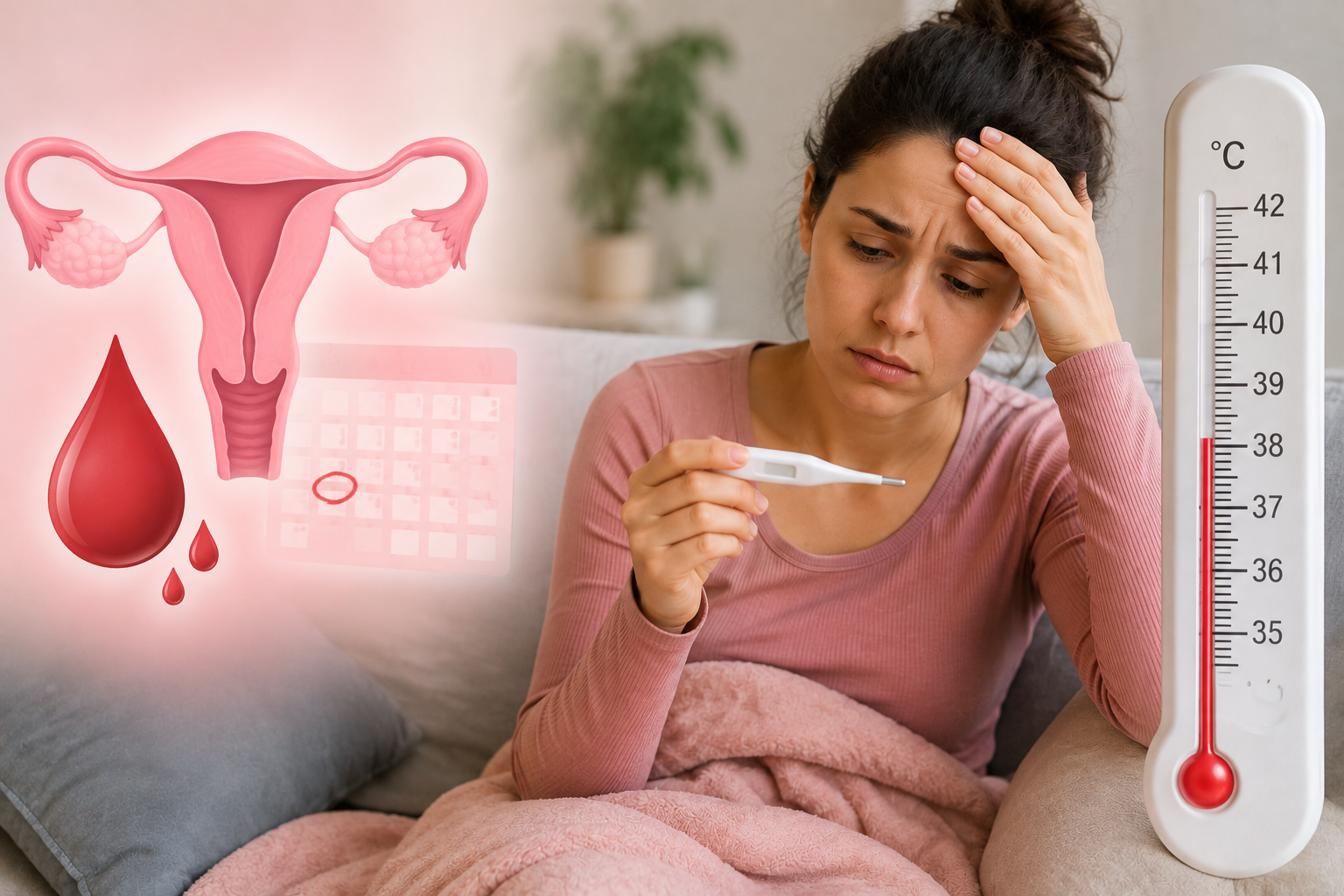
Yes, periods can sometimes cause a mild fever, and this happens because of natural hormonal shifts that occur right before and during menstruation. As estrogen and progesterone levels drop sharply, the body’s internal temperature-regulating system gets temporarily disrupted, which can raise your baseline temperature by a small margin.
At the same time, the body releases prostaglandins, hormone-like compounds that trigger uterine contractions and can also nudge body temperature upward. In most cases, this fever is low-grade, meaning it stays under 100.4°F (38°C), and it resolves on its own within a day or two without any treatment. However, not every fever during your period is harmless, and in some cases it can point to an underlying infection or condition that needs medical attention.
Key Takeaways
- A mild fever before or during your period is usually linked to hormonal changes, particularly a drop in estrogen and a rise in prostaglandins.
- Normal period-related fever generally stays below 100.4°F (38°C) and goes away within one to two days.
- A high, persistent, or worsening fever during menstruation can signal infections such as toxic shock syndrome, pelvic inflammatory disease, or a urinary tract infection.
- Tracking your temperature alongside your other period symptoms can help you tell the difference between a normal hormonal fluctuation and something that needs a doctor’s attention.
- Simple home care like hydration, rest, and appropriate over-the-counter medication is usually enough for mild period fever, but sudden high fever paired with severe pain or unusual discharge warrants immediate medical care.
Can Your Period Actually Cause a Fever?
Yes, a period can cause a mild rise in body temperature for many people, and this is a well-documented physiological response rather than something unusual or alarming on its own. The explanation lies mainly in two overlapping processes: the natural hormonal cycle your body goes through each month, and the chemical messengers released by the uterus during menstruation. The sections below explain each of these mechanisms in more detail so you can understand exactly what is happening inside your body.
The Hormonal Connection
Throughout the menstrual cycle, estrogen and progesterone rise and fall in a predictable pattern, and both hormones influence the hypothalamus, the part of the brain that acts as your body’s thermostat. Body temperature naturally rises slightly after ovulation due to increased progesterone, and it drops again just before your period starts as progesterone levels fall sharply. This sudden hormonal drop can create a brief window where your body temperature feels unstable, sometimes tipping into a mild feverish sensation even though no infection is present.
Role of Prostaglandins in Temperature Regulation
Prostaglandins are hormone-like substances your uterus releases to help shed its lining during menstruation, and they work by causing the uterine muscles to contract. High levels of prostaglandins are also linked to other systemic symptoms like nausea, diarrhea, and headaches, and in some individuals, this same inflammatory response can slightly elevate body temperature. The more prostaglandins your body produces, the more likely you are to notice these additional symptoms alongside your usual cramps.
Normal vs. Abnormal Temperature Changes During Menstruation
A normal period-related temperature increase is typically small, staying below 100.4°F (38°C), and it tends to resolve within one to two days as hormone levels stabilize. An abnormal pattern, on the other hand, involves a fever that climbs higher, lasts longer than two days, or keeps returning throughout your cycle. If your temperature crosses this threshold or is accompanied by other severe symptoms, it stops being a simple hormonal fluctuation and starts to look more like a sign of infection or inflammation that needs proper evaluation.
Common Symptoms That Come With Period-Related Fever
When a fever is genuinely tied to your menstrual cycle, it rarely shows up alone, and it is usually accompanied by a cluster of other familiar period symptoms. Recognizing this pattern can help you feel more confident that what you are experiencing is a normal hormonal response rather than something more serious.
Low-Grade Fever (Below 100.4°F/38°C)
Most hormone-related fevers stay in the low-grade range, meaning your temperature might read anywhere from 99°F to just under 100.4°F. This slight elevation is usually barely noticeable unless you specifically check your temperature, and it typically fades on its own as your period progresses and hormone levels settle.
Chills and Body Aches
Some people experience mild chills or a generalized achy feeling in the days leading up to or during their period, similar to how the body reacts during the early stages of a cold. This happens because the same inflammatory prostaglandins that cause cramping can also create a whole-body sensation of discomfort, making you feel slightly under the weather even without an actual illness.
Fatigue and Headache
Hormonal fluctuations combined with blood loss can leave you feeling unusually tired during your period, and this fatigue is often paired with a dull, tension-type headache. Both symptoms tend to peak in the first day or two of bleeding and gradually improve as your cycle moves forward, mirroring the same timeline as any mild fever you might notice.
Cramping Alongside Temperature Changes
Cramping and fever often appear together because they share the same root cause: prostaglandin release. As your uterus contracts more intensely to shed its lining, the associated inflammation can produce both the sharp or dull pelvic pain you’re used to and a subtle rise in body temperature at the same time.
When Fever During Your Period Signals Something Serious
While a mild fever is often nothing to worry about, there are specific situations where a fever during your period is a warning sign that should never be brushed aside. These conditions can escalate quickly, so understanding them helps you know exactly when to seek medical care.
Toxic Shock Syndrome (TSS) — Tampon-Related Risk
Toxic shock syndrome is a rare but life-threatening bacterial infection that has historically been linked to prolonged tampon use, particularly super-absorbency tampons left in for too long. Symptoms can include a sudden high fever, a rash resembling sunburn, vomiting, and a rapid drop in blood pressure, and it requires emergency medical treatment. If you develop a high fever along with these symptoms while using tampons, you should remove the tampon immediately and seek urgent care.
Pelvic Inflammatory Disease (PID)
Pelvic inflammatory disease is an infection of the reproductive organs that often develops from untreated sexually transmitted infections, and it can flare up or become more noticeable around your period. PID symptoms often include fever, pelvic pain, unusual vaginal discharge, and pain during intercourse, and delayed treatment can lead to long-term fertility complications, so prompt diagnosis matters.
Infections (UTI, Reproductive Tract)
Urinary tract infections and other reproductive tract infections can coincide with your period and cause fever that is unrelated to normal hormonal shifts. These infections typically come with additional symptoms like burning during urination, frequent urges to urinate, or foul-smelling discharge, and they usually require antibiotic treatment prescribed by a doctor rather than home remedies alone.
Endometriosis-Related Inflammation
Endometriosis, a condition where uterine-like tissue grows outside the uterus, can cause significant inflammation throughout the pelvic region, and this chronic inflammatory state sometimes produces low-grade fever during menstruation. Endometriosis symptoms tend to be more severe and longer-lasting than typical period discomfort, so a pattern of recurring fever alongside intense pain each cycle is worth discussing with a gynecologist.
How to Track and Manage Period-Related Fever at Home?
Most mild, hormone-related fevers can be managed comfortably at home with a few simple steps, and knowing how to monitor your symptoms properly gives you a clear signal for when home care is enough versus when you need professional help.
Monitoring Temperature Safely
Taking your temperature at the same time each day, ideally in the morning before eating or drinking, gives you a reliable baseline to compare against during your period. Keeping a short log of your readings alongside your other symptoms makes it much easier to spot whether your fever is following the mild, short-lived pattern typical of hormonal changes or climbing into a range that needs attention.
Hydration and Rest
Drinking plenty of water helps your body regulate temperature more effectively and can ease other period symptoms like headaches and fatigue at the same time. Pairing hydration with adequate rest gives your body the resources it needs to stabilize hormone levels naturally, which often helps a mild fever resolve faster.
Over-the-Counter Options for Mild Fever
Common over-the-counter pain relievers such as ibuprofen or acetaminophen can help lower a mild fever while also easing menstrual cramps, since ibuprofen specifically works by reducing prostaglandin production. Always follow the dosing instructions on the package, and check with a pharmacist or doctor first if you have any existing health conditions or take other medications regularly.
When to Contact a Doctor Immediately
You should contact a doctor right away if your fever rises above 101°F (38.3°C), lasts longer than two days, or comes with symptoms like severe abdominal pain, a rash, dizziness, or unusual discharge. These signs suggest your fever may not be related to normal hormonal changes and could instead point toward an infection that needs prompt medical evaluation.
Normal Period Symptoms vs. Red-Flag Symptoms
The table below offers a side-by-side comparison to help you quickly assess whether what you’re experiencing fits the pattern of a normal hormonal fever or one of the more serious warning signs discussed above.
| Symptom | Normal Period-Related Pattern | Red-Flag Pattern (Seek Medical Care) |
| Temperature | Below 100.4°F (38°C) | Above 101°F (38.3°C) or rising |
| Duration | Resolves in 1–2 days | Lasts more than 2 days or recurs |
| Pain Level | Typical cramping, manageable | Severe, sudden, or worsening pelvic pain |
| Discharge | Normal menstrual flow | Foul-smelling or unusual discharge |
| Additional Signs | Mild fatigue, headache, chills | Rash, dizziness, vomiting, rapid heartbeat |
| Tampon Use | No issues reported | Prolonged use with sudden high fever |
Prevention Tips for Managing Menstrual Fever
Taking a few preventive steps each cycle can lower your chances of developing an uncomfortable or concerning fever during your period, while also supporting your overall menstrual health.
Tampon Safety Practices
Changing tampons every four to eight hours and choosing the lowest absorbency needed for your flow significantly reduces your risk of toxic shock syndrome. Alternating between tampons and pads, or considering menstrual cups, can also lower this risk for people who menstruate heavily.
Anti-Inflammatory Diet Choices
Eating foods rich in omega-3 fatty acids, leafy greens, and antioxidants can help reduce the overall inflammatory response your body produces during menstruation, which may in turn lessen the intensity of prostaglandin-related symptoms like fever and cramping. Reducing processed foods and excess sugar in the days before your period may offer similar benefits.
Stress and Sleep Management
Chronic stress and poor sleep can disrupt hormonal balance, potentially making period symptoms, including mild fever, feel more pronounced. Prioritizing consistent sleep and simple stress-reducing habits like light exercise or deep breathing can help keep your hormonal fluctuations more stable throughout your cycle.
FAQs
Is a 99°F temperature normal during periods?
Yes, a temperature around 99°F is generally considered normal during your period and usually reflects typical hormonal fluctuations rather than illness.
Can period fever last more than 2 days?
A fever lasting more than two days is not typical for normal hormonal changes and should be evaluated by a doctor to rule out infection.
Does ovulation also cause fever?
Yes, many people experience a slight temperature rise after ovulation due to increased progesterone, which is a normal part of the menstrual cycle.
Can PMS cause chills without infection?
Yes, PMS-related hormonal shifts and prostaglandin release can cause mild chills even when no infection is present.
Should I take my temperature every day during my period?
Tracking your temperature daily can be helpful if you notice recurring fever patterns, as it gives you useful data to share with your doctor if needed.
Conclusion
A mild fever during your period is often a normal result of hormonal shifts and prostaglandin release, and it typically resolves within a day or two without treatment. However, a high, persistent, or unusually severe fever can signal infections like toxic shock syndrome or pelvic inflammatory disease, so it’s important to monitor your symptoms and seek medical care when something feels outside the ordinary pattern.
Related Posts
Is Sleep Apnea Considered a Disability? Symptoms, Benefits & Eligibility
Why I Still Have Acne at 40? Causes, Treatments, and Prevention Tips
Attend Health – Complete Guide to Features, Services, and Future of Healthcare AI Platform