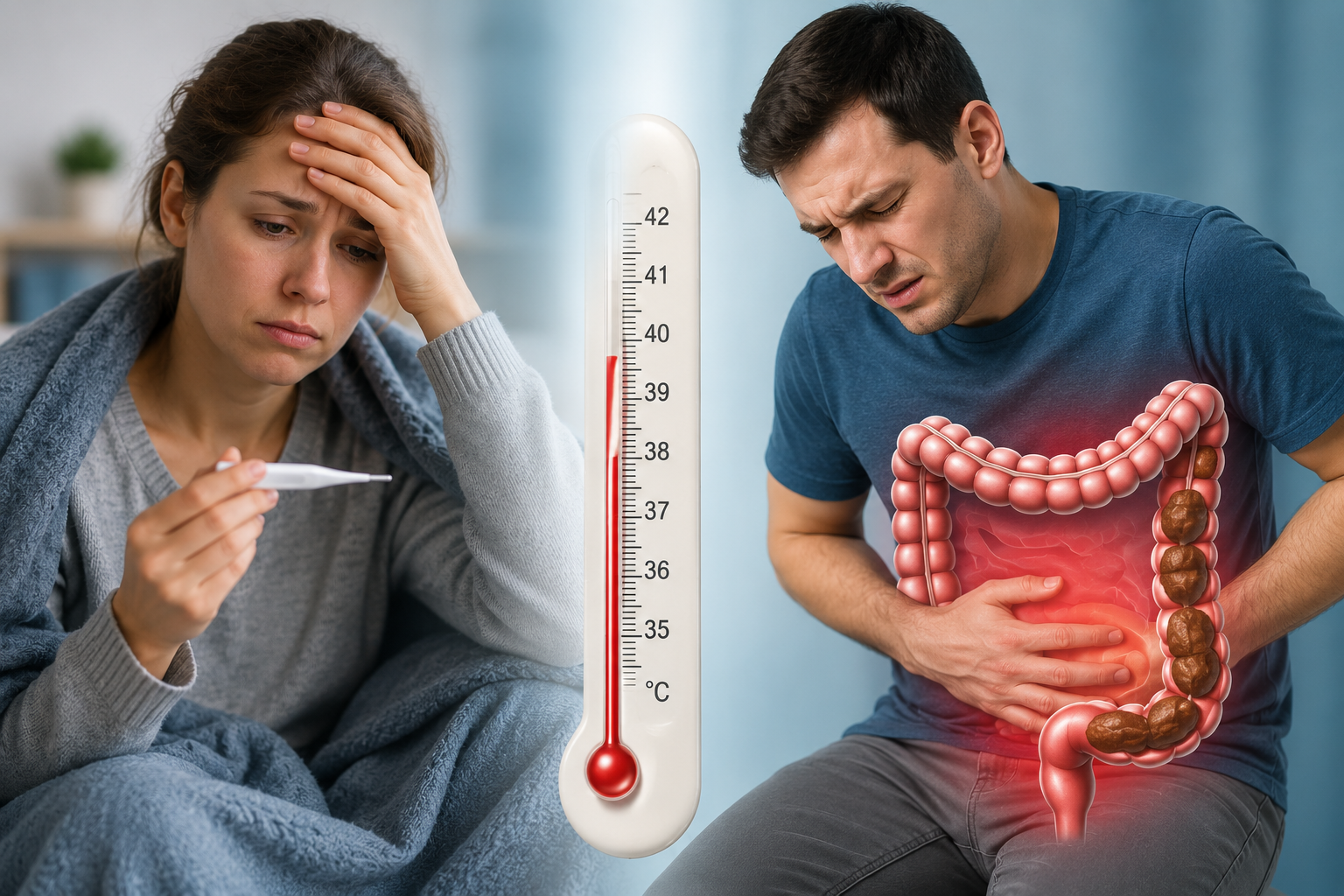
In most cases, constipation on its own does not cause fever. Constipation is a mechanical and digestive issue involving slow or difficult bowel movements, while fever is the body’s response to infection, inflammation, or illness.
When these two symptoms show up together, it usually means something else is happening in the body alongside the constipation, not that the constipation itself is producing the fever. This could range from a mild, unrelated viral infection to a more serious digestive complication such as diverticulitis or bowel obstruction.
Understanding the difference between the two helps you know when constipation is simply uncomfortable and when it might be a sign of a problem that needs medical attention.
Understanding Constipation and How It Affects the Body
Constipation happens when stool moves too slowly through the digestive tract or becomes difficult to pass. It is usually caused by everyday factors rather than infection, which is why fever is not a normal part of the experience below.
Common Symptoms of Constipation
Typical constipation symptoms include infrequent bowel movements, straining, hard or lumpy stool, and a feeling of incomplete emptying. Bloating and mild abdominal discomfort are also common. These symptoms are related to the digestive tract’s mechanics, not to the immune system, which is why they rarely come with a rise in body temperature.
How Long Does Constipation Usually Last
Occasional constipation often clears up within a few days once diet, fluid intake, or activity levels improve. Chronic constipation can persist for weeks or months and may need a more structured treatment approach. Duration alone is not usually a warning sign unless it is paired with other symptoms like fever, vomiting, or severe pain.
Does Constipation Cause Fever Directly?
Constipation by itself is not classified as an infectious or inflammatory condition, so it does not typically trigger the immune response responsible for fever. The sections below explain this distinction in more detail.
Why Fever Is Not a Typical Constipation Symptom
Fever is produced when the immune system detects a threat such as bacteria, viruses, or tissue damage. Simple constipation does not involve any of these triggers, since it is caused by slow movement of stool rather than infection. This is why doctors do not list fever as a standard symptom of ordinary constipation.
When Fever Appears Alongside Constipation
If fever does appear at the same time as constipation, it is usually a coincidence caused by an unrelated illness, or it signals that the constipation has led to or is linked with a separate complication. In these cases, the fever is coming from the underlying condition, not from the constipation itself.
Underlying Causes That Can Link Constipation and Fever
Several digestive conditions can present with both constipation and fever at the same time. Recognizing these conditions is important because they may require prompt medical treatment rather than home remedies.
Intestinal Obstruction
A blockage in the intestines can prevent stool and gas from passing normally, leading to severe constipation. If the blocked section of bowel becomes inflamed or its blood supply is affected, fever can develop alongside intense abdominal pain, swelling, and vomiting.
Diverticulitis
Diverticulitis occurs when small pouches in the colon wall become inflamed or infected, often in people who already struggle with chronic constipation. This condition commonly causes fever, lower abdominal pain, and a noticeable change in bowel habits, making it one of the more frequent explanations for the two symptoms occurring together.
Appendicitis
Appendicitis can sometimes be mistaken for simple constipation in its early stages, especially when abdominal discomfort begins gradually. As inflammation of the appendix progresses, fever typically develops along with sharp pain that often shifts to the lower right side of the abdomen.
Infections Affecting the Digestive Tract
Certain gastrointestinal infections can slow digestion and cause temporary constipation while also triggering a fever as the body fights off the infection. In these situations, the fever is a direct response to the infection itself, while the constipation is more of a secondary digestive effect.
The following table summarizes how to interpret constipation depending on whether fever is present and how severe the accompanying symptoms are.
| Situation | Fever Present? | Likely Explanation |
| Simple, occasional constipation | No | Normal slow bowel movement, no infection involved |
| Constipation with low-grade fever | Mild | Possible mild viral illness or dehydration occurring at the same time |
| Constipation with high fever and belly pain | Yes, significant | Possible diverticulitis, appendicitis, or bowel obstruction |
| Constipation with fever and vomiting | Yes | Needs urgent medical evaluation for blockage or infection |
When to See a Doctor About Constipation and Fever
Most constipation cases can be managed at home, but certain warning signs mean it is time to seek medical care rather than waiting it out.
Warning Signs You Shouldn’t Ignore
– Fever above 100.4°F (38°C) along with constipation
– Severe or worsening abdominal pain
– Persistent vomiting or inability to pass gas
– Blood in the stool or unexplained weight loss
These signs suggest the constipation may be connected to a more serious underlying issue and should be evaluated promptly by a healthcare provider rather than treated with typical home remedies.
What to Expect During Diagnosis
A doctor will usually start with a physical examination and a review of symptoms, followed by blood tests to check for infection or inflammation. Imaging such as an abdominal X-ray or CT scan may be ordered if a blockage, diverticulitis, or appendicitis is suspected based on the combination of fever and constipation.
How to Manage Constipation Safely?
For ordinary constipation without fever, simple lifestyle and dietary adjustments are usually enough to restore regular bowel movements.
Dietary Changes
Increasing fiber intake through fruits, vegetables, whole grains, and legumes helps soften stool and promote regularity. Adequate water intake works alongside fiber to keep digestion moving smoothly and reduce straining during bowel movements.
Lifestyle Adjustments
Regular physical activity stimulates intestinal movement and can significantly reduce constipation episodes over time. Establishing a consistent bathroom routine and avoiding the urge to delay bowel movements also supports healthier digestion.
Frequently Asked Questions
Can severe constipation cause a low-grade fever on its own?
Severe constipation alone rarely causes even a low-grade fever unless it has progressed into a complication like obstruction or inflammation in the colon.
Is a fever with constipation always an emergency?
Not always, but a fever combined with constipation should never be ignored, since it can point to conditions that need prompt medical evaluation and treatment.
Can dehydration from constipation raise body temperature?
Dehydration can occasionally cause a slightly elevated body temperature, but this is different from a true infection-related fever and usually resolves once fluid intake improves.
Should children with constipation and fever see a doctor immediately?
Yes, children showing both fever and constipation should be evaluated quickly, since their symptoms can escalate faster than in adults and may indicate infection or obstruction.
Conclusion
Constipation and fever are not directly connected, and ordinary constipation should not raise body temperature on its own.
When the two occur together, it is important to look for an underlying cause such as diverticulitis, appendicitis, intestinal obstruction, or a separate infection, and to seek medical care when warning signs like severe pain, vomiting, or high fever are present.
Related Articles
Why Is My Nose Burning? Causes, Symptoms and Relief Tips
Jason Health Labs: Complete Guide to Affordable Online Lab Testing Services
Ear Pain When Chewing: Causes, Symptoms, Diagnosis, and Effective Treatment