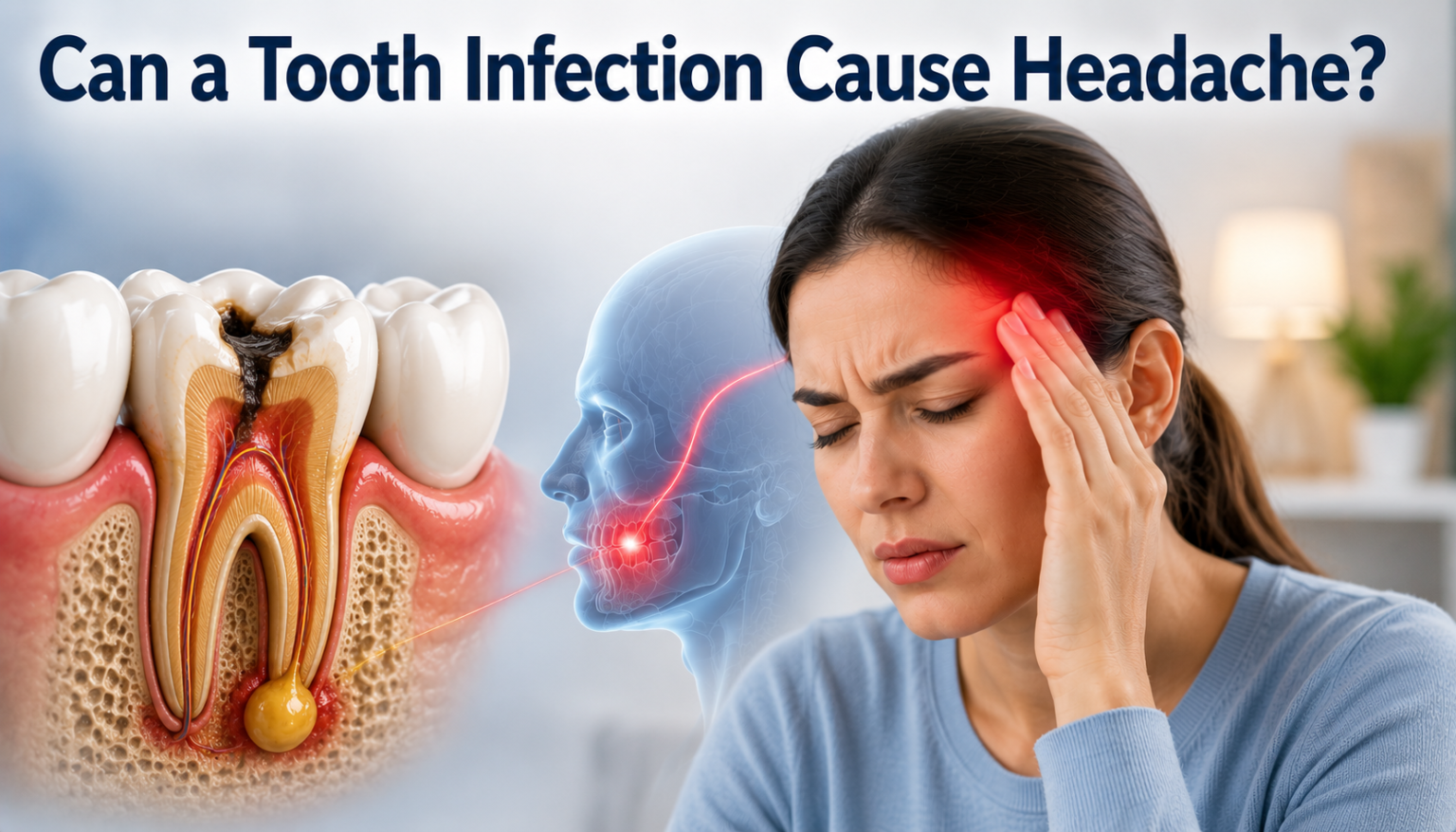
Yes, a tooth infection can cause a headache, and this connection surprises many people who never think their dental health could affect their head. When a tooth becomes infected, the bacteria and inflammation do not always stay confined to the mouth.
They can spread pain signals through shared nerve pathways that connect your teeth, jaw, and skull. This is why so many people search for “can tooth infection cause headache” when they feel a dull ache in their head alongside tooth pain.
Understanding this link helps you catch the real problem early instead of just masking the pain with everyday painkillers. In the sections below, we will break down exactly why this happens and what you should do about it.
What Is a Tooth Infection?
A tooth infection, often called a dental abscess, happens when harmful bacteria invade the inner parts of a tooth or the surrounding gum tissue. This creates a pocket of pus and swelling that can trigger pain far beyond the tooth itself.
Common Causes of Tooth Infections
Tooth infections usually begin with untreated cavities that allow bacteria to reach the soft inner pulp of the tooth. Cracked or chipped teeth can also open a pathway for bacteria to enter and multiply. Gum disease is another major contributor, since it creates pockets around the teeth where infection can easily develop over time.
Types of Dental Abscesses
There are mainly two types of abscesses that dentists identify during an exam. A periapical abscess forms at the tip of the tooth root, usually from untreated decay reaching the nerve. A periodontal abscess, on the other hand, develops in the gum tissue beside the tooth, often linked to advanced gum disease rather than decay.
Can a Tooth Infection Cause a Headache? The Direct Answer
The short answer is yes, and it happens more often than people realize. The infection triggers inflammation that irritates nearby nerves, and those nerve signals can travel upward, creating pain that feels like it is coming from your head rather than your mouth.
The Science Behind Tooth Infection Headaches
Understanding why this connection exists makes it easier to recognize the pattern in your own body. The mouth and head share a complex network of nerves, and infections rarely stay isolated in one small area.
The Role of the Trigeminal Nerve
The trigeminal nerve is the largest nerve in your face, and it controls sensation across your jaw, teeth, cheeks, and forehead. When a tooth infection irritates one of its branches, the pain signal can travel along the entire nerve pathway, making the discomfort feel like it originates in your temple or forehead instead of your tooth.
Shared Nerve Pathways Between Teeth and Head
Your upper and lower teeth connect to nerve branches that also serve the sinuses, jaw joints, and scalp muscles. Because these pathways overlap so closely, your brain sometimes struggles to pinpoint exactly where the pain is coming from, a phenomenon dentists call referred pain.
Inflammation and Pressure Buildup
As the infection grows, swelling and pus create pressure inside the tooth and surrounding bone. This pressure does not stay still; it pushes against nearby tissues and nerves, and that constant strain often shows up as a throbbing headache that worsens throughout the day.
Which Teeth Are Most Likely to Cause Headaches?
Not every infected tooth leads to head pain equally. Location matters a great deal, especially when it comes to how close a tooth sits to your sinuses and major nerve clusters.
Upper Teeth Versus Lower Teeth
Upper teeth sit much closer to the sinus cavities and major facial nerves, so infections here are far more likely to cause headaches or pressure behind the eyes. Lower teeth can still cause referred pain, but it usually stays closer to the jaw and ear region rather than spreading upward.
Molars and Their Closeness to the Sinuses
The upper back molars have roots that sit right beneath the sinus floor, sometimes separated by only a thin layer of bone. An infection here can easily irritate the sinus lining, producing a headache that feels remarkably similar to a sinus infection.
Wisdom Teeth Infections
Impacted or infected wisdom teeth are notorious for causing headaches because they sit deep in the jaw near several nerve endings. The swelling from a wisdom tooth infection often radiates outward, affecting the temple, ear, and even the back of the head.
Common Symptoms That Accompany Tooth Infection Headaches
Recognizing the full symptom pattern helps you distinguish a dental headache from an ordinary one. Most people notice more than just head pain when a tooth infection is the true cause.
| Symptom | Description |
| Throbbing headache | Often constant and worsens with pressure or movement |
| Jaw pain or stiffness | Discomfort when chewing or opening the mouth wide |
| Facial swelling | Puffiness near the cheek or jaw on the affected side |
| Fever | A sign the infection is spreading through the body |
| Sensitivity to hot or cold | Sharp pain when eating or drinking |
| Bad taste or odor | Caused by pus draining inside the mouth |
| Pain when lying down | Blood flow increases pressure in the head while flat |
Tooth Infection Headache Versus Other Headache Types
Since head pain can stem from many sources, it helps to compare a dental headache against the more common types people experience regularly.
How It Differs From a Migraine?
Migraines typically bring visual disturbances, nausea, and sensitivity to light, none of which usually accompany a tooth infection. A dental headache instead stays closely linked to jaw movement, chewing, or temperature changes in the mouth.
How It Differs From a Sinus Headache?
Sinus headaches and dental headaches feel remarkably alike because of their shared location, but sinus headaches usually come with nasal congestion and thick discharge. A tooth-related headache tends to worsen specifically when biting down or touching the infected tooth.
How It Differs From a Tension Headache?
Tension headaches create a tight, band-like pressure around the entire head, usually from stress or poor posture. A dental headache is more localized, often stronger on one side, and directly tied to the position of the infected tooth.
| Headache Type | Key Distinguishing Feature |
| Tooth infection headache | Worsens when biting or touching the tooth |
| Migraine | Includes nausea, light sensitivity, visual aura |
| Sinus headache | Comes with congestion and facial pressure |
| Tension headache | Band-like pressure across the whole head |
Sinus Infection Versus Tooth Infection Headache
These two conditions confuse even experienced patients because the pain overlaps so heavily in the same facial region. Since upper molar roots sit so close to the sinus floor, an infection in either area can mimic the other almost perfectly.
The easiest way to tell them apart at home is to pay attention to triggers. If chewing or tapping a specific tooth intensifies the pain, the tooth is likely the source. If bending forward or blowing your nose worsens the discomfort, the sinuses are more likely involved. Still, only a dentist or doctor can confirm the exact cause with certainty.
When to Worry: Warning Signs of a Serious Infection
Some symptoms indicate the infection may be spreading beyond the tooth and require urgent medical attention rather than a routine appointment.
- Swelling that spreads rapidly toward the eye, neck, or throat
- A high fever that does not respond to medication
- Difficulty swallowing or breathing
- Pain that suddenly intensifies within hours
- A racing heartbeat combined with confusion or weakness
If you notice any of these signs, seek emergency care immediately, since a spreading dental infection can become life-threatening if left untreated.
How Dentists Diagnose the Cause?
A dentist begins with a physical examination, checking for swelling, tenderness, and signs of decay around the suspected tooth. X-rays are then used to reveal abscesses, bone loss, or hidden infections that are not visible to the naked eye.
During the visit, the dentist will likely ask when the pain started, whether it worsens with temperature or pressure, and whether you have noticed any swelling or fever, since these details help narrow down the exact source.
Treatment Options for Tooth Infection Headaches
Once the infection is confirmed, treatment focuses on eliminating the bacteria and relieving the pressure causing your headache.
Antibiotics
Dentists often prescribe antibiotics to control the spread of infection, especially when swelling or fever is present. However, antibiotics alone rarely cure the problem completely, since the bacterial source inside the tooth usually needs direct treatment.
Root Canal Therapy
A root canal removes the infected pulp tissue from inside the tooth, cleaning out the bacteria at its source. This procedure typically resolves the headache within a few days as the pressure and inflammation gradually subside.
Tooth Extraction
When a tooth is too damaged to save, extraction becomes the recommended option to stop the infection from spreading further. Removing the source of infection usually brings quick relief from the associated headache and facial pain.
Drainage of the Abscess
In cases with significant swelling, a dentist may need to drain the abscess to release built-up pus and reduce pressure immediately. This step often provides fast relief even before the underlying tooth issue is fully treated.
Home Remedies for Temporary Relief
While waiting for a dental appointment, a few simple measures can ease discomfort, though they should never replace professional treatment. Rinsing with warm salt water several times a day helps reduce bacteria and mild swelling around the gums. Applying a cold compress to the outside of the cheek can numb the area and reduce inflammation temporarily. Over-the-counter pain relievers may also help manage discomfort in the short term.
It is important to avoid applying heat to the swollen area, since warmth can encourage bacteria to multiply faster. Ignoring the pain and hoping it resolves on its own is equally risky, as untreated infections rarely improve without proper care.
Can the Headache Go Away Without Treating the Tooth?
Treating only the headache with painkillers might offer temporary comfort, but it does nothing to address the bacterial infection causing it.
The underlying problem continues to grow, and the pressure inside the tooth or gum tissue keeps building until it finds another way to cause pain. In many cases, ignoring the root cause allows the infection to spread further, increasing the risk of more serious complications down the line.
How to Prevent Tooth Infection Related Headaches?
Prevention is far easier than treatment, and a few consistent habits can significantly lower your risk. Brushing twice daily and flossing regularly removes the bacteria that lead to decay and gum disease before they become serious problems.
Scheduling regular dental checkups allows small cavities to be caught and treated long before they progress into painful infections. Addressing teeth grinding, often through a nightguard, also reduces stress on the teeth and jaw that can otherwise contribute to nerve irritation and headaches.
Frequently Asked Questions
Can a tooth infection cause a headache on one side only? Yes, since the infection usually affects a single tooth, the referred pain typically stays on the same side of the head as the infected tooth.
How long does the headache last after treatment? Most headaches improve within a few days of proper treatment, such as a root canal or antibiotics, as the swelling and pressure decrease.
Can a tooth infection cause migraines? A tooth infection does not directly cause migraines, but the pain and stress from it can trigger a migraine in people who are already prone to them.
Can a tooth infection headache go away on its own? It is unlikely, since the underlying bacterial infection needs proper treatment to fully resolve rather than disappearing without care.
Is a tooth infection headache an emergency? It becomes an emergency if it comes with high fever, spreading swelling, or difficulty breathing or swallowing, all of which require immediate medical attention.
Conclusion
A tooth infection can absolutely cause a headache, largely due to shared nerve pathways and the inflammation that builds up as the infection spreads.
Recognizing the accompanying symptoms, such as jaw pain, swelling, or sensitivity, helps you identify the true source instead of just treating the headache itself. Seeing a dentist promptly ensures the infection is properly treated, bringing lasting relief rather than temporary comfort.
Related Post’s
Can Sleep Deprivation Cause Headaches? Causes, Symptoms, Treatment & Prevention
Is Muscle Twitching Dangerous? What Your Body Is Really Trying to Tell You
Source of Health Spa: Services, Benefits, Wellness Treatments & Customer Experience
How to Fix a Loose Tooth: Causes, Treatments, and When to See a Dentist