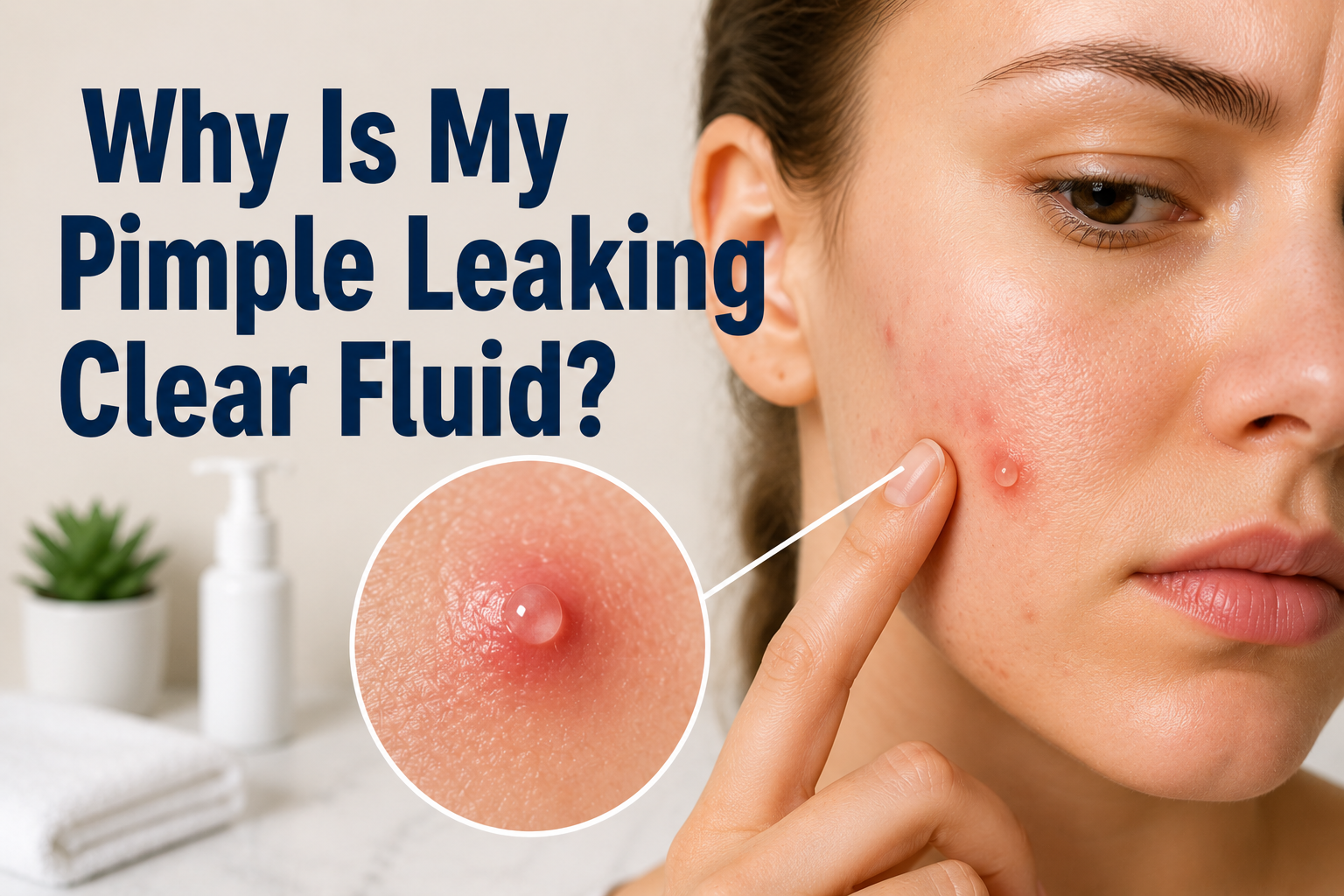
If you are asking why is my pimple leaking clear fluid, the short answer is that this is usually just your skin’s natural healing response after the pimple’s wall has broken or been disturbed. The fluid is most often serum, a watery part of your blood that helps clean the wound and start the repair process.
In most cases this is not dangerous and does not require any emergency treatment. However, if the clear fluid is joined by heavy redness, swelling, warmth, or pain, it may be a sign that something else is going on.
This article breaks down every possible reason behind this common skin reaction, how to care for it properly, and when it is time to get professional help.
What Is the Clear Fluid, Exactly?
The clear liquid coming from a pimple is generally serum, which is the watery portion of blood left over after clotting cells and red blood cells are removed. It shows up whenever the skin barrier over a blemish is broken, whether that happens on its own or through popping.
Serum vs Plasma
Serum and plasma are closely related, but serum is plasma with the clotting proteins already removed. When a pimple opens up, tiny blood vessels beneath the skin release this fluid as part of the body’s automatic cleanup process, which is why it usually looks watery and slightly yellow rather than thick or colored like pus.
Lymph Fluid Involvement
Lymph fluid can also mix in with the serum, especially if the surrounding tissue was inflamed for several days before the pimple opened. Lymph carries white blood cells and waste products away from the injured area, so its presence is actually a sign that your immune system is actively working on healing the spot.
The Skin’s Natural Healing Process
Every pimple goes through a cycle of inflammation, drainage, and repair, and the leaking stage is simply one part of that larger process. Recognizing where your skin is in this cycle helps you understand why fluid appears and roughly how long it should last.
The Inflammation Stage
During inflammation, blood flow increases to the area, causing redness, swelling, and tenderness as the immune system responds to clogged pores or trapped bacteria. This stage usually happens before any fluid is visible and can last anywhere from a day to several days depending on the severity of the blemish.
The Drainage and Repair Stage
Once the pimple’s surface weakens or breaks, either naturally or from touching it, fluid begins to drain as the body flushes out debris and starts forming new tissue underneath. This drainage stage is temporary, and as new skin cells form, the leaking typically slows down and eventually stops on its own within a few days.
Common Causes of Clear Fluid Discharge
There are several everyday reasons a pimple might start leaking clear fluid, ranging from normal healing to minor irritation from outside sources. Knowing which situation applies to you can help you decide how to respond.
Post-Rupture Healing Stage
When a pimple ruptures on its own, the body immediately begins sending serum to clean the wound and protect it from bacteria entering the open skin. This is the most common and least concerning reason for clear fluid, and it usually resolves within two to four days without any special treatment.
Popping or Picking Too Early
Squeezing a pimple before it is ready forces open the skin and disrupts the natural drainage process, which often leads to prolonged leaking mixed with lymph fluid. This early disturbance can also push bacteria deeper into the pore, sometimes making healing take longer than if the pimple had been left alone.
Cystic or Nodular Acne
Deeper acne lesions such as cysts and nodules sit further beneath the skin’s surface, and when they finally begin to resolve, they can leak a mix of clear fluid and blood-tinged discharge. Because these lesions are larger and more inflamed than surface pimples, the healing and leaking phase can last noticeably longer.
Friction or Irritation from Clothing and Products
Constant rubbing from clothing, phone screens, helmets, or rough fabric can keep a healing pimple from closing properly, causing it to continue oozing fluid. Similarly, harsh exfoliants or alcohol-based products can irritate the area and delay the natural sealing of the skin.
Allergic Reaction to Skincare Products
Certain ingredients in cleansers, moisturizers, or makeup can trigger a mild allergic or irritant reaction around a pimple, leading to extra fluid production as the skin tries to flush out the irritant. If this is the cause, you may also notice itching or a rash-like pattern spreading slightly beyond the original blemish.
Infection Resolving After Pus Drainage
If a pimple previously contained pus and that pus has already drained, clear fluid appearing afterward often signals that the infection is calming down and the wound is entering its final healing phase. This shift from thick, colored discharge to clear fluid is generally viewed as a positive sign rather than a warning sign.
When Clear Fluid Is Normal?
In most everyday cases, clear fluid leaking from a pimple is nothing more than a routine part of the skin repairing itself after the surface has broken. If the area is only mildly tender, the redness stays contained to the original spot, and the fluid gradually decreases over a few days, this pattern fits the normal healing timeline.
Mild Symptoms That Are Usually Fine
A small amount of clear discharge combined with light pink skin, slight tenderness when touched, and gradual scabbing are all typical signs that your body is handling the situation well on its own. As long as these symptoms are improving day by day rather than getting worse, there is generally no need for concern.
Typical Healing Timeline
Most pimples that leak clear fluid finish this stage within three to five days, after which a small scab or dry patch forms and eventually flakes off. Keeping the area clean and undisturbed during this window is usually enough to let the natural timeline play out.
When It Could Signal a Problem?
While clear fluid on its own is rarely serious, certain accompanying symptoms suggest that the area may be infected or irritated beyond normal healing. Paying attention to these changes can help you catch a problem early.
Warning Signs to Watch For
If the redness starts spreading outward, the skin feels warm to the touch, swelling increases instead of decreasing, or the pain becomes sharp rather than mild, these are signals that the situation may be moving beyond simple healing. A return of thick yellow pus after clear fluid had already appeared, a foul odor, or a low-grade fever are additional signs that medical attention may be needed.
Table of Red Flags
| Symptom | Likely Meaning |
| Spreading redness | Possible bacterial infection |
| Warmth around the area | Inflammation worsening |
| Increasing swelling | Infection or deep cyst formation |
| Foul-smelling discharge | Bacterial buildup |
| Fever or chills | Systemic infection, needs urgent care |
Types of Pimples That Commonly Leak Fluid
Not every blemish behaves the same way, and the type of pimple you have often determines how much fluid it produces and for how long. Whiteheads, blind pimples, and boils each follow slightly different patterns.
Whiteheads and Surface Pimples
Whiteheads sit close to the skin’s surface and tend to leak only a small, short-lived amount of clear fluid once they open, usually resolving within a couple of days. These are generally the mildest and quickest to heal among all pimple types.
Blind Pimples and Boils
Blind pimples form deeper under the skin without ever forming a visible head, so when they finally break open, they can release a noticeable amount of fluid mixed with blood or lymph. Boils, which involve a bacterial infection around a hair follicle, tend to produce more fluid over a longer period and often need extra care to fully clear.
How to Properly Care for a Leaking Pimple?
Taking the right steps while a pimple is leaking can speed up healing and reduce the risk of scarring or further irritation. Gentle, consistent care matters more than aggressive treatment at this stage.
Cleaning the Area Gently
Wash the area twice a day with a mild, fragrance-free cleanser and lukewarm water, patting it dry afterward instead of rubbing. This simple habit removes bacteria and leftover fluid without stripping the skin or reopening the wound.
Using Clean Materials to Absorb Fluid
Dab the area with a clean cotton pad or soft gauze rather than reusing towels or tissues that may carry bacteria. Changing to a fresh pad each time you clean the spot helps prevent recontamination during the healing window.
Applying Suitable Ointments
A thin layer of antibacterial ointment can help protect the open skin and keep it slightly moist, which supports faster healing without forming a hard scab. Avoid thick or heavily fragranced products, since these can trap bacteria underneath.
Keeping the Area Dry and Breathable
While gentle moisture from ointment is helpful, the surrounding skin should stay as breathable as possible, so avoid covering it with heavy makeup or tight fabric. Letting air reach the area supports the natural closing process of the wound.
What NOT to Do?
Certain habits can slow healing significantly or make the leaking worse, so avoiding them is just as important as following proper care steps.
Actions to Avoid
Do not squeeze or pick at the pimple again once it has started leaking, since this reopens the wound and increases the risk of scarring and infection. Avoid harsh scrubbing, picking at any scab that forms, and layering heavy makeup directly over the open area, as all of these can extend the healing timeline.
Home Remedies That May Help
A few gentle home remedies can support healing alongside your regular skincare routine, though they should never replace proper hygiene.
Warm Compress and Natural Options
Applying a warm, clean compress for a few minutes can encourage remaining fluid to drain naturally and ease mild swelling. Diluted tea tree oil or pure aloe vera gel can also be dabbed lightly on the area, both known for their calming and mild antibacterial properties.
Over-the-Counter Treatments
For pimples that keep recurring or take longer than expected to heal, certain over-the-counter ingredients can help manage the underlying acne itself.
Effective Ingredients to Look For
Benzoyl peroxide helps reduce acne-causing bacteria, while salicylic acid works to clear pores and reduce inflammation around the blemish. Hydrocolloid acne patches are especially useful during the leaking stage, as they absorb fluid while protecting the area from outside bacteria and picking.
When to See a Dermatologist
Most leaking pimples heal without professional help, but certain situations call for a dermatologist’s evaluation rather than continued home care.
Signs You Should Book an Appointment
If the fluid or redness has not improved after five to seven days, if the area is becoming more painful rather than less, or if you experience frequent cystic breakouts that keep leaking fluid, a dermatologist can offer targeted treatment. Recurrent boils or lesions that leave scarring are also strong reasons to seek professional guidance rather than continuing to self-treat.
Preventing Future Pimples from Leaking Excessively
Reducing how often pimples become severe enough to leak starts with consistent, gentle skincare habits rather than reactive treatment.
Daily Habits That Help
Stick to a simple routine using non-comedogenic cleansers and moisturizers, avoid touching your face throughout the day, and change pillowcases regularly to limit bacteria buildup. Resisting the urge to pop pimples early is one of the most effective ways to prevent excessive fluid leakage and reduce the chance of scarring.
Frequently Asked Questions
Is it normal for a pimple to leak clear fluid for several days? Yes, mild leaking for two to five days is generally normal as part of the healing process, especially if the area is gradually improving.
Can I put a bandage over a leaking pimple? A breathable hydrocolloid patch is fine and often helpful, but avoid airtight bandages that trap moisture and bacteria against the skin.
Should I stop wearing makeup while it is leaking? It is best to avoid makeup directly on the area until the fluid stops and the skin has started to close, to prevent further irritation.
Does clear fluid mean my pimple is infected? Not usually. Clear fluid alone typically points to normal healing, while infection is more likely when pus, warmth, or spreading redness are also present.
Conclusion
Understanding why is my pimple leaking clear fluid comes down to recognizing that this is often a normal part of your skin’s healing cycle rather than a cause for alarm.
In most cases, gentle cleaning, avoiding further picking, and giving the area time will allow it to close on its own within a few days.
However, watching for warning signs like spreading redness, warmth, or returning pus is important, and reaching out to a dermatologist is always a smart step if healing stalls or symptoms worsen.
Related Posts
Is Autism Spectrum Disorder Capitalized? A Complete Guide
Car Accident Back Pain: Causes, Symptoms, and Treatment Options
What Is Commonly Misdiagnosed as Pink Eye? Full Guide
Insanity Plyometric Cardio Circuit: Everything You Need to Know