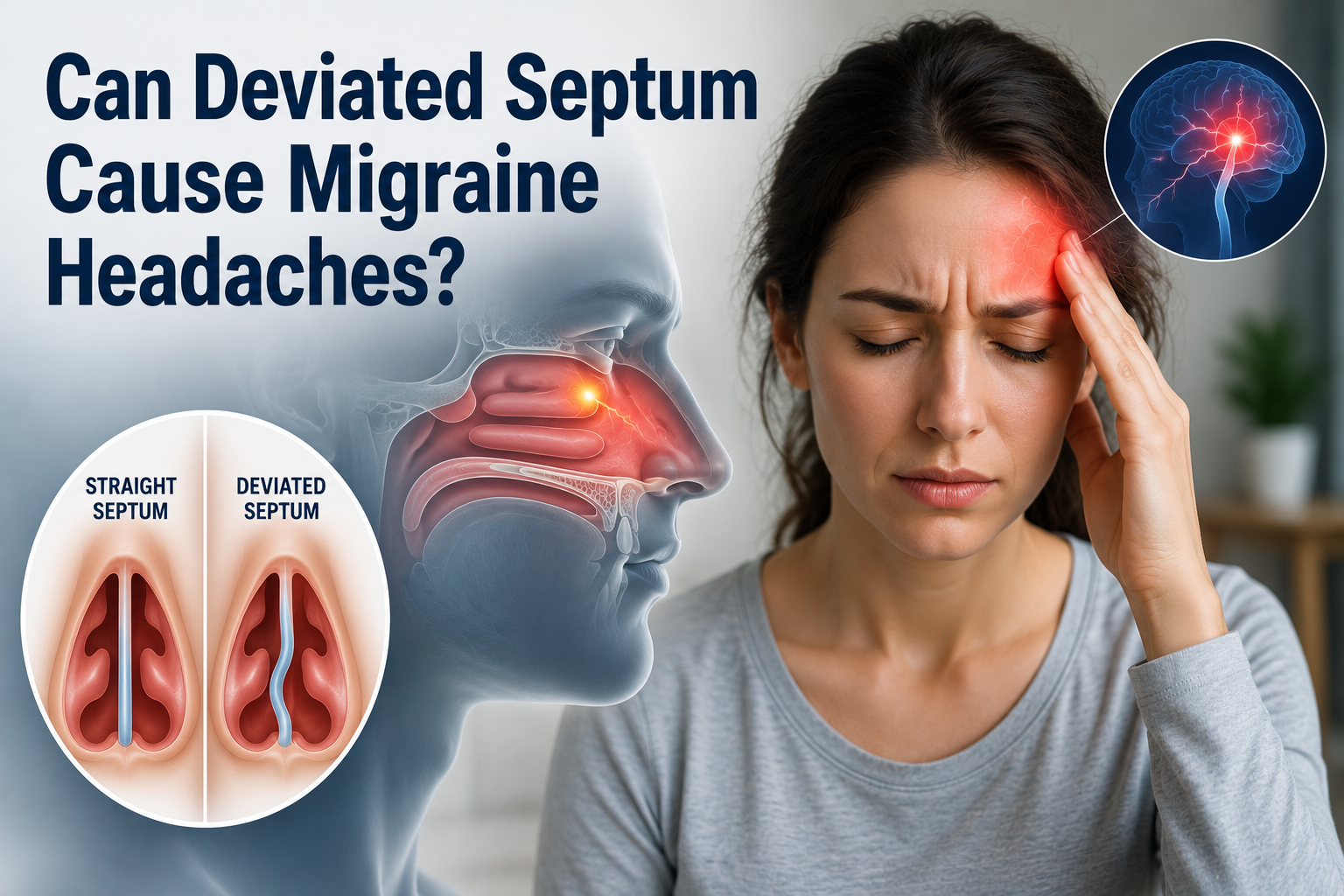
A deviated septum can cause headaches in some people, but it does not directly cause true migraines in most cases. The connection depends on how badly the septum is bent, whether it touches nearby nasal structures, and whether a person already has an underlying migraine disorder.
Many people confuse sinus pressure headaches with migraines, which makes this topic confusing. Understanding the difference between a nasal-related headache and a true migraine helps you get the right treatment instead of guessing. This guide breaks down the science, the symptoms, and what doctors actually recommend.
What Is a Deviated Septum?
A deviated septum happens when the thin wall between your two nostrils shifts to one side instead of sitting straight in the middle. This bend can be mild or severe, and it affects how air flows through your nose on a daily basis.
Definition and Anatomy of the Nasal Septum
The nasal septum is made of cartilage and bone, and it divides your nasal cavity into two separate passages. When this structure is straight, air moves smoothly through both nostrils. Once it bends or shifts, one side of the nose often becomes narrower than the other, which changes airflow and pressure inside the nasal cavity.
Common Causes of a Deviated Septum
Most cases of a deviated septum happen either at birth or because of a physical injury to the nose later in life. Sports injuries, falls, and car accidents are frequent causes among adults. Aging can also gradually shift the septum over time, even without any obvious injury.
How Common Is a Deviated Septum?
Studies suggest that a large percentage of adults have some degree of septum deviation, though many never notice symptoms. Only when the deviation becomes moderate to severe do people typically experience breathing problems, snoring, or facial discomfort that pushes them to seek medical advice.
Signs and Symptoms of a Deviated Septum
Common signs include noisy breathing during sleep, frequent nosebleeds, and a feeling of blockage that switches sides depending on position. Some people also notice recurring sinus infections or a constant sense of congestion, even when they don’t have a cold.
What Is a Migraine? A Quick Overview
A migraine is a neurological condition, not just a bad headache, and it involves specific brain and nerve activity. Recognizing true migraine symptoms is essential before linking them to nasal problems.
Definition and Types of Migraines
Migraines are recurring headaches that often come with nausea, sensitivity to light, and throbbing pain, usually on one side of the head. There are several types, including migraine with aura, migraine without aura, and chronic migraine, each with slightly different patterns and triggers.
Common Migraine Symptoms
Typical symptoms include intense throbbing pain, visual disturbances before the headache begins, nausea or vomiting, and extreme sensitivity to light and sound. Some people also experience neck stiffness or mood changes a day or two before an attack starts.
Known Migraine Triggers
Common triggers include stress, hormonal changes, certain foods, lack of sleep, and strong smells. Weather changes and dehydration are also frequently reported triggers among people who experience migraines regularly.
How Migraines Differ From Regular Headaches?
Regular tension headaches usually cause a dull, constant pressure on both sides of the head without nausea or light sensitivity. Migraines, on the other hand, are typically more intense, often one-sided, and accompanied by additional symptoms that interfere with daily activities.
The Connection: Can Deviated Septum Cause Migraine Headaches?
The honest answer is that a deviated septum can trigger headache-like pain, but this is usually different from a clinically diagnosed migraine. The link exists mainly through nerve irritation and pressure changes rather than a direct cause-and-effect relationship.
The Contact Point Headache Theory Explained
When a deviated septum touches the turbinates, the small structures inside the nose, it can irritate sensitive nerve endings in that area. This irritation is known as a contact point headache, and it often causes localized facial pain that some people mistake for a migraine.
Role of the Trigeminal Nerve
The trigeminal nerve carries sensation from the face and nasal area to the brain, and it plays a major role in migraine pathways as well. When nasal tissue irritates this nerve, the resulting signals can produce pain patterns that closely resemble migraine symptoms, which is why the confusion between the two conditions is so common.
How Nasal Obstruction Leads to Pressure and Pain?
A blocked nasal passage can cause air pressure to build up unevenly inside the sinuses. Over time, this pressure imbalance may lead to a dull ache around the forehead, cheeks, or eyes, especially during weather changes or when lying down.
What Current Research and Studies Say
Medical research remains divided on this topic. Some studies show improvement in headache frequency after septum correction, while others find no significant change, especially in people who already have a diagnosed migraine disorder unrelated to nasal anatomy.
Sinus Headache vs Migraine vs Rhinogenic Headache
These three conditions often get mixed up because they share overlapping symptoms like facial pressure and pain around the eyes. Knowing their differences helps you describe your symptoms accurately to a doctor.
Key Differences Between the Three
Sinus headaches are usually linked to infection or inflammation and come with thick nasal discharge and fever. Migraines involve neurological symptoms like aura and nausea, while rhinogenic headaches, caused by structural nasal issues like a deviated septum, tend to worsen with nasal congestion and improve with decongestants.
Why Sinus Headaches Are Often Misdiagnosed Migraines?
Many people who believe they have chronic sinus headaches actually meet the clinical criteria for migraines once properly evaluated. This happens because facial pressure and head pain overlap heavily between the two conditions, leading to years of incorrect self-diagnosis.
Comparison Table
| Feature | Sinus Headache | Migraine | Rhinogenic Headache |
| Main Cause | Sinus infection/inflammation | Neurological | Structural nasal issue |
| Nasal Discharge | Common, thick | Rare | Sometimes present |
| Nausea/Vomiting | Uncommon | Common | Uncommon |
| Light Sensitivity | Rare | Common | Rare |
| Relief With Decongestants | Often helps | Rarely helps | Often helps |
| Pain Location | Forehead, cheeks | One-sided, throbbing | Near contact point |
Symptoms That Suggest Your Headache Is Nose-Related
If your headache pattern lines up closely with your nasal symptoms, a structural cause becomes more likely. The short answer is that certain warning signs point directly toward the nose rather than the brain.
One-Sided Nasal Blockage and One-Sided Headache
When the blocked nostril and the headache pain occur on the same side of the face, this pattern strongly suggests a connection to the deviated septum rather than a typical migraine.
Headache Worsens With Nasal Congestion
If your head pain intensifies whenever your nose feels stuffy or during allergy flare-ups, this timing pattern is a useful clue that nasal structure is playing a role in your discomfort.
Relief After Using Decongestants
Headaches that ease significantly after using a nasal decongestant or spray are more likely tied to nasal pressure than to a true migraine, since migraines generally do not respond to decongestant medication.
Associated Symptoms Like Snoring and Mouth Breathing
Frequent snoring, dry mouth in the morning, and habitual mouth breathing often accompany a deviated septum and can indicate that nasal obstruction is contributing to your overall discomfort, including headaches.
How Doctors Diagnose the Cause?
Getting an accurate diagnosis requires input from more than one type of specialist in many cases. Doctors combine physical examination with imaging to separate nasal causes from neurological ones.
ENT Physical Examination
An ear, nose, and throat specialist will examine your nasal passages using a simple light or small scope to check for visible deviation, swelling, or contact points between nasal structures.
Nasal Endoscopy
This procedure uses a thin, flexible camera to give a detailed view inside the nasal cavity, allowing doctors to spot subtle deviations or irritation points that a basic exam might miss.
CT Scan and Imaging
A CT scan provides a clear picture of the nasal bone and cartilage structure, helping doctors confirm the severity of the deviation and rule out other issues like chronic sinusitis or nasal polyps.
Neurologist Evaluation for Migraine Diagnosis
If nasal causes are ruled out or seem unlikely, a neurologist will assess headache patterns, triggers, and accompanying symptoms to determine whether the pain fits the clinical definition of migraine.
Differential Diagnosis Process
Doctors often use a step-by-step elimination approach, starting with the most common causes and gradually ruling them out through history taking, physical exams, and imaging until the true source of the headache is identified.
Treatment Options
Treatment depends heavily on whether the nose or the nervous system is driving your headache pain. Options range from simple home care to surgical correction in more severe cases.
Non-Surgical Treatments
Nasal sprays, antihistamines, and decongestants can reduce swelling and improve airflow, often easing headache symptoms linked to nasal pressure. These treatments work best for mild to moderate deviation without severe structural blockage.
Home Remedies and Lifestyle Changes
Simple steps like using a humidifier, staying hydrated, and avoiding known irritants such as smoke or strong perfumes can reduce nasal inflammation and, in turn, lower the frequency of pressure-related headaches.
Septoplasty: What It Involves?
Septoplasty is a surgical procedure that straightens the nasal septum to improve airflow and eliminate contact points causing nerve irritation. It is typically recommended only when symptoms are moderate to severe and other treatments have failed.
Does Surgery Actually Reduce Headaches
Success rates vary widely between patients. Some people report significant headache relief after septoplasty, while others notice little to no change, particularly if their headaches were actually migraines unrelated to nasal structure.
Migraine-Specific Treatments
For true migraines, treatment usually includes preventive medications, trigger avoidance, and acute pain relief options prescribed by a neurologist. These treatments target nerve pathways in the brain rather than the nasal structure itself.
When to See a Doctor
Persistent or worsening symptoms should never be ignored, especially when they interfere with daily life. Knowing when to seek help ensures the underlying cause gets addressed early.
Red Flag Symptoms Requiring Urgent Care
Sudden severe headache, vision changes, confusion, or headache following a head injury all require immediate medical attention, as these symptoms can indicate more serious underlying conditions beyond nasal issues.
When to See an ENT Versus a Neurologist
If nasal blockage and facial pressure dominate your symptoms, start with an ENT specialist. If your headaches involve nausea, aura, or light sensitivity, a neurologist is the more appropriate first stop.
Questions to Ask Your Doctor
Ask whether your headache pattern matches migraine criteria, whether imaging is needed to check your septum, and whether trying nasal treatment first makes sense before considering surgery.
Prevention and Management Tips
Small daily habits can meaningfully reduce how often nasal-related headaches occur. Consistency matters more than any single remedy.
Reducing Nasal Irritation and Allergens
Keeping your living space free of dust, using air purifiers, and managing seasonal allergies can lower nasal inflammation, which in turn reduces the chances of pressure-related headache episodes.
Sleep Hygiene and Posture
Sleeping with your head slightly elevated can improve nasal drainage overnight, while maintaining a consistent sleep schedule helps reduce both tension headaches and migraine frequency.
Tracking Headache Patterns With a Diary
Recording when headaches occur, along with nasal symptoms, weather, and food intake, helps both you and your doctor identify patterns that point toward either a nasal cause or a true migraine trigger.
Frequently Asked Questions
Does everyone with a deviated septum get headaches? No, many people live with a deviated septum without ever experiencing related headaches, since symptoms usually depend on the severity of the deviation.
Can septoplasty cure migraines? Septoplasty may reduce nasal-related headache symptoms but does not typically cure true migraines caused by neurological factors unrelated to nasal structure.
How do I know if it’s a sinus headache or migraine? Sinus headaches usually come with congestion and improve with decongestants, while migraines involve nausea, light sensitivity, and throbbing pain unrelated to nasal blockage.
Is deviated septum headache one-sided? Yes, headaches linked to a deviated septum are often one-sided, matching the side where the nasal blockage or contact point occurs.
Can allergies make it worse? Yes, allergies can increase nasal swelling and pressure, which may intensify headache symptoms in people who already have a deviated septum.
Conclusion
So, can deviated septum cause migraine headaches? The honest answer is that it can contribute to headache symptoms through nerve irritation and pressure buildup, but it rarely causes a true clinical migraine on its own.
Proper diagnosis through an ENT specialist and, if needed, a neurologist is the best way to identify the real cause and choose the right treatment path.
Related Posts
How to Relieve Neck Pain from Sleeping Wrong: Effective Treatments, Stretches, and Prevention Tips
How to Unlock a Locked Knee: Causes, Immediate Steps & When to See a Doctor
Does Gatorade Cause Kidney Stones? What the Research Actually Shows
Why Does My Knee Feel Tight? Causes, Relief, and When to See a Doctor