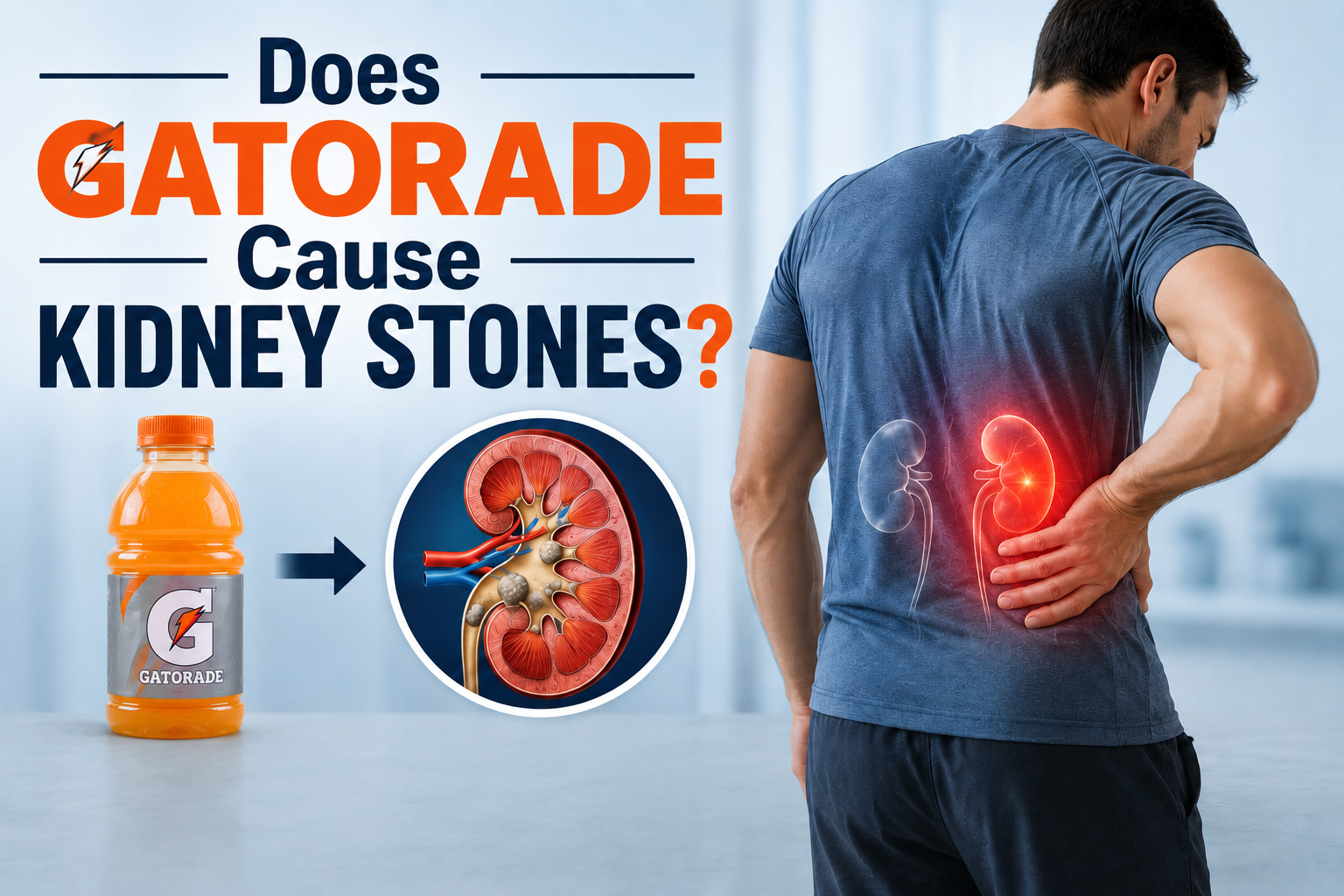
Does Gatorade cause kidney stones? It’s a fair question if you drink it often and worry about your kidney health. Sports drinks are loaded with sodium, and high sodium intake is a known risk factor for stone formation. This guide breaks down what actual urology research found when scientists tested Gatorade directly, plus what really drives kidney stone risk and how to drink smarter.
Key Takeaways
- A peer-reviewed urology study found that drinking Gatorade did not increase or decrease urinary stone risk factors compared to water.
- Gatorade did raise urinary sodium and chloride slightly, but the change was not clinically significant and urinary calcium stayed unchanged.
- A 20-ounce bottle of classic Gatorade contains roughly 270 mg of sodium, which is meaningful but not extreme in the context of a full day’s diet.
- Dehydration, not Gatorade itself, is one of the biggest controllable risk factors for kidney stones.
- People with existing kidney disease or sodium-sensitive conditions should still talk to a doctor before relying on sports drinks regularly.
Does Gatorade Cause Kidney Stones?
No, current evidence does not support the claim that Gatorade causes kidney stones. A study published in the Journal of Urology evaluated the effects of Gatorade on urinary stone risk factors and concluded that overall consumption of Gatorade does not increase or decrease those risk factors.
That single sentence answers the search query directly, but it deserves more context.
- The study compared urinary chemistry after Gatorade consumption against water and baseline measurements.
- Researchers specifically tracked the minerals tied to stone formation, including calcium, sodium, and chloride.
- Gatorade increased mean urinary sodium and chloride compared to water, but those changes stayed within normal urinary parameters and were not clinically significant, and urinary calcium was unchanged.
Pro Tip: Calcium is the mineral most directly linked to the most common type of kidney stone (calcium oxalate). Since the study found no change in urinary calcium after Gatorade, that’s the strongest evidence against a direct Gatorade-to-stone link.
Why Do People Suspect Gatorade in the First Place?
The suspicion isn’t baseless — it comes from real properties of the drink, even if the conclusion turns out to be wrong.
Sports drinks are designed to replace what you lose in sweat: water, sodium, and a smaller amount of potassium. A 20-ounce bottle of classic Gatorade Thirst Quencher carries 270 milligrams of sodium and 80 milligrams of potassium. Sodium has a well-documented relationship with kidney stones through a different mechanism than the one most people assume.
How Sodium Actually Affects Stone Risk?
H3 sections inside this H2 need a quick two-line frame: sodium’s effect on stones runs through the kidneys’ handling of calcium, not through Gatorade’s formula directly.
- Eating a high-sodium diet overall can increase how much calcium your kidneys excrete into urine.
- More calcium in urine gives stone-forming crystals more raw material to bind with oxalate.
- This effect comes from cumulative daily sodium, not from one sports drink in isolation.
What’s Actually in Gatorade That Matters for Kidneys?
Understanding the full nutrition profile helps separate real risk factors from assumptions. Here’s what one classic 20-ounce bottle contains.
| Nutrient | Amount per 20 oz bottle | Relevance to Kidney Stones |
| Sodium | ~270 mg | Moderate; matters cumulatively across your full diet |
| Potassium | ~80 mg | Low; minimal stone-related impact |
| Added Sugar | ~34 g | Indirect — high sugar intake is linked to broader metabolic and stone risk |
| Calories | ~140 | Not directly stone-related |
That sugar figure is worth flagging on its own: 34 grams of added sugar is about 68 percent of the FDA’s 50-gram daily value reference, and it can exceed the American Heart Association’s daily added-sugar guidance for many adults in a single bottle. Sugar isn’t a primary driver of kidney stones, but excessive sugar intake is tied to broader metabolic problems that can compound kidney stress over time.
Does Gatorade Help or Hurt If You Already Have Kidney Stones?
This is where the answer gets more nuanced than a flat yes or no.
The case for Gatorade helping: Staying well-hydrated is one of the most effective ways to prevent kidney stones, because concentrated urine gives minerals more opportunity to crystallize. Some urology clinics specifically note that while water is the best fluid for stone prevention, other hydrating fluids such as Gatorade can also work well for people who need to maintain fluid intake, especially after sweating heavily.
The case for caution: A registered dietitian focused on kidney stone nutrition has pointed out that people with a history of kidney stones are typically advised to keep sodium intake near 2,300 mg per day, and Gatorade’s sodium content can take up a meaningful share of that daily budget if consumed in large volumes.
What Actually Causes Kidney Stones?
Most kidney stones form due to a combination of factors that have little to do with any single beverage.
- Chronic dehydration — Low fluid intake concentrates urine and lets minerals crystallize more easily.
- High dietary sodium overall — Not just from drinks, but from processed foods, restaurant meals, and added salt.
- Low calcium intake from food — Counterintuitively, too little dietary calcium can increase oxalate absorption.
- High oxalate foods — Spinach, nuts, and certain teas in large amounts, especially for people prone to calcium oxalate stones.
- Genetics and family history — Stone formation has a documented hereditary component.
Gatorade vs. Other Drinks for Kidney Health
Not all beverages carry the same risk profile. Here’s how Gatorade stacks up against common alternatives.
| Drink Type | Sodium Impact | Sugar Impact | Stone Risk Evidence |
| Gatorade | Moderate | High | No increase in stone risk factors (per cited study) |
| Plain Water | None | None | Gold standard for stone prevention |
| Soda (cola) | Low | Very high | Linked to kidney stones and reduced kidney function with frequent consumption |
| Grapefruit Juice | Low | Moderate | Advised against by some urology clinics due to stone-promoting effects. |
| Pedialyte | Low-Moderate | Low | Generally considered a safe hydration option |
Who Should Be More Careful With Gatorade?
Most healthy adults can drink Gatorade in moderation without meaningful kidney stone risk. A few groups warrant extra caution.
- People with diagnosed kidney disease, since impaired kidneys may struggle to filter excess sodium and potassium.
- People on a sodium-restricted diet for blood pressure or Circulatory system reasons.
- People with a personal history of recurrent kidney stones, who are often given specific daily sodium targets by their doctor or dietitian.
- People drink large volumes daily for reasons unrelated to intense exercise, since the sugar and sodium add up without a real physiological need.
Warning: If you have existing kidney disease, talk to your doctor before making sports drinks a regular part of your routine. Electrolyte handling works differently when kidney function is already reduced.
How to Drink Gatorade Without Increasing Your Risk
If you enjoy Gatorade or rely on it for workouts, a few practical habits keep your overall risk profile low.
- Reserve it primarily for genuine sweat-replacement situations — long workouts, hot weather, or intense activity over an hour.
- Alternate with plain water on days when you’re not exercising heavily.
- Keep an eye on total daily sodium from food, not just from drinks.
- Choose lower-sugar Gatorade variants if you’re drinking it frequently and want to limit added sugar intake.
Frequently Asked Questions
Does Gatorade cause kidney stones?
No. A peer-reviewed urology study found that Gatorade consumption did not increase or decrease urinary stone risk factors, and urinary calcium levels stayed unchanged.
Is Gatorade bad for your kidneys?
For healthy adults drinking it in moderation, no. People with existing kidney disease should be more cautious because of how sodium and potassium are filtered.
What drinks actually cause kidney stones?
Dark sodas and grapefruit juice have stronger associations with stone risk due to sugar, phosphoric acid, and specific stone-promoting compounds. Chronic low water intake is the biggest overall driver.
Is Gatorade good for preventing kidney stones?
It can support hydration, which helps prevent stones, but plain water remains the better first choice. Gatorade works as a reasonable secondary option during heavy sweating.
How much sodium is in Gatorade?
A 20-ounce bottle of classic Gatorade Thirst Quencher contains about 270 milligrams of sodium.
Can drinking too many electrolytes cause kidney stones?
Excess sodium specifically can raise urinary calcium over time, which is a stone risk factor. This effect comes from total daily sodium intake, not from electrolyte drinks alone.
Should people with a history of kidney stones avoid Gatorade completely?
Not necessarily, but they should track it against their daily sodium limit, often around 2,300 mg, and discuss their specific case with a doctor or registered dietitian.
Conclusion
So, does Gatorade cause kidney stones? The direct research says no. A study that specifically tested Gatorade against urinary stone risk factors found no meaningful increase — urinary calcium stayed unchanged, and the small rise in sodium and chloride wasn’t clinically significant enough to matter.
That said, the bigger picture is worth holding onto. Gatorade itself isn’t the villain here, but the habits around it can still tip your risk in the wrong direction. Total daily sodium adds up fast once you count packaged foods, restaurant meals, and a few bottles of a sports drink on top.
Related Posts
How to Get Rid of Numbness After Dentist: Causes, Remedies, and Recovery Tips
Do You Gain Weight During Your Period? Causes, Truth & Simple Tips to Feel Better
Tooth Lesion: Types, Causes, and Treatment Options Explained
What Is Optimal Health? A Complete Guide to Physical, Mental, and Emotional Wellness