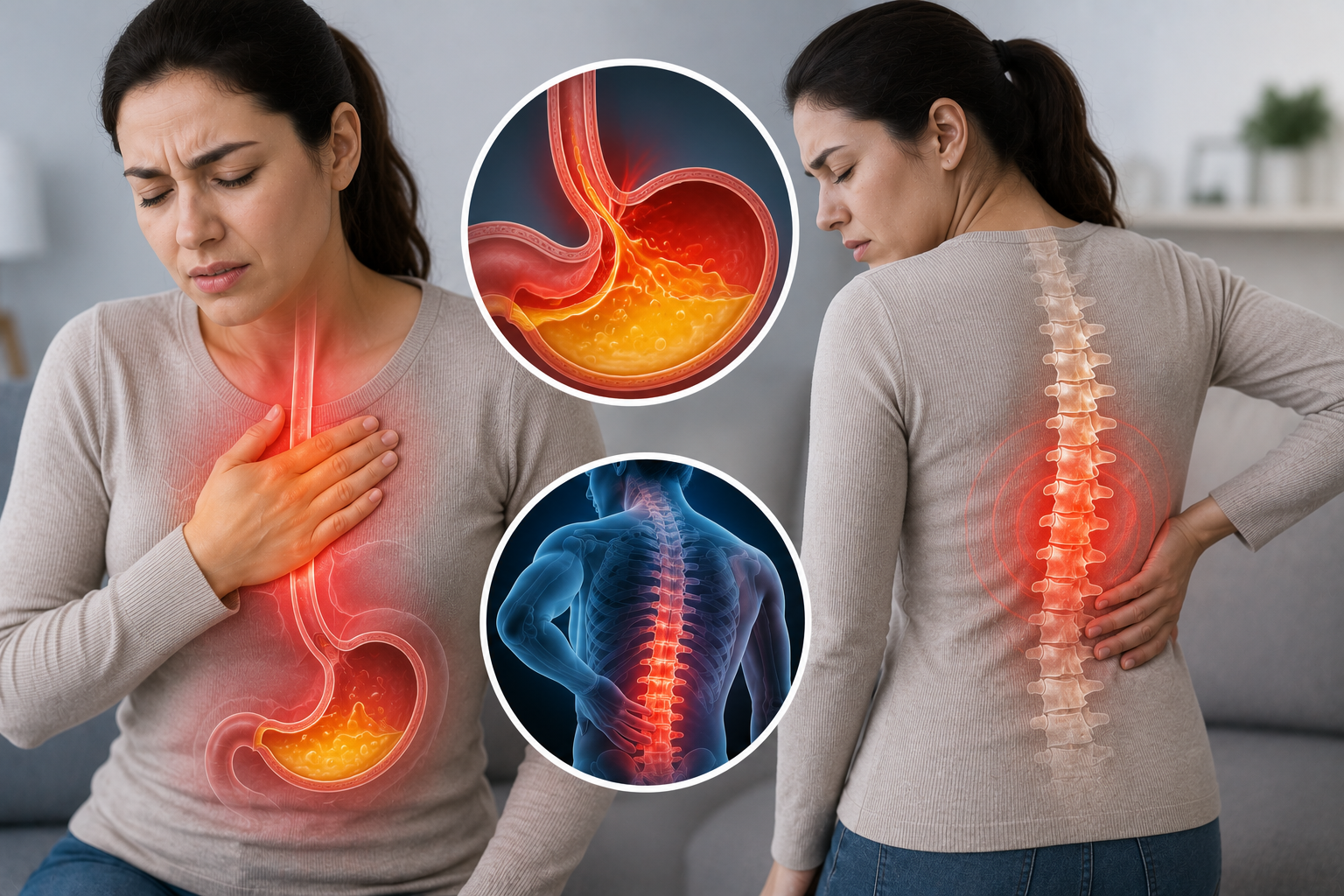
This often surprises people, especially when they experience pain between their shoulder blades or in the upper back after eating. As a result, many wonder, can heartburn cause back pain, or is something more serious happening?
The answer is yes. In some cases, heartburn caused by acid reflux or gastroesophageal reflux disease (GERD) can lead to pain that spreads to the upper or middle back. This does not happen to everyone, but it is a recognized symptom that can occur when stomach acid irritates the esophagus.
In this guide, you will learn how heartburn and back pain are connected, what symptoms to look for, common causes, and when it is time to see a doctor.
What Is Heartburn?
Heartburn is a common digestive problem that happens when stomach acid flows backward into the esophagus. This backward movement of acid is known as acid reflux. Although the name includes the word “heart,” heartburn is not related to the heart. Instead, it affects the digestive system and often causes a burning sensation behind the breastbone.
Understanding Heartburn
Heartburn occurs because the lower esophageal sphincter, a ring-shaped muscle between the stomach and the esophagus, becomes weak or relaxes when it should stay closed. This allows acidic stomach contents to move upward, irritating the lining of the esophagus.
Most people experience occasional heartburn after eating a large meal or consuming spicy or fatty foods. While occasional episodes are usually harmless, frequent heartburn can interfere with daily life and may require medical attention.
How Acid Reflux Causes Heartburn?
Stomach acid is strong enough to digest food, but the lining of the esophagus is not designed to handle this acid. When acid reaches the esophagus, it causes irritation and inflammation, creating the familiar burning sensation in the chest.
Some people also experience symptoms such as a sour taste in the mouth, frequent burping, throat irritation, or a feeling that food is stuck in the chest. These symptoms often become worse after eating, bending over, or lying flat.
Difference Between Occasional Heartburn and GERD
Doctors often suspect GERD when heartburn occurs several times a week, keeps returning despite treatment, or causes complications such as difficulty swallowing or chronic cough.
| Occasional Heartburn | GERD |
| Happens once in a while | Happens frequently |
| Usually triggered by certain foods | May occur regardless of meals |
| Improves quickly | Often requires ongoing treatment |
| Rarely causes complications | Can damage the esophagus if untreated |
Can Heartburn Cause Back Pain?
Yes, can heartburn cause back pain is a common question, and the answer is yes in certain situations. Although heartburn mainly affects the chest and throat, the discomfort can sometimes spread to the upper or middle back because of shared nerve pathways.
How Heartburn Can Lead to Back Pain?
When stomach acid repeatedly irritates the esophagus, nearby nerves can send pain signals to areas other than the chest. As a result, some people feel aching, burning, or pressure between the shoulder blades or in the upper back during an episode of acid reflux.
The pain often appears after eating a heavy meal, lying down too soon after dinner, or consuming foods that trigger acid reflux. In many cases, the back discomfort improves once the heartburn is treated or the acid reflux settles.
While heartburn-related back pain is usually not dangerous, persistent or severe pain should never be ignored. Chest pain combined with pain in the back, jaw, arm, or shortness of breath may signal a heart problem rather than acid reflux and requires immediate medical evaluation.
Symptoms of Heartburn-Related Back Pain
If you are asking, can heartburn cause back pain, understanding the symptoms can help you determine whether acid reflux may be responsible for your discomfort. Although everyone experiences heartburn differently, the pain often follows a pattern and is usually accompanied by other digestive symptoms.
Upper Back Pain
Upper back pain is one of the most common complaints among people who experience heartburn-related discomfort. The pain is usually felt between the shoulder blades or around the middle of the back rather than the lower back.
This discomfort often develops shortly after eating a large meal or consuming foods that trigger acid reflux. Unlike muscle pain, it may improve after taking antacids or acid-reducing medication.
Burning Sensation
Many people describe the pain as a burning feeling that begins in the chest and seems to spread toward the back. This occurs because the irritated esophagus shares nerve pathways with nearby areas, making it difficult for the brain to identify the exact source of the pain.
The burning sensation may become more noticeable when lying flat, bending over, or after eating spicy or fatty foods.
Pain After Eating
Heartburn-related back pain frequently appears within an hour after eating. Large meals place extra pressure on the stomach, making acid reflux more likely.
People who eat quickly or lie down immediately after a meal often notice that both their heartburn and back discomfort become worse.
Common Causes and Risk Factors
Several factors increase the likelihood of developing heartburn and the back pain that sometimes accompanies it. Understanding these causes can help prevent future episodes and improve digestive health.
GERD
Gastroesophageal reflux disease (GERD) is one of the leading causes of chronic heartburn. People with GERD experience frequent acid reflux that repeatedly irritates the esophagus.
Over time, this irritation may cause discomfort that extends into the upper back and shoulders.
Hiatal Hernia
A hiatal hernia develops when part of the stomach pushes through the diaphragm into the chest cavity. This condition weakens the barrier that normally prevents acid reflux.
People with a hiatal hernia often experience more severe heartburn, especially after meals or when lying down.
Obesity
Excess body weight increases pressure inside the abdomen, making it easier for stomach acid to move upward into the esophagus.
Losing even a small amount of weight can significantly reduce reflux symptoms for many people.
Pregnancy
Hormonal changes during pregnancy relax the muscles that normally keep stomach acid in place. As the growing baby places additional pressure on the stomach, heartburn becomes even more common.
Fortunately, symptoms usually improve after delivery.
Lifestyle Habits
Certain daily habits increase the risk of heartburn, including:
- Eating large meals
- Consuming fatty or spicy foods
- Drinking excessive caffeine or alcohol
- Smoking
- Eating close to bedtime
- Wearing tight clothing around the waist
Avoiding these triggers can greatly reduce episodes of acid reflux.
Heartburn Back Pain vs. Heart Attack: How to Tell the Difference
Because both conditions may cause chest discomfort that spreads toward the back, people often wonder whether their symptoms are caused by heartburn or a heart attack. Although the symptoms can overlap, there are important differences.
| Heartburn | Heart Attack |
| Burning sensation | Pressure, squeezing, or tightness |
| Often occurs after meals | Can happen during activity or rest |
| May improve with antacids | Usually does not improve with antacids |
| Sour taste or acid reflux | Shortness of breath and sweating are common |
| Worse when lying down | May spread to jaw, neck, shoulders, or arm |
Even though these differences are helpful, it is impossible to diagnose a heart attack based on symptoms alone.
Seek emergency medical attention immediately if chest pain is severe, lasts longer than a few minutes, spreads to the arm, jaw, neck, or back, or is accompanied by dizziness, cold sweats, nausea, or difficulty breathing.
How Do Doctors Diagnose Heartburn and Back Pain?
When symptoms occur frequently or become severe, doctors perform a careful evaluation to determine whether acid reflux is responsible or whether another medical condition is causing the pain.
The process usually begins with a discussion about your symptoms. Your healthcare provider may ask when the pain starts, whether it occurs after meals, what foods trigger it, and whether medications provide relief.
A physical examination helps rule out muscle injuries or other common causes of back pain. Depending on your symptoms, additional testing may be recommended.
Common diagnostic tests include:
- Upper endoscopy to examine the esophagus
- Esophageal pH monitoring to measure acid exposure
- Barium swallow X-rays
- Electrocardiogram (ECG) to rule out heart disease
- Blood tests when necessary
These tests help determine the exact cause of your symptoms and guide the most appropriate treatment plan.
Treatment Options for Heartburn-Related Back Pain
Once the cause has been identified, treatment focuses on reducing acid reflux while relieving discomfort in both the chest and back. Most people improve with lifestyle changes, although some may require medication or additional medical treatment.
Lifestyle Changes
Simple daily habits often make a significant difference. Eating smaller meals instead of large portions reduces pressure on the stomach and lowers the risk of acid reflux.
Avoid lying down for at least two to three hours after eating. Sleeping with the head of the bed elevated can also help prevent stomach acid from flowing upward during the night.
Maintaining a healthy weight, quitting smoking, limiting alcohol, and exercising regularly all contribute to better digestive health.
Medications
Several medications can help manage heartburn symptoms depending on their severity.
| Medication Type | Purpose |
| Antacids | Neutralize stomach acid quickly |
| H2 Blockers | Reduce acid production |
| Proton Pump Inhibitors (PPIs) | Provide long-lasting acid reduction |
| Prescription medicines | Used for persistent GERD symptoms |
Always follow your healthcare provider’s recommendations, especially if symptoms occur frequently or continue despite treatment.
Home Remedies and Lifestyle Changes
Many people find relief by combining medical treatment with healthy lifestyle habits. Drinking water throughout the day, avoiding overeating, chewing food slowly, and identifying personal food triggers can reduce reflux episodes.
Gentle walking after meals may aid digestion, while stress management techniques such as deep breathing, yoga, or meditation can also lessen symptoms in some individuals.
Foods to Eat and Foods to Avoid
Diet plays an important role in managing heartburn.
Foods that are generally well tolerated include oatmeal, bananas, melons, brown rice, whole grains, leafy green vegetables, lean chicken, fish, turkey, ginger, and low-fat yogurt.
Foods that commonly trigger symptoms include fried foods, spicy meals, tomatoes, citrus fruits, chocolate, onions, peppermint, coffee, carbonated beverages, and alcohol. Keeping a food diary can help identify which foods trigger your personal symptoms.
When to See a Doctor?
Occasional heartburn is common, but frequent symptoms should not be ignored. If heartburn occurs more than twice a week, wakes you at night, causes difficulty swallowing, leads to unexplained weight loss, or continues despite medication, schedule an appointment with your healthcare provider.
Immediate emergency care is necessary if chest pain is severe, spreads to the arm, jaw, neck, or back, or occurs with shortness of breath, heavy sweating, dizziness, or fainting. These symptoms may indicate a heart attack rather than acid reflux.
Frequently Asked Questions
Can heartburn cause upper back pain?
Yes. Heartburn can sometimes cause pain in the upper back because irritated nerves in the esophagus may create referred pain between the shoulder blades.
Can GERD cause pain between the shoulder blades?
Yes. Some people with GERD experience discomfort that radiates into the upper back due to repeated acid irritation of the esophagus.
Can acid reflux cause lower back pain?
Lower back pain is less common and is usually caused by another condition. Acid reflux is more likely to cause discomfort in the upper or middle back.
Does back pain from heartburn go away?
In many cases, it improves once acid reflux is controlled through medication, dietary changes, and healthy lifestyle habits.
What foods make heartburn worse?
Spicy foods, fried meals, chocolate, tomatoes, citrus fruits, coffee, alcohol, peppermint, and carbonated drinks commonly trigger heartburn symptoms.
Can stress make heartburn worse?
Yes. Stress may increase digestive symptoms and make people more aware of discomfort, although it is not a direct cause of acid reflux.
Is heartburn-related back pain dangerous?
Most cases are not dangerous and improve with proper treatment. However, chest pain accompanied by shortness of breath, sweating, or pain spreading to the jaw or arm requires immediate emergency medical evaluation because it may indicate a heart attack.
Conclusion
If you have been wondering, can heartburn cause back pain, the answer is yes. Although heartburn mainly causes a burning sensation in the chest, irritation of the esophagus can sometimes lead to referred pain that spreads to the upper or middle back. This discomfort often occurs after eating, when lying down, or during episodes of acid reflux.
Fortunately, most cases improve with healthy lifestyle changes, avoiding trigger foods, maintaining a healthy weight, and using appropriate medications when needed. However, persistent symptoms should always be evaluated by a healthcare provider to rule out GERD or other medical conditions.
Related Articles
Pain in Arms After Sneezing: Causes, Warning Signs, and How to Get Relief
Ear Pain When Chewing: Causes, Symptoms, Diagnosis, and Effective Treatment
Do Humidifiers Help with Asthma? What You Need to Know Before Buying One
How to Relieve Neck Pain from Sleeping Wrong: Effective Treatments, Stretches, and Prevention Tips
ASAP Health Max Immune Support Silver Supplement: Benefits, Dosage & Safety Guide