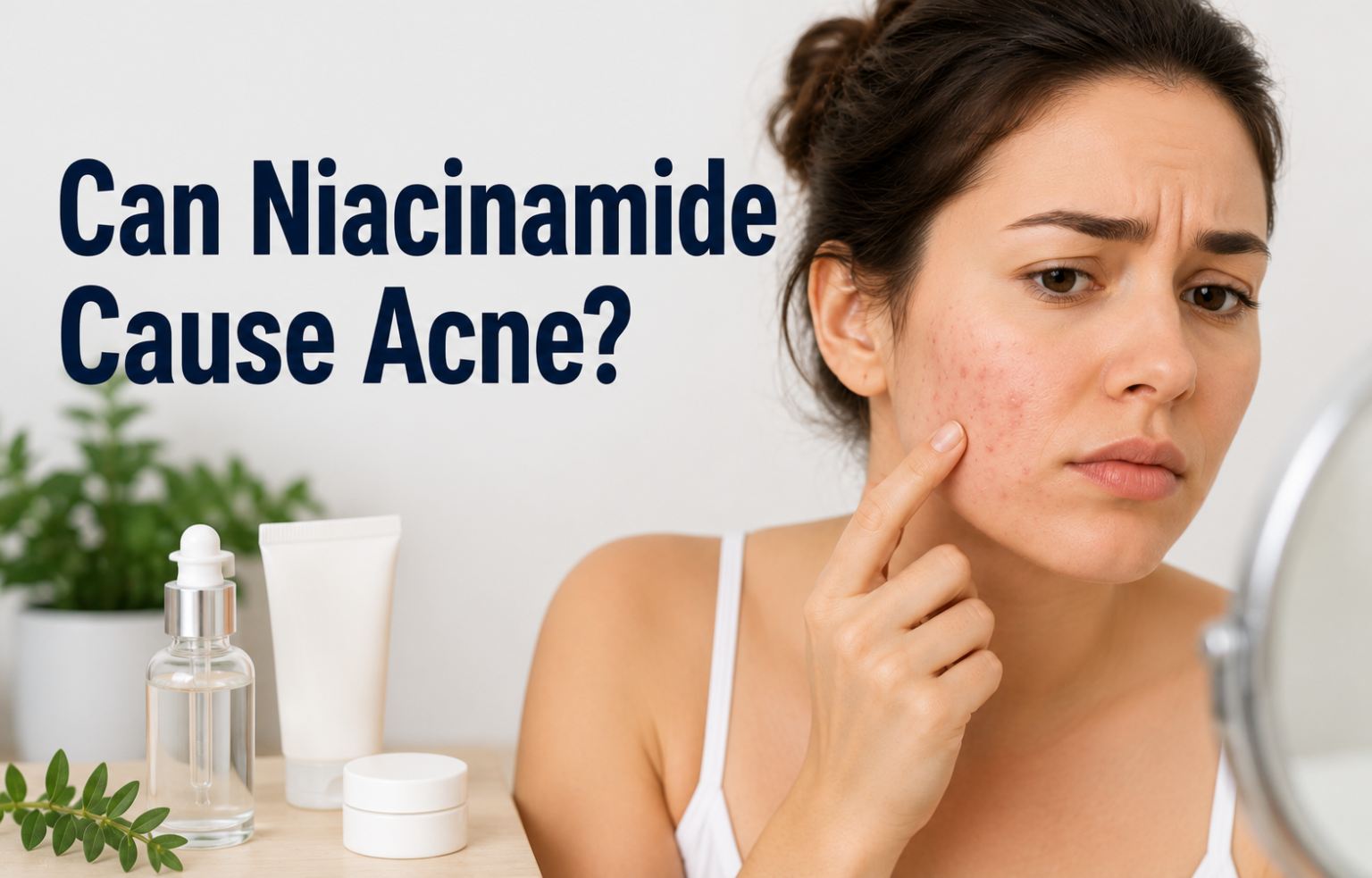
Niacinamide is one of the most talked about skincare ingredients today, and many people wonder whether it is the reason behind their sudden breakouts. The short and simple answer is that niacinamide does not cause acne on its own, since it is actually known as a calming and oil-balancing ingredient.
Most breakouts linked to niacinamide happen because of other factors like product formulation, skin adjustment, or mixing it with strong actives too soon. In this guide, you will learn exactly why some people break out after using niacinamide, how to tell purging from a real breakout, and how to use this ingredient safely without any skin trouble.
What Is Niacinamide?
Niacinamide is a form of Vitamin B3 that is widely used in serums, moisturizers, and toners for its calming and skin-repairing properties. It is loved by dermatologists because it works well with almost every skin type, including sensitive and acne-prone skin.
Definition and Basic Function
Niacinamide is a water-soluble vitamin that supports the skin barrier and helps the skin retain moisture more effectively. It works by boosting the production of ceramides, which are natural fats that protect the outer layer of the skin from damage and dryness.
Common Concentrations Used in Products
Most skincare products contain niacinamide in a range of two percent to ten percent, with five percent being the most commonly recommended strength for daily use. Higher concentrations are sometimes used for targeted concerns, but they also raise the chance of irritation for people with reactive or thin skin.
Does Niacinamide Cause Acne? (Direct Answer)
Niacinamide does not directly cause acne, and this question usually comes up because people confuse a temporary adjustment phase with a true breakout. In reality, niacinamide is one of the more acne-friendly ingredients available in modern skincare.
Why It Is Considered an Anti-Acne Ingredient
Niacinamide is often recommended by skin experts specifically because it calms inflamed skin and helps regulate the amount of oil the skin produces. This makes it a helpful addition to routines built around treating acne rather than a trigger for new blemishes.
How Niacinamide Helps With Acne?
Niacinamide supports acne-prone skin in several ways, from calming redness to controlling excess oil, which is why many acne-focused products include it as a key ingredient. Below is a simple table showing how it benefits the skin.
| Benefit | How It Helps |
| Reduces inflammation | Calms redness and swelling around active breakouts |
| Controls oil production | Balances sebum so pores are less likely to clog |
| Strengthens skin barrier | Helps skin resist irritants and bacteria |
| Fades acne marks | Lightens dark spots left behind after breakouts |
| Minimizes pore appearance | Makes pores look smaller and less noticeable over time |
These combined effects are the reason niacinamide is often paired with acne treatments rather than avoided by people with breakout-prone skin.
Why Some People Break Out After Using Niacinamide?
Even though niacinamide itself is gentle, some people notice new bumps or pimples after adding it to their routine, and this usually comes down to a handful of specific reasons rather than the ingredient itself.
Purging Versus Breakout
Purging happens when a new active ingredient speeds up skin cell turnover, pushing existing clogs to the surface faster than usual. This process is temporary and usually settles down within two to six weeks, unlike a true breakout that keeps appearing in new areas without improvement.
Comedogenic Ingredients in the Formula
Many niacinamide products also contain oils, silicones, or fragrance that can clog pores in people with oily or acne-prone skin. In these cases, it is the other ingredients in the bottle causing the reaction, not the niacinamide itself.
Using Too High a Concentration
Applying a niacinamide product above ten percent can overwhelm sensitive skin and cause irritation, which sometimes looks like small breakouts or bumps. Lower strengths are usually gentler and give the skin time to adjust without triggering this kind of reaction.
Combining With Strong Actives Too Soon
Pairing niacinamide with retinol, AHAs, or BHAs right from the start can overload the skin barrier and lead to irritation-related breakouts. It is generally safer to introduce one active ingredient at a time so the skin can adapt gradually.
Skin Barrier Damage From Over-Exfoliation
If the skin barrier is already weakened from excessive exfoliation, adding niacinamide on top can sometimes worsen sensitivity temporarily. A damaged barrier struggles to tolerate new ingredients until it has time to heal properly.
Rare Allergic or Sensitivity Reactions
In uncommon cases, some people may have a genuine sensitivity to niacinamide that shows up as redness, small bumps, or itching. This is different from acne and usually resolves once the product is discontinued.
Purging vs. Breakout: How to Tell Them Apart
Knowing the difference between purging and an actual breakout can save you from unnecessarily stopping a product that is working. The table below breaks down the key differences.
| Factor | Purging | Breakout |
| Location | Areas where you already get acne | New or unusual areas |
| Duration | Improves within a few weeks | Continues or worsens over time |
| Blemish type | Small, similar-looking bumps | Varied sizes, sometimes cystic |
| Overall skin texture | Gradually gets smoother | Stays irritated or gets worse |
Who Is More Likely to React Negatively?
Certain skin types and habits make a person more likely to experience irritation from niacinamide, even though true allergic reactions remain rare overall.
Sensitive and Reactive Skin Types
People with naturally reactive skin often notice redness or stinging with new actives, including niacinamide, especially at higher concentrations. Starting with a lower percentage usually reduces this risk significantly.
Compromised Skin Barrier
Anyone dealing with a damaged or thin skin barrier from over-cleansing or excessive product use may find that niacinamide feels uncomfortable at first. Repairing the barrier before introducing new actives generally leads to better results.
Using Multiple Actives at Once
Layering niacinamide with several other active ingredients in one routine increases the chance of irritation-based bumps appearing. Simplifying the routine often solves this issue without needing to drop niacinamide completely.
How to Introduce Niacinamide Safely?
Introducing niacinamide the right way lowers the chances of irritation and helps the skin adjust smoothly to this ingredient over time.
- Patch test the product on a small area of skin for two to three days before full use.
- Start with a lower concentration, ideally between two and five percent.
- Apply it two to three times a week initially before moving to daily use.
- Avoid combining it with strong actives like retinol during the first few weeks.
- Choose simple formulations without added fragrance or heavy oils.
Following these steps allows the skin to build tolerance gradually, which reduces the likelihood of irritation-related bumps appearing.
Best Practices for Using Niacinamide
Getting the most out of niacinamide depends on how it is layered with other products in your routine and which ingredients you pair it with.
Ideal Routine Order
Niacinamide works best when applied after cleansing and toning but before heavier creams or oils, allowing it to absorb properly into the skin. This order helps the ingredient perform its calming and barrier-supporting role more effectively.
Ingredients That Pair Well
Niacinamide combines nicely with hyaluronic acid and ceramides, since these ingredients support hydration and barrier repair alongside its own benefits. This combination is often recommended for anyone dealing with both dryness and occasional breakouts.
Ingredients to Use With Caution
Very high doses of Vitamin C or direct acids used at the same time as niacinamide can sometimes reduce effectiveness or increase irritation. Spacing these ingredients out in your morning and evening routine usually solves this concern.
When to Stop or Consult a Dermatologist?
If irritation continues for more than four to six weeks or worsens instead of improving, it is a sign that something in the routine needs to change.
Persistent burning, swelling, or spreading rash-like symptoms are signals to stop the product and speak with a dermatologist rather than waiting it out.
Common Myths About Niacinamide and Acne
Several misunderstandings about niacinamide continue to spread online, which makes it harder for people to use the ingredient with confidence.
Myth: Natural Ingredients Cannot Cause Breakouts
Many people assume that because niacinamide is a vitamin, it cannot possibly cause any skin reaction. In reality, any ingredient, natural or synthetic, can cause irritation in the wrong formulation or concentration for a specific skin type.
Myth: A Higher Percentage Always Works Better
Some believe that using a stronger concentration of niacinamide will speed up results, but this often backfires by irritating the skin instead. Moderate concentrations tend to deliver steady results without the added risk of breakouts.
Myth: If It Burns, It Is Working
A burning or stinging sensation is often mistaken as a sign that a product is effective, but this is usually a warning sign of irritation. Skincare that works well typically feels comfortable rather than painful on the skin.
FAQs
Can niacinamide purge your skin? Yes, niacinamide can cause a purging phase in some people as it speeds up cell turnover, though this is usually temporary and resolves within a few weeks.
How long does niacinamide purging last? Purging from niacinamide typically lasts between two and six weeks before the skin visibly improves.
What percentage of niacinamide is best for acne-prone skin? A concentration between two and five percent is generally best for acne-prone and sensitive skin types.
Can I use niacinamide every day? Yes, niacinamide can be used daily once the skin has adjusted, and it is considered safe for long-term use.
Does niacinamide clog pores? Niacinamide itself does not clog pores, though other ingredients in a formulation, such as oils or silicones, might.
Conclusion
Niacinamide is not a cause of acne, and in most cases, it actually supports acne-prone skin by calming inflammation and balancing oil production.
When breakouts do appear after starting niacinamide, the real cause is usually the product formulation, a purging phase, or combining it with other strong activities too quickly.
By introducing it slowly, choosing simple formulas, and following the steps outlined above, most people can enjoy the benefits of niacinamide without any unwanted breakouts.
Related Posts
Can You Have Laser Surgery Twice? Full Guide to Enhancement
Why Does My Neck Crunch When I Roll My Head?
How Long Does Tendonitis Take to Heal? Full Recovery Timeline
How Much Is SRT Therapy for Skin Cancer? Prices, Insurance & What to Expect
Can I Eat Fish on a Vegan Diet? The Complete Guide for Beginners