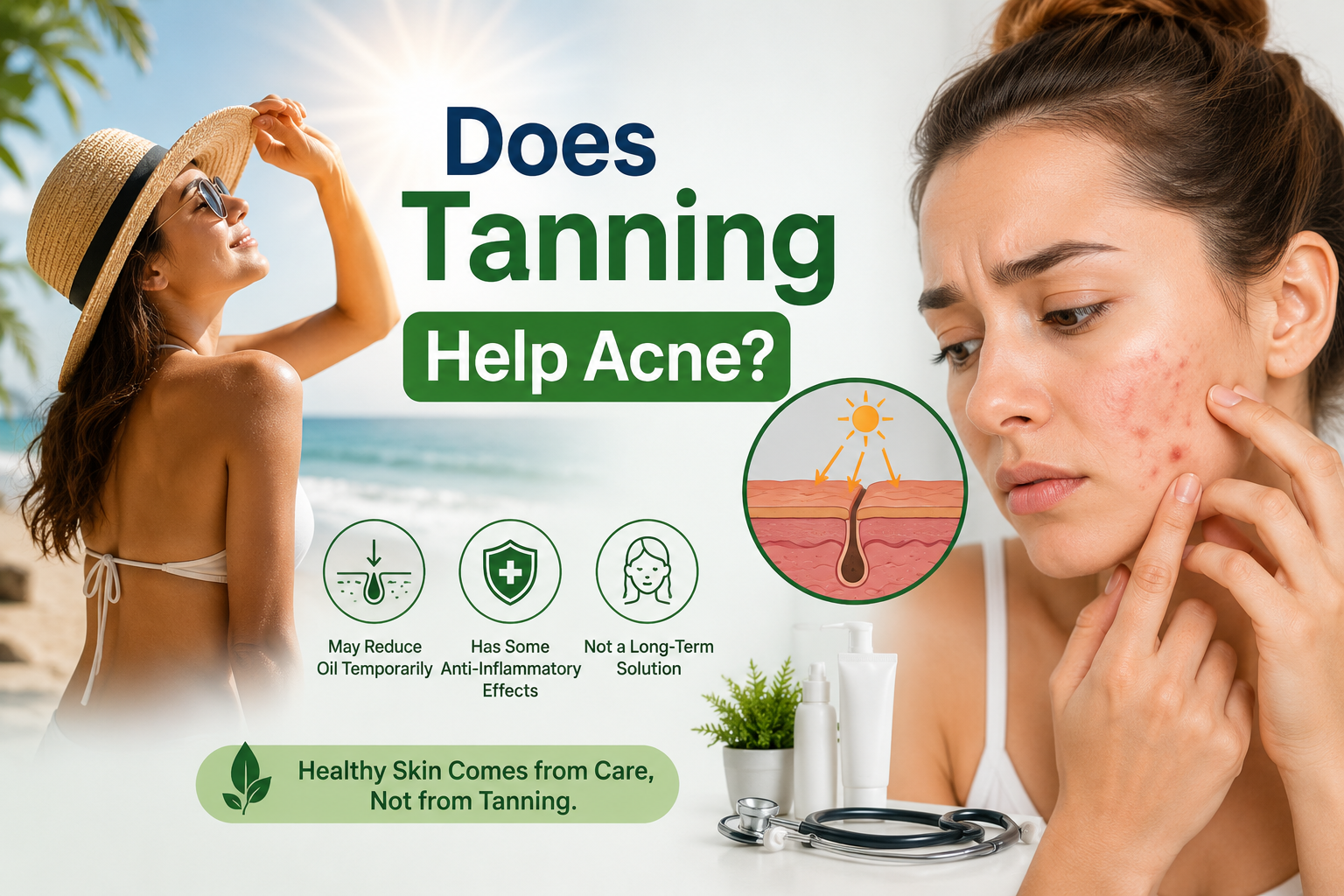
Many people with oily or breakout-prone skin have noticed that their face looks a little clearer after a day at the beach or a session in a tanning bed, which raises a common question: does tanning help acne, or is this just a temporary illusion?
The truth is that tanning does not genuinely treat acne, and in most cases it makes the underlying problem worse once the short-term effects wear off. In this article, we will look closely at the science behind what actually happens to acne-prone skin under UV exposure, including why oil production and inflammation often increase rather than decrease.
We will also walk through what dermatologists recommend instead, covering proven treatments that address acne at its source rather than masking it temporarily.
Why Do People Think Tanning Helps Acne?
This belief did not appear out of nowhere. There are a few logical, sensory reasons why tanning seems to improve acne, even though the actual skin condition underneath is not getting better.
The Drying Effect on Oily Skin
Sun exposure dries out the outer layer of the skin and temporarily reduces excess oil on the surface. Since acne is closely linked to excess sebum production, this drying effect can make skin feel less greasy and look slightly less shiny for a day or two.
People often mistake this temporary dryness for actual healing, when in reality the oil glands underneath are usually working just as hard, or harder, once the dryness wears off.
Tanned Skin Hides Redness and Marks
A tan darkens the overall skin tone, and this added pigment can visually mask the redness around pimples and the pink or purple marks left behind after a breakout.
The acne itself has not disappeared; it is simply less visible against the darker background of tanned skin. Once the tan fades, the same blemishes and discoloration usually become noticeable again.
Old Myths About Sunlight and Skin Healing
Long before modern dermatology, sunlight was widely promoted as a cure for almost every skin condition, a practice once known as heliotherapy.
This historical belief still lingers in popular culture, and combined with the short-term drying and masking effects described above, it reinforces the myth that tanning is a legitimate acne treatment.
The Science: What Happens to Acne-Prone Skin in the Sun?
Underneath the surface-level improvement, UV exposure triggers several biological responses that work against clear skin. Understanding these mechanisms makes it easier to see why tanning helps acne is really a myth rather than a fact.
UV Rays and Oil Production
When skin is exposed to UV radiation, it often responds by producing more sebum as part of its natural defense and repair process. This means that while the surface may feel dry immediately after sun exposure, oil production frequently rebounds and increases within a few days, potentially leading to more clogged pores than before.
Thickening of the Outer Skin Layer
Sun exposure causes the stratum corneum, the outermost layer of skin, to thicken as a protective response. While this might sound beneficial, this thickened layer can actually trap dead skin cells and oil more easily inside the pores, increasing the likelihood of new blackheads, whiteheads, and inflamed breakouts appearing afterward.
Inflammation and Skin Stress Response
UV exposure is a form of physical stress on the skin, and it triggers low-level inflammation even when no sunburn is visible. Since acne itself is fundamentally an inflammatory condition, adding extra UV-induced inflammation on top of existing breakouts can intensify redness, swelling, and the overall severity of active acne lesions.
Short-Term vs. Long-Term Effects of Tanning on Acne
The confusion around this topic mostly comes from comparing the immediate results of tanning with what actually happens days or weeks later. The table below makes this contrast clear.
| Time Frame | Visible Effect on Skin | What Is Actually Happening |
| Immediately after sun exposure | Skin looks drier, less oily, and more even toned | Surface oil is temporarily reduced; redness is masked by pigment |
| 24 to 72 hours later | Skin may still appear slightly improved | Oil glands begin ramping up production again |
| One to two weeks later | New breakouts or increased oiliness often appear | Thickened skin traps oil and dead cells, inflammation builds |
| Months of repeated tanning | Premature aging, sun spots, leathery texture | Cumulative UV damage and increased skin cancer risk |
This pattern explains why repeated tanning often leads people into a frustrating cycle: short-term satisfaction followed by worse breakouts, which then tempts them to tan again for relief.
Risks of Using Tanning as an Acne Treatment
Beyond simply failing to clear acne, relying on tanning as a treatment carries several serious health risks that go far beyond cosmetic concerns.
Skin Cancer Risk
Repeated UV exposure from both natural sunlight and tanning beds is directly linked to an increased risk of skin cancers, including melanoma, basal cell carcinoma, and squamous cell carcinoma. This risk accumulates over a lifetime, meaning that using tanning regularly as an acne fix can have consequences that show up years later.
Premature Skin Aging
UV rays break down collagen and elastin in the skin, leading to fine lines, wrinkles, and a loss of firmness much earlier than would naturally occur. For someone already dealing with acne, this means trading one skin concern for another, often more permanent one.
Dark Spots and Hyperpigmentation
Acne frequently leaves behind dark marks once a pimple heals, a condition known as post-inflammatory hyperpigmentation. UV exposure makes these marks darker and significantly harder to fade, which can extend the visible aftermath of acne for months or even years longer than it would otherwise last.
Tanning and Acne Medications: A Dangerous Combination
Many common acne treatments increase the skin’s sensitivity to sunlight, which makes combining them with tanning particularly risky rather than simply unhelpful.
| Acne Medication | Effect Under UV Exposure |
| Topical retinoids (tretinoin, adapalene) | Increased burning, peeling, and sun sensitivity |
| Benzoyl peroxide | Higher risk of irritation and sunburn |
| Oral antibiotics (doxycycline, tetracycline) | Significant photosensitivity, severe sunburn risk |
| Isotretinoin (Accutane) | Extreme sun sensitivity, high risk of burns and scarring |
Anyone using these treatments who also tan, whether outdoors or in a tanning bed, faces a much higher chance of painful burns, irritation, and setbacks in their skin’s healing process.
What Dermatologists Recommend Instead?
Rather than relying on UV exposure, dermatologists point toward treatments that are backed by clinical research and designed specifically to target the causes of acne.
Topical Treatments That Actually Work
Ingredients such as benzoyl peroxide, salicylic acid, and topical retinoids address acne directly by unclogging pores, reducing bacteria, and calming inflammation. Unlike tanning, these treatments have decades of clinical evidence supporting consistent, long-term improvement.
Oral Medications for Stubborn Acne
For more persistent or severe cases, dermatologists may prescribe oral antibiotics, hormonal treatments such as birth control or spironolactone, or isotretinoin for the most resistant forms of acne. These options work internally to reduce oil production and inflammation rather than masking symptoms temporarily.
How to Protect Acne-Prone Skin From Sun Damage?
Since UV exposure can worsen both acne and the medications used to treat it, proper sun protection becomes especially important for breakout-prone skin.
Choosing the Right Sunscreen
Gel-based or fluid, oil-free, non-comedogenic sunscreens with broad-spectrum SPF 30 or higher are generally the best fit for acne-prone skin, since they protect without clogging pores or adding excess shine.
Other Sun-Safety Habits
Wearing wide-brimmed hats, seeking shade during peak sun hours, and reapplying sunscreen every two hours all help reduce cumulative UV damage without relying on tanning for any perceived skin benefit.
Common Myths About Tanning and Skin Debunked
| Myth | Reality |
| A base tan prevents future sunburn | A tan offers minimal protection and still indicates skin damage |
| Tanning beds are safer than the sun | Tanning beds emit concentrated UV rays and carry similar or higher cancer risks |
| Clearer-looking skin means acne is healing | Improvement is usually temporary masking, not actual healing |
| Sun exposure kills acne-causing bacteria | UV exposure does not reliably eliminate the bacteria involved in acne |
When to See a Dermatologist?
If acne persists despite over-the-counter treatments, worsens after sun exposure, or leaves significant scarring and dark marks, it is worth consulting a dermatologist rather than experimenting with sun exposure or tanning beds.
A professional can identify the right combination of treatments based on acne severity, skin type, and any underlying hormonal or medical factors.
FAQs
Does sunlight kill acne-causing bacteria?
Not reliably. While UV light has some antibacterial properties in laboratory settings, the levels of exposure needed are not safely achievable through casual sun exposure, and any minor benefit is outweighed by increased oil production and inflammation.
Can tanning beds clear acne faster than natural sunlight?
No, tanning beds typically emit even more concentrated UV radiation than natural sunlight, which means they carry similar or greater risks for triggering breakouts, irritation, and long-term skin damage rather than offering any acne-clearing advantage.
Is a small amount of sun exposure okay for acne-prone skin?
Brief, sunscreen-protected exposure for vitamin D and general wellbeing is generally fine, but it should not be viewed as an acne treatment, and unprotected or prolonged exposure should still be avoided.
What helps reduce acne redness better than tanning?
Ingredients like niacinamide, azelaic acid, and gentle anti-inflammatory skincare routines reduce redness without the long-term risks associated with UV exposure, making them a much safer alternative to tanning.
Why does my skin look clearer right after tanning but worse a week later?
This happens because the initial drying effect of UV exposure temporarily reduces visible oil and redness, but the skin’s oil glands and inflammatory response typically rebound within days, often leading to more breakouts than before the tanning session.
Does tanning help with acne scars or only active breakouts?
Tanning does not help with acne scars either; in fact, UV exposure tends to darken post-acne marks and hyperpigmentation, making existing scars more noticeable and slower to fade compared to skin that is consistently protected from the sun.
Conclusion
So, does tanning help acne in any meaningful way? The evidence consistently points to no. While tanning can create a brief, surface-level illusion of clearer skin by drying out oil and masking redness, it does not address the actual causes of acne and often leads to increased oiliness, inflammation, and breakouts once the tan fades.
When the added risks of skin cancer, premature aging, and worsened hyperpigmentation are factored in, tanning becomes a poor trade-off for anyone hoping to manage acne safely.
Related Posts
What’s the Difference Between a Fracture and a Broken Bone?
Attend Health – Complete Guide to Features, Services, and Future of Healthcare AI Platform
How Much Is SRT Therapy for Skin Cancer? Prices, Insurance & What to Expect
Does Impact Health Cover IVF? Complete Guide to Fertility Treatment Coverage
Can Stress Cause Diarrhea? Causes, Symptoms, and Fast Relief Methods