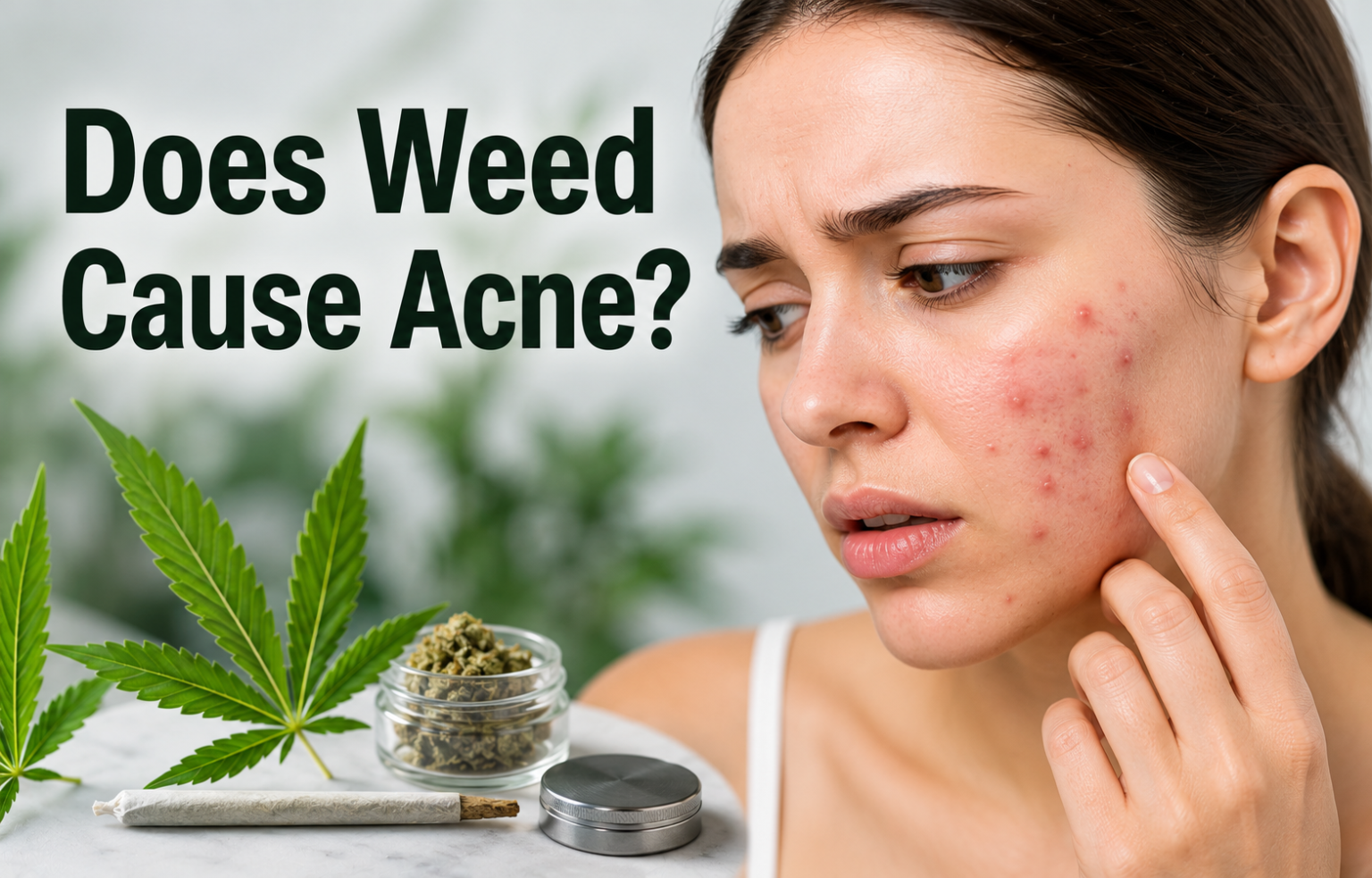
Many people who use cannabis regularly start noticing changes in their skin and wonder if there is a real connection between the two. The short answer is that weed does not directly cause acne in a scientifically proven way, but it can influence several factors that make breakouts more likely.
THC has been shown to affect oil production in the skin, and habits that often go along with cannabis use — such as poor diet choices, unclean smoking tools, and touching the face frequently — can all contribute to clogged pores.Understanding the full picture requires looking at how sebum, hormones, smoking methods, and lifestyle habits interact with each other rather than blaming a single substance alone.
This guide breaks down the science behind the question, does weed cause acne, explains what research studies actually reveal, and offers practical ways to protect your skin if you use cannabis regularly.
What Is Acne and What Actually Causes It
Acne develops when hair follicles become blocked with oil, dead skin cells, and bacteria, leading to inflammation on the surface of the skin. Before connecting cannabis to breakouts, it helps to understand the basic biology behind acne itself, since several factors work together to create the conditions for a flare-up.
The Role of Sebum (Oil) Production
Sebum is the natural oil produced by glands beneath the skin to keep it moisturized and protected. When these glands produce too much oil, it mixes with dead skin cells and can block pores, creating an environment where acne-causing bacteria thrive. Excess sebum is one of the most common underlying causes of breakouts in both teenagers and adults.
Hormones and Breakouts
Hormonal fluctuations, especially involving androgens, are a major driver of acne because they signal the sebaceous glands to increase oil output. This is why breakouts are so common during puberty, menstrual cycles, pregnancy, and periods of high stress, since all of these involve hormonal shifts that affect the skin.
Bacteria, Inflammation, and Clogged Pores
Once a pore becomes blocked, bacteria that naturally live on the skin can multiply inside it, triggering the immune system to respond with inflammation. This is what causes the redness, swelling, and sometimes pain associated with typical acne lesions, ranging from small whiteheads to deeper cystic breakouts.
Does THC Directly Affect Your Skin?
There is emerging science suggesting THC interacts with skin cells in ways that could influence oil production, though the research is still limited and far from conclusive. It is important to separate what is scientifically confirmed from what is simply assumed based on anecdotal reports.
THC and Sebaceous Gland Activity
Some laboratory research has found that cannabinoid receptors exist in human sebaceous glands, and that THC exposure in cell studies increased lipid production. This suggests a biological pathway through which cannabis use could theoretically contribute to oilier skin, which in turn raises the risk of clogged pores and breakouts.
What Studies Show (and Don’t Show)
Most existing research on cannabinoids and sebum has been conducted in laboratory settings using isolated skin cells, not through long-term studies on regular cannabis users. This means there is not yet strong clinical evidence proving that smoking or consuming weed directly causes acne in real-world conditions, even though the underlying biological mechanism appears plausible.
Cannabis vs. Other Known Acne Triggers
When compared to well-established acne triggers like hormonal imbalances, high-glycemic diets, and certain medications, cannabis use appears to be a much smaller and less direct factor. It may act as a contributing influence for some people rather than a primary cause on its own.
Smoking Weed vs. Edibles — Does the Method Matter?
The way cannabis is consumed can change how it affects the body, and this includes potential effects on the skin. Smoking introduces different variables than edibles do, since combustion and ingestion trigger separate physiological responses.
Smoke Exposure and Skin Inflammation
Smoke of any kind, including cannabis smoke, contains compounds that can increase oxidative stress and inflammation throughout the body. Since inflammation is a key part of the acne process, frequent smoke exposure could indirectly worsen existing breakouts or slow down skin healing.
Edibles, Sugar Content, and Blood Sugar Spikes
Many cannabis edibles are made with significant amounts of sugar, and high-glycemic foods have a well-documented link to increased insulin levels, which can stimulate oil production. Regularly consuming sugary edibles may therefore have more of an indirect impact on acne than the cannabinoids themselves.
Vaping and Topical Cannabis Products
Vaping avoids some combustion byproducts found in smoking but can still introduce heat and chemical irritants to the respiratory system, which some users report correlates with skin sensitivity. Topical cannabis products, on the other hand, are applied directly to the skin and are generally viewed as lower risk for triggering internal hormonal or oil-production changes.
The “Munchies” Connection — Diet-Driven Breakouts
One of the most overlooked links between cannabis and skin health is the well-known increase in appetite that often follows use. The types of food chosen during these cravings can play a bigger role in breakouts than cannabis itself.
High-Glycemic and Greasy Food Cravings
Cannabis use is often associated with cravings for salty, greasy, and sugary comfort foods rather than balanced meals. Diets high in refined carbohydrates and fried foods have been linked in multiple studies to increased sebum production and higher rates of acne.
Dairy and Sugar’s Known Link to Acne
Research has repeatedly connected high dairy and sugar intake to acne flare-ups because of their effects on insulin and hormone-like growth factors in the body. If munchie-driven snacking regularly includes ice cream, pizza, or sugary drinks, this dietary pattern may be doing more damage to the skin than the cannabis itself.
How to Manage Cravings Without Triggering Breakouts
Choosing lower-glycemic snacks such as nuts, fruit, or plain yogurt during a craving episode can help reduce the dietary impact on skin health. Planning ahead by keeping healthier options available can make a noticeable difference over time without requiring someone to change their cannabis habits.
Hygiene Habits That Make It Worse
Beyond biology and diet, everyday habits connected to cannabis use can directly transfer bacteria and oil onto the face, worsening breakouts. These are often the easiest factors to fix once identified.
Touching Your Face While Smoking
Rolling, packing, and smoking cannabis frequently involves touching the face, lips, and hands in ways that transfer oil, bacteria, and residue directly onto the skin. This repeated contact can introduce new bacteria to pores that are already vulnerable to blockage.
Unclean Pipes, Papers, and Bongs
Smoking equipment that is not cleaned regularly can build up bacteria, mold, and residue that comes into direct contact with the lips and surrounding skin. Over time, this buildup may contribute to breakouts specifically around the mouth and chin area.
Simple Fixes for Cleaner Habits
Washing hands before rolling or smoking, cleaning pipes and bongs regularly, and avoiding unnecessary face-touching can significantly reduce the bacterial transfer linked to these habits. These small adjustments require little effort but can meaningfully improve skin clarity over time.
Comparison Table — Acne Risk Factors: Weed vs. Common Triggers
| Factor | Direct Scientific Link to Acne | Typical Mechanism |
| Hormonal Fluctuations | Strong | Increased androgen-driven oil production |
| High-Glycemic Diet | Strong | Insulin spikes trigger excess sebum |
| Dairy and Sugar Intake | Moderate to Strong | Growth factors linked to oil glands |
| Cannabis (THC) | Weak to Emerging | Possible sebaceous gland stimulation |
| Smoking (General) | Moderate | Increased inflammation and oxidative stress |
| Poor Hygiene Habits | Moderate | Bacterial transfer to skin and pores |
| Stress | Strong | Cortisol-driven hormonal changes |
How to Prevent Weed-Related Breakouts
Preventing breakouts linked to cannabis use does not necessarily require quitting, but rather adjusting the surrounding habits that contribute to clogged pores. A combination of skincare, diet awareness, and smoking hygiene can make a meaningful difference.
Skincare Routine Adjustments
Washing the face after smoking sessions, using non-comedogenic products, and avoiding excessive touching can help reduce the buildup of oil and residue on the skin. A consistent morning and night skincare routine is especially helpful for people who smoke regularly.
Dietary Swaps for Munchies
Replacing high-sugar and high-fat snack choices with lower-glycemic alternatives can reduce one of the biggest indirect contributors to weed-related breakouts. Small changes, like choosing popcorn over chips or fruit over candy, can add up over time.
When to See a Dermatologist
If breakouts persist despite hygiene and dietary changes, or if acne becomes painful, cystic, or scarring, it is worth consulting a licensed dermatologist for a tailored treatment plan. A professional can also help rule out other underlying causes such as hormonal imbalances or reactions to other substances.
Frequently Asked Questions
Does smoking weed clog pores?
Smoking itself does not directly clog pores, but the smoke can increase inflammation, and habits like touching the face while smoking can transfer oil and bacteria that contribute to clogged pores over time.
Can CBD help with acne instead?
Some early research suggests CBD may have anti-inflammatory and oil-regulating properties, but more clinical studies are needed before it can be considered a proven acne treatment.
Does quitting weed clear up skin?
For some people, quitting may reduce related habits like smoke exposure and unhealthy snacking, which could improve skin, but there is no guarantee it will clear up acne caused by other underlying factors.
Is weed acne different from hormonal acne?
There is no medically recognized category called “weed acne.” Any breakouts linked to cannabis use likely stem from a combination of oil production, diet, and hygiene rather than a distinct type of acne.
Conclusion
The question does weed cause acne does not have a simple yes or no answer, since current research points to it being an indirect and minor contributing factor rather than a primary cause.
Diet choices, smoking habits, hygiene, and underlying hormonal factors play a much larger role in determining whether someone experiences breakouts.
By staying mindful of these surrounding habits, cannabis users can protect their skin without necessarily changing their consumption habits.
Related Posts
Can High Blood Pressure Cause Flashing Lights in Eyes?
What Can You Eat With Braces? Complete Food Guide
Insect Bite Scar: Causes, Removal Options & Prevention Tips
Can I Drink Alcohol 24 Hours After Tooth Extraction?
Do Humidifiers Help with Asthma? What You Need to Know Before Buying One