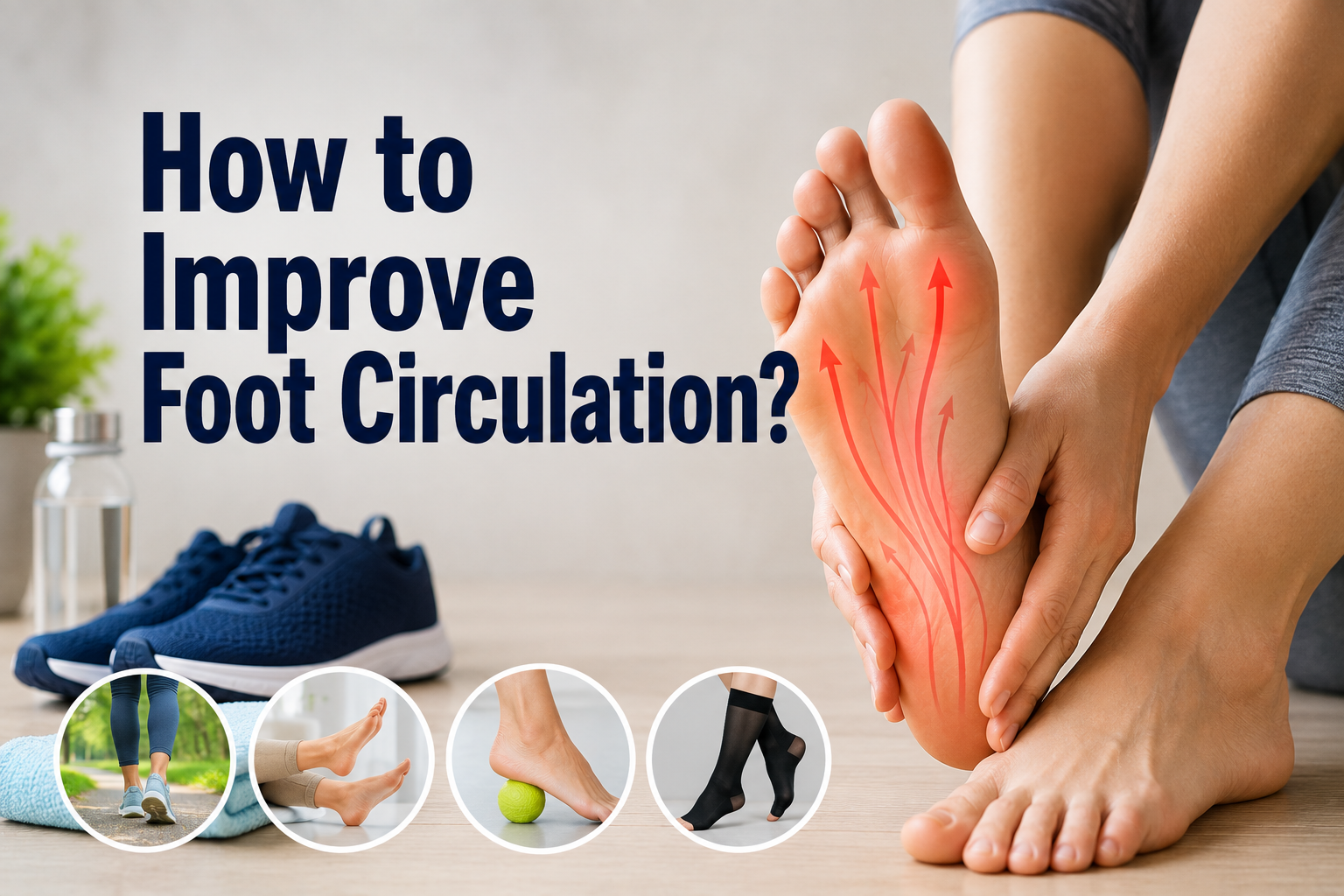
Poor blood flow in the feet is more common than most people realize, and it often shows up quietly before turning into a real problem. If you have ever noticed cold toes even in a warm room, tingling after sitting too long, or swelling by the end of the day, your circulation may already be asking for attention.
Learning how to improve foot circulation is not about one single trick — it is about combining daily habits, simple exercises, and awareness of underlying health conditions that affect blood flow to the lower body. This guide breaks down the causes, warning signs, and practical solutions in a way that is easy to follow and apply right away.
Key Takeaways
- Poor foot circulation is usually linked to inactivity, smoking, diabetes, or vascular conditions like PAD.
- Warning signs include numbness, coldness, discoloration, cramping, and slow-healing wounds.
- Daily movement, leg elevation, and compression socks are among the most effective at-home solutions.
- Warm foot baths and massage can offer short-term relief and support long-term blood flow.
- Persistent symptoms or non-healing sores should always be checked by a doctor promptly.
What Causes Poor Foot Circulation?
Poor circulation in the feet rarely happens for just one reason. It is usually the result of a combination of lifestyle habits and underlying health conditions that make it harder for blood to travel efficiently through the smaller vessels in the lower legs and feet. Understanding the root cause is the first step toward fixing it, because the right solution often depends on what is actually driving the problem.
Sedentary Lifestyle and Prolonged Sitting or Standing
Sitting or standing in the same position for hours at a time slows the natural pumping action that leg muscles normally provide to push blood back toward the heart. Office workers, drivers, and people in standing-heavy jobs are particularly prone to this. Over time, blood tends to pool in the lower legs, leading to that heavy, sluggish feeling many people describe by the end of the day.
Diabetes and Peripheral Artery Disease
Diabetes can damage blood vessels and nerves over time, a condition often referred to as diabetic neuropathy, which reduces sensation and blood flow in the feet simultaneously. Peripheral artery disease, or PAD, narrows the arteries that supply the legs and feet, restricting how much oxygen-rich blood actually reaches the tissue. According to the American Diabetes Association, people with diabetes face a significantly higher risk of developing circulation-related foot complications.
Smoking and Vascular Constriction
Nicotine causes blood vessels to narrow, a process known as vasoconstriction, which directly reduces the amount of blood reaching the extremities. Smokers often experience colder feet and slower wound healing compared to non-smokers because the vessels stay constricted for extended periods after each cigarette. Mayo Clinic research consistently links smoking to a higher risk of PAD and related circulation disorders.
Obesity and High Cholesterol
Carrying excess weight puts additional pressure on the veins in the legs, making it harder for blood to circulate back up toward the heart. High cholesterol adds another layer of risk by contributing to plaque buildup inside the arteries, which physically narrows the pathway blood needs to travel through. Together, these factors compound the strain already placed on the circulatory system by other lifestyle habits.
Signs and Symptoms of Poor Circulation in Feet
Recognizing the early signs of poor circulation makes it much easier to address the problem before it becomes serious. Some symptoms are subtle and easy to dismiss, while others are more obvious and should never be ignored.
Numbness, Tingling, and Coldness
A persistent pins-and-needles sensation or feet that feel unusually cold, even when the rest of the body is warm, is one of the earliest indicators of reduced blood flow. This happens because nerves and tissues are not receiving enough oxygenated blood to function normally. It is especially common after sitting cross-legged or wearing tight footwear for extended periods.
Skin Discoloration and Slow-Healing Wounds
When circulation is compromised, the skin on the feet may take on a bluish, pale, or reddish-purple tone depending on how blood flow is affected. Cuts, blisters, or sores that take unusually long to heal are another red flag, since healing depends heavily on a steady supply of oxygen and nutrients delivered through the blood.
Swelling and Cramping
Fluid buildup in the lower legs and feet, known as edema, often points to veins struggling to return blood efficiently to the heart. Cramping, particularly at night or after walking short distances, can also signal that muscles are not receiving adequate blood flow during activity, a symptom sometimes associated with PAD.
Lifestyle Changes to Improve Foot Circulation
Most circulation issues respond remarkably well to consistent daily habits. These changes do not require special equipment or major life overhauls — just regular attention woven into your existing routine.
Regular Walking and Ankle Exercises
Walking activates the calf muscles, which act as a secondary pump helping push blood back up toward the heart. Even short walks every hour, combined with simple ankle rotations while seated, can meaningfully improve blood flow throughout the day. This is especially important for anyone with a desk job or a long commute.
Elevating Feet Above Heart Level
Raising your feet above heart level for fifteen to twenty minutes a few times a day uses gravity to assist venous return, reducing pooling and swelling in the lower legs. This is a particularly effective habit to build into evening relaxation time, such as while watching television or reading before bed.
Quitting Smoking
Since nicotine directly constricts blood vessels, quitting smoking is one of the most impactful changes a person can make for long-term circulation health. Improvements in blood flow can begin within weeks of quitting, and the risk of PAD and related complications drops steadily over time as vessel function recovers.
Staying Hydrated
Blood that is properly hydrated flows more easily through the vessels, while dehydration thickens the blood and makes circulation more difficult. Drinking adequate water throughout the day supports not just circulation but overall cardiovascular function as well.
Managing Weight
Maintaining a healthy weight reduces pressure on the veins in the legs and lowers the overall strain placed on the circulatory system. Even modest, gradual weight loss has been shown to ease symptoms of poor circulation in people who carry excess weight around the midsection.
At-Home Remedies and Techniques
Alongside lifestyle changes, several at-home techniques offer more immediate relief for circulation symptoms and can be used alongside longer-term habits.
Warm Foot Baths
Soaking feet in warm — not hot — water for ten to fifteen minutes helps dilate blood vessels and encourages better blood flow to the area. Adding Epsom salt is a common practice, though the warmth itself is what does most of the work in relaxing constricted vessels.
Foot Massage Techniques
Gently massaging the feet, working from the toes up toward the ankle, mechanically stimulates blood flow and can offer noticeable short-term relief from numbness or coldness. Using light to moderate pressure in circular motions along the arch and heel tends to be the most effective approach.
Compression Socks
Compression socks apply graduated pressure that is tightest at the ankle and gradually loosens up the leg, helping push blood back toward the heart more efficiently. Choosing the right compression level depends on the severity of symptoms and any underlying conditions, as summarized below.
| Compression Level | Best For | Notes |
| Mild (8–15 mmHg) | Everyday tiredness, long flights, standing jobs | Widely available, comfortable for all-day wear |
| Moderate (15–20 mmHg) | Mild swelling, early circulation symptoms | Often recommended as a first step for noticeable discomfort |
| Firm (20–30 mmHg) | Diagnosed venous issues, PAD-related swelling | Typically used under medical guidance |
| Extra-firm (30–40 mmHg) | Severe venous insufficiency | Prescription-strength, requires doctor supervision |
Exercises That Boost Circulation
Movement remains one of the most reliable ways to support healthy blood flow, and certain exercises target the feet and legs more directly than general activity alone.
Toe Raises and Ankle Rotations
Simple toe raises, where you lift your heels while keeping toes on the ground, and slow ankle rotations in both directions activate the smaller muscles that support circulation in the feet. These can be done seated at a desk and take less than a minute to complete several times throughout the day.
Walking, Cycling, and Swimming
Low-impact cardio activities like walking, cycling, and swimming get the whole circulatory system working without placing excessive strain on the joints. Aiming for at least thirty minutes most days of the week has been consistently linked to better overall vascular health, including in the feet.
Yoga Poses for Blood Flow
Certain yoga poses, particularly those that involve elevating the legs or gently inverting the body, encourage blood to flow back toward the heart and can ease tension in the lower legs. Poses like legs-up-the-wall are frequently recommended for their simplicity and effectiveness.
Medical Conditions Linked to Poor Circulation
Sometimes circulation problems point to a deeper medical issue that lifestyle changes alone cannot fully resolve. Recognizing these conditions helps determine when professional care becomes necessary.
Diabetes-Related Neuropathy
Long-term high blood sugar can damage the small nerves and blood vessels in the feet, reducing both sensation and circulation over time. This combination is particularly risky because reduced sensation can mask injuries that would otherwise prompt earlier treatment.
Peripheral Artery Disease
PAD develops when arteries supplying the legs become narrowed by plaque buildup, restricting blood flow especially during physical activity. According to Cleveland Clinic, PAD symptoms often include cramping or pain while walking that eases with rest, a pattern known as intermittent claudication.
Raynaud’s Disease
Raynaud’s causes blood vessels in the extremities to spasm in response to cold or stress, temporarily cutting off circulation and causing fingers or toes to turn white or blue. While usually not dangerous on its own, severe cases can require medical management to prevent tissue damage.
When to See a Doctor
Persistent numbness, unexplained pain while walking, wounds that will not heal, or noticeable changes in skin color are signs that circulation issues have moved beyond what home care can manage.
A doctor can run simple tests, such as an ankle-brachial index, to check for PAD and recommend treatment before complications develop.
Frequently Asked Questions
Does drinking more water really help foot circulation? Yes, staying hydrated keeps blood at a healthier consistency, which allows it to flow more easily through smaller vessels in the feet.
Can poor circulation in the feet be reversed? In many cases, especially when caused by lifestyle factors, circulation can improve significantly with consistent exercise, elevation, and other habits described above.
What is the best sleeping position for foot circulation? Sleeping with feet slightly elevated using a pillow can help reduce overnight pooling and support better blood flow by morning.
Are compression socks safe to wear every day? Mild to moderate compression socks are generally safe for daily wear, though higher compression levels should be used under medical guidance.
Conclusion
Improving foot circulation comes down to consistent, everyday choices — moving regularly, elevating your feet, staying hydrated, and paying attention to warning signs like numbness or discoloration.
While simple habits and at-home remedies resolve most cases, persistent or worsening symptoms deserve a proper medical evaluation to rule out conditions like PAD or diabetic neuropathy. Taking action early is the most reliable way to keep your feet healthy and comfortable for the long run.
RELATED POSTS
How Long Does Root Canal Therapy Take? Full Time Guide
Why Do I Get Random Sharp Pains in Random Places? Causes & Relief
Does Stainless Steel Turn Skin Green? Real Answer Explained