If you have ever taken off a ring or a watch and noticed a faint green mark on your skin, you have probably asked yourself does stainless steel turn skin green, or if something else is going on.
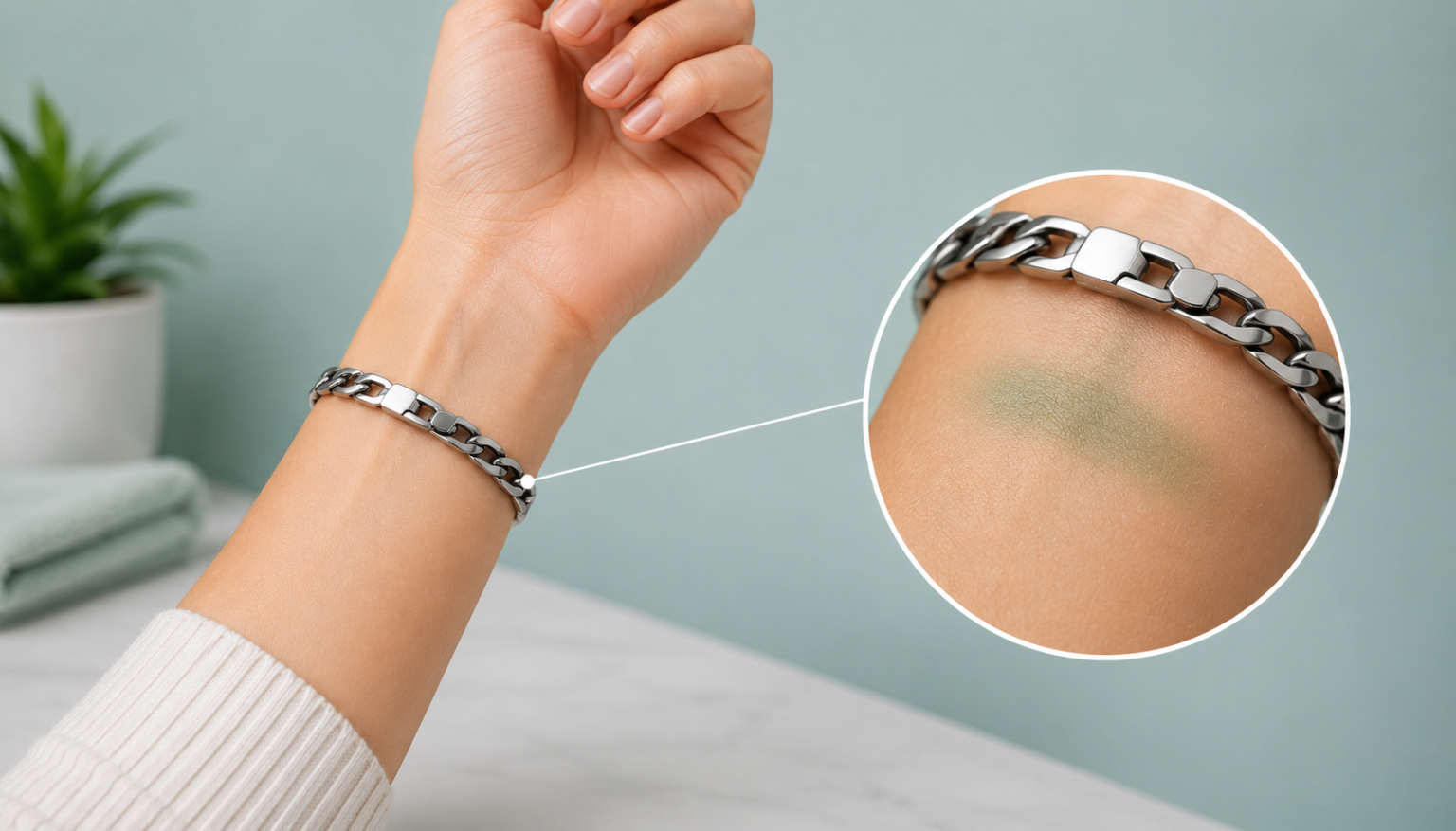
The short answer is that genuine stainless steel almost never turns skin green, because it is built to resist rust, tarnish, and the kind of chemical reaction that causes that greenish stain.
In most cases, the real culprit is a cheaper metal hiding underneath a thin layer of plating, or an item that only looks like stainless steel but is actually a mixed alloy.
This guide walks through why skin turns green in the first place, how real stainless steel behaves differently, and how you can tell what you are actually wearing.
Why Skin Turns Green From Jewelry
Skin usually turns green because of a chemical reaction between metal and the natural moisture on your body. This reaction is called oxidation, and it happens far more easily with certain metals than others.
The Role of Copper and Metal Alloys
Copper is the main reason jewelry leaves green marks on skin. Many affordable rings, bracelets, and watches contain copper mixed with other metals to make them cheaper to produce. When copper reacts with air and moisture, it forms a thin greenish layer known as copper oxide, and that layer transfers directly onto your skin, leaving a stain that looks alarming but is usually harmless.
How Sweat, Oils, and Chemicals Trigger the Reaction
Sweat is slightly acidic, and that acidity speeds up the oxidation process on copper-based metals. Lotions, perfumes, and even chlorinated pool water can make the reaction happen faster and more visibly. People with naturally oilier or sweatier skin tend to notice this discoloration more often, simply because their skin creates more of the moisture that triggers the chemical change.
Is Stainless Steel Different From Other Metals?
Yes, stainless steel behaves very differently from copper-based metals because of how it is manufactured. This is the main reason genuine stainless steel resists the kind of staining that raises the does stainless steel turn skin green question in the first place.
What Makes Stainless Steel Corrosion-Resistant
Stainless steel contains chromium, which reacts with oxygen to form an invisible protective layer on the surface of the metal. This layer stops moisture, sweat, and air from reaching the metal underneath, which is exactly what prevents the oxidation that causes green stains. As long as that chromium layer stays intact, the metal keeps its shine and does not react with your skin.
Types of Stainless Steel (304 vs. 316 vs. Lower-Grade Blends)
Not all stainless steel is made the same way. Grade 304 is common in everyday jewelry and household items, while grade 316 contains added molybdenum and is often called surgical-grade because of its extra resistance to corrosion. Lower-grade blends sold under a stainless steel label sometimes contain less chromium and more filler metals, which lowers their resistance and increases the chance of a reaction.
When Stainless Steel Can Cause Discoloration
Although true stainless steel is highly resistant to staining, there are a few situations where discoloration can still happen. These usually come down to the quality of the item rather than the metal itself.
Low-Quality or Mixed-Metal Products
Some items marketed as stainless steel are actually a blend that includes small amounts of copper, nickel, or other reactive metals. Manufacturers sometimes do this to cut production costs, which means the finished piece does not have the same corrosion resistance as pure-grade stainless steel. Over time, sweat and daily wear can expose these weaker points and cause faint discoloration.
Plated vs. Solid Stainless Steel
Plated jewelry has a thin stainless steel coating over a base metal core, and that coating can wear away with friction, cleaning products, or years of daily use. Once the plating thins out, the base metal underneath is exposed to air and sweat, and that is when green marks are most likely to appear. Solid stainless steel does not have this problem because the entire piece is made from the same corrosion-resistant material all the way through.
Stainless Steel vs. Other Common Metals
Comparing stainless steel side by side with other popular jewelry metals makes it easier to see why it stands out for everyday wear. The table below breaks down discoloration risk, common causes, and general durability.
| Metal Type | Skin Discoloration Risk | Common Cause | Durability | Typical Cost |
| Stainless Steel (304/316) | Very Low | Rare, usually poor plating | Excellent | Affordable |
| Copper | High | Oxidation from sweat/oils | Moderate | Low |
| Brass | High | Copper-zinc reaction | Moderate | Low |
| Sterling Silver | Low to Moderate | Tarnish from sulfur compounds | Good | Moderate |
| Gold-Plated Base Metal | Moderate | Base metal exposed as plating wears | Fair | Moderate |
Signs Your Jewelry or Accessory Isn’t Real Stainless Steel
If a piece is leaving marks on your skin, there are a few practical ways to check whether it is genuine stainless steel or a lower-quality substitute before assuming the metal itself is at fault.
Visual and Physical Clues
Genuine stainless steel has a consistent, slightly cool-toned shine and does not flake, peel, or show a different color underneath scratches. If you notice a yellowish or coppery tone appearing where the surface has worn down, that is a strong sign the item is plated rather than solid.
Simple At-Home Tests (Magnet Test, etc.)
A basic magnet test can offer a helpful clue, since many stainless steel alloys are only weakly magnetic or not magnetic at all, while base metals like nickel or iron tend to be strongly magnetic. Another simple check is examining the item after it gets wet, since real stainless steel dries without any residue while lower-quality metals often leave a faint colored film behind.
Is Green Skin Discoloration Harmful?
In most cases, a green mark from jewelry is a cosmetic issue rather than a medical one and fades quickly once the item is removed and the skin is washed.
Common Symptoms (Mild Irritation, Allergic Reaction)
Most people only notice a temporary green or grayish stain with no pain, itching, or swelling involved. Some individuals, however, may experience mild redness, itching, or irritation, particularly if they have a sensitivity to nickel, which is sometimes present in mixed-metal jewelry.
When to See a Doctor or Dermatologist
If the discoloration is accompanied by persistent itching, swelling, blistering, or a rash that does not clear up after removing the jewelry, it is worth having a dermatologist take a look. These symptoms can point to a genuine metal allergy rather than simple surface oxidation, and a doctor can help identify which metal is responsible.
How to Prevent Skin Discoloration?
A few simple habits can reduce the chances of green marks appearing again, regardless of what type of metal you typically wear.
Choosing Hypoallergenic Metals
Look for jewelry clearly labeled as solid surgical-grade stainless steel, titanium, or platinum, since these are the least likely to react with skin. Avoid pieces that only mention a stainless steel coating or finish, as this usually signals a plated rather than solid product.
Proper Cleaning and Storage Tips
Wiping jewelry dry after contact with water, sweat, or lotion helps slow down any oxidation process on lower-quality metals. Storing pieces in a dry container away from humidity, and removing rings or bracelets before swimming or applying skincare products, also helps preserve both the metal and your skin.
Frequently Asked Questions
Does surgical stainless steel turn skin green?
Surgical-grade stainless steel, such as 316L, is highly resistant to corrosion and very rarely causes green skin discoloration under normal wear.
Can stainless steel cause a nickel allergy?
Most stainless steel contains only trace amounts of nickel bound tightly within the alloy, so reactions are uncommon, though people with severe nickel sensitivity may still notice mild irritation.
Why did my stainless steel ring turn my finger green?
This usually means the ring is plated rather than solid stainless steel, and the base metal underneath has become exposed through daily wear.
Is stainless steel safe for sensitive skin?
Yes, solid stainless steel is generally considered one of the safer options for sensitive skin because of its strong resistance to corrosion and low reactivity.
Conclusion
So, does stainless steel turn skin green? For genuine, solid stainless steel, the answer is almost always no, thanks to the protective chromium layer that keeps moisture and air from reacting with the metal. Green stains are far more often linked to copper-based alloys, plated jewelry with worn coatings, or lower-quality blends sold under the stainless steel name.
By checking for solid, surgical-grade stainless steel and following simple care habits like drying jewelry after contact with water or sweat, most people can avoid this issue altogether. If discoloration comes with ongoing irritation or a rash, checking in with a dermatologist is the safest next step.
RELATED ARTICLES
Can a DEXA Scan Show Cancer? What It Can and Cannot Detect
How Much Does Laser Eye Surgery Cost? Full 2026 Price Guide
How to Treat a Sprained Wrist Fast: Complete Informative Guide
Why Do I Get Random Sharp Pains in Random Places? Causes & Relief