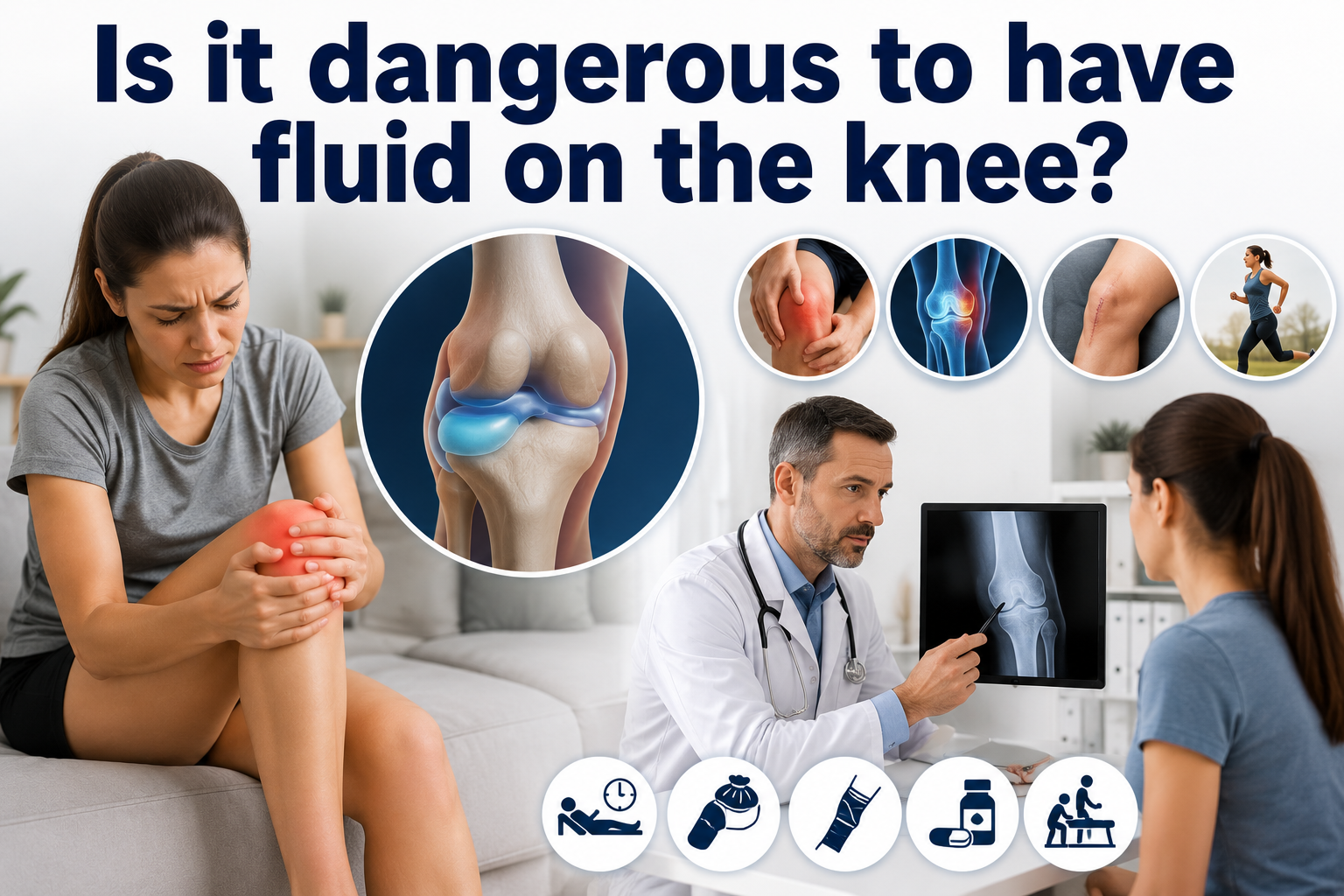
Is it dangerous to have fluid on the knee? For most people, the honest answer is: it depends entirely on the cause. A swollen, tight knee that won’t bend properly can leave you wondering whether you’re facing a minor annoyance or a medical emergency. This guide breaks down which symptoms signal real danger, which causes are usually harmless, and exactly when you need to see a doctor.
Knee effusion, the medical term for fluid buildup, affects roughly 27% of adults at some point in their lives (Medical News Today, 2023). Most cases respond well to rest and simple home care. A smaller number point to infection, gout, or ligament damage that needs prompt treatment. By the end of this article, you’ll know exactly what to watch for.
| Key Takeaways Fluid on the knee (knee effusion) is not automatically an emergency — the underlying cause determines the real risk level. Warning signs that need urgent care include fever, redness, warmth, sudden inability to bear weight, and a knee that won’t bend or straighten. Septic arthritis (a joint infection) is the most dangerous cause and can permanently damage cartilage if it goes untreated. About 27% of people experience fluid on the knee at some point in their lives (Medical News Today, 2023).Mild swelling from overuse or a minor bump usually improves with rest, ice, and elevation within a few days. A doctor can drain and test the fluid — a procedure called arthrocentesis — to pinpoint the exact cause in one visit. |
What Does It Mean to Have Fluid on the Knee?
Fluid on the knee, known clinically as knee effusion, happens when excess synovial fluid collects inside or around the joint capsule. A healthy knee holds a small amount of this fluid to lubricate movement and cushion the joint. When the synovial lining gets irritated by injury, overuse, or disease, it produces far more fluid than normal.
The result is a knee that looks puffier than its counterpart, feels tight, and may be harder to bend. The swelling itself isn’t the disease — it’s a signal that something inside the joint needs attention.
Why Your Knee Produces Extra Fluid
- Synovial membrane irritation — the joint lining overproduces lubricating fluid when inflamed.
- Bursa inflammation — small fluid sacs around the knee can swell after kneeling or trauma.
- Blood in the joint (hemarthrosis) — sudden injuries can cause bleeding inside the capsule.
- Protective response — the body sometimes floods a damaged joint with fluid to cushion it.
What Causes Fluid on the Knee? Common Knee Effusion Causes
Injuries account for a large share of effusion cases. Torn ligaments — especially the ACL — meniscus tears, and fractures near the joint all trigger fluid buildup as part of the body’s protective response.
Chronic conditions are equally common culprits. Osteoarthritis, rheumatoid arthritis, gout, and pseudogout all irritate the synovial lining over time, leading to recurring swelling.
- Ligament or meniscus tears from sports or twisting injuries
- Osteoarthritis or rheumatoid arthritis
- Gout or pseudogout (crystal buildup inside the joint)
- Bacterial or viral infection (septic arthritis)
- Overuse or repetitive kneeling (bursitis)
Risk Factors That Make Fluid Buildup More Likely
Age, obesity, and sports that involve pivoting or twisting all raise your odds of developing a swollen knee. Carrying extra body weight adds constant stress to the joint, which accelerates wear and increases fluid production over time.
When Is Fluid on the Knee Dangerous? Key Warning Signs
So, is it dangerous to have fluid on the knee? On its own, mild swelling after light overuse is rarely an emergency. The danger comes from what’s causing the fluid buildup — and from specific symptoms that point to infection, severe trauma, or advancing joint damage.
| Warning: Seek Care Immediately If You Notice Fever, chills, or an overall feeling of being unwell alongside knee swelling. Skin over the knee that looks red or feels distinctly warmer than the other knee. Sudden inability to bear weight or a knee that won’t bend or straighten. Severe pain that developed within hours of an injury. Swelling accompanied by numbness or loss of pulse below the knee |
These signs can point to septic arthritis, a joint infection that Cleveland Clinic describes as a serious disease capable of damaging or destroying the joint, sometimes requiring joint replacement surgery.
Water on the Knee Symptoms by Cause
Symptoms vary depending on what’s driving the fluid buildup. Comparing your symptoms against the underlying cause can help you decide how urgently you need care.
| Feature | Usually Manageable Swelling | Potentially Dangerous Swelling |
| Onset | Gradual, after activity or minor bump | Sudden, within minutes to hours |
| Skin appearance | Normal color, mild puffiness | Red, shiny, or noticeably warm |
| Pain level | Mild to moderate ache | Severe, sharp, or worsening fast |
| Fever present | No | Yes |
| Weight-bearing | Possible, with some discomfort | Difficult or impossible |
Arthritis-Related Swelling
Osteoarthritis pain and stiffness are typically worse in the morning and ease within about 30 minutes of moving around, while rheumatoid arthritis often affects both knees symmetrically and may include a low-grade fever.
Gout-Related Swelling
Gout flares bring rapid swelling, intense pain, warmth, and redness, often striking suddenly overnight. Repeated attacks can gradually damage the joint if the underlying uric acid levels aren’t managed.
When Is Knee Swelling Serious Enough for the ER?
| Hypothetical Example (for illustration purposes) A 32-year-old recreational basketball player plants his foot and twists to change direction. His knee swells noticeably within two hours, he can’t fully straighten it, and putting weight on it causes sharp pain. Given the speed of onset and inability to bear weight, this scenario warrants same-day evaluation, since it’s consistent with a possible ligament or meniscus tear rather than simple overuse. Note: This scenario is illustrative. Actual results vary by injury type, individual health, and how quickly treatment begins. |
Beyond traumatic injuries, certain combinations of symptoms justify an emergency room visit rather than waiting for a regular appointment.
- You have a fever along with a hot, red, swollen knee
- You cannot bear any weight on the leg
- The knee looks visibly deformed after a fall or collision
- You have known diabetes, a weakened immune system, or a recent joint surgery
- Pain is escalating rapidly rather than staying stable or improving
How Doctors Diagnose and Treat Fluid on the Knee
Diagnosis usually starts with a physical exam, including tests like the patellar tap and bulge sign, followed by imaging such as X-ray or ultrasound if needed . When the cause isn’t obvious, your doctor may recommend a joint aspiration.
Arthrocentesis, or joint aspiration, uses a thin needle to draw fluid out of the knee. Lab analysis of that fluid can reveal infection, crystals, or signs of autoimmune disease, and draining it often relieves pressure and pain immediately.
| Pro Tip Draining fluid without addressing the underlying cause often leads to it coming back. Ask your doctor what’s causing the buildup, not just how to remove it. |
Common Treatment Approaches
- Rest, ice, compression, and elevation for mild, injury-related swelling
- Over-the-counter NSAIDs such as ibuprofen or naproxen for pain and inflammation
- Corticosteroid injections to calm inflammation from arthritis
- Antibiotics if lab testing confirms a joint infection
- Surgery in select cases involving severe ligament, meniscus, or cartilage damage
Signs of Infection in the Knee Joint (Septic Arthritis)
Septic arthritis develops when bacteria, viruses, or fungi get into the joint fluid and tissues, sometimes through a cut, animal bite, or bloodstream infection. If the infection spreads into the bloodstream, it can become life-threatening, which is why prompt treatment matters.
Symptoms often develop quickly, over hours or days, and are more intense than typical effusion. Watch for these infection-specific signs.
- Skin over the knee feels hot compared with the other leg
- Fever, chills, or general malaise alongside the swelling
- Pain severe enough to make any movement of the joint unbearable
- Swelling that appeared quickly after a cut, bite, or recent joint procedure
How to Prevent Chronic Knee Swelling
You can’t prevent every injury, but you can lower your risk of recurring, chronic knee swelling. Maintaining a healthy weight reduces the mechanical stress that wears down cartilage over time.
Strengthening the muscles that support your knee, choosing low-impact exercise, and treating injuries early all help keep fluid buildup from becoming a repeated problem.
- Strengthen the quadriceps and hamstrings to stabilize the joint
- Choose low-impact activities like swimming, cycling, or water aerobics
- Maintain a healthy body weight to reduce joint stress
- Treat minor knee injuries early instead of pushing through pain
- Manage underlying conditions like gout or arthritis with your doctor’s guidance
Frequently Asked Questions
Q: How do you know if fluid on the knee is serious?
Serious cases usually come with fever, redness, warmth, or an inability to bear weight. Mild swelling without these signs is often manageable with rest, ice, and over-the-counter pain relief.
Q: What happens if fluid on the knee goes untreated?
Untreated effusion can lead to muscle weakness, limited mobility, and cartilage damage over time. If an infection is the cause, delaying treatment raises the risk of permanent joint damage.
Q: Should I be worried about fluid on my knee?
Not always — mild, gradual swelling after activity is usually not urgent. Worry increases if swelling is sudden, severe, or paired with fever, redness, or inability to move the joint.
Q: Can fluid on the knee go away on its own?
Mild effusion from minor overuse can improve on its own with rest, ice, and elevation within a few days. Swelling from arthritis, infection, or a significant injury usually needs medical treatment.
Q: What is the fastest way to get rid of fluid on the knee?
For minor cases, rest, ice, compression, and elevation bring the quickest relief. For persistent or severe swelling, a doctor can drain the fluid through aspiration for faster results.
Q: Is it OK to walk on a knee with fluid on it?
Light walking is usually fine for mild swelling if it doesn’t cause sharp pain. Avoid bearing weight and see a doctor promptly if walking is painful or the knee feels unstable.
Q: When should I go to the ER for a swollen knee?
Go to the ER if you have a fever with knee swelling, cannot bear any weight, notice visible deformity after an injury, or have numbness below the knee.
Conclusion: Know When Fluid on the Knee Needs a Doctor
Fluid on the knee isn’t automatically dangerous, but ignoring the wrong warning signs can be.
Watch for fever, redness, sudden severe pain, or an inability to bear weight, and treat those symptoms as your cue to get evaluated quickly.
For milder swelling, rest, ice, and simple home care are usually enough to get you back on your feet
Related Posts
What Causes Ice Pick Headaches? Symptoms, Triggers & When to Worry
Do Humidifiers Help with Asthma? What You Need to Know Before Buying One
How to get rid of crunching sound in neck?
Can Stress Cause Diarrhea? Causes, Symptoms, and Fast Relief Methods
Can I Eat Fish on a Vegan Diet? The Complete Guide for Beginners