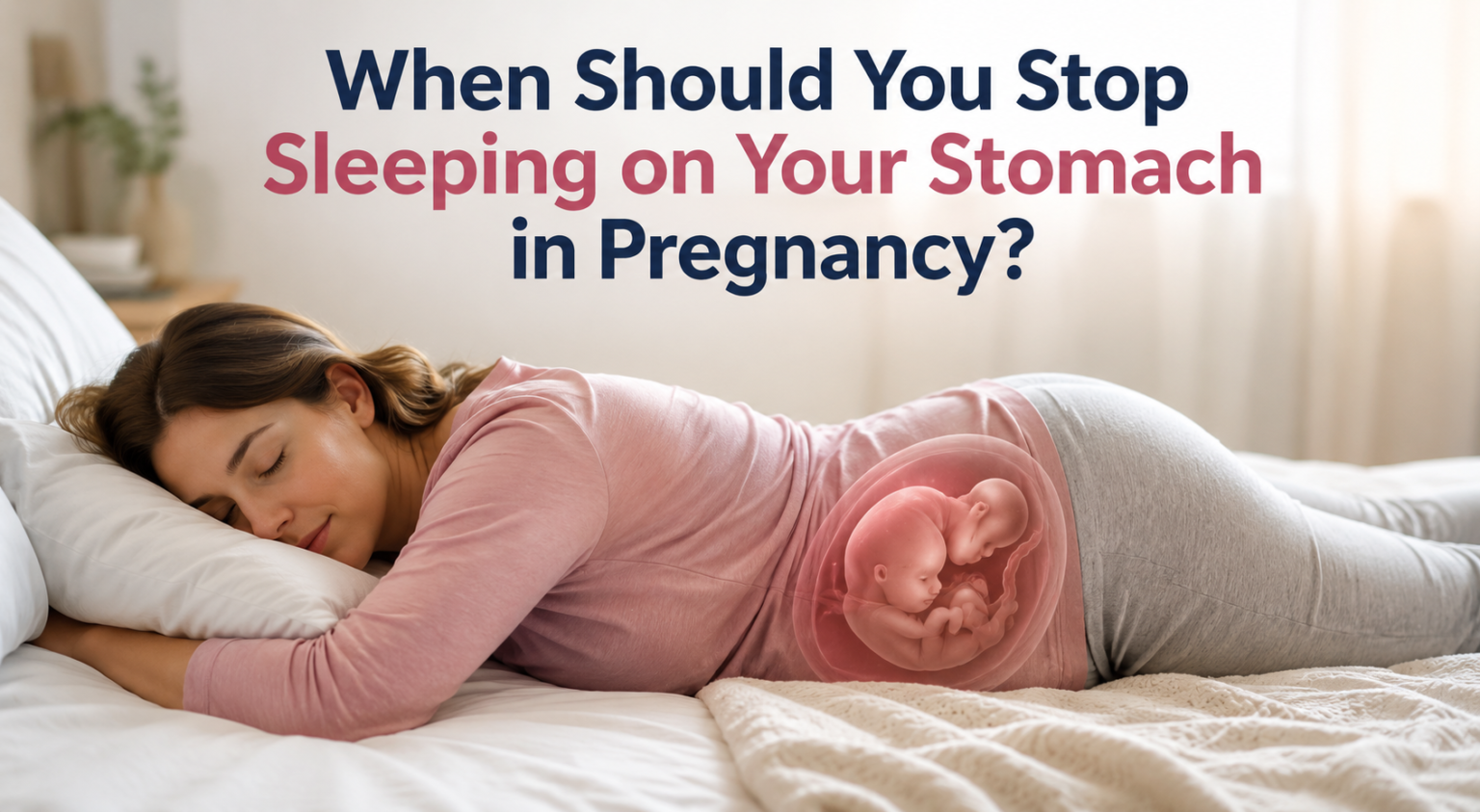
Most women naturally stop sleeping on their stomach in pregnancy somewhere between sixteen and twenty weeks, once the growing belly makes the position physically uncomfortable.
There is no single fixed date that applies to every pregnant woman, since body shape, belly size, and personal comfort levels all play a role in how long stomach sleeping stays practical.
During the first trimester, doctors generally agree that stomach sleeping carries no real risk to the baby. As the uterus expands into the second and third trimesters, however, most experts recommend switching to side sleeping for better comfort and improved blood flow.
Is Stomach Sleeping Safe in Early Pregnancy?
During the first trimester, sleeping on your stomach is considered completely safe for both you and your developing baby. The uterus is still small and well protected deep inside the pelvis at this stage.
Why is the First Trimester Different?
In the earliest weeks of pregnancy, the uterus sits low and small enough that it remains tucked behind the pelvic bone, which acts as a natural shield against outside pressure. This means that even if you sleep face-down every night, your baby is not being squeezed or compressed in any harmful way. Doctors often reassure first-time mothers that this is one of the least risky periods for choosing any sleep position, including the stomach.
What Actually Protects Your Baby?
The baby is cushioned by amniotic fluid, the muscular walls of the uterus, and your own abdominal muscles, all of which work together to absorb pressure from outside. This layered protection is designed specifically to keep the baby safe from everyday bumps, stretches, and body positions. Because of this natural cushioning, the idea that stomach sleeping could physically crush the baby in early pregnancy is simply not accurate.
Common Myths About Stomach Sleeping
A lot of expecting mothers hear frightening stories about stomach sleeping causing miscarriage or birth defects, but medical research does not support these claims for early pregnancy. Such myths often spread through word of mouth rather than clinical evidence, which only adds unnecessary stress to new mothers. Understanding the real anatomy involved helps replace fear with confidence during these early weeks.
When Stomach Sleeping Becomes Uncomfortable
As pregnancy moves into the second trimester, most women find that stomach sleeping starts to feel physically awkward rather than dangerous. The body itself usually signals when it is time to change positions.
Second Trimester Changes
Between roughly weeks thirteen and twenty-seven, the uterus rises out of the pelvis and becomes noticeably larger, making it harder to find a comfortable stomach-lying position. Many women describe feeling pressure or tightness in the belly when trying to lie face-down during this stage. This is usually the point where the body naturally nudges you toward side sleeping without needing a doctor’s instruction.
Growing Belly and Breast Tenderness
Alongside the expanding uterus, breast tenderness and sensitivity often increase significantly during the second trimester due to hormonal shifts preparing the body for breastfeeding. Lying face-down can put uncomfortable pressure on already sore breasts, making the position far less appealing than it once was. Combined with the firmer, rounder belly, most women simply stop choosing this position on their own.
Individual Variation in Comfort
Every pregnancy is different, and some women with smaller frames or lower weight gain may still manage brief stomach sleeping into the later second trimester. Others with twin pregnancies or larger bumps may abandon the position much earlier, sometimes by week fourteen or fifteen. There is no need to force a switch on a strict schedule; instead, let your own comfort level guide the transition.
Third Trimester: Why Experts Recommend Switching
By the third trimester, doctors clearly recommend avoiding both stomach and prolonged back sleeping, favoring side positions instead. This stage carries the most important reasons for changing your sleep habits.
Physical Impossibility for Most Women
By this point, the belly has grown large enough that stomach sleeping becomes physically impossible for the vast majority of pregnant women. Even attempting the position for a few minutes usually feels strained and unnatural. The body’s own limitations essentially make this decision for you well before any doctor needs to mention it.
Pressure on Major Blood Vessels
A more serious medical reason for avoiding stomach and back sleeping in later pregnancy involves the inferior vena cava, a large vein that carries blood from the lower body back to the heart. When significant weight presses directly on this vein for extended periods, it can restrict blood flow returning to the heart. This is one of the main clinical reasons side sleeping is preferred once the uterus reaches a substantial size.
Effects on Circulation and Baby’s Supply
Reduced blood flow from vena cava compression can lower blood pressure in the mother and potentially reduce the oxygen and nutrients reaching the placenta. While occasional shifts into other positions during sleep are not dangerous, consistently choosing side sleeping supports steadier circulation throughout the night. This directly benefits the baby’s ongoing growth and wellbeing during the final weeks.
Best Sleep Positions During Pregnancy
Side sleeping is widely recognized as the safest and most comfortable choice once stomach sleeping is no longer practical. Understanding which side and how to support your body makes a real difference in sleep quality.
Why Left-Side Sleeping Is Preferred?
Doctors often recommend the left side specifically because it keeps the uterus off the liver and improves blood flow to the heart, uterus, and kidneys more effectively than other positions. This position, sometimes referred to as the “SOS” or sleep-on-side approach, is considered the gold standard for later pregnancy. It also tends to reduce swelling in the hands, ankles, and feet compared to other sleeping arrangements.
Is Right-Side Sleeping Okay?
Sleeping on the right side is not considered harmful and remains a perfectly acceptable alternative if the left side becomes uncomfortable during the night. Many doctors simply recommend avoiding long stretches flat on the back rather than insisting on one specific side. Alternating between left and right throughout the night is completely normal and often happens naturally without you even noticing.
Using Pillows for Support
The table below outlines common pillow supports that many expecting mothers find helpful for comfortable side sleeping.
| Support Tool | Purpose | Best Used For |
| Pregnancy pillow (C or U shape) | Full-body support and alignment | Overall comfort, back and belly support |
| Wedge pillow | Small, targeted support | Under the belly or lower back |
| Pillow between knees | Reduces hip and lower back strain | Side sleeping alignment |
| Firm pillow behind back | Prevents rolling onto the back | Staying in side position overnight |
Signs You Should Adjust Your Sleep Position
Certain physical symptoms during the night are a clear signal that your current sleep position needs to change immediately. Recognizing these signs early helps protect both comfort and safety.
Dizziness or Shortness of Breath
If you wake up feeling lightheaded, dizzy, or unusually short of breath, this may indicate that blood flow was restricted while you were lying on your back or stomach. Shifting immediately onto your left side typically relieves this pressure within a few minutes. If these symptoms happen repeatedly, it is worth mentioning to your doctor at your next visit.
Swelling
Noticeable swelling in the legs, ankles, or feet that seems worse after certain sleep positions can also point to reduced circulation overnight. Side sleeping, particularly on the left, generally helps minimize this kind of fluid buildup compared to back or stomach positions. Elevating the feet slightly with a pillow can further support healthy circulation.
Difficulty Breathing
As the uterus grows and pushes upward against the diaphragm, certain positions can make breathing feel more labored than usual. Propping the upper body slightly with extra pillows often eases this discomfort alongside choosing a side-lying position. Persistent or severe breathing difficulty, however, should always be discussed with a healthcare provider promptly.
Tips for Transitioning Away from Stomach Sleeping
Switching sleep positions does not have to happen overnight, and a gradual approach usually works better for long-term comfort. Small, consistent adjustments make the transition feel much more natural.
Gradual Adjustment Techniques
Start by spending short periods on your side before bed, even if you fall asleep in a different position initially, so your body slowly adapts to the new posture. Over a few weeks, most women find that side sleeping starts to feel just as natural as stomach sleeping once did. Patience during this adjustment period reduces frustration and improves overall sleep quality.
Pillow Arrangements for Comfort
Placing one pillow under the belly, another between the knees, and a firmer pillow behind the back creates a supportive cocoon that discourages rolling onto the stomach or back. This three-pillow method is one of the most commonly recommended setups among sleep specialists working with pregnant patients. Adjusting pillow firmness and placement slightly each week can accommodate your changing body shape.
Products That Help
Specialized maternity pillows, wedge cushions, and body-length support pillows are widely available and specifically designed for this transition. Many of these products are shaped to cradle the belly while simultaneously supporting the back, reducing the urge to shift onto the stomach during sleep. Investing in the right pillow early in the second trimester can make the entire remaining pregnancy noticeably more comfortable.
What If You Wake Up on Your Stomach or Back?
Occasionally waking up in an unintended position during the night is completely normal and generally not a cause for concern. Understanding when brief shifts matter helps ease unnecessary anxiety.
Reassurance for Occasional Shifts
Bodies naturally move during sleep, and finding yourself briefly on your back or, in early pregnancy, your stomach does not put your baby at sudden risk. The body typically sends discomfort signals that wake you or prompt an automatic shift back to a more comfortable side position. This natural self-correction is one of the reasons doctors are not overly strict about controlling every single sleep movement.
When to Actually Worry
Concern becomes more relevant only if you consistently spend hours flat on your back during the third trimester and experience symptoms like dizziness, nausea, or shortness of breath as a result. Isolated, brief periods are simply not comparable to prolonged nightly positioning in terms of risk. If symptoms are frequent or severe, a conversation with your healthcare provider is the appropriate next step rather than self-diagnosis.
Frequently Asked Questions
Can stomach sleeping harm the baby?
In early pregnancy, stomach sleeping does not harm the baby because the uterus and amniotic fluid provide sufficient protection. Later in pregnancy, it simply becomes physically impractical rather than dangerous.
Is back sleeping dangerous too?
Prolonged back sleeping in the third trimester can compress the vena cava and reduce blood flow, so it is generally discouraged after the second trimester. Occasional, brief periods on the back are not considered harmful.
What week should I switch sleep positions?
Most women naturally shift away from stomach sleeping between weeks sixteen and twenty as the belly grows, though this varies by individual body type and pregnancy.
Does sleep position affect labor?
Sleep position does not directly influence the timing or process of labor, though comfortable positioning throughout pregnancy supports better overall rest and wellbeing.
Conclusion
There is no single strict deadline for when should you stop sleeping on your stomach in pregnancy, since the body typically guides this transition naturally between the second and third trimester.
Early pregnancy poses little risk, while later stages call for side sleeping to protect circulation and comfort. Listening to your body, using supportive pillows, and adjusting gradually will help you sleep well throughout every stage of pregnancy. Always consult your doctor if you experience persistent discomfort or unusual symptoms related to sleep position.
RELATED ARTICLES
Heart Attack Misdiagnosis Attorney: What to Know Before You Call One
How to Improve Foot Circulation: Proven Tips That Work
Does Tennis Elbow Cause Shoulder Pain? Causes, Symptoms, Treatment & Prevention Guide
Insect Bite Scar: Causes, Removal Options & Prevention Tips
Can Caffeine Cause Joint and Muscle Pain? Causes, Symptoms & Relief Tips