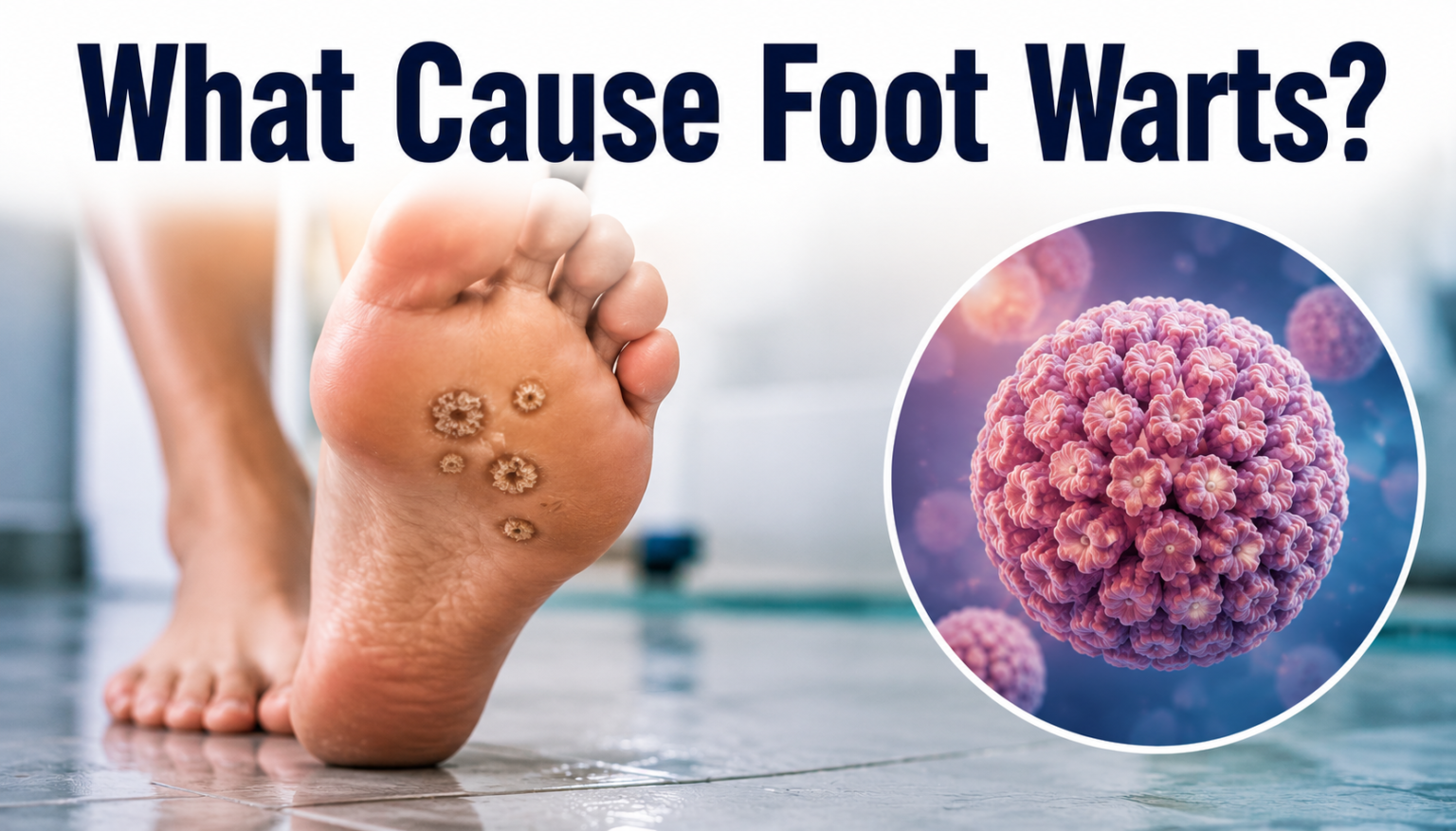
Foot warts, also known as plantar warts, are small skin growths that appear on the soles of the feet due to a viral infection. Many people search for what cause foot warts because these growths can be painful, stubborn, and confusing to identify at first. The main reason behind foot warts is a virus called human papillomavirus, which enters the skin through tiny cuts or weak spots. This guide explains everything in simple words, from the root cause to prevention and treatment, so you can understand and manage the condition confidently.
Introduction to Foot Warts
Foot warts are rough, grainy bumps that usually develop on the heels or balls of the feet, areas that carry the most body weight while walking. Unlike ordinary skin bumps, these warts often grow inward because of constant pressure, which can make them feel like a hard lump under the skin. They are extremely common among children, teenagers, and people who frequently walk barefoot in shared public spaces. Understanding how they form is the first step toward treating and preventing them effectively.
What Are Foot Warts?
Foot warts are benign skin growths caused by a viral infection that targets the top layer of skin. They typically appear as small, rough patches with tiny black dots inside, which are actually tiny clotted blood vessels. Although they are not dangerous, they can cause discomfort while standing or walking for long periods.
How Common Are They?
Plantar warts are one of the most frequently reported skin conditions worldwide, especially in school-age children and young adults. Their high frequency is largely linked to shared public spaces such as swimming pools, gyms, and locker rooms. Because the virus spreads easily in moist environments, outbreaks are common in communities with shared bathing or sports facilities.
Who Is Most Affected?
Children, athletes, and people who often walk barefoot in public areas are the most vulnerable groups. Individuals with a weaker immune system or small cuts on their feet also face a higher chance of infection. Swimmers and gym-goers are particularly at risk since damp public floors are a common transmission point.
What Causes Foot Warts?
The direct answer to what cause foot warts is a viral infection from the human papillomavirus family, commonly known as HPV. This virus is different from other HPV strains linked to more serious health issues, as the ones responsible for foot warts only affect the outer skin layer. Below, each contributing factor is explained in detail so you understand exactly how this infection develops.
The Human Papillomavirus (HPV) Explained
HPV is a large family of viruses, and only a few specific types are responsible for warts on the feet. These viruses infect keratinocytes, the cells found in the outermost layer of skin, causing them to multiply rapidly. This rapid cell growth is what forms the thick, rough texture typical of plantar warts.
Specific HPV Strains Responsible
Foot warts are mainly caused by HPV types 1, 2, 4, 27, and 57, which are different from the strains associated with other health conditions. Each strain can produce slightly different wart textures, though most appear rough and grainy. Identifying the exact strain is not usually necessary since treatment approaches remain similar across types.
How the Virus Enters the Skin
The HPV virus cannot infect intact, healthy skin easily, so it relies on small openings such as cuts, scrapes, or areas softened by moisture. Once it enters through these weak points, it settles into the skin’s surface layer and begins multiplying. This is why walking barefoot on rough or wet public surfaces significantly raises the chances of infection.
Why Feet Are Especially Vulnerable
Feet are constantly exposed to friction, pressure, and moisture, all of which create ideal conditions for the virus to take hold. Sweaty socks and shoes trap warmth and dampness, softening the skin and making it easier for the virus to penetrate. Additionally, since feet touch public floors more often than other body parts, exposure risk is naturally higher.
How Foot Warts Spread?
Foot warts spread through both direct and indirect contact with the virus, making shared spaces a common source of infection. The transmission process can happen quickly, especially in warm and damp environments where the virus survives longer. The sections below break down the different ways this spread occurs.
Direct Skin-to-Skin Contact
Touching an existing wart on your own foot or someone else’s skin can transfer the virus directly. This is one of the more straightforward ways infection occurs, particularly among family members or close contacts. Even brief contact can be enough if the skin has a small break or cut.
Indirect Contact Through Shared Surfaces
The virus can survive on surfaces like bathroom floors, shared towels, socks, and shoes for a period of time. Walking barefoot over these contaminated surfaces allows the virus to enter through tiny cracks in the skin. This indirect spread is one of the leading reasons plantar warts are so widespread in shared living or sports environments.
High-Risk Locations for Transmission
Public pools, locker rooms, communal showers, and gym floors are considered high-risk zones due to constant moisture and heavy foot traffic. These areas rarely get disinfected frequently enough to eliminate viral particles between uses. Wearing protective footwear in such places significantly lowers the chance of picking up the infection.
Autoinoculation and Self-Spreading
Once a person has a wart, scratching or touching it and then touching another part of the body can spread the virus further. This process, called autoinoculation, explains why some people develop multiple warts over time instead of just one. Keeping the infected area covered helps prevent this type of self-spreading.
Risk Factors for Developing Foot Warts
While the virus is the direct cause, certain personal habits and physical conditions increase susceptibility to infection. Recognizing these risk factors can help you take preventive steps before exposure turns into an active wart. The table below summarizes the major contributing factors.
| Risk Factor | Why It Increases Risk |
| Walking barefoot in public areas | Direct exposure to contaminated surfaces |
| Weakened immune system | Reduced ability to fight off viral entry |
| Cuts or cracks on feet | Creates an easy entry point for the virus |
| Excessive sweating | Softens skin, making penetration easier |
| Younger age group | Developing immune systems are more vulnerable |
| Sharing footwear or socks | Direct transfer of viral particles |
Each of these factors on its own may not guarantee infection, but combined exposure significantly raises the likelihood of developing plantar warts. People who fall into multiple categories, such as athletes with sweaty feet who also walk barefoot in locker rooms, face the highest risk.
Signs and Symptoms of Foot Warts
Foot warts have a fairly recognizable appearance once you know what to look for, though they can sometimes be mistaken for other skin issues. Symptoms vary slightly depending on the size, location, and number of warts present. The following points describe the most common signs in detail.
Foot warts usually appear as rough, grainy patches of skin that feel thicker than the surrounding area. They tend to form on pressure points like the heel or ball of the foot, where constant weight makes them grow inward rather than outward.
Many people notice small black dots inside the wart, which are tiny blood vessels that have clotted near the skin’s surface. Pain or tenderness while walking or standing is also common, especially when the wart is located in a high-pressure area. In some cases, warts cluster together to form what is known as a mosaic wart, which covers a larger patch of skin and can be more difficult to treat.
How Do Foot Warts Differ From Other Skin Conditions?
Foot warts are often confused with calluses or corns since all three can appear as thickened, hardened skin. Understanding the difference helps avoid incorrect home treatment and unnecessary discomfort. The comparisons below clarify how to distinguish them.
Warts Versus Calluses
Calluses form from repeated friction or pressure and usually have a smooth surface without any distinct border. Foot warts, on the other hand, have a clearly defined edge and often interrupt the natural lines of the skin. Calluses also lack the small black dots that are typically visible in plantar warts.
Warts Versus Corns
Corns are smaller, more concentrated areas of thickened skin that usually form on toes rather than the sole. Unlike warts, corns do not contain clotted blood vessels and are not caused by a virus. Corns typically result purely from mechanical pressure rather than infection.
When to See a Doctor for Diagnosis
If a growth on your foot is painful, spreading, or not responding to home treatment, it is best to consult a healthcare provider for an accurate diagnosis. Doctors can distinguish warts from other skin conditions through visual examination or a simple skin scraping test. Early diagnosis also helps prevent the wart from multiplying or spreading to other areas.
Prevention Tips for Foot Warts
Preventing foot warts largely revolves around limiting exposure to the virus and maintaining good foot hygiene. Since the infection often stems from public or shared environments, simple precautionary habits can make a significant difference. The list below highlights the most effective preventive measures.
Wearing sandals or flip-flops in public showers, pools, and locker rooms creates a barrier between your skin and contaminated surfaces. Keeping your feet clean and thoroughly dried after washing reduces the moisture that helps the virus thrive.
Avoiding direct contact with someone else’s visible wart, including refraining from touching your own, lowers the chance of spreading the infection further. Not sharing personal items like socks, shoes, towels, or nail clippers with others prevents indirect transmission. Supporting overall immune health through balanced nutrition and adequate rest also helps your body resist viral infections more effectively.
Treatment Options for Foot Warts
Once a foot wart has developed, several treatment methods are available depending on its size, location, and severity. Most cases can be managed with accessible over-the-counter options, while more persistent warts may require professional care. Below is a general overview of common treatment approaches.
Over-the-Counter Salicylic Acid Treatments
Salicylic acid products gradually dissolve the thickened skin layers of the wart when applied consistently over several weeks. This method works by softening and peeling away infected skin cells, allowing the body’s immune system to catch up. It remains one of the most widely used first-line treatments due to its accessibility and affordability.
Cryotherapy or Freezing Treatment
Cryotherapy involves freezing the wart tissue using liquid nitrogen, which destroys the infected skin cells and encourages new, healthy skin to form. This procedure is typically performed by a healthcare professional and may require multiple sessions for complete removal. It is considered effective for warts that do not respond well to topical treatments.
Professional Removal Methods
For stubborn or large warts, doctors may recommend procedures such as minor surgical removal, laser treatment, or stronger prescription-strength medications. These options are generally reserved for cases where home remedies and standard treatments have not been successful. Professional removal also reduces the risk of scarring compared to improper self-treatment attempts.
Home Remedies and Precautions
Some people try home remedies such as duct tape occlusion or natural extracts, though results can vary significantly from person to person. It is important to avoid cutting or picking at warts, as this can spread the virus to other areas of the foot. Consulting a healthcare provider before trying alternative remedies is always a safer approach.
When Foot Warts Go Away on Their Own
Many foot warts, particularly in children, eventually clear up naturally as the immune system learns to fight off the virus over time.
This natural resolution can take anywhere from several months to a couple of years, depending on individual immunity.
However, if a wart is painful, rapidly multiplying, or interfering with daily activities, seeking medical treatment sooner is generally recommended rather than waiting indefinitely.
Frequently Asked Questions
Are foot warts contagious? Yes, foot warts are contagious and can spread through direct contact or shared contaminated surfaces like pool decks and locker room floors.
Can foot warts come back after removal? Yes, since the virus can remain dormant in surrounding skin, warts sometimes return even after successful treatment, making prevention habits important long-term.
Do foot warts hurt? Many foot warts cause discomfort or pain when pressure is applied while walking or standing, especially if located on weight-bearing areas.
Can adults get foot warts too? Yes, while children are more commonly affected, adults can also develop foot warts, particularly those with weakened immunity or frequent exposure to public wet areas.
Conclusion
Understanding what cause foot warts makes it much easier to prevent and manage this common viral skin condition. The root cause is exposure to specific HPV strains through cuts or moisture-softened skin, often in shared public environments like pools and locker rooms.
By practicing good foot hygiene, avoiding barefoot walking in public areas, and seeking timely treatment when needed, most people can effectively prevent or resolve foot warts without long-term complications.
RELATED POSTS
Insanity Plyometric Cardio Circuit: Everything You Need to Know
Why Is My Nose Burning? Causes, Symptoms and Relief Tips
Can You Take Advil on an Empty Stomach? Safety Guide & Tips