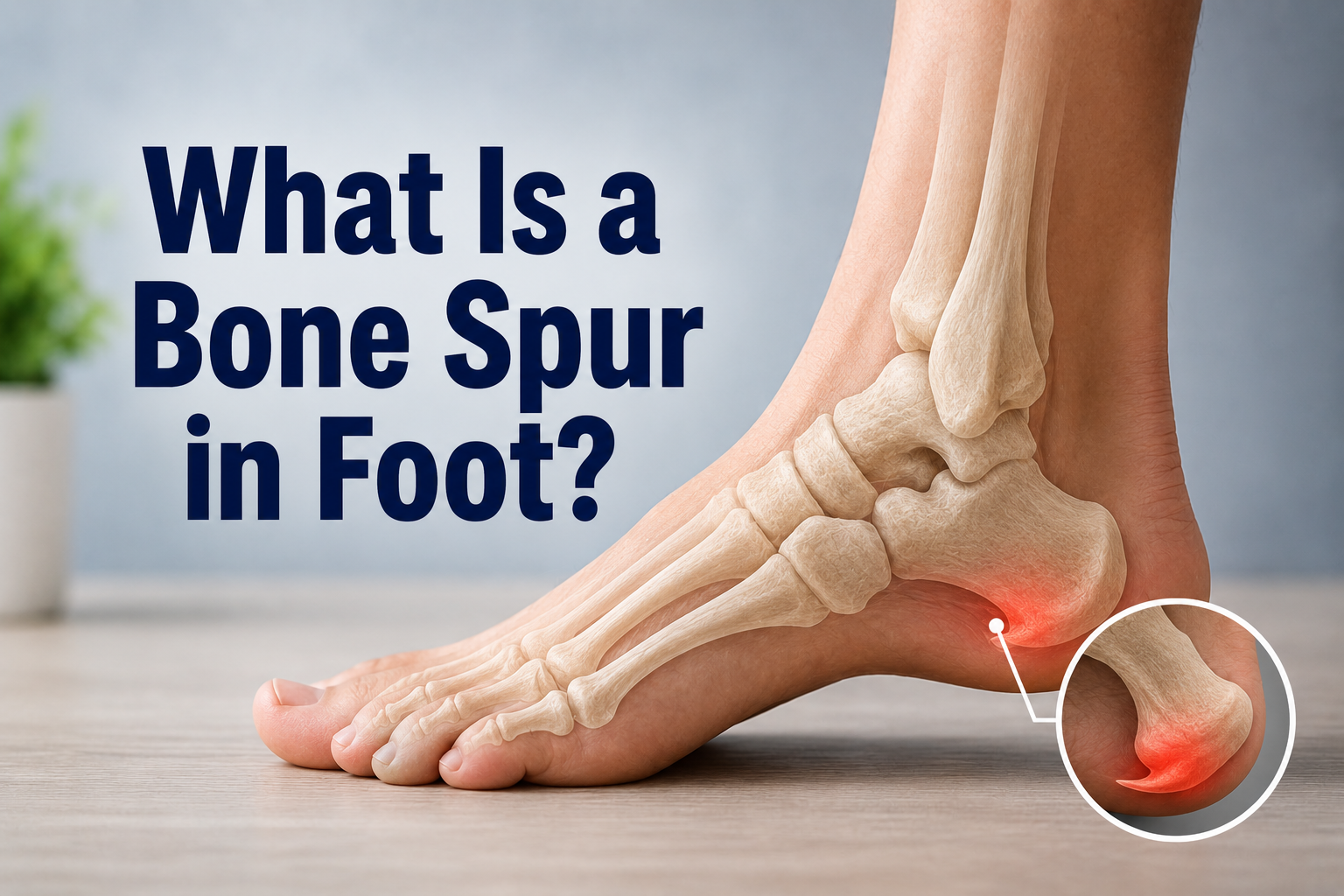
A bone spur in foot is a small, bony growth that forms on the edge of a bone, usually where bones meet joints or where tendons and ligaments attach.
It develops slowly over months or years as the body reacts to constant pressure, friction, or stress on the foot. Bone spurs are most common on the heel, but they can also appear on the toes or the top of the foot.
Many people have a bone spur without even knowing it, since it does not always cause pain. However, when it presses against nerves, tendons, or soft tissue, it can lead to discomfort, swelling, and difficulty walking comfortably.
Understanding Bone Spurs in the Foot
A bone spur is simply extra bone that grows in response to stress or damage in the surrounding area. In the foot, this growth often develops near joints that carry a lot of body weight, which is why it tends to form in specific, predictable spots.
What Is a Bone Spur?
A bone spur, medically called an osteophyte, forms when the body tries to repair damaged bone or cartilage by laying down extra calcium deposits. Over time, this buildup hardens into a small bony projection. It is not a disease on its own but a response to long-term wear, injury, or joint stress in that area.
Common Locations in the Foot
Bone spurs in the foot usually appear in a few predictable places because these areas absorb the most pressure during walking or standing. The most common spots include the back or bottom of the heel, the top of the midfoot, and the joint at the base of the big toe. Each location can cause slightly different symptoms depending on nearby nerves and tissues.
Types of Foot Bone Spurs
There are a few recognized types of foot bone spurs, and understanding them helps in identifying the right treatment approach.
| Type of Spur | Location | Common Cause |
| Plantar heel spur | Bottom of the heel | Plantar fasciitis, repeated strain |
| Posterior heel spur | Back of the heel | Achilles tendon stress |
| Dorsal foot spur | Top of the foot | Arthritis, tight footwear |
| Toe joint spur | Base of the big toe | Bunions, joint degeneration |
What Causes Bone Spurs in the Foot?
Bone spurs usually form gradually due to repeated stress, aging, or underlying foot conditions rather than a single injury. Several everyday habits and health factors can speed up this process.
Common Causes
Repeated pressure on the foot from standing for long hours, wearing unsupportive shoes, or engaging in high-impact activities like running can trigger bone spur formation. Conditions such as plantar fasciitis, arthritis, flat feet, or high arches also increase the chances, since they place uneven stress on certain parts of the foot. Being overweight adds extra load to weight-bearing joints, which further speeds up bone growth in response to strain.
Risk Factors
Certain factors make some people more likely to develop foot bone spurs than others.
- Increasing age, since bones and joints naturally wear down over time
- Jobs that involve prolonged standing or walking
- Regular participation in running or high-impact sports
- Existing foot problems like flat feet, bunions, or arthritis
- Family history of joint or bone-related conditions
Signs and Symptoms of a Bone Spur in Foot
Not every bone spur causes noticeable symptoms, but when it does press against soft tissue or nerves, the discomfort can become quite bothersome during daily activities.
Symptoms to Watch For
The most common symptom is a sharp or dull pain, especially when standing up after rest or walking for long periods. Other signs include swelling, redness, tenderness around the affected area, and in some cases, a visible bump under the skin. Some people also notice stiffness in the foot during the early hours of the morning.
Heel Spur vs Plantar Fasciitis
These two conditions are closely related but not the same thing. Plantar fasciitis is inflammation of the tissue band along the bottom of the foot, while a heel spur is the bony growth that sometimes forms because of that ongoing inflammation. Not everyone with plantar fasciitis develops a spur, and not everyone with a spur experiences pain.
Diagnosis and Complications
Getting an accurate diagnosis is important, since foot pain can come from several different causes that require different treatments. Ignoring symptoms for too long can also lead to further problems.
How Doctors Diagnose It
A podiatrist or doctor usually begins with a physical examination, checking for tenderness, swelling, and range of motion in the foot. An X-ray is the most common tool used to confirm a bone spur, while an MRI or ultrasound may be recommended if soft tissue damage is also suspected.
Complications If Untreated
If a bone spur is left untreated for a long time, it can lead to chronic pain that affects walking and daily mobility. It may also irritate nearby nerves, causing tingling or numbness, or contribute to bursitis, which is inflammation of the small fluid-filled sacs that cushion the joints.
Treatment Options for Bone Spur in Foot
Treatment depends on how severe the symptoms are, and most cases improve significantly with simple, non-surgical care before surgery is ever considered.
Non-Surgical Treatments
Most bone spurs respond well to conservative treatment methods that reduce inflammation and pressure on the affected area.
| Treatment | How It Helps |
| Rest and ice therapy | Reduces swelling and pain |
| Orthotic insoles | Redistributes pressure evenly |
| Physical therapy | Improves flexibility and strength |
| Anti-inflammatory medication | Eases pain and swelling |
| Night splints | Stretches tissue while sleeping |
Surgical Treatment
Surgery is only considered when non-surgical methods fail to relieve pain after several months. The procedure typically involves removing the bony growth and, if needed, repairing the surrounding tissue. Recovery usually takes a few weeks, and most patients regain normal foot function afterward.
Home Remedies and Prevention
Simple daily habits can go a long way in managing symptoms and preventing new bone spurs from forming in the future.
Self-Care Tips
Applying ice packs, gently massaging the foot, and doing regular calf and plantar fascia stretches can ease discomfort at home. Maintaining a healthy body weight also reduces the pressure placed on foot joints during everyday movement.
Best Footwear
Choosing shoes with proper cushioning and arch support helps distribute weight evenly across the foot. Avoiding high heels and completely flat, unsupportive shoes can prevent added strain on the heel and toe joints.
Prevention Tips
Warming up before exercise, replacing worn-out shoes regularly, and checking your feet periodically for early signs of discomfort can help prevent bone spurs from developing or worsening over time.
Frequently Asked Questions
Is a bone spur in the foot serious? Most foot bone spurs are not serious and cause no symptoms at all, though some cases can lead to ongoing discomfort if untreated.
Can a bone spur go away on its own? No, once formed, a bone spur does not disappear naturally, but symptoms can be managed effectively with proper care.
Does walking make a bone spur worse? Excessive walking on hard surfaces without proper footwear can worsen symptoms, though gentle movement is generally fine.
Is surgery always needed for a bone spur? No, surgery is only recommended in severe cases where non-surgical treatments fail to provide relief after extended trials.
Can bone spurs be prevented completely? While they cannot always be fully prevented, proper footwear and weight management significantly lower the risk.
Conclusion
A bone spur in foot is a common bony growth that develops due to long-term stress on the foot’s joints and tissues. While many cases remain painless, others can cause noticeable discomfort that affects daily movement.
With the right combination of proper footwear, home care, and medical treatment when needed, most people manage this condition successfully without major complications.
RELATED POSTS
Careers in Dental Public Health: Education, Jobs, Salary, and Future Opportunities
Ibuprofen Not Working on Fillings Pain: Causes, Relief, and When to See a Dentist
Embrace Health: Complete Guide to Services, Telehealth, Technology, and Future Innovations