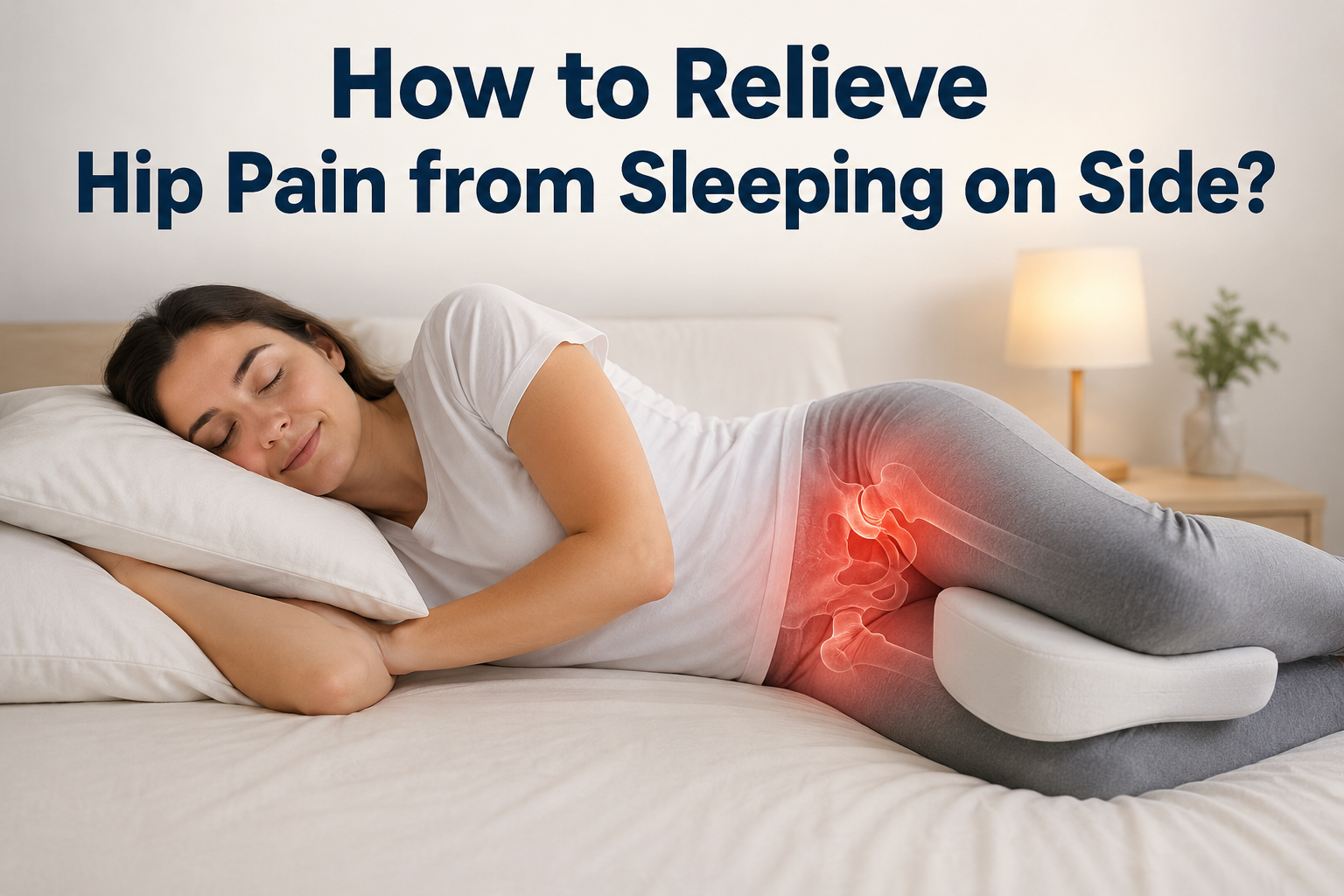
Waking up with a sore hip is one of the most common complaints among side sleepers, and it usually happens because your body weight presses down on one small area for hours at a time.
The good news is that learning how to relieve hip pain from sleeping on side does not require expensive equipment or major lifestyle changes. Small adjustments to your pillow, mattress, and sleeping posture can make a noticeable difference within just a few nights.
Stretching and strengthening exercises also help by keeping the muscles around your hip joint loose and supportive. This guide walks through every practical method, from quick fixes you can try tonight to long-term habits that keep hip pain from coming back.
Understanding the Causes of Hip Pain from Side Sleeping
Hip pain while side sleeping usually comes down to pressure, alignment, or muscle weakness rather than one single reason. Knowing the exact cause helps you pick the right fix instead of guessing.
Pressure Points and Body Weight Distribution
When you lie on your side, most of your upper body weight rests directly on one hip joint. Over several hours, this constant pressure reduces blood flow to the area and creates soreness. A softer surface under the hip usually spreads this weight more evenly.
Poor Spinal and Hip Alignment
If your spine and hips are not in a straight line while sleeping, the joint gets twisted out of its natural position. This misalignment strains the muscles and ligaments surrounding the hip. A pillow between the knees is a simple way to correct this.
Weak or Tight Hip Muscles
Muscles like the glutes and hip flexors support the joint during sleep. When these muscles are weak or overly tight from sitting all day, the hip joint takes on more stress than it should, leading to pain that shows up mostly at night.
Old or Unsupportive Mattress
A mattress that has lost its shape no longer cushions your hip properly. Instead, the joint sinks into a hard or uneven surface, which increases pressure and disrupts alignment throughout the night.
Underlying Conditions
Sometimes the pain is not purely mechanical. Conditions such as bursitis, arthritis, or sciatica can make one hip more sensitive to pressure, and side sleeping simply makes the existing discomfort more noticeable.
Signs Your Hip Pain Is Sleep-Related
Not every hip ache comes from your mattress or sleeping posture, so it helps to recognize the pattern first. Sleep-related hip pain almost always shows up on the specific side you sleep on most often, rather than affecting both hips equally. It also tends to feel worse right after waking up and gradually eases once you start moving around during the day.
Morning stiffness that fades within thirty minutes is another strong indicator that your sleeping position is the main trigger rather than a deeper joint problem. If the pain instead grows worse throughout the day or comes with swelling, that points toward a condition that needs medical attention rather than a simple sleep adjustment.
Immediate Relief Techniques
Before changing your entire sleep setup, a few quick adjustments can ease hip pain the very same night. These techniques target pressure and alignment directly, giving fast relief while you work on longer-term fixes.
Adjusting Your Sleeping Position
Small shifts, such as bringing your knees slightly forward or straightening your spine, can immediately reduce pressure on the hip. Avoid curling too tightly into a fetal position, since this compresses the joint further and worsens discomfort by morning.
Using a Pillow Between the Knees
Placing a firm pillow between your knees keeps your hips, pelvis, and spine aligned throughout the night. This one change is often enough to noticeably reduce pain because it stops the top leg from pulling the hip out of position.
Elevating the Top Leg Slightly
Resting your top leg on a pillow instead of letting it drop forward prevents unnecessary rotation of the hip joint. This keeps the pelvis level and reduces strain on the connective tissue around the joint.
Applying Heat or Ice Before Bed
Heat relaxes tight muscles and improves blood flow, while ice reduces inflammation in a joint that already feels irritated. Applying either for about fifteen minutes before bed can lower pain levels enough for a more comfortable night’s sleep.
Best Sleeping Positions to Reduce Hip Pain
The way you position your body matters just as much as what you sleep on. Small posture corrections can protect your hips without forcing you to abandon side sleeping altogether.
Side Sleeping with Proper Alignment
Keeping your ears, shoulders, and hips stacked in one straight line reduces uneven pressure on the joint. This alignment is the foundation of pain-free side sleeping and should be checked every time you settle into bed.
Switching Sides Periodically
Sleeping on the same hip every night gives that joint no time to recover. Alternating sides throughout the week, even if one side feels more natural, allows pressure to be shared and prevents chronic soreness from building up.
Back Sleeping as an Alternative
For nights when hip pain feels severe, sleeping on your back with a pillow under the knees removes pressure from the hip joint entirely. This position is not a permanent replacement but works well as an occasional reset.
Fetal Position: Pros and Cons
A loose fetal position can ease lower back tension, but curling too tightly compresses the hip and knee joints. If you prefer this position, keep your knees only slightly bent rather than pulled tightly toward your chest.
Choosing the Right Mattress and Pillow
Your sleep surface plays a bigger role in hip pain than most people realize. A mattress that is too firm or too soft can undo the benefits of good posture and pillow placement.
Mattress Firmness Guide
The right firmness level depends on your body weight and personal comfort, but side sleepers generally do best with a medium-soft to medium surface that cushions the hip without letting it sink too deep.
| Mattress Type | Best For | Hip Support Level |
| Soft | Lighter body weight | High cushioning, less alignment |
| Medium-Soft | Most side sleepers | Balanced pressure relief |
| Medium-Firm | Average to heavier weight | Good alignment, moderate cushioning |
| Firm | Back or stomach sleepers | Low cushioning for hips |
Memory Foam vs Hybrid vs Innerspring
Memory foam molds closely around the hip and shoulder, offering excellent pressure relief for side sleepers. Hybrid mattresses combine foam comfort with spring support for better alignment, while traditional innerspring mattresses often feel too firm for sensitive hip joints.
Mattress Toppers for Pressure Relief
If replacing your mattress is not an option right now, a two to three inch memory foam topper can soften pressure points significantly. This is an affordable way to test whether a softer surface actually reduces your hip pain.
Best Pillow Types for Side Sleepers
A firm knee pillow keeps the legs properly separated, while a full body pillow supports the arms, knees, and spine all at once. Choosing the right pillow shape depends on how much support your whole body needs during the night.
Stretches to Relieve Hip Pain
Tight muscles around the hip joint often make sleep-related pain worse. A short stretching routine before bed loosens these muscles and prepares the joint for hours of rest.
Hip Flexor Stretch
Kneel on one knee with the other foot forward, then gently push your hips forward until you feel a stretch along the front of the hip. Hold for twenty to thirty seconds on each side before switching.
Piriformis and Figure-Four Stretch
Lying on your back, cross one ankle over the opposite knee and gently pull the lower leg toward your chest. This targets the piriformis muscle, which is a common source of deep hip and buttock tightness.
Child’s Pose
Sitting back onto your heels with arms stretched forward gently lengthens the hips and lower back together. This resting stretch is gentle enough to do daily without any strain on the joint.
Simple Bedtime Stretching Routine
A short two to three minute routine covering the hip flexor stretch, figure-four stretch, and child’s pose is enough to release tension before sleep. Doing this consistently, rather than occasionally, produces the best long-term results.
Strengthening Exercises for Long-Term Relief
Stretching loosens tight muscles, but strengthening the muscles around the hip prevents pain from returning. A few simple bodyweight exercises done regularly can make a lasting difference.
Clamshell Exercise
Lying on your side with knees bent, lift the top knee while keeping your feet together. This targets the outer hip muscles that stabilize the joint during sleep and daily movement.
Glute Bridges
Lying on your back with knees bent, lift your hips toward the ceiling while squeezing your glutes. This strengthens the muscles that support proper hip alignment throughout the night.
Side-Lying Leg Raises
While lying on your side, slowly lift the top leg upward without rotating your hip forward or backward. This builds strength in the muscles that keep your pelvis stable during side sleeping.
Weekly Exercise Plan
Performing these three exercises for two to three sets, three to four times a week, is generally enough to notice improved hip stability within a few weeks of consistent practice.
Lifestyle Changes That Help
Beyond sleep posture and exercise, everyday habits also influence how much pressure your hips carry at night. A few consistent changes support long-term relief.
Maintaining a Healthy Weight
Extra body weight increases the pressure placed on the hip joint during side sleeping. Gradual, sustainable weight management can noticeably reduce nighttime discomfort over time.
Staying Active During the Day
Sitting for long stretches stiffens the hip flexors and weakens supporting muscles. Short walks or movement breaks throughout the day keep the joint more flexible by bedtime.
Improving Daytime Posture
Slouching or uneven sitting habits during the day often carry over into how your hips align at night. Correcting posture while sitting and standing reduces strain that would otherwise build up before sleep.
Hydration and Joint Health
Joint tissues rely on proper hydration to stay cushioned and flexible. Drinking enough water throughout the day supports the cartilage and connective tissue around the hip joint.
When to See a Doctor
Most hip pain from side sleeping improves with the adjustments covered above, but certain signs mean it’s time to consult a professional. Persistent swelling, pain that continues even after changing positions, or discomfort that spreads down the leg should not be ignored.
A doctor can check for conditions like bursitis, arthritis, or sciatica through a physical exam or imaging. Depending on the diagnosis, treatment may include physical therapy, anti-inflammatory medication, or in some cases targeted injections to reduce pain and inflammation around the joint.
Frequently Asked Questions
Is side sleeping bad for your hips? Side sleeping itself is not harmful, but poor alignment or an unsupportive mattress can create unnecessary pressure on the hip joint over time.
How long does it take for hip pain to go away? Minor pressure-related pain often improves within a few nights of using a knee pillow and better mattress support, while muscle-related pain may take a few weeks of consistent stretching.
Can a mattress alone fix hip pain? A supportive mattress helps significantly, but combining it with proper pillow placement and hip-strengthening exercises gives more complete and lasting relief.
Should I stop sleeping on my side completely? Not necessarily. Side sleeping has real health benefits, so it’s usually better to correct alignment and pressure issues rather than switching positions entirely.
Conclusion
Hip pain from side sleeping is uncomfortable, but it is also one of the most fixable sleep issues once you understand what’s causing it.
Adjusting your pillow placement, choosing the right mattress firmness, and adding simple stretches or strengthening exercises can bring noticeable relief within a short time.
Pay attention to how your body responds to each change, and if the pain persists despite these adjustments, a doctor’s evaluation can rule out any underlying joint condition.
RELATED POSTS
Can a Cavity Be Painful? Signs, Causes & Relief Explained
Tooth Lesion: Types, Causes, and Treatment Options Explained
When to Stop Using Gauze After Tooth Extraction