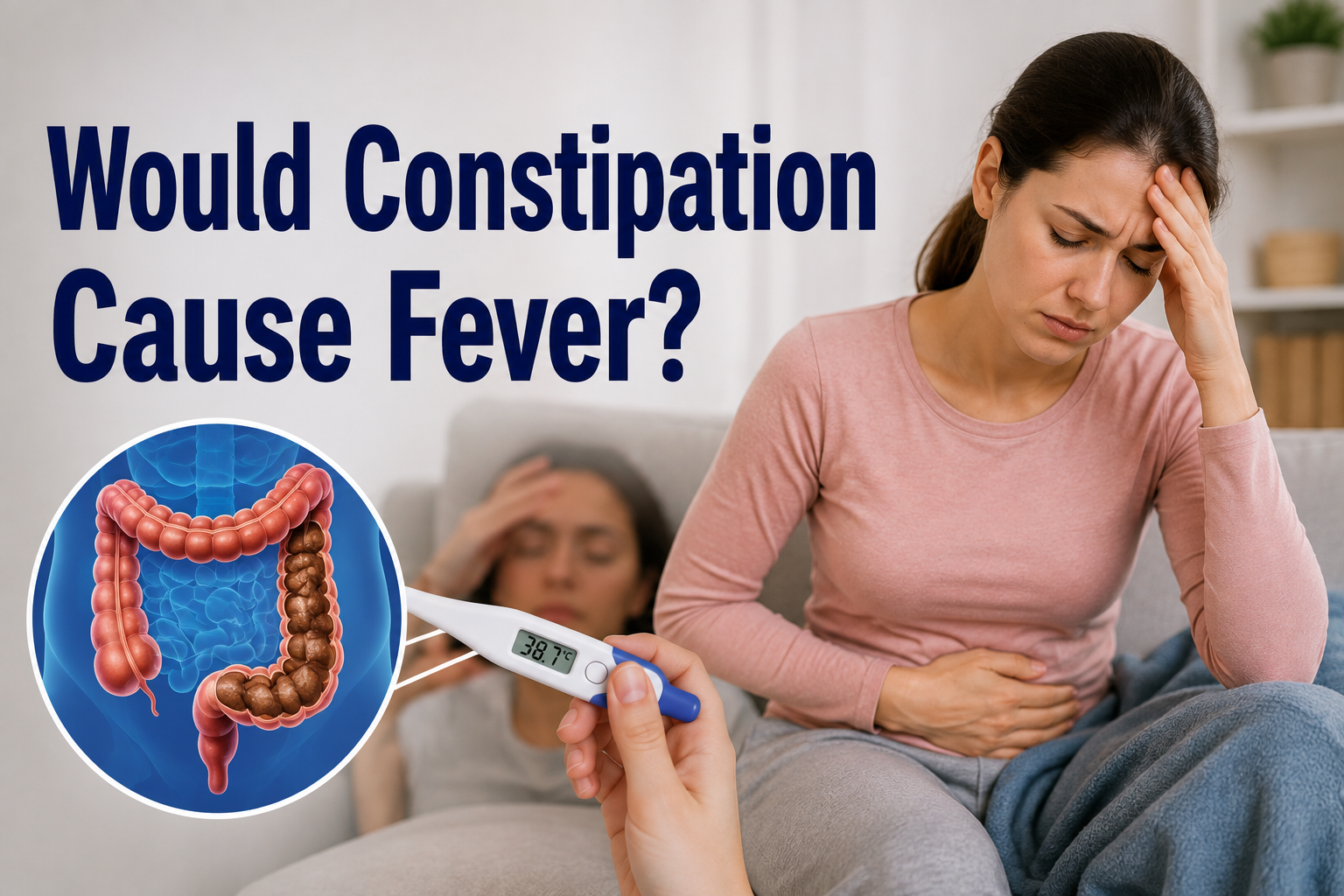
Many people search for “would constipation cause fever” because they are experiencing both symptoms at once and are unsure whether to worry. The short answer is that plain constipation is not a direct cause of fever, but the complications that sometimes follow untreated or severe constipation absolutely can raise your body temperature.
Understanding the difference between ordinary constipation and a complication that needs urgent care can help you respond appropriately and avoid a hospital visit turning into an emergency.
Key Takeaways
- Constipation alone typically does not cause fever; fever points to infection or inflammation.
- Fecal impaction, bowel obstruction, and diverticulitis are common reasons fever and constipation appear together.
- Severe abdominal pain combined with fever is a red flag that requires prompt medical evaluation.
- Children and older adults are more vulnerable to complications that produce fever alongside constipation.
- Home remedies are appropriate only for mild constipation without fever; fever changes the situation entirely.
Can Constipation Directly Cause a Fever?
Constipation by itself is a mechanical issue involving slow movement of stool through the colon, and it does not trigger the immune response that produces fever.
Fever only appears when your body is fighting an infection or reacting to significant tissue inflammation, which plain constipation does not cause on its own.
Why You Might Have Both Constipation and Fever Together
When fever and constipation happen at the same time, the constipation has usually progressed into a complication that involves inflammation, infection, or blocked tissue. According to the Cleveland Clinic, complications of chronic constipation can include fecal impaction, hemorrhoids, anal fissures, and rectal prolapse. Several of these complications can create the internal conditions that lead to a fever response.
Fecal Impaction
Fecal impaction occurs when a large, hardened mass of stool becomes stuck in the rectum and cannot pass normally. As the mass sits in place, it can irritate or damage the surrounding bowel tissue, sometimes leading to a secondary infection. This infection, not the impaction itself, is what typically produces the fever, along with symptoms like abdominal swelling and rectal pain.
Bowel Obstruction
A bowel obstruction happens when stool, or sometimes a structural problem, completely blocks the intestine. Without treatment, pressure builds up in the bowel wall, which can reduce blood flow and cause tissue damage. When bowel tissue becomes damaged or infected in this way, fever is a common and serious warning sign that requires emergency care.
Underlying Infection or GI Illness
Sometimes constipation and fever share a common root cause rather than one causing the other. Certain gastrointestinal infections, viral illnesses, or inflammatory bowel conditions can slow digestion while also triggering an immune response that raises body temperature. In these cases, both symptoms are separate effects of the same underlying illness.
Appendicitis or Diverticulitis
Diverticulitis, an infection or inflammation of small pouches in the colon wall, frequently causes both constipation and fever simultaneously. Mount Sinai notes that diverticulitis causes belly pain, most often in the lower left side, along with fever, nausea, and a change in bowel habits. Appendicitis can also present with constipation-like symptoms alongside fever, making it important to rule out with a medical evaluation rather than self-diagnosing.
Symptoms That Signal a More Serious Problem
Not every case of constipation with a mild temperature change is an emergency, but certain symptom combinations point clearly toward a complication that needs prompt care. Recognizing these patterns early can prevent a manageable issue from becoming a dangerous one.
Warning Signs to Watch For
The following symptoms, when combined with constipation and fever, suggest a condition beyond simple sluggish digestion. Persistent vomiting alongside these symptoms is especially concerning, since it may indicate the bowel is unable to move contents in either direction. A rigid, tender, or visibly swollen abdomen also points toward a more advanced complication rather than routine constipation.
- High fever above 101°F (38.3°C)
- Severe or worsening abdominal pain
- Abdominal swelling or bloating that will not resolve
- Persistent vomiting
- Inability to pass gas or stool at all
- Blood in the stool
When Fever Appears With Severe Abdominal Pain
Severe abdominal pain paired with fever is one of the clearest signals that constipation has moved beyond a simple digestive slowdown. This combination often points to inflammation or infection somewhere in the bowel, such as diverticulitis, appendicitis, or an obstruction under pressure. Waiting to see if it resolves on its own is not advisable once both symptoms appear together with this intensity.
When to See a Doctor
Most constipation cases resolve with simple home management and never involve fever at all. Once fever enters the picture, though, the situation shifts from a manageable inconvenience to something that deserves a professional evaluation, since it may reflect infection, obstruction, or tissue damage that cannot be treated safely at home.
Red-Flag Symptoms Requiring Urgent Care
Seek emergency medical attention if constipation is accompanied by a fever along with severe pain, a hard or swollen abdomen, repeated vomiting, or an inability to pass stool or gas for several days. These signs can indicate a blockage or infection that may worsen quickly without treatment, particularly in young children, older adults, or people with existing digestive conditions.
What a Doctor Will Check
A doctor evaluating fever with constipation will typically start with a physical abdominal exam to check for tenderness, swelling, or rigidity. The NIH notes that imaging tests such as an abdominal X-ray, CT scan, or ultrasound may be used to look for a blockage or other structural problem, and blood tests are often ordered to check for signs of infection or inflammation. These findings together help determine whether the cause is impaction, obstruction, diverticulitis, or another condition entirely.
How Constipation-Related Complications Are Treated?
Note: In place of the standard “tools with pricing” comparison section, this table compares common treatment approaches for constipation-related complications, since no purchasable tools apply to this medical topic.
| Treatment Approach | Best For | What It Involves | Setting |
| Stool softeners / laxatives | Mild to moderate constipation, no fever | Oral medication to ease stool passage | Home use, doctor-guided |
| Enema | Constipation without fever, mild impaction | Fluid introduced rectally to loosen stool | Home or clinic |
| Manual disimpaction | Confirmed fecal impaction | Physical removal of hardened stool by a clinician | Clinic or hospital |
| IV antibiotics | Infection-related complications (e.g., diverticulitis) | Antibiotics administered through an IV line | Hospital |
| Surgical intervention | Bowel obstruction, severe diverticulitis, appendicitis | Procedure to remove blockage or damaged tissue | Hospital, emergency setting |
Preventing Constipation and Its Complications
Preventing constipation from progressing into a fever-causing complication starts with consistent, simple daily habits. Since most complications develop after constipation has gone unmanaged for an extended period, addressing the root problem early is the most effective way to avoid fever, pain, and emergency visits altogether.
Diet and Hydration
A diet rich in fiber from fruits, vegetables, whole grains, and legumes helps keep stool soft and moving through the colon. Drinking enough water throughout the day supports this process, since fiber without adequate fluid can sometimes make constipation worse rather than better.
Physical Activity
Regular movement, even something as simple as a daily walk, helps stimulate normal bowel contractions and keeps digestion moving at a healthy pace. People who are sedentary for long periods, such as those on bed rest, face a notably higher risk of developing severe constipation and its complications.
When Fiber Supplements Help
Fiber supplements can be useful for people who struggle to get enough fiber through food alone, but they should be introduced gradually and paired with plenty of water. Adding fiber supplements too quickly, or without sufficient fluid, can occasionally worsen bloating and discomfort rather than relieve it.
FAQs
Can constipation cause a low-grade fever? Plain constipation does not typically cause even a low-grade fever; if one appears, it usually points to a mild infection or inflammation developing alongside the constipation.
Is fever with constipation an emergency? It can be, especially when paired with severe pain, vomiting, or a swollen abdomen, so it is safest to seek medical evaluation rather than wait it out.
Can constipation in babies or children cause fever? Constipation alone rarely causes fever in children, but kids are more prone to complications like impaction, so a fever alongside constipation should be checked by a pediatrician promptly.
How long can constipation-related fever last? This depends entirely on the underlying cause; fever from an infection like diverticulitis may last until antibiotics take effect, while fever from an untreated obstruction will typically persist or worsen until the blockage is resolved.
Conclusion
Would constipation cause fever on its own? Generally, no. But when the two symptoms appear together, it is a signal that a complication such as impaction, obstruction, or infection may be developing beneath the surface.
Paying attention to accompanying signs like severe pain, swelling, or vomiting, and seeking prompt medical care when they appear, is the safest way to protect your digestive health.
Related Posts
Is the Pap Smear Test Painful? What to Really Expect
Are Blue Eyes More Sensitive to Light? Science-Backed Guide
What Is Commonly Misdiagnosed as Pink Eye? Full Guide