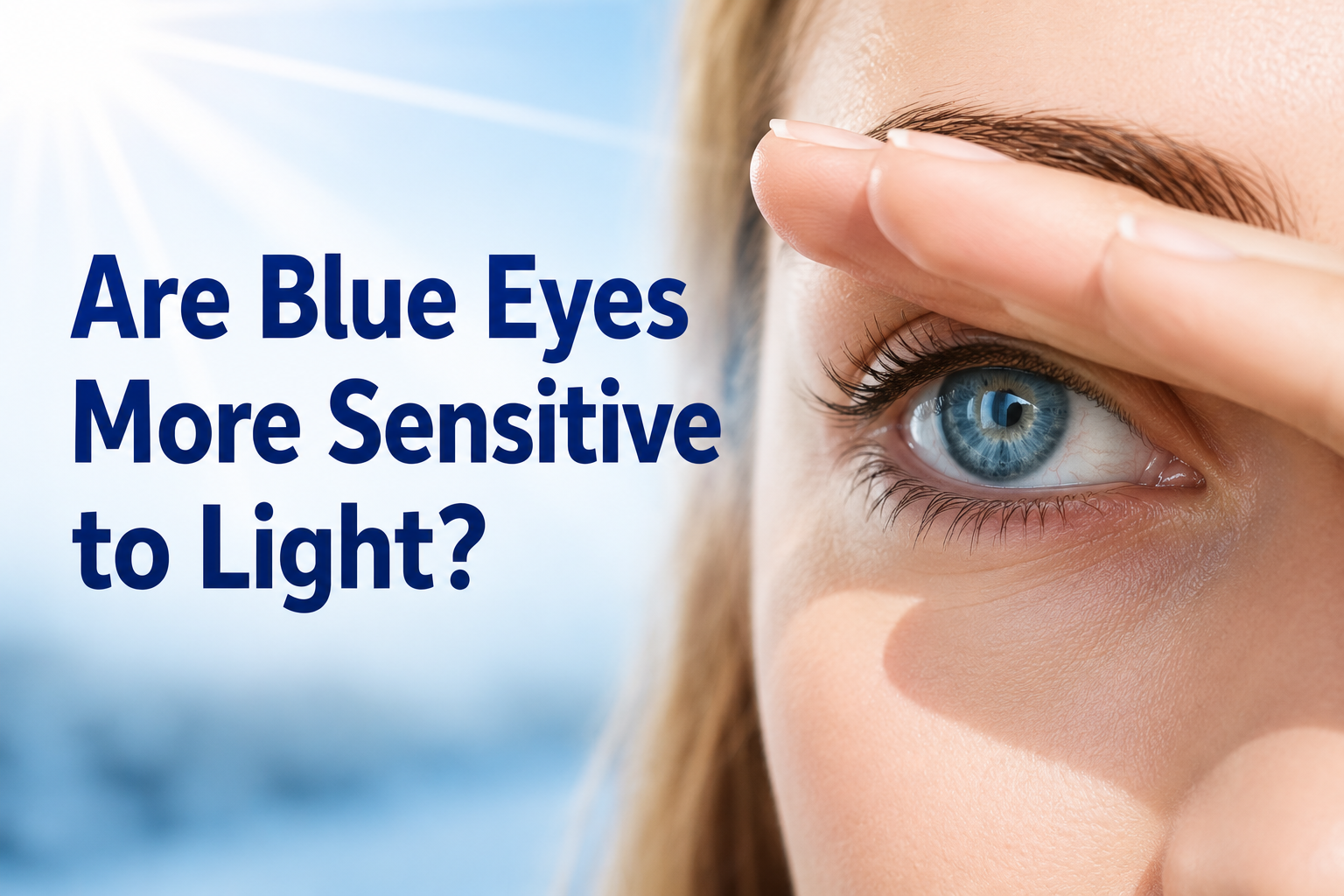
Yes, blue eyes are generally more sensitive to light than brown or darker eyes, and this happens mainly because of a pigment called melanin. Blue irises contain much less melanin than darker eyes, which means less natural protection against incoming light.
Because of this reduced pigment, more light passes through and scatters inside the eye instead of being absorbed. This scattering effect can cause squinting, discomfort, or mild glare in bright environments.
However, the difference is not the same for every person, since genetics, health conditions, and daily habits also play a role in how sensitive someone’s eyes actually are.
Understanding Eye Color: The Basics
Eye color depends almost entirely on how much melanin is present in the iris, along with how that pigment is distributed. The more melanin a person has, the darker their eyes appear, while less melanin results in lighter shades like blue or gray.
What Determines Eye Color
Genetics is the primary factor behind eye color, since specific genes control how much melanin the iris produces during early development. A person’s parents and ancestral background largely decide whether their eyes turn out to be brown, green, hazel, or blue.
Why Blue Eyes Have Less Melanin
Blue eyes appear the way they do because their iris contains a very small amount of melanin compared to darker eyes. Instead of the color coming directly from blue pigment, it results from how limited melanin interacts with light inside the eye structure, similar to how the sky appears blue due to light scattering.
Comparing Blue, Green, Brown, and Hazel Eyes
Brown eyes contain the highest melanin levels, offering the most natural light-blocking ability among all eye colors. Green and hazel eyes fall in the middle range, while blue eyes sit at the lowest end, which is a major reason why the question “are blue eyes more sensitive to light” comes up so frequently in eye health discussions.
The Role of Melanin in Light Sensitivity
Melanin acts like a natural shield inside the eye, and its main job is to absorb excess light before it can cause strain or damage. This single factor plays the biggest role in determining how sensitive a person’s eyes might be to brightness.
What Melanin Does in the Eye
Melanin is present not only in skin and hair but also in the iris and the retina, where it helps control how much light enters and reaches sensitive internal structures. It essentially works as a built-in filter that reduces the intensity of light hitting the back of the eye.
How Melanin Absorbs and Blocks Light
When light enters the eye, melanin absorbs a portion of it, converting it into heat instead of allowing it to scatter uncontrollably. This absorption process protects deeper eye tissues from excessive brightness and potential long-term strain caused by constant light exposure.
Why Less Melanin Means More Light Passes Through
With very little melanin present, blue eyes cannot absorb as much incoming light, so more of it travels through the iris and bounces around inside the eye. This is a core reason many researchers agree that blue eyes are more sensitive to light compared to darker eye colors.
Why Blue Eyes Let in More Light
Light-colored irises have a thinner pigment layer, which allows more light to physically pass through the eye structure rather than being blocked at the surface. This directly affects comfort levels in bright conditions.
Structure of the Iris in Light-Colored Eyes
The iris in blue eyes has a much thinner stroma layer with less pigment concentration, making it more translucent compared to brown eyes. This thinner structure is a big part of why light exposure feels more intense for people with lighter eye colors.
Light Scattering and Internal Reflection Explained
Because blue eyes lack a dense pigment barrier, incoming light scatters more randomly once it enters the eye instead of being absorbed cleanly. This scattering can create a mild glare effect, especially in very bright or reflective environments like snow or open water.
How This Affects Light Reaching the Retina
Since more unfiltered light reaches the retina in blue-eyed individuals, the eyes may need to work harder to adjust, often through squinting or pupil constriction. Over time, repeated exposure without protection may increase general light discomfort in certain individuals.
What Is Photophobia?
Photophobia is the medical term used to describe unusual discomfort or sensitivity when eyes are exposed to light, ranging from mild squinting to genuine pain. It is not a disease on its own but rather a symptom linked to several underlying causes.
Simple Definition of Light Sensitivity
Light sensitivity refers to an exaggerated response to normal or bright light levels that most people would not find bothersome. For some individuals, even moderate indoor lighting can feel overwhelming if their eyes are naturally more reactive.
Common Symptoms of Photophobia
Typical signs include frequent squinting, watery eyes, headaches triggered by bright environments, and an urge to close the eyes or look away from strong light sources. These symptoms can appear suddenly or build up gradually depending on the cause.
How Eye Color Relates to Photophobia
While eye color is not the only cause of photophobia, lighter eyes like blue ones are statistically more likely to experience it due to lower melanin levels. It is important to remember that photophobia can affect anyone, regardless of eye color, when other underlying factors are involved.
Scientific Evidence and Studies
Several vision science studies have examined how eye pigmentation influences light tolerance, generally supporting the idea that lighter eyes let in more light. Researchers have used pupil response tests and light exposure trials to measure these differences.
Overview of Research Comparing Eye Colors
Studies comparing light-colored and dark-colored eyes have consistently found that participants with blue or light eyes report higher discomfort levels under bright lighting conditions. These findings align closely with what is already understood about melanin’s protective function.
What Studies Generally Find
Most research agrees that reduced iris pigmentation correlates with increased light sensitivity, though the intensity of this effect varies between individuals. Some studies also suggest lighter-eyed individuals may have slightly quicker pupil reactions to sudden brightness changes.
Limitations of Current Research
Despite consistent patterns, existing studies acknowledge that eye color alone cannot fully predict sensitivity, since other biological and environmental factors also contribute. Sample sizes and self-reported discomfort levels can also introduce some variability into research conclusions.
Other Factors That Affect Light Sensitivity
Eye color is only one piece of the puzzle, and several other elements can independently increase or decrease how sensitive someone’s eyes are to light. Understanding these factors helps explain why light sensitivity varies so much even among people with the same eye color.
Age-Related Changes
As people age, natural changes in the eye’s lens and pupil function can heighten sensitivity to bright light, regardless of original eye color. Older adults often report increased glare issues, especially while driving at night.
Medical Conditions Linked to Sensitivity
Conditions such as migraines, dry eye syndrome, and cataracts are well known to increase light sensitivity significantly. These conditions can affect anyone, meaning a person with brown eyes and a medical condition may experience more discomfort than a blue-eyed person without one.
Medications That Increase Sensitivity
Certain medications, including some antibiotics and blood pressure drugs, list light sensitivity as a known side effect. Anyone starting a new medication and noticing sudden light discomfort should consider this as a possible contributing factor.
Screen Time and Modern Lighting
Extended exposure to screens and artificial indoor lighting has increased reports of general eye strain and light sensitivity across all eye colors. This modern lifestyle factor often compounds any natural sensitivity a person may already have due to their eye pigmentation.
Practical Effects on Daily Life
Light sensitivity linked to blue eyes can show up in everyday situations, often in ways people do not immediately connect to their eye color. Recognizing these patterns can help in choosing better protective habits.
Driving in Bright Sunlight or at Night
Blue-eyed drivers often report more glare-related discomfort during daytime driving and increased sensitivity to oncoming headlights at night. This makes proper sunglasses and anti-glare coatings especially useful for this group.
Outdoor Activities and Sun Exposure
Activities involving reflective surfaces like snow, sand, or water can intensify light sensitivity for blue-eyed individuals due to the added glare bouncing into the eyes. Extra caution and eye protection are recommended during such outdoor activities.
Screen Use and Indoor Lighting
Bright screens and harsh indoor lighting can also feel more intense for people with lighter eyes, sometimes leading to quicker eye fatigue. Adjusting brightness settings can make a noticeable difference in daily comfort.
Tips for Managing Light Sensitivity
Simple lifestyle adjustments can greatly reduce discomfort for anyone dealing with light sensitivity, especially those with naturally lighter eye colors. These tips are easy to apply in daily routines.
| Tip | How It Helps |
| Wear UV-protective sunglasses | Blocks harmful rays and reduces glare outdoors |
| Use wide-brim hats or visors | Adds extra shade and reduces direct light exposure |
| Adjust screen brightness | Lowers strain during long screen sessions |
| Use blue light filters | Reduces harsh artificial light from devices |
| Schedule regular eye exams | Helps catch underlying causes early |
Sunglasses and UV Protection
Choosing sunglasses with proper UV protection is one of the most effective ways to reduce discomfort for light-sensitive eyes. Polarized lenses can further help by cutting down glare from reflective surfaces.
Hats, Visors, and Physical Shade
Wearing hats or visors adds a physical barrier that reduces the amount of direct sunlight reaching the eyes throughout the day. This simple habit works especially well during outdoor activities in peak sunlight hours.
Adjusting Screens and Indoor Lighting
Lowering screen brightness and using warmer lighting indoors can significantly ease strain for anyone prone to light sensitivity. Many devices now include built-in night mode or blue light filter settings for this exact purpose.
When to See an Eye Doctor
If light sensitivity suddenly worsens or is accompanied by pain, it is important to consult an eye doctor to rule out underlying medical conditions. Persistent symptoms should never be ignored, even if they seem mild at first.
Common Myths vs Facts
Several misconceptions exist around blue eyes and light sensitivity, and clearing them up helps people understand the topic more accurately.
| Myth | Fact |
| Blue eyes are weaker or unhealthy | Blue eyes are simply less pigmented, not medically weaker |
| All blue-eyed people struggle in bright light | Sensitivity levels vary widely between individuals |
| Eye color is the only factor in sensitivity | Age, health, and medication also play major roles |
FAQs
Are blue eyes rarer than brown eyes? Yes, blue eyes are less common globally compared to brown eyes, which remain the most widespread eye color.
Do blue-eyed people need special sunglasses? Standard UV-protective sunglasses work well, though polarized lenses offer added glare reduction for extra comfort.
Can eye color change light sensitivity over time? Eye color itself stays fixed, but sensitivity can change due to aging, medications, or developing eye conditions over time.
Conclusion
In summary, blue eyes are more sensitive to light mainly because of lower melanin levels in the iris, allowing more light to pass through and scatter internally.
While this makes bright environments more challenging for many blue-eyed individuals, other factors like age, health conditions, and screen habits also strongly influence overall sensitivity.
Simple protective steps like proper sunglasses and mindful screen use can make a noticeable difference for anyone affected.
RELATED POSTS
What Is Commonly Misdiagnosed as Pink Eye? Full Guide
Why Does My Eye Hurt? Causes, Symptoms and Relief Guide
How Much Does Laser Eye Surgery Cost? Full 2026 Price Guide
Insanity Plyometric Cardio Circuit: Everything You Need to Know
Can I Eat Fish on a Vegan Diet? The Complete Guide for Beginners