


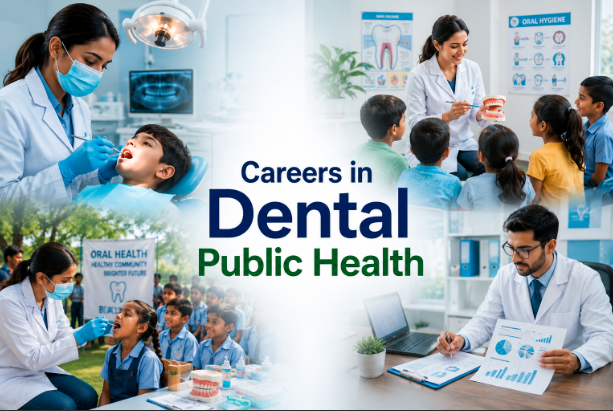
Careers in Dental Public Health focus on improving oral health at the community and population level instead of treating individual patients. This field combines dentistry, public health, education, and research to prevent dental diseases and promote better oral hygiene practices. Professionals in this area play an important role in reducing oral health inequalities and improving access to care.
In this article, we will discuss Educational Requirements and Qualifications for Career Success and also explain How to Start and Build a Successful Dental Public Health Career.
Understanding the Role and Scope of Dental Public Health
Dental public health focuses on preventing oral diseases and improving oral health outcomes at the population level. Instead of treating one patient at a time, professionals in this field develop programs, conduct research, and create policies that benefit large groups of people.
The scope of dental public health is broad and includes disease prevention, community education, oral health promotion, healthcare planning, epidemiology, and policy development. These professionals often collaborate with government agencies, healthcare organizations, schools, and community groups to address oral health challenges.
Educational Requirements and Qualifications for Career Success
A strong educational foundation is essential for entering and advancing in careers in dental public health. Various educational pathways can lead to successful opportunities within this field.
Undergraduate Education
Most professionals begin with a bachelor’s degree in health sciences, biology, public health, healthcare administration, or a related discipline. Undergraduate studies provide foundational knowledge in science, research methods, and healthcare systems.
Students often benefit from courses such as:
- Biology
- Chemistry
- Statistics
- Public Health
- Epidemiology
- Healthcare Management
These subjects help prepare individuals for advanced education and specialized training.
Dental Degree Requirements
Many leadership and specialist positions require a Doctor of Dental Surgery (DDS) or Doctor of Dental Medicine (DMD) degree. These programs provide comprehensive training in clinical dentistry, oral health assessment, and patient care.
Clinical experience gained during dental school helps professionals understand oral health challenges from both individual and community perspectives.
Essential Skills Needed for Dental Public Health Professionals
Success in careers in dental public health depends on a combination of technical knowledge and professional skills. These abilities help professionals manage complex health initiatives and communicate effectively with diverse populations.
Analytical and Research Skills
Public health professionals regularly collect, analyze, and interpret data. Strong analytical skills help identify oral health trends, evaluate interventions, and support evidence-based decision-making.
Communication Skills
Clear communication is essential when educating communities, presenting research findings, or collaborating with healthcare organizations. Professionals must be able to explain complex health information in simple and understandable language.
Leadership and Management Abilities
Many positions involve supervising teams, managing programs, and coordinating healthcare initiatives. Leadership skills help professionals guide projects and achieve public health goals.
Problem-Solving and Critical Thinking
Dental public health professionals often face challenges related to healthcare access, funding, and disease prevention. Effective problem-solving skills allow them to develop practical solutions and improve community outcomes.
Popular Career Paths Available in Dental Public Health
The field offers a wide range of career opportunities for individuals with different interests and educational backgrounds.
Dental Health Specialist
These specialists focus on developing community programs, conducting research, and improving oral healthcare delivery systems. They often work with government agencies and healthcare organizations.
Oral Program Manager
Program managers oversee public health initiatives aimed at improving oral health outcomes. Their responsibilities include planning programs, managing budgets, and evaluating results.
Epidemiologists study patterns of oral diseases and identify factors that affect community health. Their findings help guide prevention strategies and policy decisions.
Health Advisor
Policy advisors analyze healthcare issues and recommend policies that improve access to oral healthcare services. They often work with government agencies and advocacy organizations.
Government, Community, and Public Health Agency Employment Opportunities
Many careers in dental public health are found within government and community-based organizations. These positions allow professionals to influence healthcare systems and improve access to care.
Federal, state, and local health departments employ dental public health experts to develop and implement oral health programs. These agencies often focus on disease prevention, community outreach, and policy development.
Community health organizations also play an important role. Professionals working in these settings collaborate with schools, nonprofit organizations, and healthcare providers to deliver preventive services and educational programs.
Common Employers
| Employer Type | Examples of Roles |
| Government Agencies | Public Health Officer |
| Community Clinics | Program Coordinator |
| Nonprofit Organizations | Health Educator |
| School Systems | Community Outreach Specialist |
| Healthcare Networks | Public Health Manager |
These organizations provide opportunities to make a meaningful impact on community health.
Research, Epidemiology, and Oral Health Data Analysis Careers
Research and data analysis form the foundation of many public health decisions. Professionals in these areas help identify health trends and evaluate the effectiveness of prevention programs.
Researchers investigate factors that influence oral health, including lifestyle habits, socioeconomic conditions, and access to care. Their findings support evidence-based interventions and policy recommendations.
Epidemiologists analyze large datasets to monitor disease patterns and identify populations at risk. They use statistical methods to understand trends and predict future healthcare needs.
Data analysts transform complex information into actionable insights that help organizations allocate resources and improve healthcare outcomes.
This area of dental public health is ideal for individuals who enjoy scientific investigation and evidence-based decision-making.
Health Education, Community Outreach, and Prevention Programs
Education and prevention are central components of dental public health. Professionals in this area work directly with communities to promote healthy behaviors and reduce disease risk.
They design educational campaigns that teach proper oral hygiene, nutrition, and preventive care practices. These initiatives often target schools, workplaces, and underserved populations.
Community outreach programs help connect individuals with healthcare services and resources. By increasing awareness and accessibility, these efforts contribute to improved oral health outcomes.
Prevention programs may include:
- School dental screenings
- Fluoride initiatives
- Oral health workshops
- Community awareness campaigns
- Preventive care education
These activities help reduce healthcare costs and improve quality of life for many individuals.
Leadership, Management, and Administrative Career Advancement Options
As professionals gain experience, many move into leadership and management positions. These roles involve strategic planning, organizational oversight, and policy implementation.
Healthcare administrators manage programs, budgets, and personnel while ensuring compliance with healthcare regulations. Their leadership helps organizations achieve public health objectives efficiently.
Senior managers and directors often oversee multiple programs and coordinate large-scale initiatives. They work closely with government officials, healthcare providers, and community partners.
Career Advancement Path
| Career Level | Typical Position |
| Entry Level | Public Health Coordinator |
| Mid-Level | Program Manager |
| Senior Level | Public Health Director |
| Executive Level | Chief Public Health Officer |
Leadership positions offer greater responsibility, influence, and opportunities for professional growth.
Salary Expectations, Job Outlook, and Future Growth Trends
Salary levels vary based on education, experience, location, and employer type. Professionals with advanced degrees and specialized training often earn higher salaries.
Government agencies, universities, healthcare systems, and consulting firms generally offer competitive compensation packages. Leadership and specialist roles tend to provide the highest earning potential.
The job outlook for careers in dental public health remains positive due to increasing emphasis on preventive care and community health initiatives. Growing awareness of oral health’s connection to overall wellness continues to create new opportunities.
Factors Affecting Salary
- Educational qualifications
- Professional experience
- Geographic location
- Industry sector
- Leadership responsibilities
As healthcare systems continue to evolve, demand for skilled dental public health professionals is expected to remain strong.
Benefits, Challenges, and Rewards of Working in Public Health
Working in dental public health offers numerous personal and professional rewards. Professionals have the opportunity to improve health outcomes for entire populations and address significant healthcare challenges.
One major benefit is the ability to create lasting positive change through prevention and education. Many professionals find satisfaction in helping underserved communities gain access to essential healthcare services.
However, challenges can include limited funding, policy changes, and complex healthcare disparities. Addressing these issues often requires creativity, persistence, and collaboration.
Despite these challenges, the field provides meaningful work, career stability, and opportunities for continuous learning and advancement.
How to Start and Build a Successful Dental Public Health Career?
Building a successful career in dental public health requires education, practical experience, and ongoing professional development. The following areas are important for long-term success.
Build a Strong Educational Foundation
Begin by pursuing relevant academic qualifications in dentistry, public health, healthcare administration, or related disciplines. Advanced education can significantly improve career opportunities.
Gain Practical Experience
Hands-on experience through internships, volunteer programs, and community projects helps develop real-world skills and professional networks.
Pursue Advanced Training
Specialized certifications and graduate degrees provide deeper expertise and increase competitiveness in the job market.
Develop Professional Networks
Joining professional associations and attending conferences can create valuable connections and learning opportunities.
Stay Current with Industry Developments
Continuous learning helps professionals adapt to emerging trends, technologies, and healthcare policies.
FAQs
What is the main difference between dental public health and clinical dentistry?
Dental public health focuses on preventing oral diseases and improving the overall oral health of communities, while clinical dentistry mainly treats individual patients’ dental problems.
Can someone work in dental public health without being a dentist?
Yes, many roles are open to professionals from public health, epidemiology, biology, healthcare management, and related fields, not only licensed dentists.
What organizations hire dental public health professionals?
Government health departments, non-governmental organizations, universities, research institutions, and international health agencies regularly hire experts in this field.
Is dental public health a good career choice for the future?
Yes, it is considered a strong career option due to the growing demand for preventive healthcare, public health awareness, and community-based oral health programs.
What are the key challenges in dental public health careers?
Major challenges include limited funding, unequal access to healthcare services, and difficulties in reaching rural or underserved populations effectively.
Do dental public health jobs involve working with patients directly?
Some positions involve limited patient interaction, but most roles focus on research, policy-making, education, and community health programs.
How long does it take to build a career in dental public health?
It usually takes several years, including completing undergraduate education, professional degrees, and sometimes specialized public health training or certifications.
Conclusion
Careers in dental public health provide a unique opportunity to improve oral health outcomes for entire communities while contributing to broader public health goals. Professionals in this field work across education, research, policy, management, and community outreach to reduce oral disease and promote healthier populations.
With strong job growth, diverse career pathways, and increasing demand for preventive healthcare services, careers in dental public health offer both professional fulfillment and long-term stability.
Related Posts
MyChart First Health: Complete Guide to Registration, Login, Features, Appointments, and Billing
LifeX Health Insurance Explained: Plans, Coverage, Cost, Benefits and Full Detailed Guide
Source of Health Spa: Services, Benefits, Wellness Treatments & Customer Experience
Does Impact Health Cover IVF? Complete Guide to Fertility Treatment Coverage
How to Treat a Sprained Wrist Fast: Complete Informative Guide