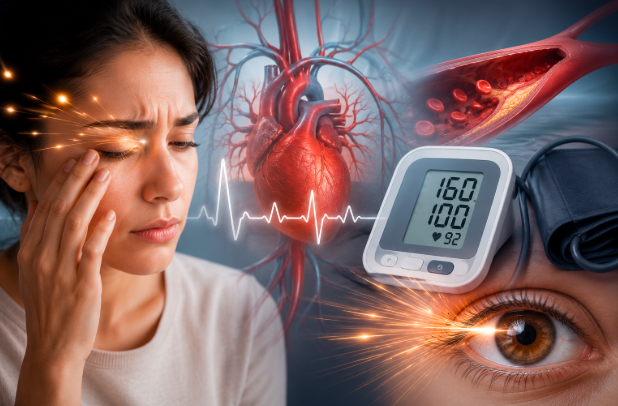
Visual changes can be alarming, especially when they appear suddenly. One symptom that often worries people is seeing flashing lights in their vision. These flashes may look like sparks, lightning streaks, flickering lights, or brief flashes similar to a camera flash. When this happens, many people wonder: can high blood pressure cause flashing lights in eyes?
The short answer is yes. High blood pressure can sometimes contribute to flashing lights in the eyes, particularly when it affects the delicate blood vessels that supply the retina. However, flashing lights are not always caused by hypertension. They can also occur because of migraines, retinal problems, eye injuries, or other medical conditions.
Understanding the relationship between high blood pressure and eye health is important because untreated hypertension can damage blood vessels throughout the body, including those inside the eyes. In some cases, vision changes may be one of the first warning signs that blood pressure has reached dangerous levels.
This article explains everything you need to know about the connection between hypertension and flashing lights in vision, including causes, symptoms, diagnosis, treatment options, and prevention strategies.
Understanding High Blood Pressure
High blood pressure, also known as hypertension, occurs when the force of blood pushing against artery walls remains consistently too high. Over time, this increased pressure can damage blood vessels and reduce their ability to function properly.
Blood pressure is measured using two numbers:
| Blood Pressure Category | Reading |
|---|---|
| Normal | Less than 120/80 mmHg |
| Elevated | 120-129 / Less than 80 |
| High Blood Pressure Stage 1 | 130-139 / 80-89 |
| High Blood Pressure Stage 2 | 140/90 or higher |
| Hypertensive Crisis | Higher than 180/120 |
Many people with hypertension experience no symptoms for years. This is why the condition is often called the “silent killer.” Even without noticeable symptoms, high blood pressure can slowly damage the heart, kidneys, brain, and eyes.
When blood vessels become damaged, blood flow can be reduced, leading to complications that affect overall health and vision.
What Are Flashing Lights in the Eyes?
Flashing lights in vision are medically known as photopsia. These flashes occur when the retina or visual pathways send signals to the brain that are interpreted as light, even when no actual light source is present.
People describe flashing lights in different ways. Some see brief sparkles in the corners of their vision, while others notice zigzag patterns, lightning-like streaks, or flickering flashes that come and go.
The retina plays a vital role in vision. Located at the back of the eye, it converts light into electrical signals that travel to the brain. When the retina becomes irritated, stretched, or damaged, it may create visual disturbances such as flashing lights.
Occasional flashes may not always indicate a serious problem. However, frequent or sudden flashes should never be ignored because they may signal an underlying eye condition.
Can High Blood Pressure Cause Flashing Lights in Eyes?
Many people searching for answers ask, “Can high blood pressure cause flashing lights in eyes?” The answer is yes, although it is not the most common cause.
High blood pressure can affect the tiny blood vessels inside the retina. Over time, excessive pressure may cause these vessels to narrow, leak, or become damaged. When retinal tissues receive less oxygen and nutrients, visual disturbances can occur.
In severe cases, hypertension can lead to a condition known as hypertensive retinopathy. This condition develops when chronic high blood pressure damages retinal blood vessels and interferes with normal vision.
The resulting damage may produce symptoms such as:
- Flashing lights
- Blurred vision
- Double vision
- Eye strain
- Reduced visual clarity
- Temporary vision loss
The risk increases when blood pressure remains uncontrolled for long periods. Individuals experiencing sudden flashes accompanied by elevated blood pressure should seek medical evaluation as soon as possible.
How High Blood Pressure Affects the Eyes
The eyes contain an extensive network of tiny blood vessels. These vessels deliver oxygen and nutrients that help maintain healthy vision.
When blood pressure rises, these delicate vessels experience increased stress. Over time, several changes may occur.
Narrowing of Blood Vessels
Persistent hypertension causes arteries in the retina to become narrower. Reduced blood flow means retinal tissues may not receive adequate oxygen.
Blood Vessel Leakage
Damaged blood vessels can leak fluid or blood into surrounding retinal tissue. This leakage may cause swelling and visual distortions.
Reduced Oxygen Supply
Insufficient oxygen can affect retinal function. The retina may respond by generating abnormal visual signals that appear as flashing lights.
Optic Nerve Damage
In severe cases, high blood pressure can affect the optic nerve, which carries visual information from the eye to the brain. Damage to this nerve may contribute to significant vision problems.
Because the retina relies on healthy circulation, any disruption caused by hypertension can interfere with normal visual processing.
Understanding Hypertensive Retinopathy
Hypertensive retinopathy is one of the most important eye conditions associated with high blood pressure. It occurs when hypertension damages retinal blood vessels over time.
The severity of hypertensive retinopathy usually depends on how long blood pressure has been elevated and how well it has been controlled.
Early Stage
In the early stage, blood vessels become slightly narrowed. Most people do not notice symptoms at this point.
Moderate Stage
As damage progresses, retinal blood vessels may become thicker and less flexible. Small areas of bleeding or fluid leakage can develop.
Advanced Stage
In severe cases, swelling may occur in the retina and optic nerve. Vision can become significantly affected.
Malignant Hypertension
Extremely high blood pressure may create a medical emergency known as malignant hypertension. This condition can rapidly damage the eyes and increase the risk of permanent vision loss.
Symptoms of hypertensive retinopathy may include:
- Flashing lights
- Blurred vision
- Headaches
- Reduced visual sharpness
- Vision loss
Early diagnosis is important because treatment of hypertension may prevent further damage.
Why Flashing Lights Occur
To understand why flashing lights happen, it helps to know how retinal cells work.
The retina constantly converts incoming light into electrical signals. When retinal tissue becomes stressed, swollen, or damaged, abnormal signals may be generated.
Several mechanisms can contribute to flashes.
Retinal Stress
Reduced circulation may place stress on retinal cells, causing them to send irregular signals to the brain.
Swelling of Retinal Tissue
Fluid accumulation can disrupt normal retinal function and trigger visual disturbances.
Nerve Stimulation
Damaged retinal cells or optic nerve fibers may create spontaneous electrical activity that appears as flashing lights.
Changes in Blood Flow
Rapid fluctuations in blood flow can affect retinal performance and contribute to temporary visual symptoms.
These flashes may appear for only a few seconds or persist for longer periods depending on the underlying cause.
Other Eye Symptoms Linked to High Blood Pressure
Although flashing lights receive significant attention, they are not the only visual symptom associated with hypertension.
Many people experience additional eye-related changes, including:
| Symptom | Description |
| Blurred Vision | Objects appear unclear or out of focus |
| Double Vision | Seeing two images of a single object |
| Eye Floaters | Small moving spots or strings in vision |
| Reduced Peripheral Vision | Difficulty seeing objects to the side |
| Temporary Vision Loss | Brief periods of impaired vision |
| Permanent Vision Damage | Severe retinal or optic nerve injury |
Not everyone with high blood pressure develops eye symptoms. However, the risk increases when hypertension remains uncontrolled.
Other Conditions That Can Cause Flashing Lights
While hypertension may contribute to flashing lights, several other conditions are often responsible.
Retinal Detachment
Retinal detachment occurs when the retina separates from the back of the eye. This condition is a medical emergency and requires immediate treatment.
Posterior Vitreous Detachment
As people age, the gel-like vitreous inside the eye can pull away from the retina. This process frequently causes flashes and floaters.
Migraine Aura
Some migraines create visual disturbances before the headache begins. People may see flashing lights, zigzags, or shimmering patterns.
Eye Injuries
Trauma to the eye can stimulate retinal tissue and produce flashes.
Diabetic Retinopathy
Diabetes can damage retinal blood vessels and cause symptoms similar to hypertensive retinopathy.
Neurological Conditions
Certain brain-related disorders may affect visual pathways and create flashing light sensations.
Because multiple conditions can cause flashes, a professional eye examination is often necessary for accurate diagnosis.
Warning Signs That Require Immediate Medical Attention
Not all flashing lights indicate an emergency. However, some symptoms should never be ignored.
Seek urgent medical care if flashing lights occur alongside:
- Sudden vision loss
- A curtain-like shadow across vision
- Numerous new floaters
- Severe eye pain
- Extremely high blood pressure readings
- Sudden blindness
- Severe headache with vision changes
- Loss of side vision
These symptoms may indicate retinal detachment, severe hypertensive damage, stroke, or another serious condition requiring immediate treatment.
How Doctors Diagnose the Cause
When someone experiences flashing lights, healthcare providers perform several tests to identify the underlying cause.
Medical History
Doctors ask about symptoms, duration, medical conditions, medications, and blood pressure history.
Blood Pressure Assessment
Checking blood pressure helps determine whether hypertension may be contributing to visual symptoms.
Dilated Eye Examination
Eye drops are used to enlarge the pupils so the retina can be examined more thoroughly.
Retinal Imaging
Special imaging devices provide detailed pictures of retinal blood vessels and tissues.
Optical Coherence Tomography (OCT)
OCT scans create cross-sectional images of the retina and help detect swelling or structural abnormalities.
Additional Testing
Depending on findings, doctors may recommend visual field tests, blood tests, or neurological evaluations.
Early diagnosis can significantly improve outcomes and reduce the risk of permanent vision damage.
Treatment Options
Treatment depends on the underlying cause of flashing lights.
If high blood pressure is responsible, controlling hypertension becomes the primary goal.
Managing Blood Pressure
Doctors may recommend:
- Prescription blood pressure medications
- Reduced salt intake
- Regular exercise
- Weight management
- Smoking cessation
- Stress reduction techniques
Lowering blood pressure helps protect retinal blood vessels from further damage.
Eye-Specific Treatments
Some patients require additional eye treatments, especially if retinal complications have developed.
Possible treatments include:
- Monitoring retinal health
- Laser therapy
- Treatment for retinal swelling
- Management of retinal blood vessel abnormalities
Treating Underlying Conditions
If migraines, retinal tears, diabetes, or neurological disorders are causing flashes, treatment focuses on those specific conditions.
The earlier treatment begins, the better the chance of preserving vision.
Preventing Eye Damage from High Blood Pressure
Preventing hypertension-related eye problems is often easier than treating advanced damage.
Maintaining healthy blood pressure remains the most effective strategy.
Several preventive measures can help:
- Monitor blood pressure regularly.
- Attend routine eye examinations.
- Follow prescribed medications consistently.
- Eat a heart-healthy diet.
- Limit sodium intake.
- Exercise regularly.
- Avoid smoking.
- Manage stress effectively.
- Maintain a healthy weight.
- Control diabetes and cholesterol levels.
Regular eye exams are especially important because retinal damage may develop before noticeable symptoms appear.
Frequently Asked Questions
Can flashing lights be the first sign of high blood pressure?
In some cases, yes. Although hypertension often produces no symptoms, visual disturbances may occasionally be one of the first warning signs of severe or uncontrolled blood pressure.
Are flashing lights always dangerous?
Not always. Some flashes result from age-related changes or migraines. However, sudden or persistent flashing lights should always be evaluated by an eye specialist.
Can high blood pressure permanently damage eyesight?
Yes. Long-term uncontrolled hypertension can damage retinal blood vessels and the optic nerve, potentially leading to permanent vision loss.
Will vision improve after blood pressure is controlled?
Many people experience improvement when blood pressure is properly managed. However, severe retinal damage may not always be reversible.
When should I see an eye doctor?
You should schedule an eye examination if flashing lights are new, frequent, worsening, or accompanied by floaters, blurred vision, or vision loss.
Conclusion
So, can high blood pressure cause flashing lights in eyes? Yes, it can. High blood pressure may damage retinal blood vessels, reduce blood flow, and contribute to visual disturbances such as flashing lights. Although hypertension is not the only cause of flashes, it remains an important possibility, especially in individuals with uncontrolled blood pressure.
Because flashing lights can also signal serious eye conditions such as retinal detachment or retinal damage, they should never be ignored. Early diagnosis, proper blood pressure control, routine eye examinations, and healthy lifestyle habits are essential for protecting both vision and overall health.
If you experience sudden flashes, vision changes, or extremely high blood pressure readings, seek medical attention promptly. Quick action can make a significant difference in preserving your eyesight and preventing long-term complications.
Related Articles
How Much Is SRT Therapy for Skin Cancer? Prices, Insurance & What to Expect
Clear Liquid Diet: Complete Guide for Faster Recovery and Easy Digestion
How to Treat a Sprained Wrist Fast: Complete Informative Guide
Careers in Dental Public Health: Education, Jobs, Salary, and Future Opportunities