


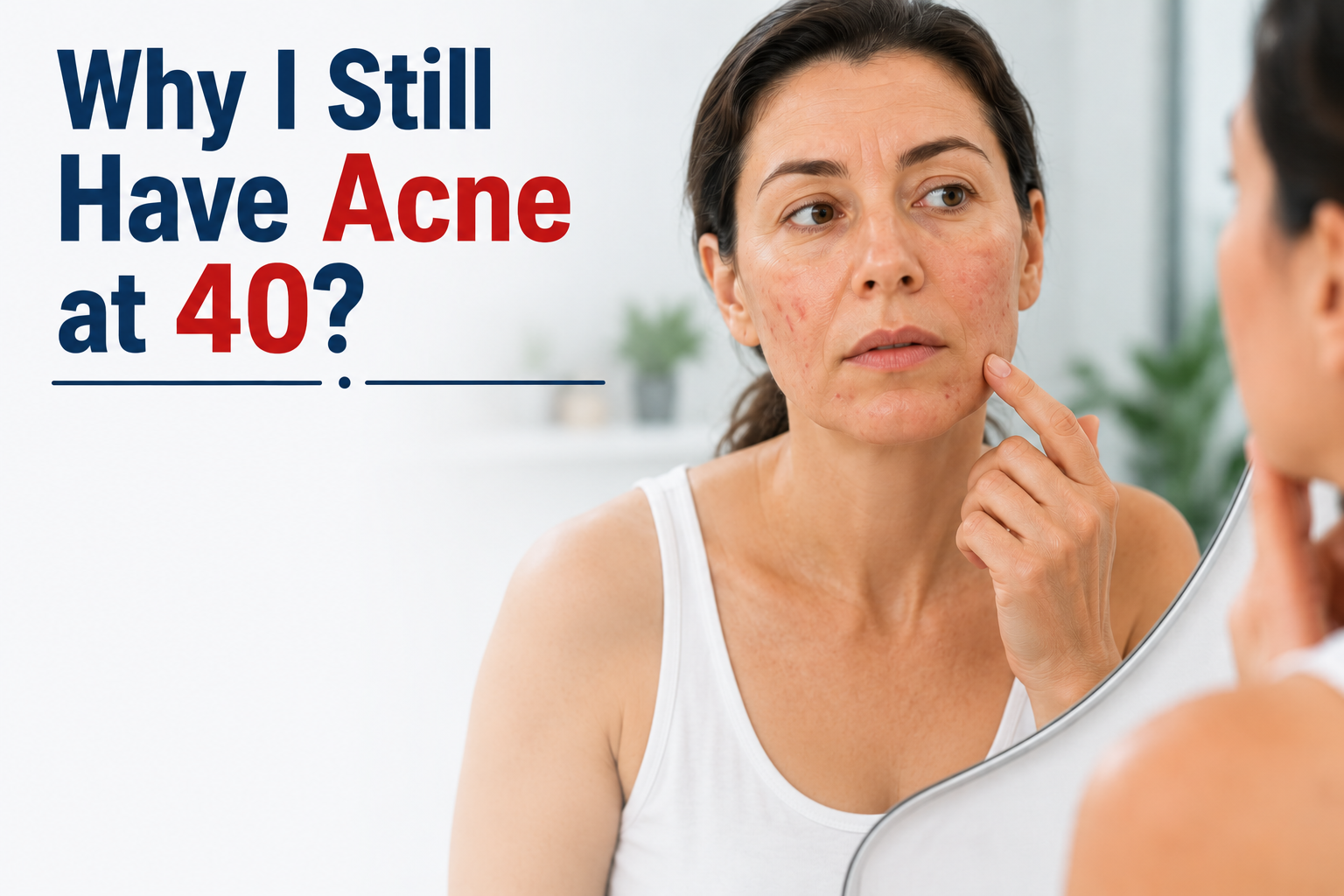
Many people expect acne to disappear after their teenage years, but that is not always the case. If you are asking yourself, “why do I still have acne at 40?“, you are certainly not alone. Adult acne affects millions of people and can continue well into middle age or even develop for the first time in your 40s.
The reasons behind adult acne are often different from those that cause teenage breakouts. Hormonal changes, stress, genetics, skincare habits, and lifestyle factors can all contribute to persistent pimples.
Understanding these causes is the first step toward finding the right treatment. In this guide, we will explore why acne can continue at 40, what increases your risk, and how you can achieve healthier, clearer skin.
Understanding Adult Acne at 40
Adult acne is a common skin condition that affects many people beyond their teenage years. To understand why breakouts continue at this age, it is important to look at how adult acne develops and how it differs from teenage acne.
What Is Adult Acne?
Adult acne refers to acne that occurs after the age of 25. It can include Comedo, whiteheads, pimples, cysts, and inflamed bumps. Some people experience acne continuously from adolescence, while others develop it for the first time later in life.
Adult acne often appears on the lower face, including the chin, jawline, and neck. These breakouts can be more painful and deeper than teenage acne, making them harder to treat.
How Common Is Acne After 40?
Many people are surprised to learn that acne remains common in middle age. Women are particularly affected because hormonal fluctuations continue throughout adulthood. Men can also experience persistent acne due to genetics, stress, and lifestyle factors.
Acne at 40 is not unusual, and it does not mean you are doing something wrong. It simply reflects the complex factors that influence skin health.
Why Do I Still Have Acne at 40?
There is no single answer to the question, “why do I still have acne at 40?” Multiple factors can contribute to adult breakouts. Understanding these causes can help you identify potential triggers and choose the most effective treatment.
Hormonal Changes and Their Impact on Acne
Hormones play a major role in adult acne. Even at age 40, hormone levels continue to fluctuate due to aging, menstrual cycles, pregnancy, perimenopause, and menopause.
When androgen hormones increase, oil glands produce more sebum. Excess oil combines with dead skin cells and clogs pores, creating an ideal environment for acne.
Women often notice breakouts before their menstrual periods because hormone levels change during this time. Perimenopause can also trigger unexpected acne flare-ups.
Common Causes of Adult Acne
Several everyday factors may contribute to persistent acne:
- Excess oil production
- Clogged pores
- Stress
- Poor sleep habits
- Certain medications
- Inappropriate skincare products
- Environmental pollutants
Even if you maintain good hygiene, these underlying factors can continue to trigger breakouts.
Signs and Symptoms of Acne in Your 40s
Adult acne does not always look the same as teenage acne. Common symptoms include:
- Painful cysts beneath the skin
- Pimples around the chin and jawline
- Red and inflamed bumps
- Blackheads and whiteheads
- Acne scars from previous breakouts
Many adults experience fewer pimples overall but more severe and stubborn lesions.
Risk Factors That Increase Adult Acne
Certain factors make some individuals more likely to experience acne in their 40s. Recognizing these risk factors can help you better manage your skin condition.
Being Female
Women are more likely to experience adult acne because hormonal fluctuations continue throughout life. Menstrual cycles, pregnancy, and menopause can all affect hormone levels.
As estrogen levels change, oil production may increase, contributing to clogged pores and breakouts.
Hormonal Changes
Hormonal imbalances remain one of the strongest risk factors for adult acne. Conditions such as polycystic ovary syndrome (PCOS) can increase androgen levels and trigger persistent acne.
People experiencing hormonal changes often notice acne concentrated around the jawline and chin.
Family History
Genetics can significantly influence your likelihood of developing acne. If your parents experienced adult acne, you may have a higher risk of dealing with similar skin issues.
Genetics can affect oil production, skin inflammation, and pore size.
High-Stress Lifestyle
Stress increases cortisol production, which can stimulate oil glands and worsen acne. Chronic stress may also slow the skin’s healing process, making breakouts last longer.
Smoking and Environmental Factors
Research suggests that smoking may contribute to certain forms of adult acne. Environmental pollutants can also clog pores and increase inflammation, especially in urban areas.
How Adult Acne Is Diagnosed?
Proper diagnosis helps determine the underlying causes of persistent acne and guides treatment decisions. A dermatologist can identify factors that may be contributing to your breakouts.
Physical Skin Examination
A dermatologist will examine the affected areas and determine the severity of the acne. They will assess the number of lesions, their location, and whether scarring is present.
This examination helps create a personalized treatment plan.
Reviewing Medical History
Your doctor may ask about:
- Family history of acne
- Current medications
- Menstrual history
- Lifestyle habits
- Existing health conditions
These details can provide important clues about possible triggers.
Hormone Testing When Needed
In some cases, blood tests may be recommended to evaluate hormone levels. This is especially common when acne is severe, sudden, or accompanied by other symptoms of hormonal imbalance.
Best Treatment Options for Acne at 40
Fortunately, many effective treatments are available for adult acne. The best approach depends on the severity and underlying cause of your condition.
Over-the-Counter Acne Treatments
Many mild acne cases respond well to non-prescription products.
Common ingredients include:
| Ingredient | Benefits |
| Salicylic Acid | Unclogs pores |
| Benzoyl Peroxide | Reduces acne-causing bacteria |
| Adapalene | Helps prevent clogged pores |
| Niacinamide | Reduces inflammation |
Consistent use is important because results may take several weeks.
Prescription Medications
For moderate to severe acne, prescription treatments may be necessary.
These may include:
- Topical retinoids
- Oral antibiotics
- Hormonal medications
- Prescription-strength creams
A dermatologist can determine which option is most appropriate for your situation.
Professional Dermatology Treatments
When home treatments are not effective, professional procedures may help.
Popular options include:
- Chemical peels
- Laser therapy
- Light treatments
- Cortisone injections for cysts
These procedures can improve both active acne and acne scars.
The Ideal Skincare Routine for Mature Acne-Prone Skin
A proper skincare routine can reduce breakouts while maintaining healthy skin. Adult skin requires a balance between acne control and moisture retention.
Gentle Cleansing
Wash your face twice daily using a mild cleanser. Harsh scrubbing can irritate the skin and worsen inflammation.
Choose products designed specifically for acne-prone skin.
Choosing Non-Comedogenic Products
Look for skincare and makeup products labeled “non-comedogenic.” These products are less likely to clog pores and trigger breakouts.
Avoid heavy creams and oily cosmetics whenever possible.
Daily Moisturizing
Many adults mistakenly skip moisturizer because they believe it causes acne. In reality, proper hydration supports the skin barrier and may reduce irritation from acne treatments.
Choose lightweight, oil-free moisturizers.
Importance of Sunscreen
Daily sunscreen use helps protect the skin from UV damage and prevents acne scars from becoming darker.
Select a broad-spectrum sunscreen that is non-comedogenic and suitable for sensitive skin.
Lifestyle Changes That Can Help Reduce Breakouts
Lifestyle habits can have a significant impact on skin health. Small adjustments may help improve acne management over time.
Improve Your Diet
While diet alone does not cause acne, certain foods may worsen breakouts in some people.
Consider limiting:
- Sugary foods
- Highly processed snacks
- Excess dairy products
Focus on fruits, vegetables, lean proteins, and whole grains.
Manage Stress Effectively
Stress management techniques may help reduce acne flare-ups.
Helpful strategies include:
- Meditation
- Deep breathing exercises
- Yoga
- Regular physical activity
Reducing stress can improve both skin health and overall well-being.
Prioritize Quality Sleep
Sleep allows the body to repair itself. Poor sleep may increase inflammation and stress hormones, both of which can contribute to acne.
Aim for seven to nine hours of quality sleep each night.
Stay Hydrated
Proper hydration supports healthy skin function. While drinking water will not cure acne, it helps maintain overall skin health.
When to See a Dermatologist?
Some cases of adult acne require professional medical attention. Seeking help early can prevent complications and long-term scarring.
Persistent or Severe Acne
If over-the-counter treatments fail after several weeks, it may be time to consult a dermatologist.
Persistent acne often requires prescription medication.
Acne Causing Scars
Scarring can become permanent if acne is not treated properly. Early intervention may reduce the risk of long-term skin damage.
Signs of Hormonal Imbalance
Symptoms such as irregular periods, excessive facial hair, or sudden severe acne may indicate an underlying hormonal condition.
A healthcare provider can perform appropriate testing.
How to Prevent Acne and Maintain Clear Skin After 40?
Although acne cannot always be completely prevented, healthy habits can reduce the frequency and severity of breakouts.
Maintain a Consistent Skincare Routine
Consistency is essential for acne management. Frequently changing products can irritate the skin and make acne worse.
Stick to a simple routine that includes cleansing, moisturizing, and sun protection.
Avoid Picking or Squeezing Pimples
Picking at acne can increase inflammation, spread bacteria, and cause scarring. Allow blemishes to heal naturally whenever possible.
Follow Medical Advice
If a dermatologist prescribes treatment, follow the recommended plan carefully. Consistent treatment often produces the best long-term results.
FAQs
Is it normal to have acne at 40?
Yes, it is completely normal to have acne at 40. Adult acne affects many men and women, and some people continue to experience breakouts from their teenage years. Others may develop acne for the first time in adulthood due to hormonal changes, stress, genetics, or lifestyle factors.
Why is my acne worse in my 40s than it was in my 20s?
Acne can become worse in your 40s because of hormonal fluctuations, increased stress levels, certain medications, and slower skin cell turnover. Adult acne also tends to be deeper and more inflamed, making it seem more severe than acne experienced during younger years.
Can menopause cause acne?
Yes, menopause and perimenopause can contribute to acne. During this stage of life, estrogen levels decline while androgen hormones may become more dominant. This hormonal shift can increase oil production and lead to breakouts, especially around the chin and jawline.
What skincare ingredients are best for acne-prone mature skin?
Ingredients such as salicylic acid, benzoyl peroxide, adapalene, niacinamide, and retinoids are commonly used to treat adult acne. These ingredients help unclog pores, reduce inflammation, and prevent new breakouts while supporting overall skin health.
Does stress really make acne worse?
Stress does not directly cause acne, but it can trigger or worsen breakouts. When you are stressed, your body produces more cortisol and other hormones that can increase oil production and inflammation, creating conditions that make acne more likely.
Conclusion
If you have been wondering, “why do I still have acne at 40?”, the answer often involves a combination of hormones, genetics, lifestyle factors, stress, and skincare habits. Adult acne is common and can affect both men and women, even decades after the teenage years.
The good news is that effective treatments and prevention strategies are available. By understanding the causes of your breakouts, maintaining a healthy skincare routine, and seeking professional guidance when necessary, you can improve your skin and reduce future acne flare-ups.
Related Posts
Tooth Lesion: Types, Causes, and Treatment Options Explained
How to Get Rid of Numbness After Dentist: Causes, Remedies, and Recovery Tips
Do You Gain Weight During Your Period? Causes, Truth & Simple Tips to Feel Better
Can Stress Cause Diarrhea? Causes, Symptoms, and Fast Relief Methods
Does Impact Health Cover IVF? Complete Guide to Fertility Treatment Coverage