


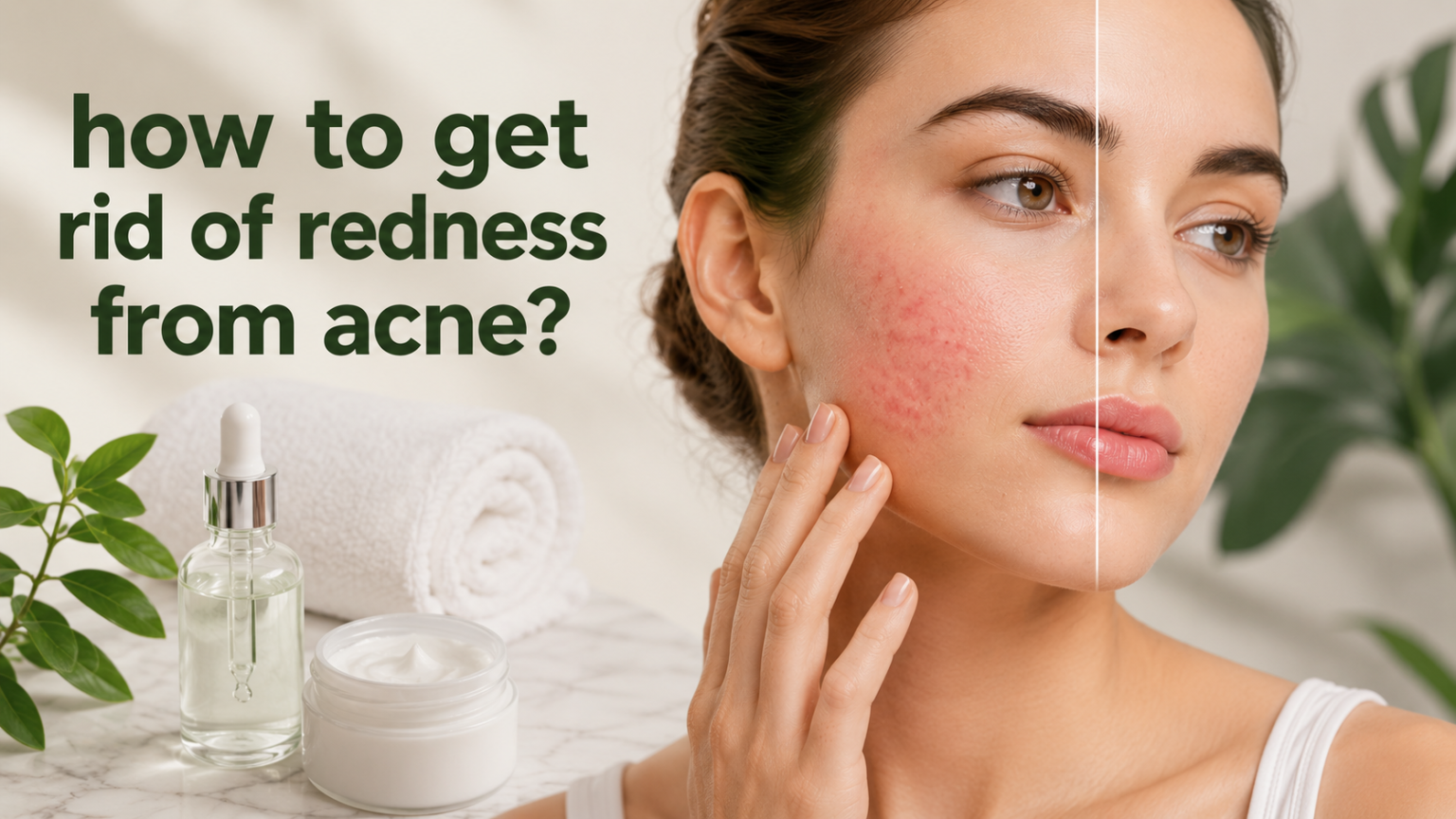
Acne redness happens when inflamed blood vessels rise close to the skin’s surface, reacting to bacteria, clogged pores, or irritation. This redness can appear during an active breakout or linger afterward as a mark, even once the pimple itself has healed.
Understanding how to get rid of redness from acne means treating both the immediate inflammation and the skin barrier that supports long-term healing. The right combination of soothing ingredients, gentle skincare habits, and lifestyle adjustments can visibly calm redness within days, while consistent care helps prevent it from returning.
This guide walks through causes, remedies, ingredients, and professional options in detail, so you can build a routine that actually works for your skin type.
Key Takeaways
- Acne redness is caused by inflammation, dilated blood vessels, and a weakened skin barrier.
- Cold compresses, aloe vera, and green tea offer fast, natural relief for irritated skin.
- Niacinamide, azelaic acid, and centella asiatica are dermatologist-recommended ingredients for reducing redness over time.
- Gentle cleansing, moisturizing, and daily sunscreen use prevent redness from worsening or lingering.
- Persistent redness that doesn’t improve with home care may require a dermatologist’s evaluation.
What Causes Redness in Acne?
Redness from acne develops when the skin’s immune response triggers inflammation around a clogged or infected pore. This causes nearby blood vessels to widen, which is what gives pimples their reddish appearance. The sections below explain the specific mechanisms behind this process in more detail.
Inflammation and Blood Vessel Dilation
When a pore becomes clogged with oil, dead skin cells, and bacteria, the body sends immune cells to the area to fight potential infection. This immune response causes nearby capillaries to widen, increasing blood flow to the area. The increased blood flow is what makes an active pimple look red, swollen, and warm to the touch.
Post-Inflammatory Erythema vs. Active Breakouts
Redness that remains after a pimple has healed is known as post-inflammatory erythema, which differs from the redness of an active breakout. According to the Cleveland Clinic, this occurs because blood vessels near the skin’s surface remain dilated even after the acne lesion itself has resolved. Unlike active acne, this type of redness is not infectious but can still take weeks or months to fade without treatment.
Skin Barrier Damage and Irritation
Harsh skincare products, over-washing, or picking at acne can damage the skin’s protective barrier, making redness worse. A compromised barrier allows irritants to penetrate more easily and slows the skin’s natural healing process. This is why gentle, barrier-supportive skincare is just as important as targeted redness treatments.
Quick At-Home Remedies for Acne Redness
Several simple, low-cost remedies can calm acne redness quickly using ingredients you likely already have at home. These methods work primarily by reducing inflammation and soothing irritated skin on contact.
Cold Compress and Ice Therapy
Wrapping ice in a clean cloth and applying it to the affected area for five to ten minutes helps constrict blood vessels and reduce swelling almost immediately. This method is especially useful before an event when you need fast, temporary results. Avoid placing ice directly on bare skin, as this can cause additional irritation or frostbite with prolonged contact.
Aloe Vera Gel
Aloe vera contains compounds with natural anti-inflammatory and cooling properties that help calm irritated skin. Applying a thin layer of pure aloe vera gel to red areas can reduce visible redness while also supporting the skin’s hydration levels. It is gentle enough for daily use and works well alongside other treatments.
Green Tea Application
Cooled green tea, whether applied via a soaked cotton pad or a green tea-based topical product, contains antioxidants called catechins that help reduce skin inflammation. Regular use can calm redness over time while also protecting the skin from oxidative stress caused by environmental factors. This remedy pairs well with other soothing ingredients in a routine.
Honey and Anti-Inflammatory Masks
Raw honey has natural antibacterial and soothing properties that can help calm inflamed skin when applied as a short mask. Leaving a thin layer on the affected area for ten to fifteen minutes before rinsing can reduce redness while supporting the skin’s healing process. This remedy is best used a few times per week rather than daily, to avoid over-application.
Topical Ingredients That Reduce Redness
Beyond home remedies, certain over-the-counter ingredients are specifically formulated to target redness and inflammation at a deeper level. These ingredients are widely recommended by dermatologists for long-term improvement.
Niacinamide
Niacinamide, a form of vitamin B3, is one of the most researched ingredients for reducing skin redness and inflammation. It works by strengthening the skin barrier and regulating oil production, which helps prevent future breakouts as well. Most people tolerate niacinamide well, making it suitable for daily use in serums or moisturizers.
Centella Asiatica (Cica)
Centella asiatica, often labeled as “cica” in skincare products, is a plant extract known for its calming and wound-healing properties. It is commonly used in Korean skincare formulations designed specifically for sensitive, irritated, or acne-prone skin. Regular use can reduce redness while supporting the skin’s natural repair process.
Azelaic Acid
Azelaic acid is a dermatologist-recommended ingredient that reduces inflammation while also targeting acne-causing bacteria. It is particularly effective for post-inflammatory redness and is generally safe for long-term, sensitive skin use. Many over-the-counter and prescription-strength formulations are available depending on severity.
Hydrocortisone Cream (Short-Term Use)
A low-strength hydrocortisone cream can quickly reduce inflammation and redness when used for short periods on specific spots. However, it should not be used continuously or over large areas, as prolonged use can thin the skin. This option is best reserved for occasional flare-ups rather than daily maintenance.
Skincare Routine Adjustments to Prevent Redness
Preventing acne redness from worsening requires consistent, gentle skincare habits that protect the skin barrier. The following adjustments help minimize irritation while supporting overall skin health.
Gentle Cleansing Habits
Washing the face with a mild, fragrance-free cleanser twice daily helps remove excess oil and debris without stripping the skin’s natural barrier. Avoid scrubbing or using harsh exfoliants on active breakouts, as this can increase inflammation and redness. Patting the skin dry with a soft towel is gentler than rubbing.
Fragrance-Free Moisturizing
Keeping the skin hydrated with a fragrance-free, non-comedogenic moisturizer supports barrier repair and reduces sensitivity. Skipping moisturizer can actually worsen acne, as dehydrated skin often overproduces oil to compensate. Choosing lightweight, gel-based formulas works well for acne-prone skin types.
Sunscreen and UV Protection
Daily sunscreen use is essential, since UV exposure can darken post-acne redness and delay the skin’s healing process. A broad-spectrum SPF of 30 or higher, applied every morning, helps protect healing skin and prevents marks from becoming more noticeable. Mineral sunscreens are often better tolerated by sensitive, acne-prone skin.
Avoiding Picking or Popping
Picking or popping pimples increases inflammation, prolongs healing time, and significantly raises the risk of lasting redness or scarring. Even seemingly minor picking can push bacteria deeper into the skin, worsening the breakout. Keeping hands away from the face is one of the simplest yet most effective habits for reducing redness.
Comparison Table: Redness-Reducing Ingredients
Note: In place of a standard product/pricing comparison, this table compares key ingredients by function, suitability, and recommended use for transparency and accuracy.
| Ingredient | Best For | How It Works | Recommended Frequency |
| Niacinamide | Daily redness prevention | Strengthens barrier, reduces inflammation | Once or twice daily |
| Centella Asiatica | Sensitive, irritated skin | Calms and supports healing | Daily |
| Azelaic Acid | Post-acne redness and bacteria | Reduces inflammation, targets bacteria | Once or twice daily |
| Hydrocortisone Cream | Occasional flare-ups | Rapidly reduces localized inflammation | Short-term, as needed only |
| Green Tea Extract | Antioxidant support | Reduces oxidative stress and inflammation | Daily |
When to See a Dermatologist
While most acne redness improves with consistent home care, certain signs indicate it’s time to consult a professional for further evaluation.
Signs Redness Is Not Improving
If redness persists for several months despite consistent skincare, or if it spreads or worsens over time, this may signal a need for professional evaluation. Persistent redness can sometimes indicate an underlying condition such as rosacea rather than typical post-acne marks. A dermatologist can help distinguish between the two and recommend appropriate treatment.
Prescription Treatment Options
Dermatologists can prescribe stronger topical treatments, such as prescription-strength azelaic acid or retinoids, for more stubborn redness. In some cases, oral medications may also be recommended for underlying inflammatory acne. These treatments are typically more potent than over-the-counter options and require medical supervision.
Professional Procedures (Laser, LED Therapy)
For long-standing redness that doesn’t respond to topical treatments, procedures like laser therapy or LED light treatment can target dilated blood vessels directly. According to the American Academy of Dermatology, these treatments are often used for both active acne inflammation and lingering post-acne marks. Multiple sessions are usually needed for optimal results.
Lifestyle Factors That Affect Acne Redness
Skin health is closely connected to overall lifestyle habits, and certain factors can influence how quickly redness improves or worsens.
Diet and Inflammation
Diets high in processed sugars and dairy have been associated with increased inflammation in some studies, which may worsen acne and related redness. Incorporating more anti-inflammatory foods, such as leafy greens and omega-3-rich fish, may support skin healing. However, dietary triggers can vary significantly between individuals.
Stress and Hormonal Triggers
Stress triggers the release of cortisol, a hormone that can increase oil production and inflammation, worsening both acne and redness. Managing stress through regular exercise, adequate rest, and relaxation techniques can indirectly support clearer, calmer skin. Hormonal fluctuations, particularly around menstrual cycles, can have a similar effect.
Sleep and Skin Recovery
Adequate sleep allows the skin to repair itself overnight, supporting the reduction of inflammation and redness. Poor sleep quality has been linked to increased stress hormone levels, which can indirectly worsen acne severity. Prioritizing seven to nine hours of sleep nightly supports the skin’s natural healing cycle.
FAQs
Does ice really reduce acne redness fast?
Yes, applying ice wrapped in cloth for a few minutes can quickly constrict blood vessels and reduce visible redness temporarily.
Can redness from acne be permanent?
Redness is usually temporary, but without proper care or in cases of skin barrier damage, it can take months to fade naturally.
Is niacinamide better than hydrocortisone for redness?
Niacinamide is better suited for daily, long-term use, while hydrocortisone is more effective for short-term, occasional flare-ups.
How long does post-acne redness take to fade naturally?
Post-acne redness typically fades within a few weeks to a few months, depending on skin type and how well it’s protected from sun exposure.
Conclusion
Getting rid of redness from acne involves calming inflammation, supporting the skin barrier, and using targeted ingredients consistently.
Combining gentle skincare habits with proven remedies like niacinamide, centella asiatica, and daily sunscreen can significantly speed up recovery.
For redness that doesn’t improve, consulting a dermatologist ensures the right treatment path for lasting results.
Related Posts
How Long Does Root Canal Therapy Take? Full Time Guide
Can Jaw Pain Be Caused by an Ear Infection? Full Guide & Relief Tips
How Long Does Tendonitis Take to Heal? Full Recovery Timeline