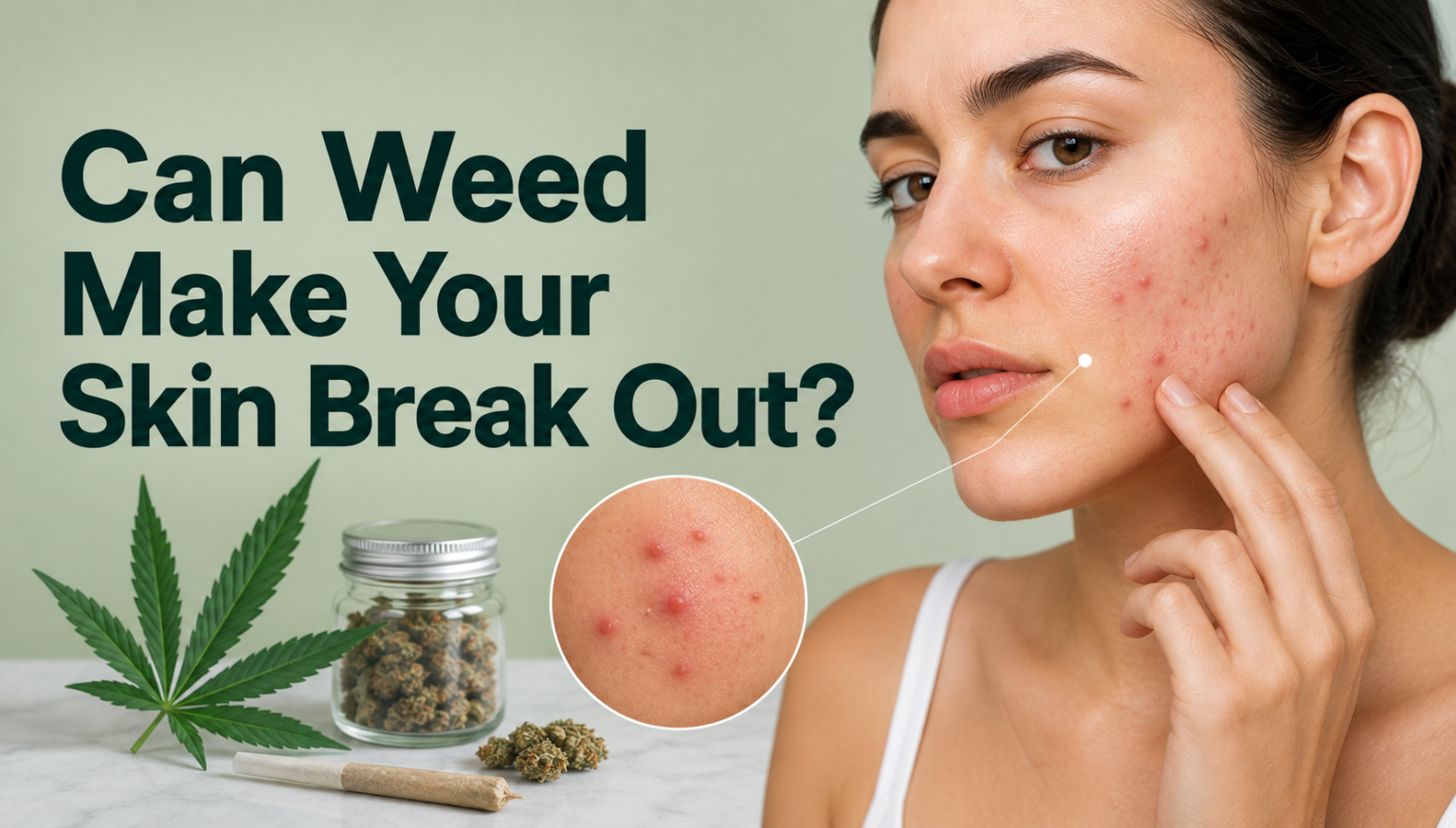
Yes, weed can make your skin break out for some people, though the connection is not the same for everyone. Cannabis interacts with oil-producing glands, hormones, and hydration levels in the body, which can trigger breakouts in acne-prone individuals.
However, factors like consumption method, frequency of use, diet choices, and skin type all play a role in whether cannabis actually affects your complexion. This guide breaks down the science, the triggers, and practical solutions in simple, easy-to-understand language.
What Happens to Your Skin When You Use Weed
When cannabis enters your system, it interacts with receptors found throughout your skin, not just your brain. These receptors influence oil production, inflammation, and even how your skin heals itself.
The Skin-Cannabis Connection Explained
Your skin contains a network called the endocannabinoid system, which regulates oil balance and inflammation naturally. When THC enters this system, it can disrupt the normal signals your skin uses to control sebum production. This disruption is one of the main reasons some people notice more breakouts after regular cannabis use.
The Science: How THC Affects Your Skin
THC binds to specific receptors in your skin cells that are responsible for regulating oil and inflammation. This biological interaction is the foundation of why cannabis use is sometimes linked to acne flare-ups.
CB1 and CB2 Receptors in Sebaceous Glands
Sebaceous glands, the parts of your skin responsible for producing oil, contain CB1 and CB2 receptors. When THC activates these receptors, it can increase oil output significantly. Excess oil combined with dead skin cells often leads to clogged pores, which is the starting point of most acne breakouts.
Inflammation Response Triggered by THC
Beyond oil production, THC can also influence how your skin responds to inflammation. Some studies suggest that while cannabinoids have anti-inflammatory properties in certain contexts, excessive THC exposure can still irritate sensitive skin, especially when combined with other triggers like poor diet or dehydration.
Does Smoking Weed Cause Acne? Direct Effects
Smoking cannabis exposes your skin to smoke particles and toxins, which behave differently than edibles or other consumption methods. This direct exposure is one of the most overlooked causes of weed-related breakouts.
Smoke Exposure and Pore-Clogging Residue
When you smoke, tiny particles from the smoke settle on your skin throughout the day. Over time, this residue mixes with natural oils and clogs pores, particularly around the face and hands where exposure is highest during sessions.
Dehydration From Smoking and Its Skin Effects
Smoking cannabis can dry out your skin and body simultaneously. When your skin senses dehydration, it often overcompensates by producing more oil, which directly increases the likelihood of breakouts appearing within a few days of heavy use.
Does Eating Edibles Cause Breakouts?
Edibles skip the smoke exposure problem entirely, but they introduce a different set of risks tied to ingredients and blood sugar spikes. The method of consumption changes how your body reacts.
Sugar and Dairy Content in Edibles
Many cannabis edibles are made with high amounts of sugar, chocolate, or dairy, all of which are already linked to acne in various studies. Eating these regularly, even without the cannabis itself, can independently trigger breakouts.
Blood Sugar Spikes and Skin Inflammation
Edibles often cause rapid blood sugar spikes followed by crashes. This fluctuation increases insulin activity, which in turn boosts oil production in the skin and creates the perfect environment for acne-causing bacteria to thrive.
The Munchies Effect on Skin
The well-known “munchies” that follow cannabis use often lead to unhealthy food choices. These choices can affect your skin just as much as the cannabis itself, sometimes even more.
Greasy and Processed Food Cravings
After using weed, cravings usually lean toward fried, greasy, or heavily processed snacks. These foods are high in unhealthy fats that contribute to systemic inflammation, which frequently shows up on the skin as breakouts within days.
Dairy and Sugary Snack Consumption
Ice cream, chips, and sugary desserts are common munchie choices. Dairy proteins and refined sugars are known acne triggers, and combining both in one late-night snacking session can worsen existing skin issues significantly.
Hormonal Changes and Cannabis
Cannabis use can influence hormone levels in the body, particularly cortisol, which is directly tied to stress and oil production. This hormonal shift is a less obvious but important factor in weed-related breakouts.
Cortisol and Stress Hormone Disruption
THC can alter cortisol levels temporarily, either increasing or decreasing them depending on the individual and dosage. Elevated cortisol is strongly associated with increased oil gland activity, making breakouts more likely during periods of frequent use.
Long-Term Hormonal Impact With Regular Use
Chronic, heavy cannabis use may lead to more consistent hormonal fluctuations over time. This ongoing imbalance can make skin more reactive and prone to recurring acne, especially in people already sensitive to hormonal shifts.
Dehydration: A Hidden Cause of Breakouts
Dehydration is one of the most underestimated triggers behind cannabis-related skin issues. Weed affects the body’s fluid balance in ways that directly impact skin health.
How Weed Dries Out the Body
Cannabis has mild diuretic properties and can also cause dry mouth, both signs that it affects overall hydration levels. When your body lacks sufficient water, your skin loses its natural moisture barrier as well.
Oil Overproduction as a Compensation Response
Dehydrated skin often triggers oil glands to work overtime to protect itself. This overproduction is a defense mechanism, but it frequently backfires by clogging pores and leading to new breakouts.
Behavioral Triggers Linked to Weed Use
Beyond biology, certain habits that come with cannabis use can independently contribute to breakouts. These behavioral patterns are easy to overlook but simple to fix.
Touching Your Face More Often
Rolling joints, packing bowls, and general handling during sessions often means more frequent face-touching. This transfers bacteria and oils from your hands directly onto your skin, increasing breakout risk.
Skipping Skincare After Sessions
Many people fall asleep or forget their skincare routine after using cannabis, especially at night. Leaving smoke residue, oil, and dirt on the skin overnight is a common and preventable cause of morning breakouts.
Who Is Most at Risk for Weed-Related Breakouts?
Not everyone experiences breakouts from cannabis use. Certain skin types and usage patterns make some people significantly more susceptible than others.
| Risk Factor | Higher Risk Group | Lower Risk Group |
| Skin Type | Oily or combination skin | Dry or normal skin |
| Consumption Method | Smoking | Tinctures or topicals |
| Frequency | Daily or heavy use | Occasional use |
| Diet Habits | High sugar/dairy intake after use | Balanced diet maintained |
| Hydration | Low water intake | Consistent hydration |
Weed vs Other Substances for Skin Health
Comparing cannabis to alcohol and nicotine helps put its skin impact into perspective. Each substance affects the skin through different mechanisms.
Alcohol dehydrates the body more aggressively than cannabis and is strongly linked to inflammation and redness. Nicotine restricts blood flow to the skin, causing dullness and premature aging. Cannabis, by comparison, primarily affects oil production and hormonal balance rather than blood flow, making its breakout pattern distinct from these other substances.
Can CBD Help Instead of Causing Acne?
CBD behaves very differently from THC when it comes to skin health, and understanding this difference is important for anyone concerned about breakouts.
THC vs CBD Effects on Oil Glands
While THC tends to increase sebum production, CBD has shown the opposite effect in several studies by actually helping regulate and reduce excess oil. This makes CBD products a popular alternative for those prone to acne.
Anti-Inflammatory Properties of CBD
CBD is widely recognized for its calming effect on inflamed skin. Many skincare brands now use CBD specifically to reduce redness and irritation, positioning it as a skin-friendly alternative to THC-heavy products.
Signs Your Breakouts Are Weed-Related
Identifying whether cannabis is truly the cause of your breakouts requires paying attention to specific patterns and timing.
- Breakouts appear within 24 to 48 hours after heavy use sessions
- Acne worsens during periods of frequent smoking rather than edibles
- Breakouts improve noticeably during tolerance breaks
- Oiliness increases specifically after sessions involving munchies
- Skin issues correlate with poor hydration during use periods
How to Prevent Breakouts If You Use Weed?
Prevention is entirely possible with a few consistent habits, even if you continue using cannabis regularly.
Hydration and Skincare Routine Tips
Drinking extra water before and after sessions helps counteract the dehydrating effects of THC. Following a simple cleansing and moisturizing routine, especially after smoking, prevents residue and oil buildup from settling into pores overnight.
Healthier Snack Swaps for Munchies
Replacing sugary or greasy munchie snacks with options like fruit, nuts, or yogurt-based alternatives reduces the dietary triggers that often accompany cannabis use, helping keep breakouts under control.
When to See a Dermatologist
If breakouts persist despite lifestyle changes, professional guidance becomes necessary to rule out other underlying causes.
Persistent cystic acne, painful breakouts, or skin issues that don’t improve after reducing cannabis use and adjusting diet are strong signs that a dermatologist should be consulted. They can identify whether hormonal, genetic, or other medical factors are contributing alongside cannabis use.
Myths vs Facts About Weed and Skin
| Myth | Fact |
| Weed always causes acne | Effects vary widely by individual and usage habits |
| Edibles are completely safe for skin | Sugar and dairy content in edibles can still trigger breakouts |
| CBD and THC affect skin the same way | CBD often reduces oil while THC tends to increase it |
| Only smoking affects skin | Diet, hydration, and hormones also play major roles |
Expert Opinions and Research Insights
Dermatological research on cannabis and skin is still developing, but existing studies confirm that skin cells contain functional cannabinoid receptors capable of influencing oil production and inflammation.
Experts generally agree that individual reactions vary significantly, and lifestyle factors surrounding cannabis use often matter as much as the substance itself.
Conclusion
So, can weed make your skin break out? For many people, the answer is yes, primarily due to increased oil production, hormonal shifts, dehydration, and diet-related munchie habits.
However, the effect isn’t universal, and simple changes like better hydration, a consistent skincare routine, and healthier snacking can significantly reduce breakout risks while still enjoying cannabis responsibly.
FAQs
Does weed cause acne in everyone who uses it? No, reactions vary based on skin type, usage frequency, and lifestyle habits surrounding consumption.
Are edibles better than smoking for skin health? Edibles avoid smoke residue but can introduce sugar and dairy triggers depending on ingredients used.
Can CBD products help reduce weed-related breakouts? Yes, CBD has shown potential in regulating oil production and reducing skin inflammation compared to THC.
How long after using weed do breakouts typically appear? Breakouts linked to cannabis use often appear within 24 to 48 hours after heavy sessions.
Does quitting weed clear up skin completely? For some individuals, reducing or quitting cannabis use improves skin clarity, though results depend on other contributing factors like diet and hormones.
RELATED POSTS
Does Constipation Cause Fever? What You Need to Know
How to Make a Kidney Stone Pass Faster: A Complete Guide
Can Niacinamide Cause Acne? The Complete Guide
How to Unlock a Locked Knee: Causes, Immediate Steps & When to See a Doctor