



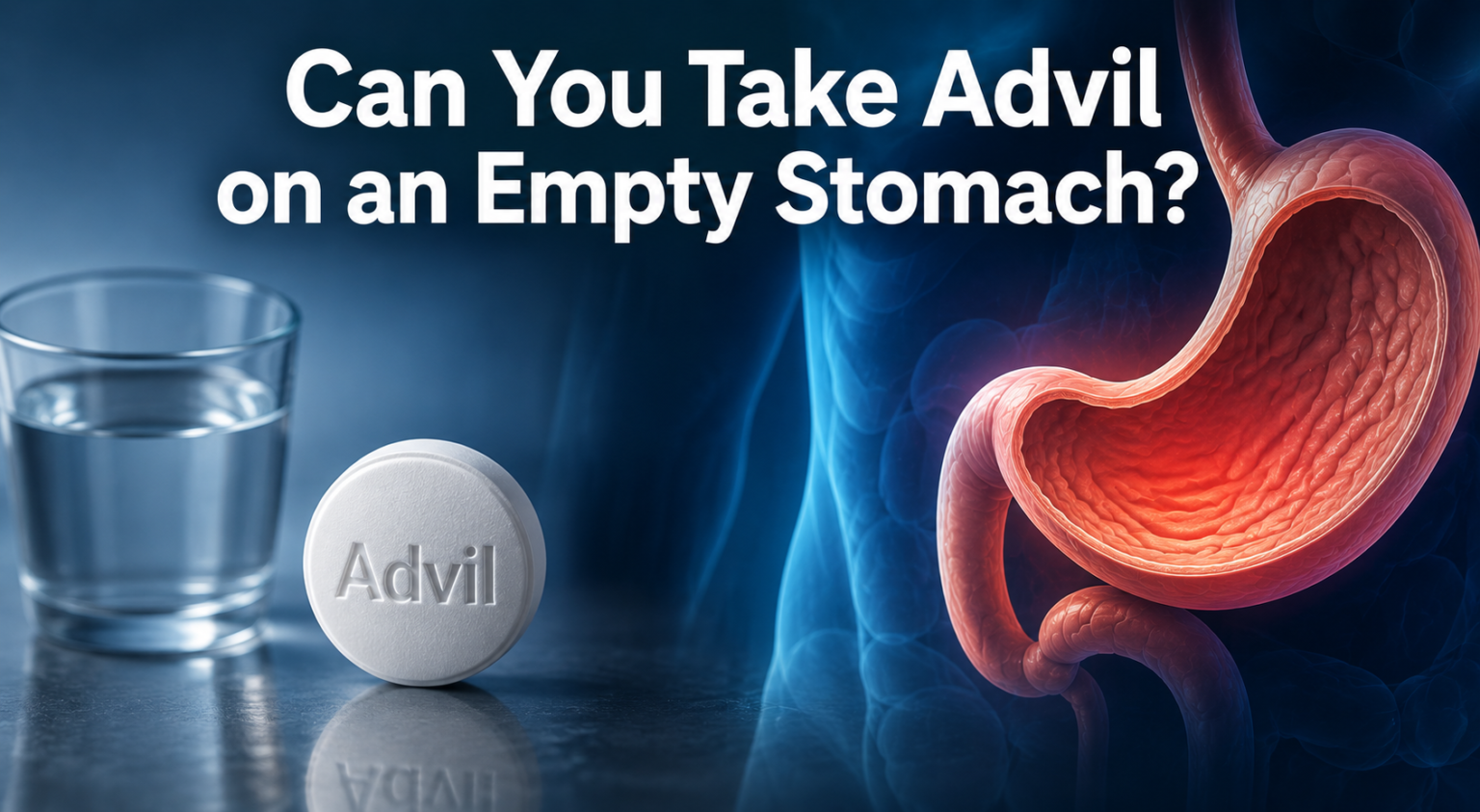
Yes, you can take an Advil on an empty stomach, but doctors and pharmacists generally advise against it. Advil, whose active ingredient is ibuprofen, belongs to a group of medicines called NSAIDs that are known to irritate the stomach lining when taken without food.
Taking it empty-stomach does not make it dangerous for a one-time dose, but it does raise the chances of nausea, acidity, or discomfort. For people who take Advil regularly or have a sensitive stomach, this risk becomes more serious over time.
The safest approach is to pair Advil with food, milk, or at least a full glass of water. Below, we break down exactly why this happens and how you can protect your stomach while still getting effective pain relief.
What Is Advil and How Does It Work?
Advil is the brand name for ibuprofen, a widely used non-steroidal anti-inflammatory drug (NSAID) that treats pain, fever, and swelling. It works by blocking certain chemicals in your body that trigger inflammation and discomfort.
Advil as a Brand Name for Ibuprofen
Advil is simply a trademarked version of ibuprofen, meaning the active medical compound inside it is identical to many generic ibuprofen tablets sold under different names. Companies package the same core ingredient differently and market it with their own branding. Regardless of the brand, the way it interacts with your stomach remains the same.
Classification as an NSAID
NSAID stands for non-steroidal anti-inflammatory drug, a category that also includes medicines like aspirin and naproxen. These drugs are designed to reduce swelling, pain, and fever without using steroid compounds. This classification is important because NSAIDs, as a group, share a common side effect profile related to stomach irritation.
How It Relieves Pain, Fever, and Inflammation
Ibuprofen works by blocking enzymes called COX-1 and COX-2, which are responsible for producing prostaglandins. Prostaglandins are chemicals that cause inflammation, pain signals, and fever in the body. By reducing these chemicals, Advil effectively lowers swelling and discomfort, but this same mechanism also reduces a protective substance in your stomach lining.
Can You Take Advil on an Empty Stomach?
The direct answer is yes, you technically can take Advil on an empty stomach, and for most healthy adults a single dose will not cause serious harm. That said, medical guidance consistently recommends taking it with food to minimize discomfort.
Why the Label Often Says Take With Food
Most Advil packaging includes a suggestion to take the medicine with food or milk, and this instruction exists for a practical reason rather than a strict safety rule. Food acts as a buffer that slows down how quickly the medicine irritates the stomach lining, making the overall experience more comfortable and reducing the odds of nausea or acidity.
Why Advil Can Irritate an Empty Stomach?
Advil can irritate an empty stomach because it interferes with the natural protective barrier that lines your digestive tract. Without food to act as a cushion, the medicine has more direct contact with sensitive stomach tissue.
How NSAIDs Affect the Stomach Lining
NSAIDs like ibuprofen reduce the production of prostaglandins, which are chemicals that normally help maintain a protective mucus layer in the stomach. When this layer weakens, stomach acid can come into closer contact with the stomach wall, leading to irritation, burning sensations, or discomfort, especially when there is no food present to dilute this effect.
Reduction of Protective Stomach Mucus
The mucus lining in your stomach acts like a shield against the naturally acidic environment your body creates for digestion. Since ibuprofen suppresses prostaglandins, this shield becomes thinner and less effective. Over time or with repeated empty-stomach dosing, this reduction can leave the stomach wall more exposed and vulnerable to acid-related damage.
Increased Stomach Acid Exposure
When there is no food in your stomach, acid levels are already more concentrated because there is nothing solid to absorb or neutralize them. Adding Advil into this environment means the medication and the acid interact more directly with the stomach lining, which can heighten irritation compared to taking it after a meal.
Possible Side Effects of Taking Advil Without Food
Taking Advil without food can lead to a range of side effects, from mild stomach discomfort to more serious digestive issues in certain cases. The severity often depends on dosage, frequency, and individual sensitivity.
Mild Symptoms
Many people who take Advil on an empty stomach experience relatively minor symptoms such as nausea, a bloated feeling, or general stomach discomfort shortly after taking the pill. These symptoms are usually temporary and tend to resolve once food is eaten or the medication is fully absorbed.
Moderate Symptoms
In some cases, users may notice heartburn or a burning sensation, along with more persistent stomach pain that lingers for a few hours after taking the dose. These moderate symptoms are a signal that the stomach lining is reacting more strongly to the medication and that dietary precautions should be taken going forward.
Serious Risks With Long-Term or Frequent Use
Repeated use of Advil without food, especially over weeks or months, raises the risk of more serious complications such as stomach ulcers or gastrointestinal bleeding. These conditions develop when the stomach lining becomes chronically irritated and weakened, allowing acid to damage deeper tissue layers, which requires medical attention if it occurs.
Who Is Most at Risk?
Certain groups of people face a higher chance of experiencing stomach problems when taking Advil without food, making it especially important for them to follow safe dosing practices.
People With a History of Ulcers or GI Issues
Anyone who has previously dealt with stomach ulcers, acid reflux, or other gastrointestinal conditions is more susceptible to irritation from NSAIDs. Their stomach lining may already be weakened, so taking Advil without food can trigger symptoms more quickly and severely than in someone with no prior digestive issues.
Older Adults
As people age, the stomach lining naturally becomes thinner and less resilient, making older adults more prone to NSAID-related irritation. This age group is often advised to be extra cautious and to always pair Advil with food to reduce unnecessary strain on their digestive system.
Those Taking Blood Thinners or Steroids
Combining Advil with blood-thinning medications or steroids can significantly increase the risk of stomach bleeding, since both drug categories affect the body’s clotting ability and stomach lining protection. People on these medications should consult a doctor before regularly using Advil, regardless of whether it is taken with food.
Frequent or Long-Term Advil Users
Individuals who rely on Advil for chronic pain conditions and take it multiple times a week face a cumulative risk that builds up over time. Even if each individual dose seems harmless, the repeated exposure without food can gradually wear down the stomach’s protective lining.
Heavy Alcohol Consumers
Alcohol itself irritates the stomach lining, and when combined with Advil on an empty stomach, the combined effect can significantly increase the risk of gastrointestinal damage. People who drink regularly should be particularly mindful of spacing out alcohol consumption and NSAID use.
Best Practices for Taking Advil Safely
Following a few simple habits can significantly reduce the chances of stomach-related side effects while still allowing Advil to work effectively for pain and inflammation relief.
Take With Food or a Full Glass of Milk
Eating a small snack or meal before taking Advil, or pairing it with a full glass of milk, helps create a buffer between the medication and your stomach lining. This simple step is one of the most effective ways to reduce irritation and discomfort.
Drink Plenty of Water
Taking Advil with a full glass of water rather than just a small sip helps the tablet dissolve properly and move through your digestive system more smoothly. Adequate hydration also supports overall digestion and reduces the concentration of the medication sitting in one spot.
Avoid Alcohol Close to Dosing
Since alcohol independently irritates the stomach, it is best to avoid drinking close to the time you take Advil. Spacing these out reduces the combined strain on your digestive lining and lowers the risk of more serious complications.
Don’t Exceed Recommended Dosage
Sticking to the dosage instructions on the label or from your doctor is essential, since higher amounts of ibuprofen increase both its pain-relieving effect and its potential to irritate the stomach. Never assume that taking more will speed up relief, as it only raises the risk of side effects.
Space Out Doses Properly
Allowing enough time between doses, as instructed on the packaging, gives your stomach lining a chance to recover between exposures. Doubling up doses too close together increases cumulative irritation and should always be avoided.
What to Do If You Must Take It on an Empty Stomach?
Sometimes circumstances make it unavoidable to take Advil without having eaten first, and knowing how to handle this situation properly can help minimize any negative effects.
Situations Where This Might Happen
There are times when pain strikes suddenly, such as an unexpected headache or muscle cramp, and food may not be readily available. In these moments, people often need fast relief and cannot wait until their next meal to take the medication.
Tips to Minimize Stomach Irritation
If you must take Advil without food, drinking a full glass of water or milk beforehand can help create some buffer for your stomach. Eating even a small snack like crackers shortly afterward can also help reduce the direct exposure your stomach lining experiences.
Monitoring for Symptoms Afterward
After taking Advil on an empty stomach, it helps to pay attention to how your body responds over the next few hours. If you notice nausea, burning, or discomfort, eating something light and avoiding further doses until you’ve eaten can help prevent the situation from worsening.
Advil vs. Other Pain Relievers: Stomach-Friendliness Comparison
Different pain relievers affect the stomach in different ways, and understanding these differences can help you choose the right option based on your digestive sensitivity.
| Pain Reliever | Stomach Impact | Best Taken With Food? |
| Advil (Ibuprofen) | Moderate to high irritation risk | Yes, recommended |
| Tylenol (Acetaminophen) | Minimal stomach irritation | Not required |
| Aleve (Naproxen) | Similar or slightly higher irritation than ibuprofen | Yes, recommended |
Ibuprofen vs. Acetaminophen
Acetaminophen, sold under the brand name Tylenol, works through a different mechanism than ibuprofen and does not carry the same stomach lining irritation risks. This makes it a preferred option for people with sensitive stomachs, although it does not reduce inflammation the way Advil does.
Ibuprofen vs. Naproxen
Naproxen, found in Aleve, belongs to the same NSAID family as ibuprofen and carries a similar or sometimes slightly higher risk of stomach irritation. Both medications benefit from being taken with food, and the choice between them often comes down to how long the pain relief needs to last.
When to See a Doctor
Knowing when stomach discomfort from Advil crosses the line into a medical concern is important for protecting your long-term digestive health.
Persistent Stomach Pain After Taking Advil
If stomach pain continues for several hours or returns every time you take Advil, this pattern suggests your body may not be tolerating the medication well, and a doctor’s evaluation is recommended before continuing use.
Signs of Gastrointestinal Bleeding
Symptoms such as black or tarry stools, vomiting blood, or severe abdominal pain are serious warning signs that require immediate medical attention, as they may indicate internal bleeding caused by NSAID-related stomach damage.
Long-Term NSAID Use Concerns
Anyone using Advil regularly over an extended period should discuss this with a healthcare provider, since long-term NSAID use is associated with higher risks of ulcers and other digestive complications that may need monitoring.
Frequently Asked Questions
Can I take Advil with just water? Yes, taking Advil with water is acceptable, but pairing it with food or milk offers better protection for your stomach lining compared to water alone.
How long after eating should I wait? There is no strict waiting period, but taking Advil during or shortly after a meal offers the most stomach protection compared to waiting hours after eating.
Is it safe to take Advil every day? Daily use should only be done under medical supervision, since regular NSAID use increases the risk of stomach irritation and other complications over time.
Can children take Advil on an empty stomach? Children’s doses should always follow pediatric guidelines, and giving Advil with food is generally recommended to reduce the chance of stomach upset in young users.
Conclusion
Taking Advil on an empty stomach is possible but not the safest choice for regular use. Pairing it with food, milk, or at least water significantly lowers the risk of irritation and long-term complications.
People with existing digestive issues, older adults, and frequent users should be especially cautious and consider consulting a doctor for personalized guidance.
RELATED POSTS
What Causes Lower Back Pain in Females? Complete Guide with Treatment Tips
LifeX Health Insurance Explained: Plans, Coverage, Cost, Benefits and Full Detailed Guide
MyChart First Health: Complete Guide to Registration, Login, Features, Appointments, and Billing
PRP for Under Eyes: Benefits, Procedure, Recovery, Cost, Results, and Side Effects