


The under-eye area is one of the first places where signs of aging become noticeable. Dark circles, fine lines, wrinkles, and thinning skin can make a person look tired even when they are well-rested. While many cosmetic treatments promise younger-looking eyes, one option that has gained significant attention is PRP for under eyes.
PRP, or Platelet-Rich Plasma, is a treatment that uses the healing properties found in your own blood to improve skin quality. Unlike surgical procedures, PRP is minimally invasive and focuses on stimulating natural collagen production. Because it relies on the body’s own regenerative abilities, many people consider it a natural approach to under-eye rejuvenation.
This guide explains how PRP for under eyes works, who can benefit from it, what results to expect, and whether it is worth considering.
What Is PRP for Under Eyes?
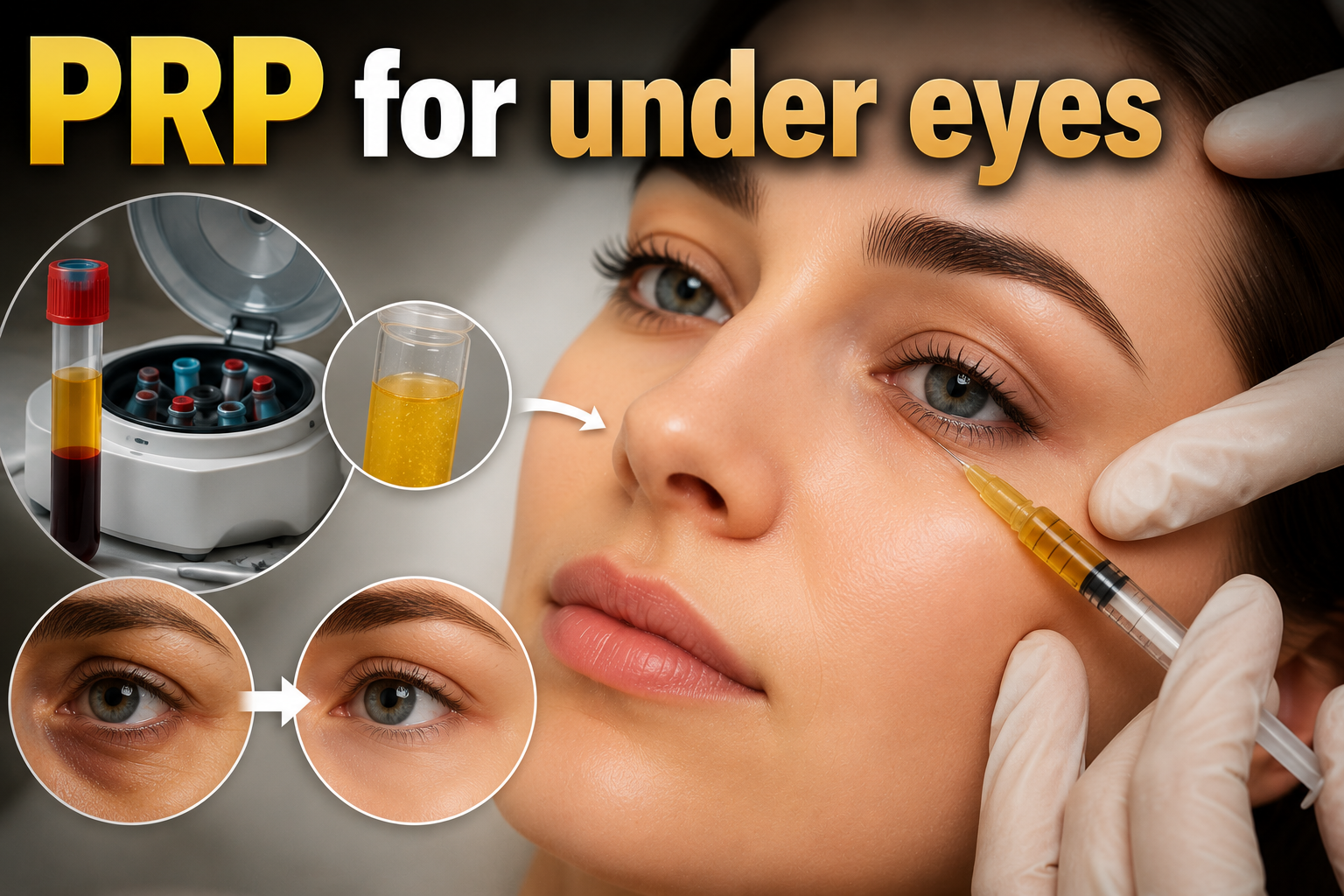
PRP for under eyes is a cosmetic treatment designed to improve the appearance of the skin beneath the eyes. It involves drawing a small amount of blood from the patient and processing it to isolate platelet-rich plasma.
What Is PRP?
PRP stands for Platelet-Rich Plasma. During treatment, a small sample of blood is drawn from the patient. This blood is placed into a centrifuge machine that separates the platelet-rich portion from other blood components.
The concentrated plasma contains growth factors that can help stimulate natural skin renewal. Because the treatment uses the patient’s own blood, the risk of allergic reactions is generally very low.
How Does PRP Improve the Under-Eye Area?
When PRP is injected beneath the eyes, the growth factors encourage collagen and elastin production. These proteins are essential for maintaining firm and youthful-looking skin.
Over time, PRP may help:
- Improve skin texture
- Reduce fine lines
- Enhance skin thickness
- Improve circulation
- Reduce the appearance of certain dark circles
Unlike fillers that provide immediate volume, PRP works gradually by encouraging natural tissue regeneration.
Benefits of PRP for Under-Eye Rejuvenation
Many individuals choose PRP because it offers a natural approach to improving under-eye concerns. The treatment focuses on enhancing the quality of the skin rather than simply covering imperfections.
Some of the most notable benefits include:
| Benefit | How It Helps |
| Natural Treatment | Uses the patient’s own blood |
| Improved Skin Quality | Supports collagen production |
| Reduced Fine Lines | Makes skin appear smoother |
| Better Skin Thickness | Helps strengthen thin under-eye skin |
| Minimal Downtime | Most people return to normal activities quickly |
| Long-Term Improvement | Results develop gradually over time |
Another major advantage of PRP for under eyes is that it can address multiple concerns simultaneously. Instead of targeting only wrinkles or only pigmentation, it may help improve overall skin appearance.
Common Under-Eye Concerns PRP Can Treat
PRP is often recommended for individuals who want to improve mild to moderate under-eye issues. It is not a solution for every concern, but it can provide noticeable improvements in suitable candidates.
Dark Circles
Dark circles are among the most common reasons people seek PRP treatment. Some dark circles develop because of poor circulation, thin skin, or aging-related volume loss.
PRP may improve skin quality and blood flow, making dark circles less noticeable over time.
Fine Lines and Wrinkles
Aging naturally reduces collagen production. As collagen decreases, fine lines and wrinkles become more visible.
PRP stimulates collagen formation, which can gradually soften these signs of aging.
Thin Under-Eye Skin
Thin skin often makes blood vessels more visible, creating a shadowed appearance beneath the eyes.
By encouraging collagen production, PRP may help increase skin thickness and improve overall texture.
Mild Hollowness
Some people develop slight hollows beneath their eyes due to aging and fat loss.
PRP may improve the appearance of mild hollows through tissue regeneration, although severe hollowness often requires additional treatments.
Tired-Looking Eyes
A combination of pigmentation, wrinkles, and volume loss can create a tired appearance.
PRP helps rejuvenate the skin, which may contribute to a more refreshed and youthful look.
Who Is an Ideal Candidate for PRP Under Eyes?
Not everyone is an ideal candidate for PRP treatment. The best results are usually seen in individuals with realistic expectations and mild to moderate under-eye concerns.
Suitable candidates often include:
- Adults with dark circles
- People with early signs of aging
- Individuals with thin under-eye skin
- Those seeking a natural treatment option
- Patients wanting minimal downtime
People with severe eye bags, significant skin laxity, or advanced volume loss may require alternative procedures for optimal results.
The PRP Under-Eye Treatment Procedure
Understanding the treatment process can help patients feel more comfortable before their appointment. The procedure is relatively straightforward and usually takes less than an hour.
Blood Collection
The treatment begins with a small blood draw, similar to a routine laboratory test.
Only a small amount of blood is required to create the PRP solution.
Centrifuge Processing
The collected blood is placed into a centrifuge machine.
The machine spins rapidly, separating platelet-rich plasma from red blood cells and other components.
PRP Preparation
After separation, the concentrated platelet-rich plasma is carefully collected.
This purified solution contains a higher concentration of growth factors than normal blood.
Injection Process
The PRP is injected into specific under-eye areas using a fine needle.
Some providers may apply a numbing cream beforehand to improve patient comfort.
Most patients describe the treatment as mildly uncomfortable rather than painful.
Recovery, Aftercare, and Healing Timeline
Recovery from PRP for under eyes is generally quick. Most people can resume normal activities within a day.
Proper aftercare can help maximize results and reduce potential side effects.
Immediate Recovery
Mild swelling, redness, and tenderness are common immediately after treatment.
These effects typically improve within a few days.
Aftercare Tips
Patients are often advised to:
- Avoid touching the treated area unnecessarily
- Stay hydrated
- Follow provider instructions carefully
- Avoid intense exercise for a short period
- Protect skin from excessive sun exposure
Healing Timeline
The healing process varies between individuals.
| Time After Treatment | What to Expect |
| 1–3 Days | Mild swelling and redness |
| 1 Week | Most visible side effects resolve |
| 2–4 Weeks | Early skin improvements begin |
| 1–3 Months | Continued collagen production |
| 3–6 Months | Full results become more noticeable |
Potential Side Effects and Risks of PRP
PRP is generally considered safe because it uses the patient’s own blood. However, every cosmetic procedure carries some risks.
Common side effects include:
- Temporary swelling
- Mild bruising
- Redness
- Tenderness
- Minor discomfort
Rare complications may include infection, prolonged swelling, or uneven results.
Choosing a qualified and experienced provider significantly reduces these risks.
PRP Under Eyes Before and After Results
One important aspect of PRP treatment is that results are not immediate. Unlike fillers that produce instant volume, PRP works gradually as collagen develops.
Most patients notice:
- Smoother skin texture
- Improved skin brightness
- Reduced fine lines
- Better skin elasticity
- A healthier overall appearance
Results continue improving for several weeks or months following treatment.
Patients should understand that PRP enhances skin quality rather than dramatically altering facial structure.
How Many Sessions Are Needed and How Long Do Results Last?
The number of treatments needed depends on individual goals and the condition of the under-eye area.
Many providers recommend an initial series of treatments for optimal improvement.
Typical Treatment Schedule
A common treatment plan may include:
- First PRP session
- Second session after several weeks
- Third session if recommended
- Maintenance treatments as needed
Duration of Results
Results vary based on age, lifestyle, and skin condition.
Many patients enjoy improvements for several months to over a year before considering maintenance treatments.
Maintaining a healthy lifestyle, protecting skin from sun damage, and following a good skincare routine can help extend results.
PRP vs Under-Eye Fillers: Key Differences
Although both treatments target under-eye concerns, they work in very different ways.
| Feature | PRP | Under-Eye Fillers |
| Source | Patient’s own blood | Hyaluronic acid or other materials |
| Results | Gradual | Immediate |
| Purpose | Skin rejuvenation | Volume restoration |
| Longevity | Varies | Several months to years |
| Natural Tissue Growth | Yes | No |
| Downtime | Minimal | Minimal |
PRP focuses on improving skin quality and stimulating collagen production, while fillers primarily replace lost volume.
The best choice depends on the patient’s specific concerns and desired outcome.
Frequently Asked Questions
Does PRP for under eyes really work?
Yes. PRP can improve skin quality, fine lines, and certain types of dark circles by stimulating collagen production.
How many sessions are usually needed?
Most patients benefit from a series of two to three sessions, although individual needs vary.
Is the procedure painful?
Discomfort is usually mild because numbing cream is often applied before treatment.
Can PRP remove all dark circles?
Not always. Results depend on the underlying cause of the dark circles.
How long does recovery take?
Most side effects resolve within a few days, and normal activities can often be resumed immediately.
Are results permanent?
No. Maintenance treatments are usually recommended because the natural aging process continues.
Conclusion
PRP for under eyes is a popular non-surgical treatment that uses the body’s own healing properties to rejuvenate the delicate skin beneath the eyes. By stimulating collagen production and supporting tissue repair, it can help improve dark circles, fine lines, skin texture, and overall under-eye appearance.
Although results develop gradually rather than instantly, many patients appreciate the natural-looking improvements that PRP provides. The treatment is generally safe, involves minimal downtime, and carries a low risk of allergic reactions because it uses the patient’s own blood.
Related Posts
Can Stress Cause Diarrhea? Causes, Symptoms, and Fast Relief Methods
Does Impact Health Cover IVF? Complete Guide to Fertility Treatment Coverage
Detego Health Provider Portal: Complete Guide for Healthcare Providers
Tooth Lesion: Types, Causes, and Treatment Options Explained
What Is Optimal Health? A Complete Guide to Physical, Mental, and Emotional Wellness