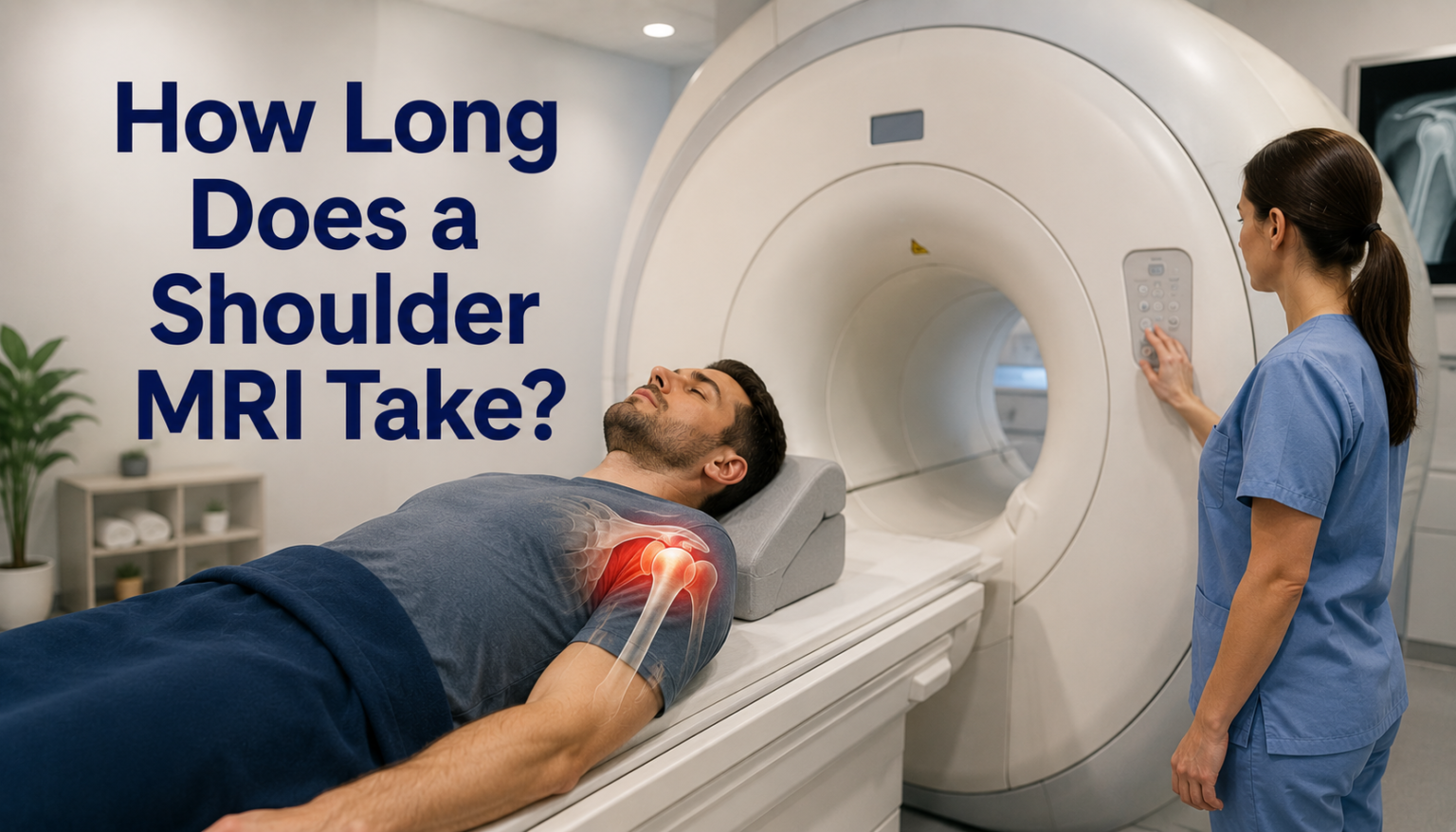
A standard shoulder MRI takes between 20 and 45 minutes to complete, with most scans finishing around the 30-minute mark. The exact time depends on whether contrast dye is used, how many views the radiologist needs, and how still the patient is able to stay during the process.
If contrast is injected to get a clearer look at soft tissue, the appointment can stretch closer to 45 or even 60 minutes once prep and injection time are added. Knowing this timeframe in advance helps patients plan their day, arrange transportation if needed, and walk into the imaging center feeling less anxious about the unknown.
This guide breaks down everything that happens before, during, and after a shoulder MRI so there are no surprises on appointment day. From the moment you check in to the moment you get your results, every stage of the process is explained in simple, everyday language.
What Is a Shoulder MRI Used For?
A shoulder MRI is a diagnostic imaging test that uses magnetic fields and radio waves to create detailed pictures of the bones, muscles, tendons, and ligaments inside the shoulder joint. Doctors rely on it when an X-ray does not give enough detail about soft tissue damage.
Common Conditions Diagnosed
Shoulder MRIs are most often ordered to check for rotator cuff tears, labral tears, tendon inflammation, and joint impingement. They are also useful for spotting early signs of arthritis, cartilage damage, and small fractures that may not show up clearly on a regular X-ray. Because the scan captures cross-sectional images from multiple angles, it gives surgeons a much clearer roadmap before any operation is planned.
Who Typically Needs One
Athletes recovering from a fall or repetitive throwing motion are frequent candidates, as are people who have had a recent shoulder injury from an accident. Patients dealing with ongoing pain, stiffness, or reduced range of motion that has not improved with rest or physical therapy are also commonly referred for this scan. In many cases, a doctor will request it before deciding whether surgery is necessary.
Average Duration Breakdown
On average, a shoulder MRI without contrast takes about 20 to 30 minutes, while one with contrast can take closer to 45 to 60 minutes once the injection and additional imaging are factored in. The type of scan ordered depends on what the referring doctor needs to see.
Standard Shoulder MRI Time
A standard, non-contrast shoulder MRI is the quickest version of this test and generally wraps up in under half an hour. This type is usually enough for diagnosing general pain, mild injuries, or checking bone and joint structure without needing extra detail on soft tissue.
Shoulder MRI With Contrast (Arthrogram)
When a doctor needs a closer look at the labrum or rotator cuff, a contrast dye is injected directly into the joint before the scan. This procedure, called an MRI arthrogram, adds preparation and injection time, pushing the full visit closer to 45 to 60 minutes from start to finish.
Bilateral Shoulder MRI Time
If both shoulders need to be scanned in the same visit, expect the appointment to roughly double in length. Most facilities schedule 45 minutes to over an hour for bilateral scans since each shoulder is imaged separately using its own set of sequences.
Step-by-Step: What Happens During the Scan
The entire shoulder MRI appointment, including check-in, changing, positioning, and the scan itself, typically takes between 45 minutes and an hour from arrival to departure. Understanding each step ahead of time makes the process feel far less intimidating.
Check-In and Preparation
Patients usually arrive 15 to 20 minutes early to complete paperwork, confirm medical history, and answer safety screening questions about metal implants or pacemakers. This step alone can take five to ten minutes depending on how busy the facility is that day.
Changing and Positioning
After check-in, patients change into a gown and remove any metal objects such as jewelry, watches, or hairpins that could interfere with the magnetic field. The technologist then helps position the patient on the scanning table, usually lying on the back with the arm placed in a specific angle to get the clearest images.
The Actual Scanning Process
Once positioned, the table slides into the MRI machine and the scan begins, running through several imaging sequences that each last a few minutes. This core scanning portion is where most of the 20 to 30 minute (or longer, with contrast) timeframe is spent, as the machine captures images from different angles.
Contrast Injection Process
If contrast is required, a small needle is used to inject the dye into the shoulder joint under image guidance before the MRI begins. This injection step, including numbing the area and confirming correct placement, generally adds 15 to 20 extra minutes to the total appointment.
Factors That Affect How Long It Takes?
Several variables can either shorten or extend how long a shoulder MRI takes, and being aware of them helps set realistic expectations. The two biggest factors are whether contrast is used and how well the patient can hold still throughout the scan.
Contrast vs No Contrast
As covered earlier, contrast-based scans naturally take longer because of the added injection and verification steps. Non-contrast scans move faster since the machine goes straight into imaging without any extra preparation.
Type of MRI Machine
Newer, higher-strength machines such as 3T scanners can sometimes capture images faster than older 1.5T models, though the difference is usually a matter of a few minutes rather than a major time gap. Open MRI machines, often used for claustrophobic patients, may take slightly longer due to lower image resolution requiring extra sequences.
Patient Movement or Anxiety
Even small movements during the scan can blur the images, forcing the technologist to repeat a sequence. Patients who feel anxious or claustrophobic may need short breaks, which can add several extra minutes to the overall appointment time.
Complexity of the Injury
A straightforward pain evaluation may only require a few basic sequences, while a complex case involving multiple suspected issues might need additional angles and views. This directly affects how long the technologist keeps the patient inside the machine.
MRI With Contrast vs Without Contrast
The main difference between these two options comes down to image detail versus appointment length. Contrast dye highlights soft tissue structures that are harder to see on a standard scan, but this added clarity comes at the cost of extra time.
What Contrast Dye Does?
The contrast agent, usually gadolinium-based, is injected into the joint space to outline the labrum, cartilage, and rotator cuff more sharply on the resulting images. This makes subtle tears or fraying much easier for a radiologist to spot compared to a standard scan.
Why Do Arthrograms Take Longer?
Because the dye has to be injected precisely into the joint capsule using imaging guidance beforehand, this adds a separate procedural step before the actual MRI sequences even start. That is why an arthrogram appointment routinely takes 15 to 30 minutes longer than a standard shoulder MRI.
How to Prepare to Keep Your Scan on Time?
Showing up prepared is one of the easiest ways to avoid delays and keep the appointment within its expected timeframe. A few simple steps beforehand can prevent unnecessary back-and-forth at the facility.
What to Wear and Remove?
Loose, comfortable clothing without metal zippers or buttons is ideal, since many facilities allow patients to stay dressed if their outfit is MRI-safe. Jewelry, watches, hairpins, and any metal accessories should be removed before arriving to save time during check-in.
Informing Staff About Implants or Conditions
Patients with pacemakers, metal implants, cochlear implants, or a history of severe claustrophobia should inform the facility when booking the appointment, not just on arrival. This allows staff to prepare accordingly and avoid last-minute delays that could push the scan time back.
What to Expect During the Scan?
MRI machines are known for being loud, producing repetitive knocking and buzzing sounds throughout the scan. Most facilities provide earplugs or headphones with music to make the experience more comfortable.
Noise and Comfort Measures
The sounds come from the machine’s internal coils rapidly switching on and off to generate images, and while startling at first, they are completely normal. Staying relaxed and following the technologist’s breathing or stillness instructions helps the scan finish on schedule.
Staying Still and Communication
Since even minor movement can blur the images and force a repeat sequence, patients are asked to stay as still as possible for the duration of each scan segment. A call button or intercom system is usually provided so patients can communicate with the technologist if they feel uncomfortable at any point.
After the Scan: What’s Next?
Once the scan is finished, most patients can get dressed and leave almost immediately, with no recovery time needed for a standard MRI. Those who received contrast may be asked to wait a few minutes to ensure there is no reaction at the injection site.
Getting Your Results
A radiologist reviews the images and sends a written report to the referring doctor, which typically takes anywhere from one to three business days depending on the facility’s workload. Patients should follow up directly with their doctor to go over what the results mean for their specific situation.
Frequently Asked Questions
Does a shoulder MRI hurt? The scan itself is painless, though the contrast injection, if needed, may cause a brief pinch similar to a standard shot.
Can I eat before a shoulder MRI? Yes, eating and drinking normally beforehand is generally fine unless the facility gives specific instructions related to contrast use.
How long until I get my results back? Most results are ready within one to three business days, though this can vary depending on the imaging center and how quickly the report is sent to your doctor.
Can I drive myself home afterward? In almost all cases, yes, since a shoulder MRI does not involve sedation and patients are fully alert immediately after the scan.
What if I’m claustrophobic? Open MRI machines or mild sedation options are available at many facilities for patients who struggle with enclosed spaces during the scan.
Is a 3T MRI faster than a 1.5T MRI? A 3T machine can sometimes shave a few minutes off the scan due to stronger imaging capability, though the difference is usually minor rather than dramatic.
Conclusion
So, how long does a shoulder MRI take overall? Most patients can expect the full visit, including check-in, prep, and scanning, to last around 45 minutes to an hour, with the scan itself typically running 20 to 45 minutes depending on whether contrast is used. Knowing this timeline ahead of time makes it much easier to plan the day, reduce pre-appointment anxiety, and know exactly what to expect from arrival to results.
RELATED POSTS
Attend Health – Complete Guide to Features, Services, and Future of Healthcare AI Platform
Car Accident Back Pain: Causes, Symptoms, and Treatment Options
Would Constipation Cause Fever? What You Need to Know