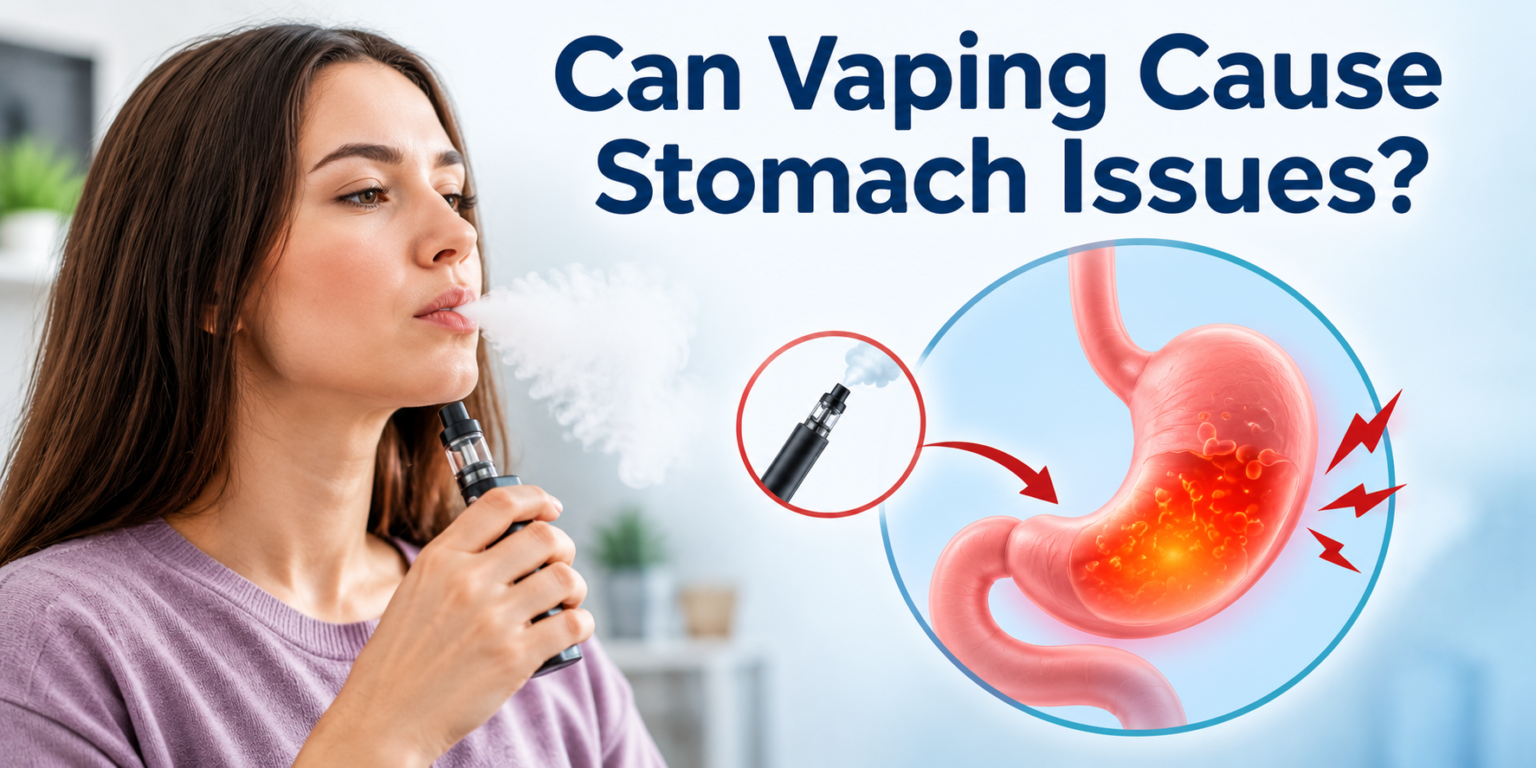
Yes, vaping can cause stomach issues for a noticeable number of people, and this happens mainly because of nicotine and the chemicals present in e-liquids.
Many vapers report nausea, stomach pain, acid reflux, and appetite changes soon after using their device. These reactions are not random; they are linked to how nicotine interacts with the digestive system and the nervous system.
The good news is that most stomach issues caused by vaping are manageable once the trigger is identified. This article breaks down every possible cause, symptom, and solution in detail so you get a complete and honest picture.
Understanding Vaping and How It Enters the Body
Vaping works by heating an e-liquid into an inhalable vapor, but that vapor doesn’t stay limited to the lungs alone. Some of it gets absorbed through the mouth and throat, and small amounts are often swallowed along with saliva, which is exactly why the stomach gets involved in the first place.
How the Body Absorbs Vape Chemicals?
When a person inhales vapor, nicotine enters the bloodstream through the lungs almost instantly, but a portion of the vapor condenses in the mouth and throat. This condensed liquid gets swallowed naturally, carrying nicotine and flavoring chemicals directly into the stomach lining, where they can cause irritation over time.
Why does the Digestive System React?
The stomach has its own nerve connections that respond quickly to nicotine, which is why digestive symptoms often appear within minutes of vaping. This reaction explains why people frequently search for whether vaping can cause stomach issues after noticing discomfort right after a vaping session.
Can Vaping Really Cause Stomach Issues?
The short answer is yes, and it is backed by both user experiences and how nicotine is known to affect the gut. The digestive system is sensitive to nicotine levels, meaning even moderate vaping can trigger noticeable discomfort in certain individuals, especially new users or those vaping on an empty stomach.
Common Stomach Problems Linked to Vaping
Before going into individual symptoms, it’s worth noting that stomach issues from vaping usually fall into a predictable pattern involving nausea, pain, reflux, appetite changes, and irregular bowel movements. Each of these has its own root cause, which is explained below.
Nausea and Vomiting
Nicotine is a stimulant that can overactivate certain brain receptors responsible for triggering nausea, especially when consumed in higher amounts or on an empty stomach. This is one of the most commonly reported effects among new vapers, and it often fades once the body builds tolerance. Vomiting can occur in more severe cases, particularly with high-nicotine e-liquids.
Stomach Pain or Cramping
Stomach pain after vaping is usually linked to irritation caused by swallowed vapor residue mixing with stomach acid. This irritation can inflame the stomach lining slightly, leading to cramping sensations similar to mild indigestion. People who vape frequently throughout the day are more likely to notice this discomfort building up.
Acid Reflux and Heartburn
Nicotine has a relaxing effect on the lower esophageal sphincter, the muscle that normally prevents stomach acid from moving upward. When this muscle weakens, acid can rise into the esophagus, causing a burning sensation commonly known as heartburn. This is one of the clearest medical explanations for why vaping and stomach issues are so closely connected.
Loss of Appetite
Nicotine is known to suppress hunger signals in the brain, which is why many vapers notice reduced appetite throughout the day. While this might seem harmless at first, consistently skipping meals can worsen stomach acidity and increase the chances of nausea during vaping sessions.
Diarrhea or Digestive Irregularity
Although less common than nausea, some vapers report loose stools or irregular bowel movements. This is generally linked to how nicotine speeds up gut motility, causing food to move through the digestive tract faster than usual, which can affect nutrient absorption and stool consistency.
Bloating and Gas
Bloating after vaping often results from swallowing air along with vapor during inhalation, a habit sometimes called aerophagia. Combined with irritation from e-liquid chemicals, this can lead to a temporary feeling of fullness, gas, or mild discomfort in the abdominal area.
Why Does Vaping Affect the Stomach?
Vaping affects the stomach mainly through nicotine absorption, chemical irritation from flavorings, and the physical act of swallowing vapor residue. Each of these factors plays a different role, and understanding them helps explain why some people experience stronger reactions than others.
The Role of Nicotine
Nicotine directly stimulates the vagus nerve, which connects the brain to the digestive system, and this stimulation can speed up or disrupt normal gut function. Higher nicotine concentrations tend to produce stronger digestive reactions, which is why switching to lower-strength e-liquids often reduces symptoms.
The Role of PG and VG
Propylene glycol and vegetable glycerin are the base liquids used in most e-liquids, and while generally considered safe for inhalation, they can mildly irritate the stomach lining when swallowed repeatedly. Some individuals are more sensitive to these compounds than others, leading to noticeable digestive discomfort.
Swallowing Vapor Residue
Every vaping session involves some degree of swallowing, whether from vapor condensation or simply from the mechanical act of inhaling and exhaling. Over time, this repeated exposure can build up irritation in the stomach lining, especially in people who vape heavily throughout the day.
Who Is Most at Risk?
Certain groups are more likely to experience stomach issues from vaping than others, and recognizing these risk factors can help identify whether vaping is the actual cause of ongoing discomfort. The table below summarizes the main risk categories.
| Risk Group | Why They Are More Affected |
| New vapers | Bodies haven’t built tolerance to nicotine yet |
| High-nicotine users | Stronger stimulation of nausea-triggering receptors |
| People with GERD or acid reflux | Nicotine worsens existing sphincter weakness |
| IBS or sensitive stomach individuals | More reactive gut lining to chemical irritation |
| Empty-stomach vapers | No food buffer against nicotine absorption |
| Chain vapers (frequent use) | Continuous chemical exposure to stomach lining |
Vaping vs. Smoking: Stomach Effects Compared
Both vaping and smoking introduce nicotine into the body, so they share similar risks like nausea, appetite suppression, and acid reflux.
However, traditional cigarettes also involve combustion byproducts like tar and carbon monoxide, which add additional digestive strain that vaping typically avoids. This means vaping may cause milder digestive symptoms overall, but it is far from risk-free for the stomach.
When to Be Concerned — Warning Signs
While mild nausea or occasional stomach discomfort is usually not dangerous, certain symptoms should never be ignored. If any of the following occur, it’s important to stop vaping immediately and seek medical attention.
- Persistent vomiting that doesn’t stop after a few hours
- Severe or worsening abdominal pain
- Blood present in vomit or stool
- Signs of nicotine poisoning such as dizziness, rapid heartbeat, or confusion
- Unexplained weight loss alongside digestive symptoms
Tips to Reduce Stomach Issues from Vaping
Reducing stomach discomfort from vaping usually comes down to adjusting habits rather than stopping altogether, although cutting back remains the most effective long-term solution. Practical changes can significantly lower the frequency and intensity of symptoms.
- Avoid vaping first thing in the morning on an empty stomach
- Gradually lower the nicotine concentration in your e-liquid
- Drink water regularly to help dilute stomach acid
- Choose e-liquids from trusted, quality-tested brands
- Space out vaping sessions instead of continuous use
- Pay attention to which flavors trigger stronger reactions
- Consult a doctor if symptoms continue despite these changes
Long-Term Digestive Health Considerations
Current research on vaping’s long-term digestive effects is still developing, and most existing evidence comes from short-term user reports rather than extensive clinical studies. This means the full long-term impact on gut health, acid balance, and digestive lining is not yet completely understood. Until more research is available, it’s wise to monitor personal symptoms closely and treat any persistent digestive changes as a signal worth discussing with a healthcare provider.
Conclusion
Vaping can genuinely cause stomach issues, primarily through nicotine’s effect on the gut, chemical irritation from e-liquid ingredients, and the habit of swallowing vapor residue.
Symptoms like nausea, acid reflux, cramping, and appetite loss are common but usually manageable with simple lifestyle adjustments. Anyone experiencing severe or persistent symptoms should consult a medical professional rather than relying on guesswork alone.
FAQs
Does vaping cause ulcers? Vaping is not directly proven to cause ulcers, but nicotine-related acid reflux and stomach irritation can worsen conditions that lead to ulcer formation over time.
Can vaping cause IBS-like symptoms? Yes, nicotine’s effect on gut motility can produce symptoms similar to IBS, including bloating, irregular bowel movements, and cramping in sensitive individuals.
Is nicotine or flavoring more likely to upset the stomach? Nicotine is generally the bigger trigger due to its direct effect on gut nerves, though certain strong flavorings can add extra irritation for sensitive users.
Can quitting vaping reverse stomach issues? In most cases, yes — stomach symptoms linked to vaping typically improve within days to weeks after stopping, as nicotine’s effects on the digestive system fade.
RELATED POSTS
Does Tanning Help Acne? What Dermatologists Really Say
Does Teething Cause Runny Nose? Causes, Symptoms, Treatment
What Causes Lower Back Pain in Females? Complete Guide with Treatment Tips
How to Sleep With a Stuffy Nose: Complete Guide to Breathing Easy at Night
How Long Does Tendonitis Take to Heal? Full Recovery Timeline