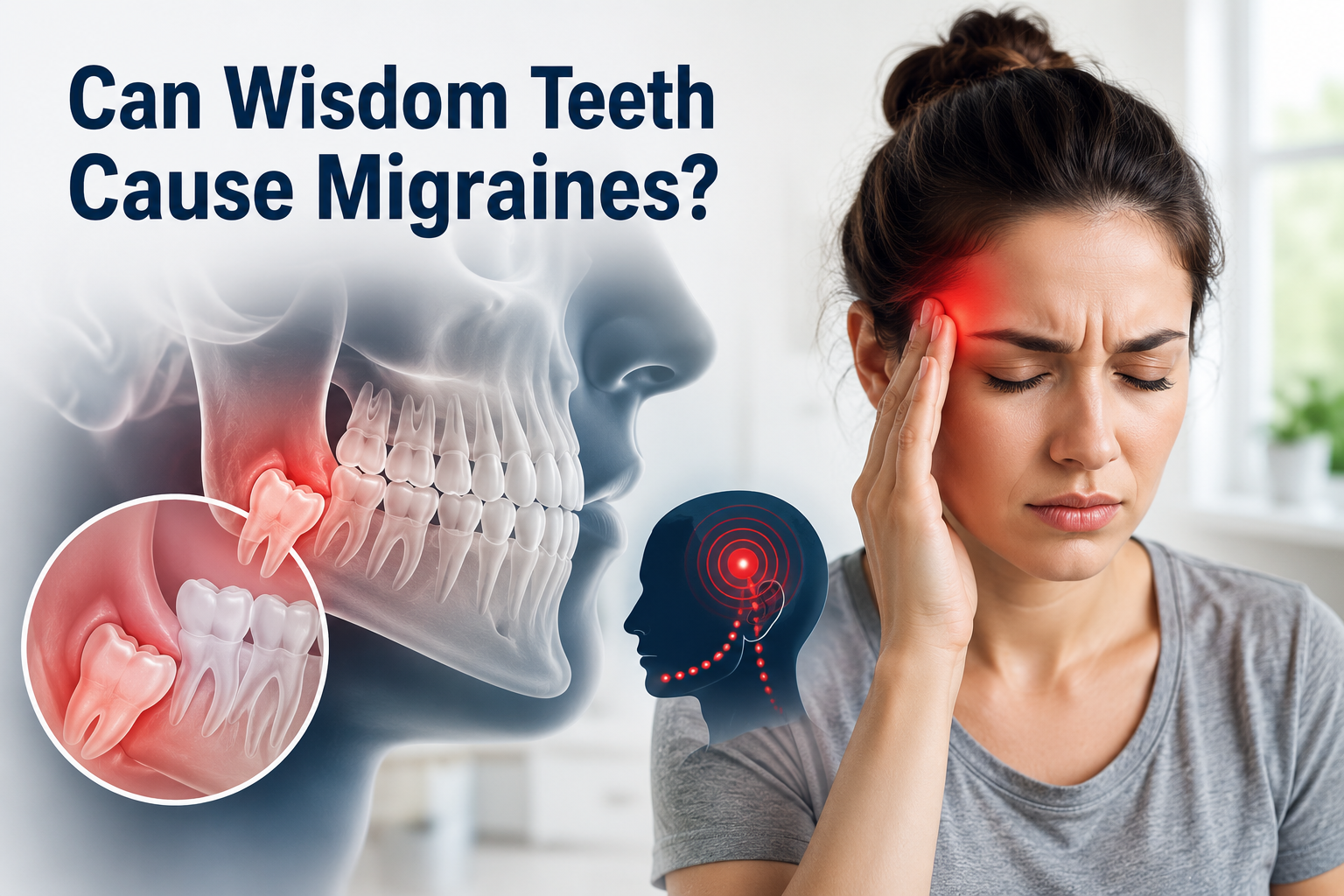
Wisdom teeth are often blamed for a wide range of discomforts, and head pain is one of the most commonly reported complaints among people whose third molars are coming in. Many people ask can wisdom teeth cause migraines, especially when they notice recurring headaches around the same time their wisdom teeth start to emerge or become impacted.
The honest answer is that wisdom teeth do not directly cause true migraines in the clinical sense, but the pressure, inflammation, and muscle tension they create can produce migraine-like symptoms that feel very similar.
This connection happens because the back of the jaw is packed with nerves and muscles that are closely linked to the head and face. When something goes wrong in this area, the pain often does not stay localized and instead spreads outward, mimicking a headache or migraine.
Can Wisdom Teeth Really Cause Migraines?
The relationship between wisdom teeth and migraines is more indirect than most people assume, and understanding this distinction is the first step toward finding real relief. Below, the difference between referred pain and an actual migraine is explained in detail.
The Referred Pain Connection
Referred pain occurs when discomfort in one part of the body is felt in another area entirely. Wisdom teeth sit at the very back of the jaw, close to a dense network of nerves and muscles that connect to the temples, ears, and scalp. When a wisdom tooth pushes against surrounding tissue or becomes inflamed, the nerves in that region can send confused pain signals that the brain interprets as a headache rather than a toothache.
Direct Migraine vs. Migraine-Like Symptoms
A true migraine is a neurological condition with its own set of triggers, such as hormonal shifts, stress, or certain foods, and it usually comes with symptoms like visual disturbances or extreme light sensitivity. Wisdom-teeth-related head pain, on the other hand, is triggered by physical pressure or inflammation in the jaw. While the pain can feel intense and throbbing like a migraine, it typically improves once the underlying dental issue is treated, which is not the case with a genuine migraine.
How Wisdom Teeth Trigger Head Pain
Several mechanical and biological factors explain why an emerging or impacted wisdom tooth can lead to headache-like pain. The sections below break down the most common contributing factors.
Impacted Wisdom Teeth and Jaw Pressure
When a wisdom tooth does not have enough room to emerge properly, it becomes impacted and pushes against neighboring teeth or bone. This constant pressure builds up in the jaw and radiates outward, often reaching the temples and sides of the head. The pain tends to worsen over time if the impaction is left untreated, since the tooth continues trying to shift into a space that simply is not there.
Inflammation and Gum Irritation
As a wisdom tooth breaks through the gum line, the surrounding tissue often becomes swollen, tender, and inflamed. This localized inflammation can trigger a cascade of discomfort that travels beyond the mouth, affecting nearby nerves and muscles. In some cases, bacteria trapped under partially erupted gum tissue add infection to the irritation, intensifying the sensation of pressure and pain around the head.
Muscle Tension From Jaw Clenching
Pain or discomfort from an erupting wisdom tooth often causes people to unconsciously clench or grind their jaw, especially during sleep. This repeated muscle tension puts strain on the temporomandibular joint and the muscles connecting the jaw to the skull. Over time, this tension can produce a dull, persistent headache that feels remarkably similar to a tension-type migraine.
Nerve Compression in the Jawbone
In some cases, an impacted wisdom tooth presses directly against a nerve pathway running through the jawbone. This compression can cause sharp, radiating pain that travels along the nerve route, sometimes reaching as far as the ear or temple. Because this pain follows nerve pathways rather than staying confined to the tooth itself, it is frequently mistaken for a migraine or sinus headache.
Symptoms That Point to Wisdom-Teeth-Related Headaches
Certain patterns can help distinguish a headache caused by wisdom teeth from an unrelated migraine. Recognizing these signs makes it easier to know when a dental visit, rather than migraine treatment, is the right next step.
One-Sided Pain With Jaw Soreness
Headaches linked to wisdom teeth are often felt on just one side of the head, matching the side where the problematic tooth is located. This one-sided pain is usually accompanied by soreness or stiffness in the jaw, which is a strong indicator that the source is dental rather than neurological.
Pain That Worsens When Biting Down
If a headache intensifies specifically when chewing or biting down, this points toward pressure being placed on an impacted or inflamed wisdom tooth. This trigger pattern is uncommon in true migraines, which are not typically affected by jaw movement or biting pressure.
Morning Headaches From Teeth Grinding
Waking up with a headache can be a sign of nighttime teeth grinding caused by wisdom tooth discomfort. Since grinding often happens unconsciously during sleep, the resulting jaw tension builds overnight and is most noticeable first thing in the morning, easing gradually as the day goes on.
Ear Pain and Pressure
Because the nerves near the wisdom teeth are closely connected to those serving the ear, many people report ear pain or a feeling of fullness alongside their headache. This combination of ear pressure and head pain is a fairly reliable clue that the wisdom teeth are involved rather than a standalone migraine.
Wisdom-Teeth Headache vs. True Migraine
The table below highlights the key differences to help identify which type of pain is being experienced.
| Feature | Wisdom-Teeth-Related Headache | True Migraine |
| Location | Usually one-sided, near the jaw and temple | Can be one or both sides, often behind the eyes |
| Trigger | Jaw pressure, chewing, tooth eruption | Stress, hormones, certain foods, light |
| Accompanying Symptoms | Jaw soreness, ear pressure, gum swelling | Nausea, visual aura, light and sound sensitivity |
| Duration | Often improves once dental issue is treated | Can last hours to days regardless of dental care |
| Response to Dental Treatment | Significant improvement after treatment | No change with dental intervention |
When to See a Dentist
Not every headache near the jaw requires urgent attention, but certain warning signs suggest it is time to schedule a dental evaluation rather than waiting it out.
Warning Signs You Shouldn’t Ignore
Persistent jaw pain that does not fade after a few days, visible swelling around the gums, difficulty opening the mouth fully, or a fever alongside the headache are all signs that should not be ignored. These symptoms may indicate an infection or a more serious impaction that needs professional treatment before the problem worsens.
What a Dental Exam Checks For
During an evaluation, a dentist typically takes X-rays to assess the position and angle of the wisdom teeth, checking for impaction, infection, or pressure against nearby teeth. This imaging helps determine whether the headaches are truly linked to the wisdom teeth and guides the decision on whether monitoring, treatment, or extraction is the best path forward.
Relief Options for Wisdom-Teeth-Related Headaches
Once wisdom teeth are confirmed as the source of head pain, several approaches can help manage discomfort while a longer-term treatment plan is decided.
At-Home Remedies
Rinsing with warm salt water several times a day can reduce inflammation around an emerging wisdom tooth and ease the pressure contributing to headaches. Applying a cold compress to the jaw or cheek area helps numb pain and reduce swelling, while over-the-counter pain relievers can offer short-term relief from both the jaw discomfort and the associated headache.
Professional Treatment Options
For persistent or severe cases, a dentist may recommend extraction of the problematic wisdom tooth, which often resolves the associated headaches once healing is complete. In milder cases, regular monitoring with periodic X-rays may be sufficient, while orthodontic evaluation can help if crowding or misalignment is contributing to the pressure and pain.
FAQs
Can wisdom teeth cause headaches on one side only?
Yes, one-sided headaches are common when only one wisdom tooth is impacted or inflamed, since the pain radiates from that specific area of the jaw.
Do headaches stop after wisdom tooth removal?
Most people notice significant relief within days to weeks after extraction, once swelling goes down and the jaw tissue heals.
Can impacted wisdom teeth cause dizziness too?
Some people report mild dizziness linked to jaw tension and nerve irritation, though this is less common than headache or ear pain symptoms.
Conclusion
Wisdom teeth do not cause true migraines directly, but the pressure, inflammation, and muscle tension they create can produce headache symptoms that feel very similar. Paying attention to patterns like one-sided pain, jaw soreness, and discomfort while chewing can help identify whether wisdom teeth are the actual cause.
Seeking a dental evaluation when these signs appear allows for proper treatment, whether that means monitoring the teeth or moving forward with extraction, ultimately bringing lasting relief from the headaches.
Related Articles
How to Make a Kidney Stone Pass Faster: A Complete Guide
Are Blue Eyes More Sensitive to Light? Science-Backed Guide
Are Leg Extensions Bad for Knees? What You Need to Know