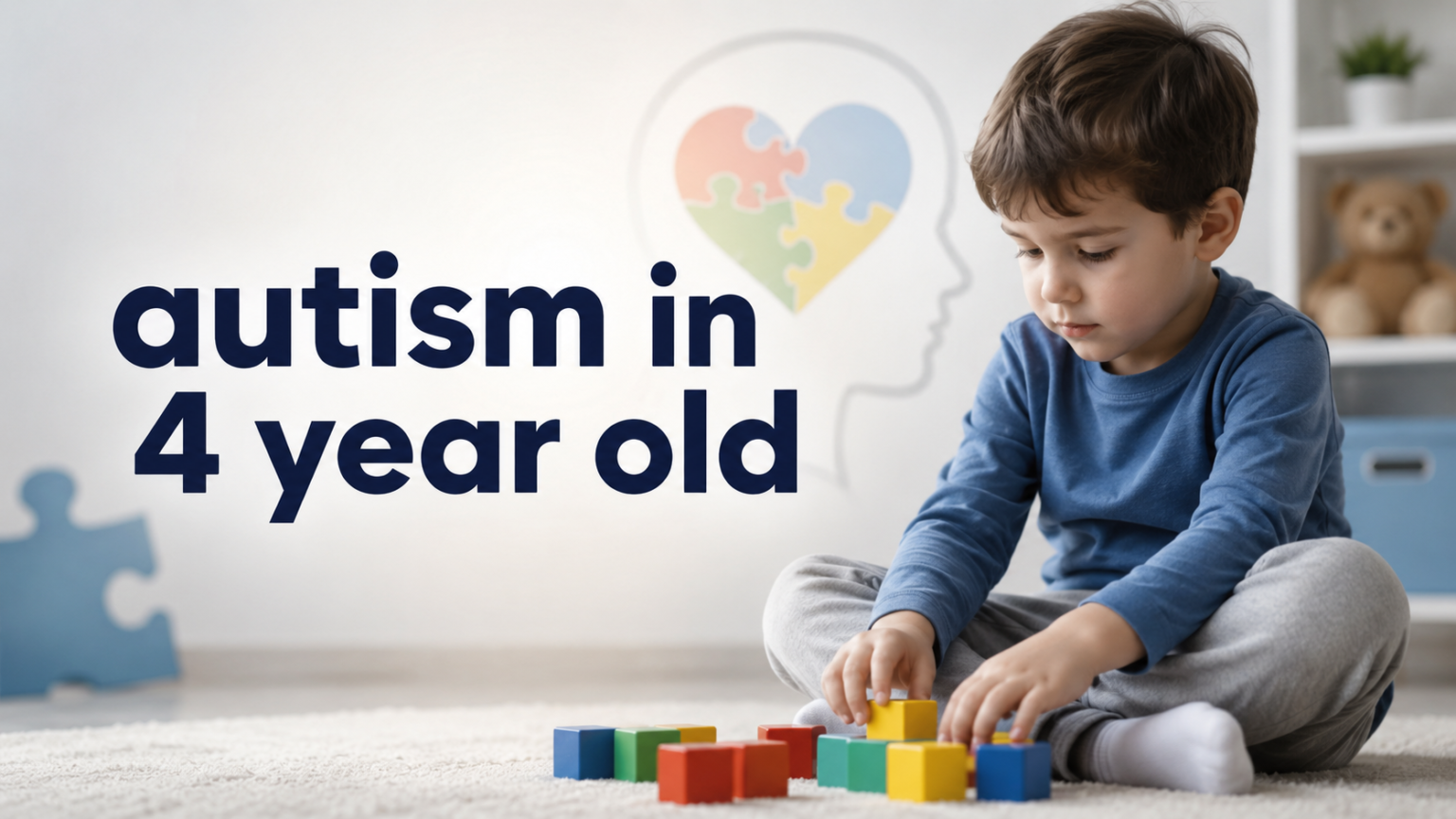
Autism in a 4 year old often becomes noticeable around this age because social, language, and behavioral expectations grow quickly during preschool years. Parents may start comparing their child with classmates and notice gaps in communication, eye contact, or play patterns.
Autism Spectrum Disorder (ASD) is a developmental condition that affects how a child communicates, interacts, and processes the world around them. According to the Centers for Disease Control and Prevention (CDC), most children are diagnosed after age 4, even though reliable signs can appear much earlier.
Understanding the early indicators, causes, and diagnostic process can help parents seek timely support and give their child the best possible start.
Key Takeaways
- Autism in a 4 year old can show up through delayed speech, limited eye contact, and repetitive behaviors.
- Early screening tools like the M-CHAT help pediatricians identify red flags before formal diagnosis.
- No single cause of autism exists; genetics and prenatal environment both play a role.
- Early intervention therapies such as ABA, speech therapy, and occupational therapy significantly improve outcomes.
- Autism looks different in every child, so comparing symptoms with a professional is more reliable than self-diagnosis.
What Is Autism Spectrum Disorder (ASD)?
Autism Spectrum Disorder is a neurodevelopmental condition that influences how a child thinks, communicates, and relates to others. It is called a “spectrum” because symptoms and their severity vary widely from one child to another, meaning two children with the same diagnosis can behave very differently. The sections below explain what the spectrum means in practice and why age 4 tends to be such an important point for noticing or confirming these differences.
Definition and Spectrum Concept
Autism is not a single fixed condition but a range of related traits that affect communication, behavior, and sensory processing differently in each child. Some children may have mild difficulties with social cues while excelling academically, while others may need significant daily support. This is why professionals avoid a one-size-fits-all description and instead assess each child individually against developmental milestones.
Why Age 4 Is a Key Diagnostic Window
By age 4, most children have reached clear milestones in speech, imaginative play, and social interaction, which makes gaps easier to spot. Preschool settings often bring these differences into sharper focus because teachers and parents can directly compare a child’s behavior with same-age peers. Pediatric organizations, including the American Academy of Pediatrics, recommend developmental screening at this stage precisely because it offers a clearer diagnostic picture than infancy or toddlerhood.
Early Signs and Symptoms of Autism in a 4-Year-Old
Recognizing autism in a 4 year old usually starts with noticing patterns rather than a single behavior. These patterns typically fall into four broad categories: social communication, repetitive behavior, sensory response, and speech development. The following sections break down what each of these categories can look like in daily life.
Social Communication Signs
A 4-year-old with autism may avoid eye contact, struggle to respond to their name, or find it difficult to share enjoyment with others, such as pointing at something exciting to show a parent. They might also have trouble understanding facial expressions or tone of voice, which can make everyday conversations feel one-sided. Group play at preschool often reveals these gaps more clearly than interactions at home.
Repetitive Behaviors and Routines
Many children on the spectrum show repetitive movements like hand-flapping, rocking, or spinning objects repeatedly. They often develop an intense need for sameness, becoming distressed when a routine changes unexpectedly, such as taking a different route to school. This need for predictability is not simple stubbornness; it reflects how the child’s brain processes change and uncertainty.
Sensory Sensitivities
Sensory processing differences are common, with some children being extremely sensitive to sounds, lights, textures, or smells, while others seem underresponsive to pain or temperature. A child might cover their ears at ordinary background noise or refuse certain clothing because of how the fabric feels. These reactions are involuntary and rooted in how the nervous system interprets sensory input, not a behavioral choice.
Speech and Language Delays
Speech delays are one of the most noticeable early signs, ranging from limited vocabulary to unusual speech patterns like echoing words or phrases, known as echolalia. Some children may speak in a flat or robotic tone, while others rely heavily on gestures instead of words. According to the National Institute of Child Health and Human Development (NICHD), language delays combined with social difficulties are among the strongest early predictors that warrant a screening.
Causes and Risk Factors
There is no single known cause of autism, and researchers agree it results from a combination of genetic and environmental influences. No parenting style or single event during pregnancy has been proven to cause autism on its own. The following sections outline what current research does support, along with common misconceptions that deserve clarification.
Genetic Factors
Genetics play a substantial role, and children with a sibling who has autism carry a higher likelihood of also being diagnosed. Certain genetic conditions, such as Fragile X syndrome, are also linked to higher autism rates. Research published through the National Institutes of Health (NIH) continues to identify multiple genes that may contribute to the condition, though no single “autism gene” has been found.
Environmental and Prenatal Factors
Beyond genetics, some prenatal factors are associated with a slightly higher likelihood of autism, including advanced parental age, certain complications during pregnancy, or very low birth weight. These factors do not guarantee a diagnosis; they simply represent statistical associations found in large population studies. Researchers continue investigating how genetics and environment might interact rather than pointing to any single environmental cause.
Common Myths Debunked
One of the most persistent myths is that vaccines cause autism, a claim that has been repeatedly disproven by large-scale studies, including research reviewed by the CDC and the World Health Organization. Another myth suggests that autism results from poor parenting, which has no scientific support whatsoever. Relying on verified medical sources rather than social media claims helps parents make informed decisions without unnecessary guilt or fear.
How Autism Is Diagnosed at Age 4
Diagnosing autism in a 4 year old typically involves a combination of screening questionnaires, direct observation, and specialist evaluation. No blood test or brain scan can confirm autism; instead, diagnosis relies on behavioral assessment over time. The next sections explain the tools and professionals typically involved in this process.
Developmental Screening Tools
The Modified Checklist for Autism in Toddlers (M-CHAT) is a common first-step questionnaire used by pediatricians to flag potential concerns. For a more detailed evaluation, specialists often use the Autism Diagnostic Observation Schedule (ADOS-2), which involves structured play and interaction tasks to observe communication and behavior directly. These tools do not diagnose autism by themselves but help guide whether a full evaluation is needed.
Role of Pediatricians and Specialists
Pediatricians usually conduct the first screening during a routine well-child visit and refer families to specialists if concerns arise. A formal diagnosis typically comes from a team that may include a developmental pediatrician, child psychologist, or neurologist. Early referral matters because waitlists for specialist evaluations can be long in many regions.
What a Formal Evaluation Involves
A full diagnostic evaluation usually includes parent interviews, direct observation of the child, and standardized testing of language and cognitive skills. The process can take several sessions and may also involve input from preschool teachers who observe the child in a group setting. Once complete, the evaluating team provides a detailed report outlining strengths, challenges, and recommended next steps.
Autism vs. Normal Developmental Delays
Not every delay signals autism, and distinguishing between the two requires careful observation rather than assumption. A child with a general speech delay, for example, may still make consistent eye contact and enjoy interactive play, while a child with autism-related delays often shows differences across multiple developmental areas at once. Comparing notes with a pediatrician remains the safest way to tell them apart, since overlapping symptoms can easily confuse parents trying to self-assess.
Key Differences to Watch For
Children with isolated developmental delays typically show steady progress once given extra support, while autism-related patterns tend to persist across social, communication, and behavioral domains simultaneously. A child who struggles only with pronunciation but engages socially in every other way is less likely to be on the spectrum. It is this combination of signs, rather than any single symptom, that professionals look for when assessing a case.
When to Seek Professional Evaluation
Parents should consider an evaluation if a 4-year-old shows little interest in interacting with others, has very limited language, or consistently repeats the same behaviors without variation. Waiting to “see if they grow out of it” is generally discouraged by pediatric associations because early intervention has the strongest impact during preschool years. A screening appointment carries no risk and can bring clarity even if the outcome is reassuring.
Treatment and Early Intervention Options
There is no cure for autism, but a wide range of therapies can help a 4-year-old build communication, social, and daily living skills. Treatment plans are typically personalized based on the child’s specific strengths and challenges rather than following a single fixed program. The comparison table below summarizes the most common intervention types recommended for this age group.
| Therapy Type | Primary Focus | Typical Setting |
| Applied Behavior Analysis (ABA) | Reinforcing communication and reducing challenging behaviors | Home, clinic, or school-based sessions |
| Speech Therapy | Improving language, pronunciation, and communication skills | One-on-one sessions with a speech-language pathologist |
| Occupational Therapy | Building motor skills and managing sensory sensitivities | Clinic or school occupational therapy room |
| Social Skills Training | Teaching turn-taking, sharing, and peer interaction | Small group sessions or preschool integration programs |
Applied Behavior Analysis (ABA) Therapy
ABA therapy uses structured reinforcement techniques to encourage positive behaviors and reduce behaviors that interfere with learning or social interaction. Sessions are often tailored to the child’s individual goals, ranging from following instructions to initiating conversation. Many pediatric associations consider ABA one of the most researched and widely recommended interventions for young children with autism.
Speech and Occupational Therapy
Speech therapy focuses on helping a child express needs clearly, understand instructions, and build vocabulary through play-based exercises. Occupational therapy, on the other hand, targets fine motor skills and sensory regulation, helping children manage discomfort from textures, sounds, or transitions. Both therapies are often combined for children who show delays in multiple developmental areas.
Social Skills Training
Social skills training helps children practice sharing, taking turns, and reading basic social cues in a structured, low-pressure environment. These sessions are often run in small groups so children can practice real interactions rather than just discussing concepts. Over time, this training can make preschool and playground interactions noticeably smoother for the child.
Supporting a 4-Year-Old with Autism at Home
Home support plays a major role in reinforcing what a child learns during therapy sessions, and small daily adjustments can make a significant difference. Consistency, patience, and clear communication tend to matter more than any single specialized technique. The sections below cover practical ways parents can support their child outside of formal therapy.
Creating Routines and Predictability
Predictable daily routines help reduce anxiety for a child who finds unexpected changes overwhelming. Using visual schedules or simple picture charts can help a 4-year-old understand what comes next in their day without relying solely on verbal instructions. Even small warnings before transitions, such as “five more minutes,” can prevent meltdowns caused by sudden change.
Communication Strategies for Parents
Using simple, clear language and giving the child extra time to respond can make communication far less frustrating for both sides. Visual aids, such as picture cards, can support children who are not yet verbal or who struggle with spoken instructions. Celebrating small communication attempts, rather than correcting every mistake, helps build confidence over time.
Managing Sensory Challenges Daily
Identifying specific sensory triggers, such as loud noises or scratchy clothing, allows parents to make small adjustments that reduce daily distress. Noise-canceling headphones, softer fabrics, or a quiet corner at home can offer relief during overwhelming moments. Working closely with an occupational therapist can help parents build a personalized sensory plan suited to their child’s needs.
When to Consult a Doctor
Parents should consult a pediatrician if a 4-year-old shows a combination of delayed speech, limited social interaction, and repetitive behavior that does not improve over time.
Early consultation ensures timely screening, and if needed, a referral to specialists who can confirm or rule out a diagnosis.
Frequently Asked Questions
Can autism be detected at 4 years old?
Yes, autism can be reliably diagnosed at age 4 using standardized screening tools and specialist evaluation, even though many signs may have started appearing earlier.
Is autism in 4-year-olds treatable?
While there is no cure, therapies like ABA, speech therapy, and occupational therapy can significantly improve communication and daily functioning when started early.
Does every autistic child show the same signs?
No, autism is a spectrum, so symptoms and their severity vary widely from one child to another, even within the same family.
Can a 4-year-old outgrow autism symptoms?
Children do not outgrow autism, but with early intervention, many develop stronger coping skills and show significant improvement in communication and behavior over time.
Conclusion
Recognizing autism in a 4 year old early gives families a real opportunity to access support that can shape long-term development.
While every child’s experience is different, timely screening, professional evaluation, and consistent home support together make the biggest difference. Parents who notice persistent signs should not hesitate to consult a pediatrician for guidance.
Related Posts
Can Allergies Cause Ear Pain? Causes, and Prevention
Ibuprofen Not Working on Fillings Pain: Causes, Relief, and When to See a Dentist
Pain in Ear After Wisdom Tooth Removal: Causes, Relief & When to Worry