



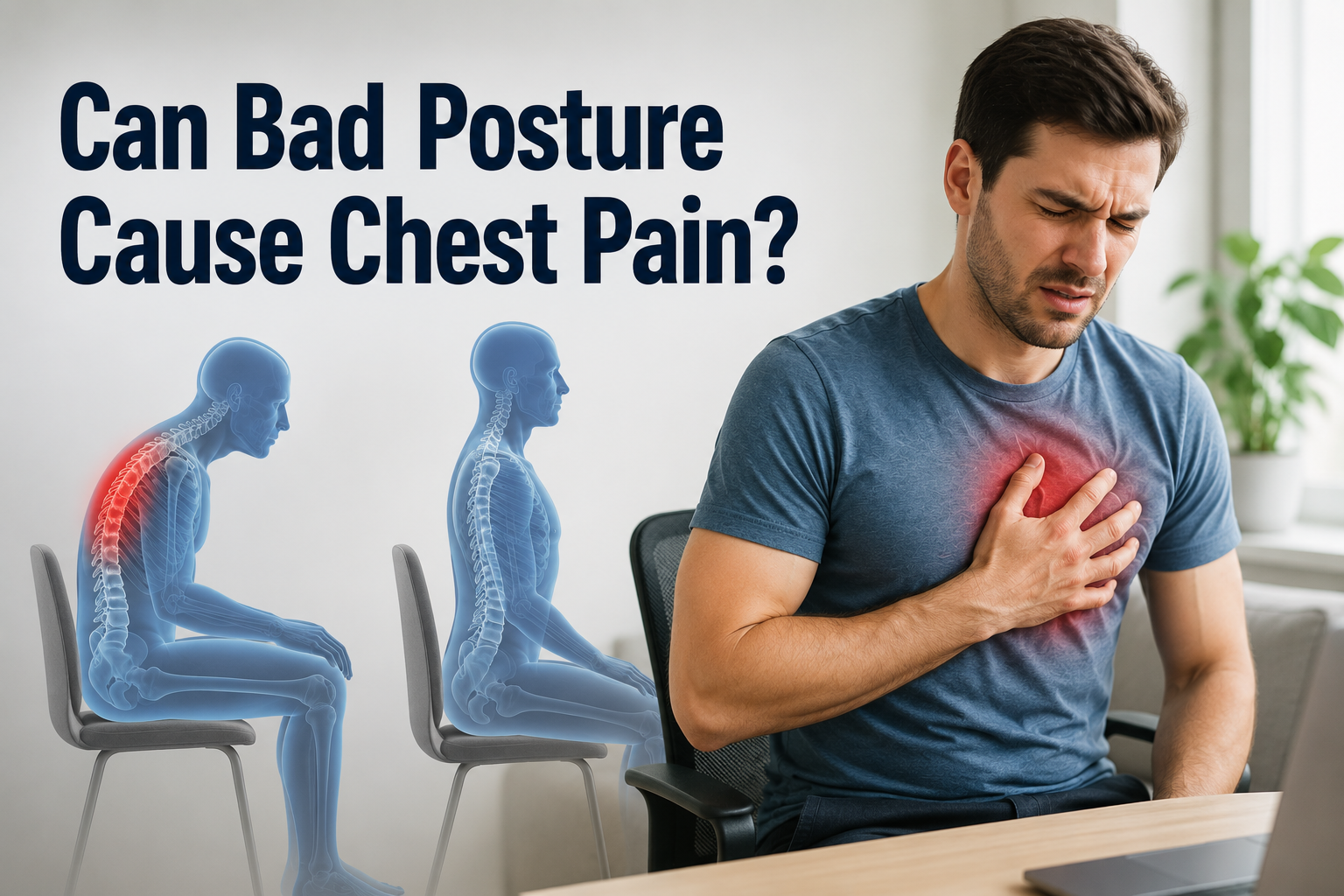
Yes, bad posture can cause chest pain, and it happens more often than most people realize. When you slouch, hunch over a desk, or hold your head forward for long hours, the muscles, joints, and cartilage in your chest and upper back come under constant strain.
This tension can radiate into the chest wall, mimicking discomfort that feels alarming even though its root cause is mechanical, not cardiac. Over time, poor posture also restricts how fully your rib cage expands, which adds to the tightness and soreness. The good news is that this type of chest pain is usually manageable and reversible once posture habits improve.
Chest pain understandably makes people anxious, since it is often associated with heart problems. However, posture-related chest pain has distinct characteristics that set it apart from cardiac pain, and understanding these differences can bring both clarity and relief. This article breaks down exactly how posture affects the chest, what symptoms to expect, how it compares to heart-related pain, and practical ways to find relief.
How Bad Posture Leads to Chest Pain
Poor posture affects the body in layers, starting with muscle strain and eventually influencing breathing mechanics and nerve function. Each of these factors plays a distinct role in how chest discomfort develops over time.
Muscle Strain and Tension
When you slouch or round your shoulders forward, the pectoral muscles shorten while the muscles between your shoulder blades overstretch. This imbalance creates constant low-grade tension across the chest wall. Over weeks or months, this tension can turn into noticeable soreness, tightness, or even sharp twinges during certain movements.
Rib Cage Compression and Restricted Breathing
Slouched posture compresses the rib cage, limiting how much your lungs can expand with each breath. This forces the intercostal muscles between the ribs to work harder, leading to fatigue and discomfort. Many people mistake this restricted breathing sensation for something more serious when it is simply a mechanical limitation caused by posture.
Nerve Impingement from Spinal Misalignment
Forward head posture and rounded shoulders can alter the alignment of the thoracic spine, occasionally putting pressure on nerves that run through the chest and upper back. This impingement can cause referred pain that feels like it originates in the chest, even though the actual source is spinal misalignment.
Common Postural Habits That Trigger Chest Pain
Certain everyday habits are more likely than others to cause posture-related chest discomfort. Recognizing these patterns is the first step toward correcting them.
Forward Head Posture (“Tech Neck”)
Constantly looking down at phones or laptops shifts the head forward, adding significant strain to the neck and upper chest muscles. This posture, often called tech neck, increases pressure on the cervical spine and can trigger discomfort that spreads into the chest area over time.
Rounded Shoulders and Slouching
Sitting for long periods without back support encourages the shoulders to round forward. This position shortens the chest muscles while overstretching the upper back muscles, creating an imbalance that commonly results in chest tightness and soreness.
Prolonged Sitting and Desk Work
Extended sitting, especially without ergonomic support, compounds nearly every postural issue mentioned above. Reduced movement throughout the day means muscles stay in shortened or overstretched positions for hours, giving little opportunity for the chest and back muscles to reset.
Symptoms of Posture-Related Chest Pain
Posture-related chest pain tends to present differently depending on which structures are affected, though most cases share a few recognizable patterns.
Dull, Achy, or Sharp Localized Pain
The pain is typically felt in a specific, identifiable spot rather than spreading broadly across the chest. It may feel like a dull ache, a tight band of tension, or an occasional sharp twinge, particularly along the sides of the sternum or beneath the collarbone.
Pain That Worsens with Movement or Breathing
Unlike cardiac pain, posture-related discomfort often intensifies with specific movements such as twisting, reaching overhead, or taking a deep breath. Pressing on the affected area may also reproduce or worsen the pain, which is a strong indicator of a musculoskeletal cause.
Associated Neck, Shoulder, and Upper Back Discomfort
Because posture problems rarely affect just one area, chest pain is often accompanied by stiffness or soreness in the neck, shoulders, and upper back. This combination of symptoms further supports a postural rather than cardiac origin.
Posture-Related vs. Cardiac Chest Pain
Distinguishing between these two types of chest pain is essential for safety and peace of mind. The table below highlights the most important differences.
| Feature | Posture-Related Chest Pain | Cardiac Chest Pain |
| Pain Type | Dull, achy, or sharp and localized | Pressure, tightness, or squeezing sensation |
| Trigger | Worsens with movement, posture, or breathing | Often triggered by exertion or stress |
| Location | Specific spot, reproducible by touch | Broad, central chest area |
| Associated Symptoms | Neck, shoulder, or upper back stiffness | Shortness of breath, sweating, nausea |
| Duration | Comes and goes with movement or rest | May persist or intensify with activity |
| Relief | Eases with stretching or posture correction | Does not improve with movement changes |
Key Differences in Pain Type and Triggers
Posture-related pain is mechanical, meaning it responds predictably to movement, touch, and posture changes. Cardiac pain, in contrast, is usually unrelated to body position and often connects to physical exertion or emotional stress instead.
Warning Signs That Require Immediate Medical Attention
Chest pain accompanied by shortness of breath, sweating, dizziness, nausea, or pain radiating into the arm or jaw should never be dismissed as postural. These symptoms warrant emergency medical evaluation without delay, since they may indicate a cardiac event.
Conditions Linked to Poor Posture and Chest Pain
Several specific musculoskeletal conditions are commonly associated with prolonged poor posture and can explain persistent chest discomfort.
Costochondritis
Costochondritis is inflammation of the cartilage connecting the ribs to the sternum. Poor posture places uneven stress on this cartilage, making it a frequent contributor to this condition, which causes sharp, localized pain that worsens with pressure or deep breathing.
Thoracic Outlet Syndrome
This condition occurs when nerves or blood vessels between the collarbone and first rib become compressed, often due to rounded shoulders or forward head posture. It can cause chest, shoulder, and arm discomfort along with tingling or numbness in the hands.
Muscle Strain (Pectoral/Intercostal)
Chronic tightness in the pectoral or intercostal muscles from sustained poor posture can lead to strain-related pain. This type of discomfort typically responds well to stretching, posture correction, and gradual strengthening exercises.
How to Relieve Posture-Related Chest Pain?
Relief generally involves a combination of stretching, ergonomic changes, and strengthening exercises that work together to correct the underlying imbalance.
Stretching and Mobility Exercises
Gentle chest-opening stretches, such as doorway stretches or shoulder rolls, help release tension in tightened pectoral muscles. Consistent daily stretching gradually restores mobility to the chest and upper back region.
Ergonomic Adjustments
Setting up a workstation so the screen sits at eye level and the back is properly supported reduces the tendency to slouch. Small adjustments like these prevent the repetitive strain that builds up over long working hours.
Strengthening Postural Muscles
Strengthening the muscles between the shoulder blades helps counteract the forward pull caused by tight chest muscles. Exercises such as rows and shoulder blade squeezes build the support needed to maintain better posture throughout the day.
When to See a Doctor
While most posture-related chest pain resolves with lifestyle changes, certain situations call for professional evaluation.
Persistent or Worsening Pain
If chest pain continues despite posture correction and stretching, or if it steadily worsens over time, a medical evaluation can help rule out other underlying causes and confirm the correct diagnosis.
Symptoms Suggesting a Cardiac Event
Any chest pain accompanied by shortness of breath, sweating, dizziness, or pain spreading to the arm or jaw should be treated as a medical emergency. Prompt evaluation ensures that serious cardiac conditions are identified and addressed quickly.
Preventing Future Posture-Related Chest Pain
Long-term prevention relies on building sustainable habits rather than occasional fixes.
Daily Posture Habits
Being mindful of posture throughout the day, taking regular breaks from sitting, and consciously keeping the shoulders back can significantly reduce the recurrence of chest discomfort.
Workstation Setup Tips
An ergonomic chair, a monitor positioned at eye level, and a keyboard placed to keep elbows at a natural angle all contribute to maintaining healthier posture during long work sessions.
FAQs
Can bad posture cause chest pain on one side only?
Yes, since muscle tension and rib cartilage inflammation often affect one side more than the other, depending on which side bears more postural strain.
How long does posture-related chest pain last?
It typically improves within days to a few weeks with consistent posture correction and stretching, though chronic cases may take longer to fully resolve.
Can sitting all day cause chest tightness?
Yes, prolonged sitting without proper back support encourages slouching, which tightens chest muscles and restricts rib cage movement over time.
Is posture-related chest pain dangerous?
It is generally not dangerous, but any chest pain accompanied by cardiac warning signs should be evaluated by a medical professional immediately.
Conclusion
Bad posture can cause chest pain through muscle strain, restricted breathing, and occasional nerve impingement, and this discomfort is usually distinguishable from cardiac pain by its movement-related triggers and localized nature.
Correcting posture through stretching, ergonomic adjustments, and targeted strengthening often brings lasting relief, though persistent or alarming symptoms should always prompt medical evaluation.
Related Articles
Does Gatorade Cause Kidney Stones? What the Research Actually Shows
Heart Attack Misdiagnosis Attorney: What to Know Before You Call One
What Causes Ice Pick Headaches? Symptoms, Triggers & When to Worry
When to Stop Using Gauze After Tooth Extraction
Jason Health Labs: Complete Guide to Affordable Online Lab Testing Services