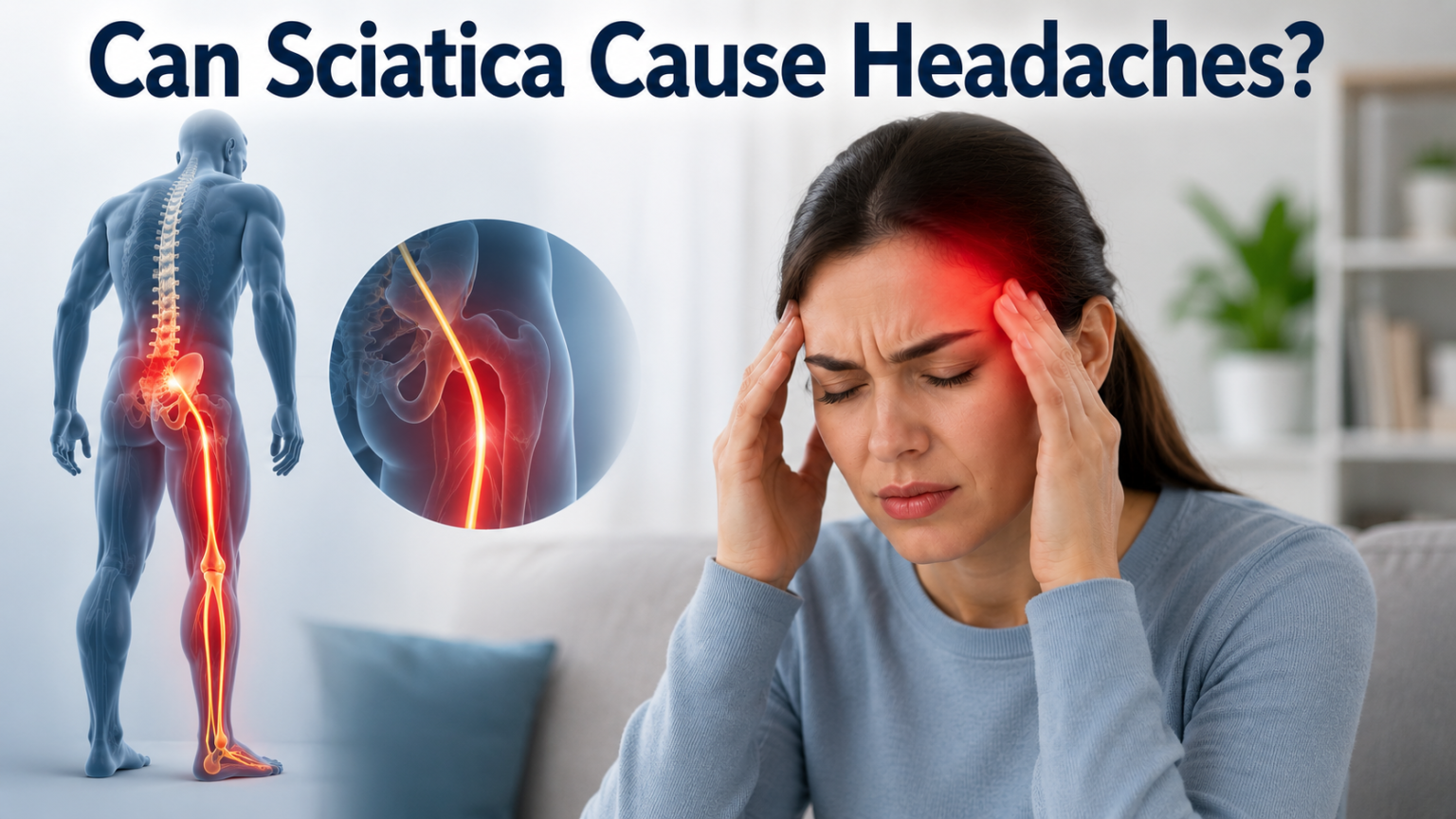
Sciatica does not directly cause headaches because it involves the sciatic nerve located in the lower back, hips, and legs, which has no direct connection to the nerves responsible for head pain.
However, many people who suffer from sciatica also experience headaches, and this is usually linked to indirect factors rather than a direct nerve pathway. Chronic pain, disturbed sleep, poor posture, and muscle compensation caused by sciatica can all contribute to tension-type headaches over time. In some cases, the stress of managing long-term sciatic pain can also trigger headaches as a secondary symptom.
Understanding this indirect relationship is important so that patients do not overlook other possible causes of their headaches. This article breaks down the connection in detail and offers practical guidance on managing both conditions together.
Key Takeaways
- Sciatica does not directly cause headaches since the sciatic nerve is unrelated to head nerves.
- Chronic pain, poor sleep, and posture changes can indirectly trigger tension-type headaches.
- Compensatory neck strain from sciatica may lead to cervicogenic headaches.
- Overuse of pain relief medication for sciatica can cause rebound headaches.
- Persistent headaches with sciatica should be evaluated by a doctor.
What Is Sciatica? A Quick Overview
Sciatica refers to pain that travels along the sciatic nerve, running from the lower back through the hips and down each leg. Below, we look at its causes, symptoms, and typical pain locations.
Causes of Sciatica
Sciatica commonly develops when a herniated disc, bone spur, or spinal stenosis presses against the sciatic nerve roots in the lower spine. According to the Mayo Clinic, a herniated disk or bone spur on the spine are among the most frequent culprits. Less commonly, piriformis syndrome, where a buttock muscle irritates the nerve, produces similar symptoms.
Common Symptoms of Sciatica
The hallmark symptom is a sharp, burning, or shooting pain that radiates from the lower back into the buttock and down one leg. Numbness, tingling, or muscle weakness in the affected leg or foot often accompanies the pain. Symptoms usually worsen with sitting, coughing, or sudden movements, and affect only one side of the body.
Where Sciatica Pain Typically Occurs?
Sciatica pain generally starts in the lower back or buttock area and travels down the back of the thigh toward the calf or foot. In severe cases, discomfort can extend all the way to the toes. The pain pathway follows the sciatic nerve, the longest and widest nerve in the human body.
Can Sciatica Directly Cause Headaches?
From a strictly anatomical standpoint, sciatica cannot directly cause headaches because the sciatic nerve and the nerves responsible for head pain belong to completely separate systems. The sections below clarify why.
The Nerve Pathway Explanation
The sciatic nerve originates from the lumbar and sacral nerve roots and travels downward into the legs. Head pain, by contrast, typically involves the trigeminal nerve, occipital nerves, or vascular changes in the brain and scalp. Since these networks do not overlap, sciatic nerve irritation has no direct pathway to trigger pain in the head.
Why Is Direct Causation Unlikely?
Because sciatica is a localized nerve compression issue confined to the lower body, it lacks the mechanism needed to produce head pain on its own. Medical literature treats sciatica and headache disorders as distinct conditions with separate diagnostic criteria. Any overlap is generally explained through secondary, lifestyle-related factors instead.
What Medical Research Says?
Clinical resources such as Cleveland Clinic describe sciatica strictly in terms of lower back and leg nerve compression, without listing headaches as a direct symptom. Research on headache disorders similarly does not identify sciatic nerve involvement as a trigger. This reinforces that headaches alongside sciatica are more likely linked through indirect stress and posture pathways.
Indirect Ways Sciatica May Trigger Headaches
While there is no direct nerve connection, several indirect pathways explain why sciatica sufferers frequently report headaches too. These generally revolve around the body’s response to chronic pain and lifestyle disruption.
Chronic Pain and Stress-Induced Headaches
Living with ongoing sciatic pain places continuous stress on the nervous system and heightens overall pain sensitivity. This stress response often manifests as tension headaches, among the most common headache types linked to chronic pain. Repeated activation of the fight-or-flight response can tighten muscles in the neck and scalp.
Sleep Disruption from Sciatica Pain
Sciatica pain frequently worsens at night, making it hard to find a comfortable position and leading to fragmented, poor-quality sleep. Sleep deprivation is a well-documented trigger for headaches, including both tension headaches and migraines. Over time, this cycle of pain disrupting sleep, and poor sleep worsening pain sensitivity, creates a pattern where headaches become more frequent.
Poor Posture and Muscle Compensation
People with sciatica often shift their posture unconsciously to avoid pain, favoring one side of the body while walking, sitting, or standing. This compensatory posture places extra strain on the neck, shoulders, and upper back muscles. Over time, this imbalance builds tension in the head and neck region, resulting in headaches.
Medication-Related Headaches
Many sciatica patients rely on over-the-counter or prescription pain relievers, and frequent use of certain medications can lead to rebound headaches. This is particularly common with overuse of analgesics taken more than a few times per week over extended periods. Patients should stay mindful of medication frequency and consult a healthcare provider if headaches appear alongside sciatica treatment.
Types of Headaches Linked to Sciatica-Related Factors
Not all headaches are the same, and identifying which type is occurring helps guide the right management approach. Below are the types most commonly reported among sciatica patients.
Tension Headaches
Tension headaches are typically described as a dull, band-like pressure wrapped around the head, often triggered by stress and muscle tightness. Since sciatica frequently causes both stress and compensatory muscle strain, this is the most commonly linked headache type among sciatica patients. They usually respond well to rest, stretching, and stress reduction.
Cervicogenic Headaches
Cervicogenic headaches originate from issues in the neck rather than the head itself, often triggered by postural strain or tension in the cervical spine. Since sciatica can lead to compensatory neck and upper back tension, this headache type is a plausible indirect link worth watching for. These headaches often present as one-sided pain starting at the base of the skull.
Stress Headaches
Stress headaches overlap closely with tension headaches but are specifically triggered by emotional or psychological strain rather than purely physical muscle tightness. The frustration of managing chronic sciatic pain can act as a psychological trigger for this headache type. Addressing the emotional burden of chronic pain, alongside physical treatment, often reduces their frequency.
When Sciatica and Headaches Occur Together: What It Might Mean
When both conditions appear together, it is worth considering whether a shared underlying issue is responsible, rather than assuming pure coincidence.
Red Flag Symptoms to Watch For
Sudden, severe headaches paired with sciatica, especially with fever, vision changes, or loss of bladder control, should never be ignored. These combinations could indicate a more serious underlying condition requiring immediate attention. Numbness spreading beyond the usual sciatic pathway alongside headache symptoms is another warning sign worth flagging to a doctor.
When to See a Doctor
If headaches become frequent, severe, or start interfering with daily activities alongside ongoing sciatica, a medical evaluation is strongly recommended. A doctor can assess whether the two conditions are connected through lifestyle factors or whether further testing is needed. Early evaluation often leads to more effective, targeted treatment.
How to Manage Sciatica-Related Headaches?
Managing both sciatica and its associated headaches usually means addressing shared root causes rather than treating each symptom in isolation.
Posture Correction Techniques
Improving posture while sitting, standing, and sleeping reduces the compensatory strain that often leads to headaches. Ergonomic chairs, supportive pillows, and neutral spine alignment throughout the day significantly ease muscle tension. Small adjustments, like keeping screens at eye level, also reduce unnecessary neck strain.
Physical Therapy and Stretching
A structured physical therapy program targeting the lower back, hips, and neck can relieve pressure on the sciatic nerve while easing tension-related headache triggers. Gentle stretches for the hamstrings, lower back, and neck muscles are often recommended together as part of a combined plan. Consistency with these exercises produces better long-term results than occasional stretching.
Stress Management and Sleep Hygiene
Since stress and poor sleep are major contributors to headaches in sciatica patients, relaxation techniques such as deep breathing, meditation, or light yoga can be helpful. A consistent sleep schedule and supportive sleeping positions also reduce nighttime pain flare-ups. Both strategies together lower the overall frequency of headache episodes.
Safe Pain Relief Options
Rather than relying heavily on over-the-counter painkillers, patients can explore heat or cold therapy, gentle massage, and doctor-approved anti-inflammatory approaches. When medication is necessary, following recommended dosing guidelines closely helps avoid medication-overuse headaches. Consulting a healthcare provider before combining multiple pain relief strategies is always advisable.
Comparison Table: Sciatica-Linked Headache Types at a Glance
| Headache Type | Common Trigger | Typical Feeling | Management Approach |
| Tension Headache | Stress and muscle tightness from chronic pain | Dull, band-like pressure around the head | Stretching, rest, stress reduction |
| Cervicogenic Headache | Neck strain from compensatory posture | One-sided pain starting at base of skull | Posture correction, physical therapy |
| Stress Headache | Emotional strain from managing chronic pain | Similar to tension headache, mood-linked | Relaxation techniques, counseling support |
| Medication-Overuse Headache | Frequent use of pain relievers | Recurring, dull headache pattern | Reduced medication frequency, doctor guidance |
Prevention Tips for Avoiding Both Sciatica and Headaches
Preventing both conditions from worsening comes down to consistent daily habits that support spinal health and reduce physical strain.
Ergonomic Adjustments
Setting up a workstation with proper chair height, lumbar support, and monitor positioning helps prevent both sciatic nerve compression and neck strain. Small changes, such as avoiding prolonged sitting without breaks, make a noticeable difference over time. Standing desks or periodic position changes throughout the day are also beneficial.
Regular Movement and Exercise
Incorporating low-impact activities like walking, swimming, or yoga strengthens the muscles supporting the spine and reduces pressure on the sciatic nerve. Regular movement also improves circulation and reduces the stiffness that often contributes to tension headaches. Avoiding long periods of inactivity helps prevent flare-ups of either condition.
Hydration and Nutrition
Staying well-hydrated supports overall nerve and muscle function, while dehydration is a known trigger for headaches on its own. A balanced diet rich in anti-inflammatory foods can support spinal health and reduce nerve irritation over time. Limiting excessive caffeine and processed foods may further reduce headache frequency.
Frequently Asked Questions
Can sciatica cause head pressure? Not directly, but the stress and muscle tension it creates can lead to tension-type headaches that feel like pressure around the head.
Is it common to have sciatica and migraines together? It is not a common direct combination, though both can coexist due to shared stress, sleep disruption, or chronic pain sensitivity.
Can a pinched nerve in the back cause head pain? Not directly, but resulting posture changes and muscle strain can indirectly contribute to headaches.
How do I know if my headache is stress-related or something serious? Mild, recurring headaches tied to stress or posture are usually not serious, but sudden severe headaches with vision changes or fever need prompt medical attention.
Conclusion
Sciatica and headaches are not directly connected through the nervous system, but chronic pain, poor sleep, posture changes, and medication overuse can create an indirect link.
Recognizing these pathways helps patients address root causes rather than treating each symptom separately. If headaches persist alongside sciatica, consulting a healthcare provider ensures both are properly managed.
Related Post’s
Does Gatorade Cause Kidney Stones? What the Research Actually Shows
Can Braces Fix an Overbite? Causes, Treatment, and Recovery
When Should You Stop Sleeping on Your Stomach in Pregnancy?
How Long Does a Shoulder MRI Take? Full Time Breakdown & Guide