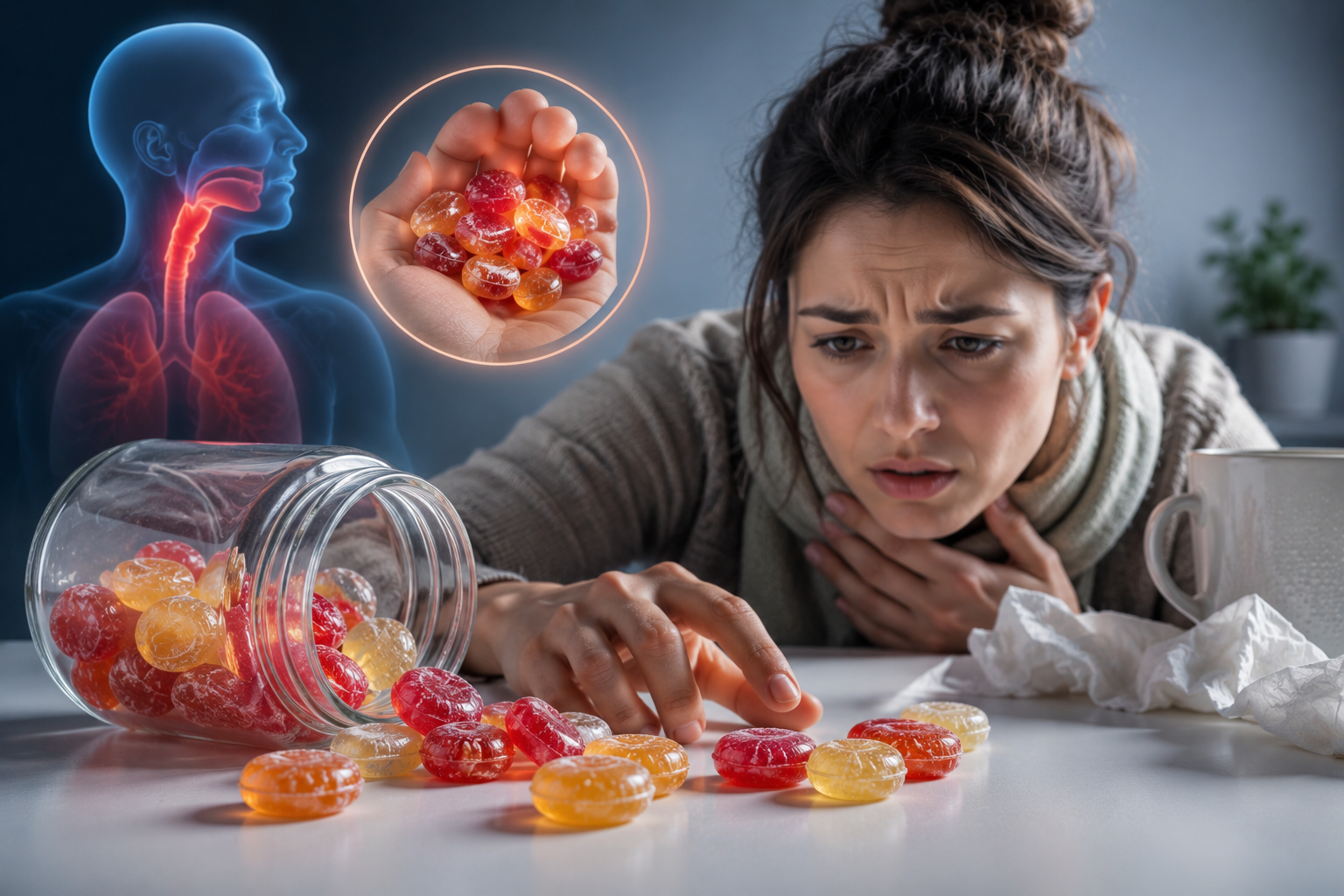
Yes, you can overdose on cough drops, though it usually takes eating a large number of them at once for this to happen. Cough drops contain active ingredients like menthol, benzocaine, or dextromethorphan, and consuming too many can lead to stomach upset, dizziness, headaches, or in rare cases, more serious reactions.
Children are especially vulnerable since their smaller body weight means even a modest overdose can cause noticeable symptoms. Understanding how much is too much, what warning signs to watch for, and when to seek help can keep a simple mistake from turning into a medical emergency. This guide walks through everything you need to know in plain, simple language.
Key Takeaways
- Cough drop overdose is possible but rare with normal, occasional use.
- The three main risk ingredients are menthol, benzocaine, and dextromethorphan (DXM).
- Children face higher risk due to lower body weight and choking hazards.
- Mild symptoms include nausea and headache; severe symptoms include confusion and rapid heartbeat.
- Poison Control (1-800-222-1222) should be contacted for any suspected overdose.
What’s Actually in a Cough Drop?
Most cough drops are built around a small handful of active ingredients that soothe the throat, and knowing what each one does helps explain why overdoing it can cause problems. Below is a breakdown of the most common components found in everyday brands.
Menthol
Menthol is the cooling, minty compound responsible for that soothing sensation at the back of the throat. In small amounts, it’s harmless, but eating a large quantity can irritate the stomach lining and cause nausea or a burning sensation. It’s the most common active ingredient across nearly all cough drop brands sold in the US.
Benzocaine
Benzocaine is a numbing agent added to some throat lozenges to dull pain temporarily. While effective for sore throats, excessive use has been linked to a rare but serious blood condition called methemoglobinemia, which reduces the blood’s ability to carry oxygen. This risk is why benzocaine-containing products carry stricter dosing guidance.
Dextromethorphan (DXM)
DXM is a cough suppressant found in some medicated drops rather than basic soothing lozenges. Unlike menthol, DXM affects the central nervous system, and taking too much can cause confusion, hallucinations, or an irregular heartbeat. Products containing DXM require more caution than simple menthol-based drops.
Sugar, Pectin, and Zinc
Beyond the active ingredients, most drops contain a sugar or pectin base to hold their shape, and some add zinc for immune support. These are generally low-risk, though excessive sugar intake can cause digestive discomfort, and very high zinc intake over time may cause nausea or copper deficiency.
Can You Overdose on Cough Drops?
Yes, overdosing on cough drops is medically possible, but it typically requires eating well beyond the recommended dose on the package label. The outcome depends heavily on which active ingredient is involved, how many drops were consumed, and the person’s age and body weight. A single extra drop poses essentially no risk, but consuming a large handful or an entire bag in one sitting is a different situation entirely, particularly for young children.
Symptoms of Cough Drop Overdose
Symptoms of overconsumption tend to fall into three general categories depending on severity. Recognizing where symptoms fall on this scale helps determine whether home monitoring is enough or medical attention is needed.
Mild Symptoms
Mild overconsumption usually shows up as an upset stomach, nausea, or a dull headache within a short time after eating too many drops. These symptoms often resolve on their own with rest and fluids. They’re the most common outcome when someone eats slightly more than intended, such as finishing an entire small bag over a few hours.
Moderate to Severe Symptoms
More serious cases can involve dizziness, a noticeably faster heart rate, vomiting, or confusion, particularly with DXM-containing products. These symptoms suggest the body has absorbed a meaningful amount of the active ingredient and warrant contacting Poison Control or a healthcare provider promptly rather than waiting to see if they pass.
Benzocaine-Specific Warning Signs
Benzocaine overuse carries a distinct risk: bluish-tinted skin or lips, shortness of breath, and fatigue can signal methemoglobinemia, a condition where blood cannot carry oxygen properly. This is considered a medical emergency and requires immediate care rather than home observation, since it can worsen quickly.
Cough Drop Overdose in Children
Children are far more susceptible to cough drop overdose than adults because their smaller body size means the same number of drops delivers a proportionally larger dose. A quantity that would barely affect an adult can cause real symptoms in a toddler or young child, making supervision and safe storage genuinely important.
Why Kids Are More Vulnerable
A child’s lower body weight means active ingredients build up in their system faster relative to an adult consuming the same amount. Young children are also more likely to mistake colorful, sweet-tasting drops for candy, increasing the chance of accidentally eating several at once.
Warning Signs Parents Should Watch For
Parents should watch for unusual drowsiness, repeated vomiting, complaints of stomach pain, or a child seeming unusually confused or unsteady after getting into a bag of cough drops. Any of these signs following suspected overconsumption warrants an immediate call to Poison Control for guidance.
How Many Cough Drops Are Too Many?
There’s no single number that applies to every product, since the threshold depends on the active ingredient and its concentration per drop. The table below compares common drop types to give a general sense of where concern typically begins.
| Cough Drop Type | Main Active Ingredient | Typical Dose Per Drop | General Concern Threshold |
| Menthol lozenges (e.g., Halls) | Menthol | ~1–10 mg | Large quantities (20+) in a short time |
| Herbal/honey drops (e.g., Ricola) | Menthol/herbal extracts | Low, varies | Rarely concerning unless dozens consumed |
| Benzocaine throat lozenges | Benzocaine | 2–15 mg | Repeated use well beyond label instructions |
| DXM cough suppressant drops | Dextromethorphan | 2.5–5 mg | Several times the labeled daily dose |
This table is a general reference only; always check the specific product label, since formulations vary by brand and country.
What to Do If You’ve Had Too Many?
If mild symptoms like an upset stomach appear after eating more drops than intended, resting, drinking water, and monitoring for worsening symptoms is usually a reasonable first step. However, if symptoms are moderate to severe, or if a young child is involved, contacting Poison Control at 1-800-222-1222 immediately is the safer path, since they can advise based on the exact product and quantity involved.
Emergency services or an ER visit should be the immediate choice if someone shows confusion, breathing difficulty, bluish skin, or a rapid or irregular heartbeat. Trying to induce vomiting without professional guidance is not recommended, as it can cause additional complications in some cases.
Are Sugar-Free or Herbal Cough Drops Safer?
Sugar-free cough drops often use sugar alcohols like sorbitol, which can cause diarrhea or stomach cramping if eaten in large quantities, so “sugar-free” doesn’t automatically mean risk-free.
Herbal or menthol-only drops without benzocaine or DXM generally carry a lower overdose risk profile, but eating an excessive quantity of any product can still upset the digestive system.
Long-Term Risks of Chronic Overuse
People who rely on cough drops frequently for a chronic cough or persistently dry throat may face different risks than someone who overdoes it once. Regularly consuming sugar-based drops can contribute to tooth decay over time, while habitual overuse of menthol has been associated with rebound throat irritation in some users.
Anyone using cough drops daily for an extended period should mention this to a healthcare provider, since ongoing throat symptoms may point to an underlying issue worth addressing directly rather than managing with lozenges alone.
Frequently Asked Questions
Can cough drops make you feel high? Standard menthol-based drops won’t cause a high, but products containing dextromethorphan in very high quantities can cause dissociative effects, which is a sign of overdose rather than normal use.
How many cough drops is too many in a day? Most labels recommend no more than 8–10 drops daily, and consistently exceeding that, especially with medicated formulas, raises the risk of side effects.
Are cough drops dangerous during pregnancy? Occasional use of standard menthol drops is generally considered low-risk during pregnancy, but anyone pregnant should check with their doctor before regularly using benzocaine or DXM-containing products.
Can pets overdose on cough drops? Yes, and it can be more serious for pets than humans, since ingredients like xylitol (a sugar substitute in some sugar-free drops) are toxic to dogs even in small amounts.
Conclusion
Cough drop overdose is uncommon with normal use but genuinely possible when a large quantity is consumed at once, particularly with benzocaine or DXM-containing formulas.
Knowing the symptoms, keeping drops away from young children, and knowing when to call Poison Control versus seeking emergency care are the key takeaways to keep in mind. When in doubt about a specific situation, reaching out to a healthcare provider or Poison Control directly is always the safest choice.
Related Articles
Careers in Dental Public Health: Education, Jobs, Salary, and Future Opportunities
Wisdom Tooth Pain? Get Instant Relief with These Proven Remedies Today
Source of Health Spa: Services, Benefits, Wellness Treatments & Customer Experience
Itchy Inner Thighs: Causes, Symptoms, Treatments, Home Remedies, and Prevention
Ibuprofen Not Working on Fillings Pain: Causes, Relief, and When to See a Dentist