



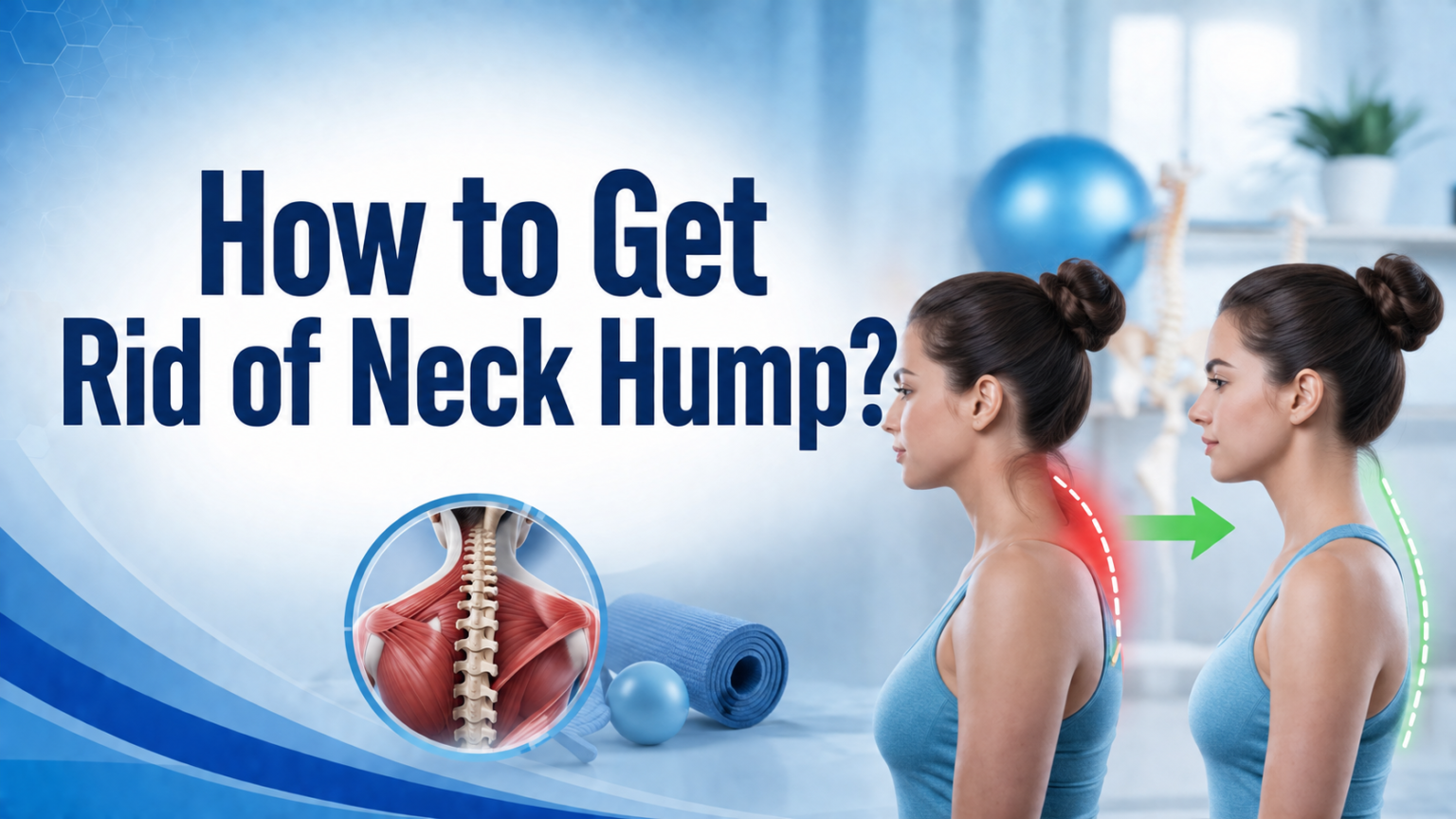
A neck hump forms when the tissue at the base of the neck and upper back begins to curve outward, usually because of long-term poor posture or fat accumulation in that area. Many people search for how to get rid of neck hump once they notice the shape becoming more visible in photos or mirrors.
The good news is that most postural neck humps can be reduced through daily stretching, targeted strengthening, and ergonomic changes. Fat-based humps may need a different approach involving weight management or medical evaluation. This guide breaks down every cause, exercise, and treatment option in a simple, step-by-step format so you can start correcting it today.
Key Takeaways
- A neck hump is usually caused by forward head posture, muscle imbalance, aging, or fat buildup.
- Chin tucks, wall angels, and thoracic stretches are the most effective exercises for postural humps.
- Fat-related humps (buffalo hump) may need medical evaluation for hormonal or medication-related causes.
- Consistent daily practice over 6 to 12 weeks typically produces visible improvement.
- Severe, painful, or rapidly growing humps should always be checked by a doctor.
Reviewed by: [Licensed Physical Therapist / Physician Name], [Credentials] — Medical content reviewed for accuracy on July 20, 2026.
What Is a Neck Hump (Dowager’s Hump vs. Buffalo Hump)
A neck hump refers to a visible curve or bump at the back of the neck where it meets the upper spine. Two distinct types exist, and knowing the difference matters before starting any correction plan.
The postural type, often called a dowager’s hump, develops when the upper spine rounds forward due to slouched sitting or standing habits over months or years. It involves bone alignment and muscle tightness rather than fat.
A buffalo hump, by contrast, is a soft fatty deposit that forms independently of posture, often linked to hormonal changes, certain medications, or rapid weight gain. Telling these apart early helps you choose exercises versus medical treatment, since the two respond to very different approaches.
Common Causes of Neck Hump
Several everyday habits and health factors contribute to a neck hump forming over time, and most people experience a mix of more than one cause rather than a single trigger.
Poor Posture and Text Neck
Spending hours looking down at phones or laptops pulls the head forward, straining the neck muscles and encouraging the upper spine to round. This repeated position, often called text neck, is one of the leading modern causes of postural neck humps in younger adults.
Aging and Bone Density Loss
As people age, the spine can naturally lose bone density, a condition known as osteoporosis. This weakens the vertebrae and makes the upper back more prone to curving forward, creating a hump that becomes more noticeable over the years.
Excess Fat Deposits
Fat can accumulate at the base of the neck due to steroid medication use, hormonal conditions such as Cushing’s syndrome, or general weight gain. Unlike postural humps, this type feels soft and does not improve with stretching alone.
Muscle Imbalance
Weak deep neck flexors combined with overly tight upper trapezius and chest muscles pull the head and shoulders into a forward, rounded position. This imbalance is one of the most correctable causes through targeted strengthening.
How to Tell Which Type You Have?
A simple self-check involves standing sideways against a wall to see how far your head sits forward from your shoulders, along with noting whether the hump feels bony and rigid or soft and fatty to the touch.
Postural humps usually improve slightly when you consciously straighten up, while fat-based humps stay the same shape regardless of posture. If the hump appears suddenly, feels painful, or comes along with other symptoms like weight gain or fatigue, it is worth having a doctor assess it rather than assuming it is purely postural.
Best Exercises to Reduce Neck Hump
Targeted exercises are the most effective starting point for anyone learning how to get rid of neck hump caused by posture, since they retrain the muscles that hold the head and spine in proper alignment.
| Exercise | How to Do It | Frequency |
| Chin Tucks | Pull chin straight back, not down, hold 5 seconds | 10–15 reps, twice daily |
| Wall Angels | Stand against a wall, slide arms up and down like a snow angel | 10 reps, once daily |
| Doorway Pec Stretch | Place forearm on doorframe, gently lean forward | Hold 20–30 seconds, 3 sets |
| Thoracic Extension | Use a foam roller under upper back, arch gently backward | 1–2 minutes daily |
| Scapular Squeezes | Pull shoulder blades together and hold | 10–15 reps, twice daily |
Practicing these consistently strengthens the deep neck flexors and mid-back muscles while loosening the tight chest and upper trap muscles that pull the body into a hunched position.
Posture Correction Tips for Daily Life
Exercises alone are not enough if daily habits keep reinforcing the same forward-head position, so pairing movement with lifestyle adjustments speeds up results significantly.
Raising your computer screen to eye level, holding your phone closer to face height instead of looking down, and choosing a supportive pillow that keeps your neck aligned while sleeping all reduce the daily strain that causes the hump to worsen.
Setting hourly reminders to check your posture, sitting with your back fully supported, and avoiding long unbroken periods of sitting also make a measurable difference over a few weeks. Some people additionally use posture-correcting braces or ergonomic cushions, described below, as a supportive tool alongside exercise rather than a replacement for it.
| Product Type | Purpose | Best For |
| Posture Corrector Brace | Gently pulls shoulders back | Mild to moderate forward posture |
| Ergonomic Cervical Pillow | Supports natural neck curve while sleeping | Preventing overnight strain |
| Standing Desk Converter | Reduces prolonged sitting and slouching | Office and desk workers |
Lifestyle and Medical Treatments
When posture correction and exercise are not enough, or when the hump is fat-related rather than postural, additional treatment routes may be necessary.
Gradual, sustainable weight management often reduces fat-based humps over time, particularly when combined with regular physical activity. A physical therapist can design a personalized correction plan for people with significant spinal rounding, while in rare cases involving steroid-related fat buildup, a doctor may adjust medication dosage under medical supervision.
For older adults with osteoporosis-related humps, bone density management through diet, supplements, or prescribed medication becomes an important part of the long-term treatment plan, and in very severe structural cases, a specialist may discuss surgical options.
How Long Does It Take to See Results?
Postural neck humps typically show noticeable improvement within six to twelve weeks of consistent daily exercise and posture correction, though full correction of long-standing rounding can take several months.
Fat-based humps respond more slowly and depend heavily on the underlying cause, meaning weight-related humps may shrink gradually with sustained lifestyle changes, while hormonal or medication-related humps often require addressing the root cause first before visible change occurs.
When to See a Doctor
Certain warning signs mean self-treatment should be paused in favor of a medical evaluation.
A hump that grows rapidly, causes pain, numbness, or tingling, or appears alongside symptoms like unexplained weight gain, fatigue, or high blood pressure could indicate an underlying hormonal or spinal condition that needs proper diagnosis rather than home exercises alone.
Frequently Asked Questions
Can a neck hump be reversed naturally? Yes, postural neck humps often improve significantly through consistent stretching, strengthening, and posture correction, though fat-based humps may need additional lifestyle or medical intervention.
Does losing weight get rid of a neck hump? Weight loss can reduce fat-based humps over time, but it will not correct a purely postural hump, which requires targeted exercise instead.
What is the best sleeping position to prevent neck hump? Sleeping on your back or side with a supportive cervical pillow that maintains the neck’s natural curve helps prevent the forward strain that worsens a hump.
Is neck hump linked to osteoporosis? Yes, especially in older adults, since reduced bone density can cause the upper spine to curve forward more easily.
How long before I see results from neck hump exercises? Most people notice gradual improvement within six to twelve weeks of daily, consistent practice.
Conclusion
A neck hump, whether caused by posture, aging, or fat accumulation, is manageable once you identify its underlying cause and apply the right combination of exercises, posture habits, and lifestyle changes.
Staying consistent with daily stretches and ergonomic adjustments produces the most reliable long-term results, while persistent or unusual symptoms should always be evaluated by a healthcare professional to rule out deeper medical causes.
Related Articles
How to Sleep With a Stuffy Nose: Complete Guide to Breathing Easy at Night
Why Is My Nose Burning? Causes, Symptoms and Relief Tips
What Types of Cancer Qualify for Disability?
Can Heartburn Cause Back Pain? Causes, Symptoms, Treatment, and When to Worry
PRP for Under Eyes: Benefits, Procedure, Recovery, Cost, Results, and Side Effects