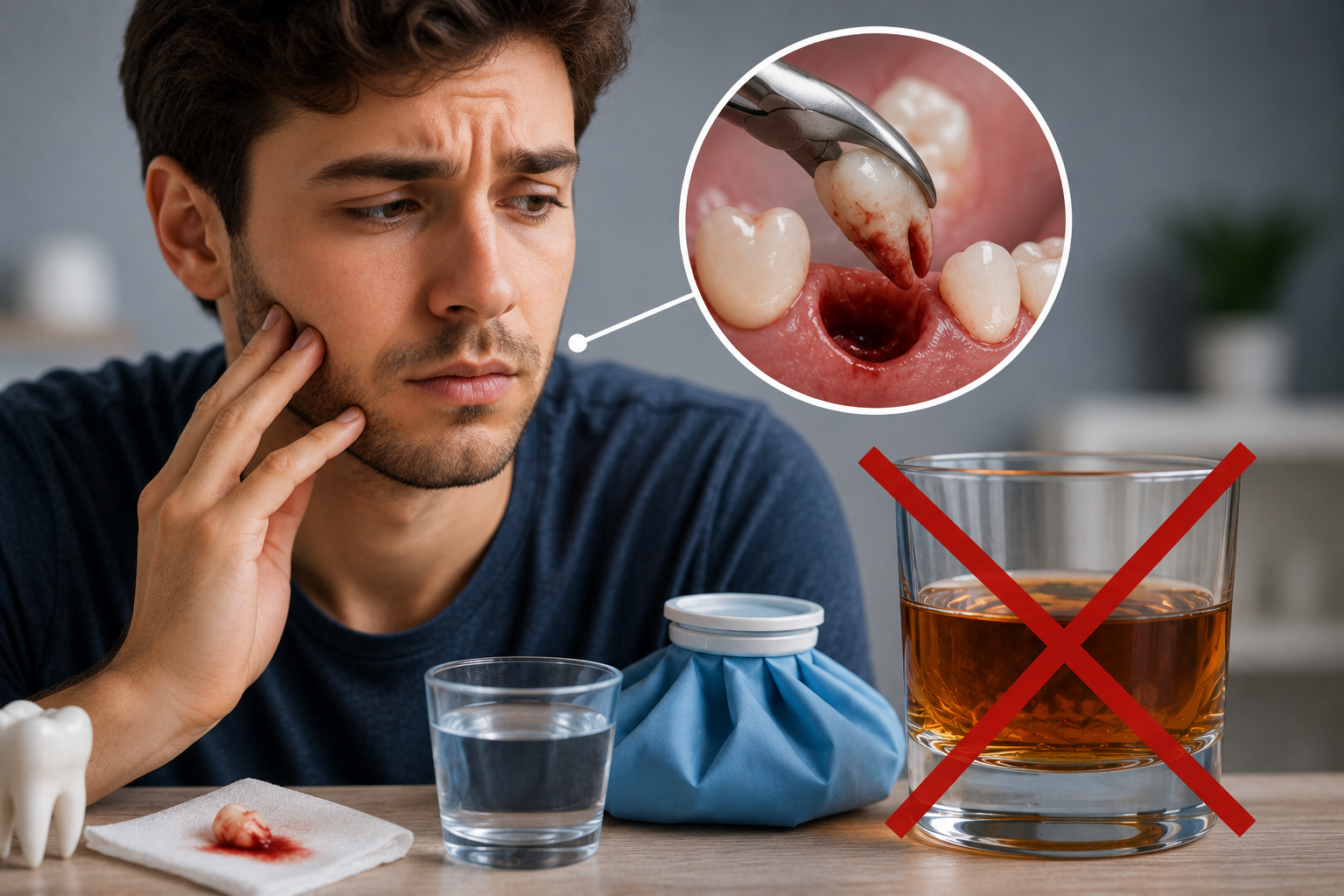
No, drinking alcohol only 24 hours after a tooth extraction is not considered safe by most dentists and oral surgeons. In the first day after the procedure, your body is still working to form a stable blood clot inside the empty socket, and this clot is extremely fragile at this stage.
Alcohol acts as a blood thinner, which means it can loosen or dislodge that clot before it has properly set. It can also slow down the tissue repair process and irritate the surgical site if it comes into direct contact with the gums.
On top of that, alcohol often interacts poorly with the pain relievers or antibiotics dentists prescribe after extractions. Because of these combined risks, dental professionals generally recommend waiting at least 48 to 72 hours, and sometimes longer, before having any alcoholic drink.
Why Alcohol Interferes With Tooth Extraction Healing
Alcohol affects several parts of the healing process at once, from blood clotting to tissue repair. The sections below explain the main reasons dentists advise against drinking too early after an extraction.
Effect on Blood Clot Formation
Right after an extraction, your body forms a blood clot in the socket to protect the underlying bone and nerve endings. This clot acts as the foundation for new tissue growth over the following days. Alcohol thins the blood and can prevent this clot from forming properly or cause it to break loose too soon.
Increased Risk of Dry Socket
Dry socket occurs when the protective blood clot is lost before the wound underneath has healed, exposing bone and nerves to air, food, and bacteria. It is one of the most painful complications of tooth extraction and often requires a return visit to the dentist for treatment. Drinking alcohol within the first 24 to 48 hours significantly raises the chances of this happening.
Interaction With Painkillers and Antibiotics
Most patients are given pain medication, and sometimes antibiotics, following an extraction. Mixing alcohol with these drugs can cause increased drowsiness, nausea, stomach upset, or reduced effectiveness of the antibiotic. Certain antibiotics, such as metronidazole, can cause a severe reaction when combined with alcohol, including vomiting and a rapid heartbeat.
Recommended Waiting Period Before Drinking Alcohol
Dentists generally suggest a minimum waiting period before alcohol is safe to consume again. The exact timeline depends on how your healing is progressing and whether you are taking any medication.
Why 48 to 72 Hours Is Safer Than 24 Hours
By the 48 to 72 hour mark, the initial blood clot has usually stabilized, and the risk of it being dislodged drops considerably. This window also gives the surgical site time to begin early tissue repair. Waiting this long significantly lowers the chances of dry socket and delayed healing compared with drinking after just 24 hours.
When Antibiotics Extend the Waiting Time
If you have been prescribed an antibiotic course, you may need to avoid alcohol for the entire duration of that course rather than just the first few days. Some antibiotics remain active in your system and can cause unpleasant reactions if alcohol is introduced too soon. Always check with your dentist or pharmacist about the specific medication you were given before deciding it is safe to drink.
| Time After Extraction | Healing Stage | Risk Level If Drinking | Recommendation |
| 24 hours | Fresh, fragile clot | High | Avoid alcohol completely |
| 48 hours | Clot stabilizing | Moderate | Still best to wait |
| 72 hours | Early tissue repair | Low to moderate | Generally acceptable if no complications |
| 1 week or more | Socket largely settled | Low | Usually safe with dentist clearance |
What Happens If You Drink Alcohol Too Soon
Drinking before the socket has properly healed can lead to several uncomfortable and sometimes serious complications. Understanding these risks makes it easier to see why patience during recovery is worth it.
Dry Socket Symptoms
Dry socket typically causes a throbbing pain that can radiate toward the ear or jaw on the same side as the extraction. Patients often notice a visibly empty-looking socket along with an unpleasant taste or odor in the mouth. If these symptoms appear after drinking too early, a dental visit is usually necessary for proper treatment.
Delayed Clotting and Bleeding
Alcohol’s blood-thinning effect can cause the extraction site to bleed again even after it had initially stopped. This delayed bleeding interrupts the healing timeline and can prolong discomfort. In some cases, it may require additional care from your dentist to bring under control.
Increased Swelling and Discomfort
Alcohol can also contribute to inflammation and fluid retention around the surgical area, making swelling worse rather than better. This added swelling can increase pain levels and make it harder to eat, speak, or sleep comfortably. It may also mask early warning signs of infection, since alcohol-related swelling can look similar to swelling from a developing problem.
Signs That You Are Ready to Drink Alcohol Safely
Everyone heals at a slightly different pace, so it helps to look for specific signs rather than relying only on the calendar. Before considering alcohol again, check that the following conditions have been met:
• The bleeding has fully stopped and has not returned for at least 24 hours
• There is no significant swelling, throbbing, or spreading pain
• You are no longer taking pain medication that interacts with alcohol, or your dentist has confirmed it is safe
• Any prescribed antibiotic course has been completed, or your pharmacist has cleared moderate alcohol use
• Your dentist has given clearance during a follow-up check, if one was scheduled
If any of these points are still unclear, it is safer to wait a little longer and confirm with your dental provider before drinking.
Safer Recovery Tips After Extraction
While you wait for the socket to heal, a few simple habits can make the process smoother and reduce your risk of complications. These tips apply whether or not alcohol is part of your usual routine.
What to Drink Instead During the First 72 Hours
Water, milk, and room-temperature herbal tea are all gentle options that will not interfere with clot formation. Cold drinks can help reduce swelling on the first day, while warm, not hot, liquids can be introduced gradually afterward. Avoid using a straw for any beverage, since the suction can dislodge the healing clot in much the same way alcohol-related irritation can.
Habits and Foods to Avoid Along With Alcohol
Smoking, spicy foods, and hard or crunchy snacks should be avoided for the same reasons alcohol is restricted, since they can all disturb the healing socket. Vigorous rinsing or spitting in the first 24 hours can also loosen the clot before it has set. Sticking to soft foods and gentle oral care for the first few days supports faster, more comfortable healing.
When to Contact Your Dentist?
If you experience severe or worsening pain, persistent bleeding that does not slow down, fever, or a bad taste or smell coming from the extraction site, contact your dentist promptly.
These can be signs of dry socket or infection that need professional treatment rather than home care. It is always better to check in early than to wait and risk the problem becoming more serious, especially if alcohol was consumed shortly after the procedure.
Frequently Asked Questions
Can I drink beer or wine specifically after 24 hours?
Beer and wine carry the same risks as any other alcoholic drink because the concern is the alcohol itself, not the specific beverage type. Both can thin the blood and irritate the healing socket, so the same 48 to 72 hour guideline applies regardless of what you choose to drink.
Does the type of alcohol change how risky it is?
Stronger spirits may cause slightly more direct irritation if they touch the extraction site, but overall risk is driven mainly by alcohol content and its effect on clotting. Lower-alcohol drinks are not automatically safe within the first 24 to 48 hours.
How long should I wait after wisdom teeth removal specifically?
Wisdom tooth extractions often involve a larger surgical site and longer recovery, so many dentists recommend waiting closer to a full week before drinking alcohol. Following your surgeon’s specific aftercare instructions is always the safest approach.
Can I drink if I was not prescribed antibiotics?
Even without antibiotics, the blood-clotting risk from alcohol remains the same, so the 48 to 72 hour minimum still applies. Skipping antibiotics only removes one of the two main risk factors, not both.
Conclusion
Waiting just 24 hours before drinking alcohol after a tooth extraction is not enough time for the socket to heal safely.
Giving your body at least 48 to 72 hours, and longer if you are on antibiotics, allows the blood clot to stabilize and lowers your risk of dry socket, bleeding, and other complications.
When in doubt, checking with your dentist is the simplest way to know it is truly safe to drink again.
RELATED POSTS
Itchy Inner Thighs: Causes, Symptoms, Treatments, Home Remedies, and Prevention
How to Cure Burning Watery Eyes: Causes, Remedies & When to See a Doctor
Why Does My Knee Feel Tight? Causes, Relief, and When to See a Doctor
Is Muscle Twitching Dangerous? What Your Body Is Really Trying to Tell You
Clear Liquid Diet: Complete Guide for Faster Recovery and Easy Digestion